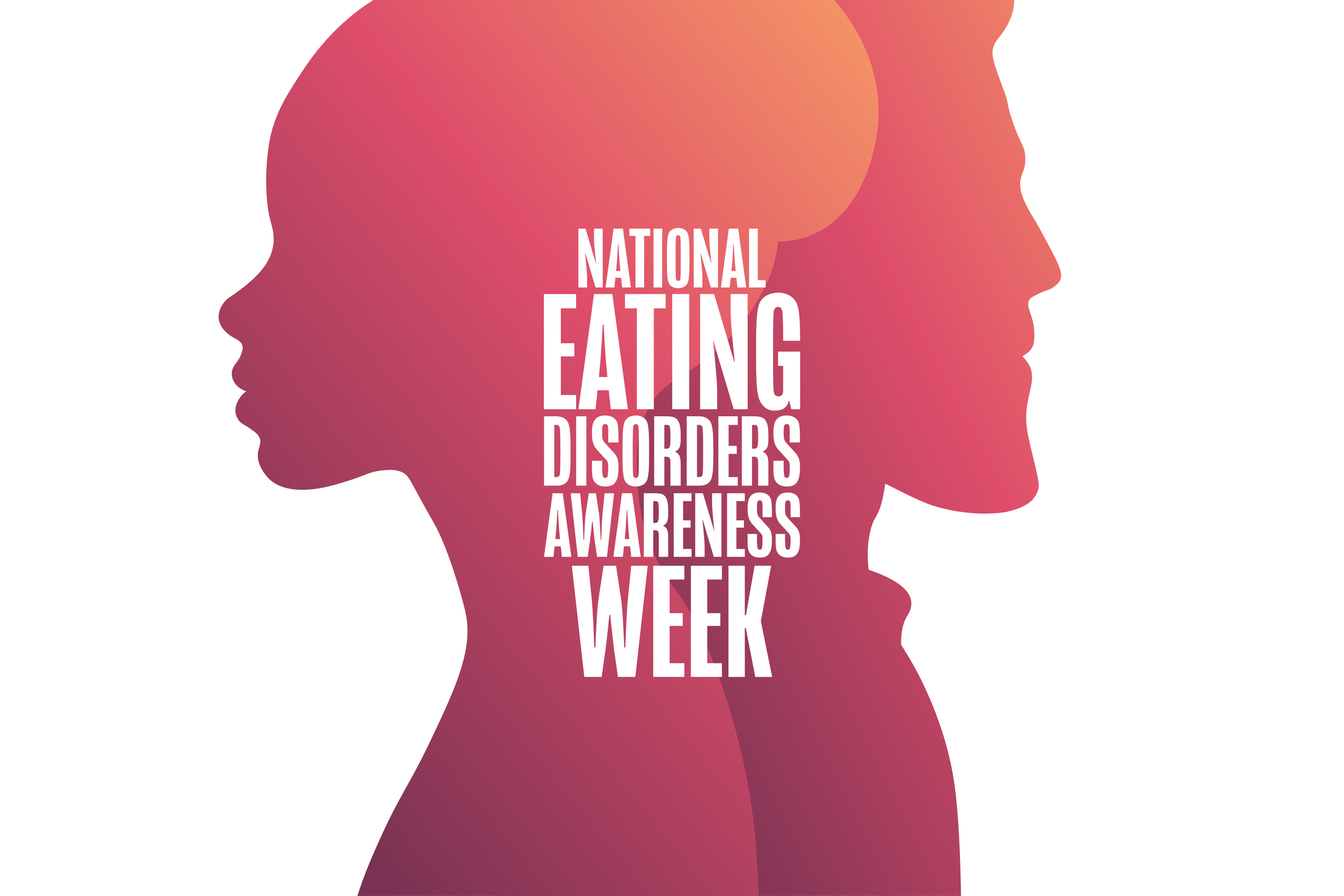
National Eating Disorder Awareness Week

National Eating Disorder Awareness Week (NEDAW) takes place February 23rd – March 1st. NEDAW raises awareness about eating disorders, challenges stigma, and provides hope and support to all who have been impacted by these conditions.  

Eating disorders are serious mental health conditions that can cause unhealthy relationships with how a person thinks about food, eating, weight, and how they see themselves. If eating disorders aren’t treated effectively, they can become long-term problems and can be fatal in some cases.   

Eating disorders are common. According to the National Eating Disorder Association (NEDA), studies show that 28.8 million people in the U.S. will have an eating disorder in their lifetime. 

There are several types of eating disorders. They include: 

  • Anorexia nervosa restricts food and/or caloric intake, and creates a fear of gaining weight and a distorted self-image 
  • Bulimia nervosa causes a person to binge or eat large amounts of food in a short amount of time, or believe that the food intake was large, which is followed by purging the food by vomiting or with the use of laxatives, or excessive exercise 
  • Avoidant/restrictive food intake disorder (ARFID) limits the amount or type of food eaten for reasons unrelated to a distorted self-image or an attempt to lose weight 
  • Binge eating disorder causes a person to eat or think there is a large amount of food in a short time, followed by feelings of shame, regret, guilt, or depression 
  • Pica causes a person to compulsively swallow non-food items, such as chalk, dirt, or paint 
  • Rumination disorder causes undigested food to return to a person’s mouth after swallowing it. Food is then rechewed, re-swallowed, or spit out 

It may be difficult to spot an eating disorder in a loved one, as they can often mimic some dietary or lifestyle changes. What’s more, you may not be able to tell if someone is suffering from an eating disorder by looking at them. Eating disorders have several signs and symptoms, including: 

  • Mood swings 
  • Fatigue 
  • Fainting or dizziness 
  • Thinning hair or hair loss 
  • Unexplained weight changes or drastic weight loss 
  • Unusual sweating or hot flashes 

Behavioral symptoms of eating disorders include: 

  • Restrictive eating 
  • Eating a lot of food in a short amount of time 
  • Avoiding certain foods 
  • Forced vomiting after meals or misuse of laxatives 
  • Compulsive exercising after meals 
  • Frequent bathroom breaks after eating 
  • Withdrawing from friends or social activities 
  • Hiding food or throwing it away 
  • Food rituals, such as chewing food longer than necessary or eating in secret 

These symptoms look and feel different for each person and vary depending on the type of eating disorder they have, and can affect their health, emotions, and ability to function in important areas of life 

If a person has an eating disorder, they may experience several feelings, including: 

  • Food is their enemy, or it can harm them 
  • They did something wrong or shameful after they ate food 
  • They aren’t the correct weight or body size 
  • They are perceived negatively by other people 
  • They are “failing” if they don’t meet certain food or weight requirements 
  • What and how they eat is the only thing they can control in their life 
  • They don’t want to spend time with others due to the fear of being judged 

There isn’t an exact known cause for eating disorders. However, research has suggested that several factors can lead to a person developing an eating disorder, including: 

  • Genetics 
  • Brain biology 
  • Underlying mental health conditions 
  • Cultural and social ideals 

Eating disorders can be developed by anyone at any age but are most common among adolescents and teenagers. A person may be at increased risk of developing an eating disorder if they: 

  • Have a history of eating disorders or other mental health conditions in their biological family 
  • Have an underlying mental health condition such as anxiety, depression, or obsessive-compulsive disorder (OCD) 
  • Experienced a physical, emotional, or sexual trauma 
  • Participate in activities where their weight or body size is a factor, such as swimming, gymnastics, or wrestling 
  • Have gone through a major change, such as starting a new school or job, a divorce, or a move 
  • Have type 1 diabetes. Studies have found that up to 25% of women with type 1 diabetes develop an eating disorder 
  • Has a driven personality and is a perfectionist 

Untreated eating disorders can cause a person to have several serious health complications, as severely restricting calories, vomiting, or extreme exercise can take a toll on their physical health. Complications include: 

  • Arrhythmia, heart failure, and other heart problems 
  • Stroke  
  • Gastrointestinal problems 
  • Acid reflux 
  • Low blood pressure 
  • Osteoporosis 
  • Organ failure and brain damage 
  • Severe dehydration and constipation 
  • Stopped menstrual cycles 
  • Tooth damage 

A healthcare provider may diagnose a person’s eating disorder by reviewing their symptoms, performing a physical exam, and ordering imaging, blood, or urine tests.  

A mental health professional, such as a psychologist or psychiatrist, can also diagnose an eating disorder by conducting a psychological evaluation to learn more about a person’s eating behaviors and beliefs. They will use the American Psychiatric Association’s Diagnostic and Statistical Manual of Mental Disorders, Fifth Edition (DSM-5-TR) to make a diagnosis. The DSM-5-TR outlines symptoms for each type of eating disorder. 

Treatments for eating disorders can vary by type, but they can include: 

  • Psychotherapy, such as cognitive behavioral therapy (CBT) 
  • Medications such as antidepressants, antipsychotics, or other medications 
  • Nutrition counseling from a registered dietitian 

As a mental health condition, your feelings about food or your body image may put you at risk of suicide or suicidal thoughts. If at any time you feel overwhelmed or need someone to talk to, call or text 988 to reach the Suicide and Crisis Lifeline (U.S.). Someone is available to help you 24/7. 

If you or a loved one is experiencing symptoms of an eating disorder and needs the assistance and support of a mental health professional at Jamaica Hospital Medical Center, please call 718-206-5575 to schedule an appointment. Call 911 if there is an emergency. 

All content of this newsletter is intended for general information purposes only and is not intended or implied to be a substitute for professional medical advice, diagnosis or treatment. Please consult a medical professional before adopting any of the suggestions on this page. You must never disregard professional medical advice or delay seeking medical treatment based upon any content of this newsletter. PROMPTLY CONSULT YOUR PHYSICIAN OR CALL 911 IF YOU BELIEVE YOU HAVE A MEDICAL EMERGENCY.


Snow STEMI

A powerful winter storm called a Nor’easter has brought blizzard-like conditions and a large amount of snowfall to our area.

When we get such large amounts of snow, the easy part is watching the beauty of the snow falling. Unfortunately, the most difficult part is having to shovel several inches of snow from the sidewalk and driveway.

A major worry when shoveling large amounts of snow is how it can affect our health.

According to the National Library of Medicine, heavy snowfall, cold temperatures, and low atmospheric pressure during the winter months have been associated with increased adverse cardiovascular events, such as “snow-shoveler’s ST-elevated myocardial infarction (STEMI).”

Snow-shoveler’s STEMI is a type of heart attack that occurs when there is a partial or complete blockage in one of the coronary arteries, which stops blood flow to part of the heart muscle. This can especially occur due to the over-exertion caused by shoveling snow.

Per the American Heart Association, shoveling snow can put some people at risk of a heart attack, but most people won’t have a problem. Sudden exertion, such as shoveling hundreds of pounds of snow or pushing a heavy snow blower after being sedentary for several months, can put a huge strain on the heart.

There is also a factor of cold weather, as it can increase heart rate and blood pressure, and make blood clots form more easily and constrict arteries, which can decrease blood supply. This can even affect healthy people. People who are over the age of 40 years old, or are relatively inactive, are especially at risk. Other people who are at risk of STEMI include:

Those with preexisting heart conditions:

  • Those with high blood pressure (hypertension)
  • Those who smoke tobacco products

According to Medical News Today, research indicates that heavy snowfall is linked to a 6% higher likelihood of hospital admission for men with a heart attack and a 34% increase in dying.

The National Safety Council recommends the following safety tips to shovel safely:

  • Know the signs of a heart attack, stop immediately, and call 911 if you’re experiencing any of them; every minute counts

The warning signs of a heart attack include:

    • Chest discomfort that lasts more than a few minutes or doesn’t go away and returns
    • Pain or discomfort in the arms, back, neck, jaw, and stomach
    • Shortness of breath

Other signs of a heart attack can include:

    • Breaking out in a cold sweat
    • Nausea
    • A rapid or irregular heartbeat
    • Unusual tiredness
    • Heartburn or indigestion
    • Lightheadedness
  • Take it slow and stretch before you start shoveling
  • Shovel only fresh, powdery snow because it is lighter
  • Push the snow instead of lifting it. If you do lift the snow, use a small shovel or only partially fill the shovel
  • Lift with your legs and not your back
  • Dress in warm layers
  • Do not shovel after eating or while smoking
  • Do not work to the point of exhaustion

If you have a history of heart disease, do not pick up a shovel without the permission of your healthcare provider.

If you or a loved one is experiencing any symptoms of STEMI, while, during, or after shoveling snow, you can schedule an appointment at Jamaica Hospital Medical Center’s Cardiology Department by calling (718) 206-7100. If you are experiencing an emergency, please call 911 immediately.

All content of this newsletter is intended for general information purposes only and is not intended or implied to be a substitute for professional medical advice, diagnosis or treatment. Please consult a medical professional before adopting any of the suggestions on this page. You must never disregard professional medical advice or delay seeking medical treatment based upon any content of this newsletter. PROMPTLY CONSULT YOUR PHYSICIAN OR CALL 911 IF YOU BELIEVE YOU HAVE A MEDICAL EMERGENCY.

Patient Testimonial- Mohammed Rahman

Patient Mohammed Rahman was taken to Jamaica Hospital Medical Center’s Emergency Room after experiencing a fall at home. He was transferred to the ICU after he was diagnosed with internal bleeding. His daughter Suraya Clemente recounts the care he received. 

My dad, Mr. Mohammed Rahman, is a father of three and a grandfather of four. He is a man of few words. However, his presence speaks for itself. He is admired by not only me and his family and friends, but also his colleagues, neighbors, and the Bangladeshi community. My father is charitable and an active member of a donation-based Bangladeshi organization. 

During the autumn of 2025, my father unfortunately had an accidental fall at home. This fall resulted in a deep laceration and internal bleeding. After being taken to the ER at Jamaica Hospital Medical Center, the bleeding seemed to have stopped. He was then transferred from the ICU to the med-surge unit within two days. Soon after the transition, he started to experience symptoms that suggested further internal bleeding. My family members and I were extremely worried and started to panic. That’s when we met Dr. Benjamin Hartley. He appeared in the hospital room with absolute grace and kindness. He helped us feel seen and heard through his authenticity and empathetic personality. Dr. Hartley explained the CT results and the complications of a brain bleed thoroughly. He was confident and knew exactly how to steer my father towards recovery.  

Dr. Hartley took the time to get to know us during our initial conversation. He was genuine, transparent, and personable while still maintaining professionalism. Dr. Hartley’s presence and competence was significantly comforting to my family members and me. He kept an open line of communication with us through text, which was incredibly generous. 

My family and I felt a sense of relief and knew my father was in good hands after speaking with Dr. Hartley and knowing he’d oversee the surgery. 

My sisters and I are forever grateful to Dr. Hartley for saving our father’s life. He’s the best doctor we’ve met, and he is an irreplaceable gem in Jamaica Hospital. My father is also very grateful to Dr. Hartley, as he explained, “Dr. Hartley is a saint that was sent to me in human form. He helped me in my weakest moment by holding a glass of water with a straw for me to drink. He did not hesitate to recline my hospital bed. He did not hold back in taking the best care of me. He’s down to earth and carries no prejudice.” 

Though it’s been less than three months since his brain surgery, my father feels like he’s slowly getting his old life back. “I can walk long distances alone and without any assistive devices. I also look forward to start driving soon,” he said. 

Thank you, 

Suraya Clemente 

All content of this newsletter is intended for general information purposes only and is not intended or implied to be a substitute for professional medical advice, diagnosis or treatment. Please consult a medical professional before adopting any of the suggestions on this page. You must never disregard professional medical advice or delay seeking medical treatment based upon any content of this newsletter. PROMPTLY CONSULT YOUR PHYSICIAN OR CALL 911 IF YOU BELIEVE YOU HAVE A MEDICAL EMERGENCY.

Helping Kids Cope with Bullying

Many children get teased by siblings or friends at some point in their childhood. Teasing isn’t usually harmful when done in a mutual, friendly, and playful way. When teasing constantly turns hurtful and cruel, it becomes bullying. Unfortunately, bullying is something that children experience at one time or another.   

Bullying is when peers intentionally use physical, verbal, or psychological ways to torment someone else, using a real or perceived power imbalance between the bully and the victim.  

Bullying affects 75% of kids at some point between kindergarten and 12th grade. Sadly, 10%-20% of kids will be chronically bullied and at risk for poor physical and mental health outcomes, such as physical illnesses, depression and anxiety, aggression, and in extreme cases, suicide. Moreover, they may also face lower graduation rates and less successful career placement.  

Chronic bullying has three components: 

  • A power differential between the child and their aggressor 
  • Repeated bullying day after day 
  • Social sanctioning, which regulates another person’s behavior, enforces social standards, and maintains order 

There are several reasons why children bully other children. Sometimes they do it because they need a victim, someone who seems to be emotionally or physically weaker, or acts or looks different in some way that makes the bully feel more important, popular, or in control. It may seem like bullies are bigger and stronger; however, that isn’t always the case.  

Additionally, children can sometimes bully others because that is the way they have been treated. This behavior has been normalized because they may come from families or other environments where everyone regularly gets angry shouts or calls each other names.  

It can be hard to know whether a child is being bullied or not, unless they tell a parent, guardian, or trusted adult, or if they have visible injuries or bruises.  

However, there are some warning signs. A parent may notice a child is: 

  • Not eating, sleeping well, or not doing the things they usually enjoy 
  • Moodier or more easily upset than usual 
  • Acting differently or anxious 
  • Avoiding certain situations, such as going to school or taking the bus 

Kids can be reluctant to tell adults about bullying experiences because they feel embarrassed and ashamed that it’s happening, or worried that their parents will be disappointed, upset, or angry with them. They may feel like getting bullied is their own fault, or that if they looked or acted differently, they wouldn’t get bullied. They may also be reluctant to tell someone about the bullying, because they believe that the bullying will get worse due to the fear of their bully finding out they told someone.  

If a parent suspects that their child is being bullied and their child is hesitant to open up, it is important to find ways to approach the issue. If a child tells their parents that they are being bullied or if they see it happening to someone else, it is important to listen calmly and offer them comfort and support. Parents should praise their child for doing the right thing by talking about it and reminding them that they aren’t alone, as a lot of people get bullied at some point. They should also explain that it is the bully who is behaving badly, not them, and reassure them that they will figure out what to do about the bullying together.  

Parents can help kids learn how to deal with bullying if it happens. Some parents or caregivers may be tempted to tell a child to fight back against their bully; however, it is important to advise them not to respond to bullying by fighting or bullying in return. This can quickly escalate into violence, trouble, and someone getting injured. Instead, advise them that it is best to walk away from the situation, spend time with others, and tell an adult. Some other ways kids can improve the situation and feel better are by: 

  • Telling an adult 
  • Talking about it 
  • Avoiding the bully and using the buddy system 
  • Holding onto the anger 
  • Acting brave, walking away, and ignoring the bully  

A child’s confidence can be greatly affected by bullying. A parent can help rebuild it by encouraging them to spend time with friends who have a positive influence on them. They can also participate in any sports, clubs, or any other activities that they enjoy that build strength and friendships.  

Parents can also provide their child with a sympathetic ear and listen attentively to their tough situations, but they should also encourage them to talk about the good parts of their day, so a line of open communication becomes a habit for everyone. It is important to make sure they know that they are believed and that their parents will do what they can to address the bullying.  

If your child needs the assistance and support of a mental health professional at Jamaica Hospital Medical Center, please call 718-206-5575 to schedule an appointment. 


All content of this newsletter is intended for general information purposes only and is not intended or implied to be a substitute for professional medical advice, diagnosis or treatment. Please consult a medical professional before adopting any of the suggestions on this page. You must never disregard professional medical advice or delay seeking medical treatment based upon any content of this newsletter. PROMPTLY CONSULT YOUR PHYSICIAN OR CALL 911 IF YOU BELIEVE YOU HAVE A MEDICAL EMERGENCY.

Scar Revision

A scar is a visible mark that is made of fibrous tissue.  Scars may form as a result of surgery, injury, infection, burns, or sores.

Less severe scars may fade (appearing lighter or less prominent) over time. However, thicker, more severe scars may remain prominent and cause physical discomfort, such as pain or tenderness to the touch. In addition, severe scars, particularly those resulting from burns, prior surgeries, or injuries, can restrict motion by tightening the skin. People may consider scar revision to address these issues.

Scar revision is a treatment performed to cosmetically improve the appearance of scars or potentially minimize the discomfort caused by scars.  It is important to note that scar revision will not completely erase your scar.

There are several scar revision treatments, including:

  • Injectables/ steroid injections
  • Topical treatments
  • Resurfacing treatments
  • Surgery

Scar revision surgery is plastic surgery performed to alter the appearance or condition of scars.  Surgery typically involves advanced, minimally invasive techniques such as surgical excision, tissue expansion, Z-plasty or W-plasty, skin flap surgery, or skin grafts.

It is important to note that all surgical procedures carry risks; however, serious complications are rare in scar revision surgery.  Potential risks include:

  • Poor wound healing
  • Bleeding
  • Infection
  • Recurrence of keloid scars
  • Asymmetry
  • Anesthesia risks (if general anesthesia is used)
  • New scar may not look exactly as desired (though usually better than the original)

If you are considering scar revision surgery, you will first meet with a plastic surgeon for a consultation.  Your surgeon will evaluate your scar to determine which treatments or methods may work best for you.   A qualified plastic surgeon evaluates risks based on your health and scar type.

To learn more about scar revision surgery or to schedule an appointment with a plastic surgeon at Jamaica Hospital Medical Center, please call 718-206-6713.

All content of this newsletter is intended for general information purposes only and is not intended or implied to be a substitute for professional medical advice, diagnosis or treatment. Please consult a medical professional before adopting any of the suggestions on this page. You must never disregard professional medical advice or delay seeking medical treatment based upon any content of this newsletter. PROMPTLY CONSULT YOUR PHYSICIAN OR CALL 911 IF YOU BELIEVE YOU HAVE A MEDICAL EMERGENCY.
Athlete’s Foot

Athlete’s foot, also known as tinea pedis, is a skin infection caused by dermatophytes, which are the same fungi that cause jock itch and ringworm. However, unlike jock itch and ringworm, athlete’s foot can often come back. 

The fungi that cause athlete’s foot thrive in warm, damp places, which can occur when feet get hot and sweaty inside closed shoes, creating sweaty socks. They can also live on wet towels.  

The fungi that cause athlete’s foot can spread easily to other people because they can travel on hands, towels, and other surfaces. A person can get athlete’s foot through contact with someone who has it and by touching surfaces where fungi are present. It can also spread from the feet to other parts of the body and may happen when a person uses a towel to dry their feet and then uses the same towel to dry the rest of their body, such as the groin area, which causes jock itch. 

Athlete’s foot can affect one or both feet, usually starting between the toes. It causes common symptoms that include: 

  • Dry, scaly skin on the bottom and sides of the feet  
  • Itchy skin, occurring especially right after taking off shoes and socks 
  • Swollen skin that may look red, purple, or gray, depending on skin color 
  • A burning or stinging sensation 
  • Blisters 
  • Scaly, peeling, or cracked skin between the toes 

A person has a higher risk of developing athlete’s foot if they: 

  • Sweat a lot  
  • Often wear closed shoes 
  • Walk barefoot in public showers, pools, or locker rooms 
  • Share towels, shoes, rugs, or bed linens with someone who has athlete’s foot 

Athlete’s foot can cause complications for people with weakened immune systems, such as those with diabetes, leading to a bacterial skin infection called cellulitis.  

A healthcare provider may be able to diagnose athlete’s foot after an examination. Some types of athlete’s foot can look similar to dry skin or dermatitis. To help rule out other conditions, your provider may take a small skin sample of the affected area for lab testing.  

Treatment for athlete’s foot may involve self-care and over-the-counter products such as antifungal cream, spray, or powder. If these over-the-counter products do not work, a healthcare provider may prescribe a stronger antifungal medicine to apply to the affected area. 

Several tips can help ease the symptoms of athlete’s foot and lower the risk of it coming back. They include: 

  • Keeping your feet clean and dry 
  • Wearing different shoes every day 
  • Changing socks regularly 
  • Wearing breathable and lightweight footwear 
  • Using an antifungal product 
  • Wearing waterproof shoes or sandals around public pools, showers, and locker rooms 
  • Not scratching the rash in the affected area 
  • Not sharing shoes 

If you are experiencing symptoms of athlete’s foot or another fungal infection, you can call (718) 206- 6742 or (718) 206-7001 to make an appointment. 

All content of this newsletter is intended for general information purposes only and is not intended or implied to be a substitute for professional medical advice, diagnosis or treatment. Please consult a medical professional before adopting any of the suggestions on this page. You must never disregard professional medical advice or delay seeking medical treatment based upon any content of this newsletter. PROMPTLY CONSULT YOUR PHYSICIAN OR CALL 911 IF YOU BELIEVE YOU HAVE A MEDICAL EMERGENCY.

Do Using Smart Rings Actually Help You Be Healthier?

Recently, technology has brought us fitness trackers and smart watches that can help us track our workouts, daily steps, and even monitor our sleep, stress, heart rate, and blood oxygen levels.  

However, smart rings have become another way to track our health, and can be used to monitor movement, body temperature, sleep, heart rate, stress, as well as menstrual cycles. 

Unlike smartwatches, smart rings don’t have screens to view these health metrics. Instead, they use a Bluetooth connection to send health data to your smartphone.  

When a smart ring detects a person’s cardiovascular health, it uses infrared photoplethysmography technology (PPG), which uses a light source and a photodetector on the surface of the skin to measure the variations in blood circulation. These variations can estimate heart rate variability, blood oxygen saturation, blood pressure, and artery stiffness.  

Out of the different sensors a smart ring has, the PPG is the most studied one due to its proposed accuracy in tracking heart rate and monitoring overall cardiovascular health. However, most studies note that they are significantly less accurate than medical-grade technology.  

According to the National Library of Medicine, in a study with 35 healthy individuals, researchers compared the heart rate and heart variability measured by a smart ring with an ECG during the night. Results showed that some health parameters matched the medical-grade measurement, but most were inaccurate. 

To monitor body temperature, smart rings use a sensor called a thermistor, which estimates body temperature based on a person’s skin temperature. Smart rings also use this feature to assess stress levels and identify other bodily issues. However, a systematic review of the sensors and functionalities of wearable health technology, like a smart ring, indicates that these devices may not accurately indicate a person’s core body temperature, as researchers point out that a person’s skin temperature is a few degrees Fahrenheit lower than their body’s temperature.  

What’s more, researchers emphasize that a person’s skin temperature fluctuates based on environmental conditions. When considering these two factors, it may be assumed that the thermistor sensor won’t be accurate. 

Companies that produce smart rings have detailed the use of a variety of sensors to support women’s health. This feature relies mostly on the smart ring’s temperature feature, which they claim to use to track menstrual cycles and fertility windows. 

Numerous studies have examined the accuracy of smart rings, which have produced promising results. According to the National Library of Medicine, in a pilot study with 22 participants, researchers used a smart ring to analyze temperature changes during the menstrual cycle. They discovered that the temperature readings were consistent with oral temperatures that were taken with ambulatory equipment.  

In a separate study with 26 participants, it was found that this study was consistent with the previous study’s findings, demonstrating that smart rings could be a beneficial tool for monitoring menstruation. This study also detected that there was a significant temperature drop around ovulation, highlighting that smart rings could be an additional tool to track fertility. 

Although these results are promising based on limited studies on smart rings, further research is needed as they are not 100% accurate.  

Most of the smart rings on the market combine various metrics such as heart rate, heart rate variability, body temperature, and movement, to estimate a person’s daily stress levels and provide tips to reduce them. 

According to the National Library of Medicine, research suggests that there is a connection between stress and decreased parasympathetic regulation, the regulation that affects heart rate, heart rate variability, and respiratory rate. These are changes that a smart ring could potentially detect.  

Additionally, a study with 525 college students explored this subject further. The study indicated that sleep data from smart rings could help predict stress. Notably, some experts do not consider smart rings as promising as research, as they highlight the negative effect smart rings may have on mental health. The reason is that while smart rings are promoted as a tool to shift lifestyle habits, they may cause the opposite effect, noting that constant monitoring of health metrics can create obsessive behaviors and paranoia about a person’s well-being. It could also be harmful to a person’s self-confidence, as a person may feel like they are not meeting the expectations and goals that a smart ring sets for them. 

Smart rings can perform a sleep analysis by tracking a person’s heart rate, blood oxygen, and sleep cycles. They may also include features, such as a snoring score and a recovery metric that indicates energy levels before a person starts their day.  

Polysomnography (PSG) is used to track sleep, which uses a variety of signals such as brain activity, eye movements, muscle activity, blood pressure, heart rate, and more. Although smart rings are not as accurate as PSG, researchers have been drawn to them due to the smart ring’s potential to monitor a person’s sleep at home comfortably.  

Any current evidence on smart rings for tracking sleep is still very limited and conflicting. While some small studies highlight their potential. However, studies with bigger sample sizes indicate that smart rings can over- or underestimate some sleep parameters. A study in the National Library of Medicine compared the accuracy of several health technology devices on 35 individuals overnight. The study found that a smart ring surpassed the accuracy of smartwatches in various sleep parameters such as wake, light sleep, deep sleep, and REM sleep. 

Smart rings can measure a person’s physical activity with two sensors: an accelerometer that tracks movement and speed, and a gyroscope that helps determine orientation. Smart rings gather data from these motion sensors, as well as the PPG and body temperature trackers, to understand how physical activity affects the body.  

Research is limited in this area; however, a study in the National Library of Medicine focused on the accuracy of smart rings in measuring caloric expenditure and steps. The results indicated that smart rings were far from accurate, causing researchers to note the need to improve these devices, specifically their estimation of energy expenditure. 

Another study on step count was consistent with a study that indicated a smart ring overestimated step count, compared to a medical-grade device to detect motion called ActiGraph. 

A systematic review on wearable tech devices supported the findings of the studies, noting that they may be useful for estimating step count but shouldn’t be trusted to measure calorie expenditure. 

Smart rings and other wearable devices that can track a person’s health can be useful. However, it is important not to use them to self-diagnose conditions. It is important to see a healthcare provider when experiencing any symptoms to professionally diagnose conditions.  

If you are experiencing any medical problems, you can schedule an appointment at Jamaica Hospital Medical Center’s Ambulatory Care Center. Please call (718) 206-7001. 


All content of this newsletter is intended for general information purposes only and is not intended or implied to be a substitute for professional medical advice, diagnosis or treatment. Please consult a medical professional before adopting any of the suggestions on this page. You must never disregard professional medical advice or delay seeking medical treatment based upon any content of this newsletter. PROMPTLY CONSULT YOUR PHYSICIAN OR CALL 911 IF YOU BELIEVE YOU HAVE A MEDICAL EMERGENCY.
How Much Protein Do You Really Need?

Protein is essential to maintaining overall good health. However, consuming extra protein often comes from eating meats high in saturated fats, which can add to elevated LDL cholesterol levels or “bad cholesterol”. 

The recommended daily allowance (RDA) is 0.8 g/kg per day for adults 18 years or older. Based on weight, growing children and pregnant or lactating women require more protein than a typical adult man or woman. In terms of calories, the recommendation is that 10% to 35% of your daily calories come from protein. 

You can consume your recommended daily allowance of protein from several food sources. If someone’s body weight is 70kg (154 lbs.), the RDA of protein is 56 g/day. If you drink an 8-ounce glass of milk, you’ll take in about 8 grams of protein. Add a cup of yogurt for about another 11 grams. Follow that up with a 3-ounce piece of lean/extra lean meat, which is about 21 grams of protein, and a cup of dry beans, which is about 16 grams, and you have already reached the 56-gram daily requirement for an adult man. For an adult woman, a 46-gram daily requirement of protein can be reached by eating one serving of low-fat Greek yogurt, a 4-ounce serving of lean chicken breast, and a bowl of cereal with skim milk. 

The American Heart Association has a guided outline of the suggested servings for each food group: 

  • Choose plant-based proteins such as legumes, nuts, lentils, or chickpeas. These are not only high in protein but also in fiber. Legumes, for example, can pack about 16 grams of protein per cup and are low in fat and an inexpensive alternative to meat. 
  • Opt for low-fat or fat-free dairy options instead of full-fat dairy products. 
  • Include regular intake of fish and seafood 2 to 3 times a week, especially oily fish such as salmon, anchovies, herring, mackerel, tuna, and sardines, which are high in polyunsaturated fats. Make sure to avoid seafood that is fried. These forms do not have health benefits. 
  • When choosing meat or poultry, opt for lean cuts, skinless poultry, and avoid processed forms. 
  • Eggs are another good source of protein and provide other sources of nutrients that benefit your health. Healthy individuals can include up to a whole egg or equivalent daily. However, people with dyslipidemia should be cautious about consuming eggs. 
  • Choose main dishes that combine meat and vegetables, such as low-fat soups or stir-fry. 
  • Be aware of portion sizes. Aim for 3-ounce servings (4 ounces raw) of cooked poultry or meat per meal. 

Before you add or make any drastic changes to your diet, it is important to consult with your healthcare provider before doing so. 

The registered dietitians at Jamaica Hospital Medical Center are ready to help you plan a diet that can reduce your risk of disease, maintain a healthy weight, and improve your overall health. To learn more or to schedule an appointment, please call (718) 657-7093. 


All content of this newsletter is intended for general information purposes only and is not intended or implied to be a substitute for professional medical advice, diagnosis or treatment. Please consult a medical professional before adopting any of the suggestions on this page. You must never disregard professional medical advice or delay seeking medical treatment based upon any content of this newsletter. PROMPTLY CONSULT YOUR PHYSICIAN OR CALL 911 IF YOU BELIEVE YOU HAVE A MEDICAL EMERGENCY.
High Blood Pressure and Heart Health

The American Heart Association defines hypertension, or high blood pressure, as a condition that occurs when the force of your blood pushing against the walls of your blood vessels is too high.

Hypertension causes the heart to work harder, which can lead to serious cardiovascular problems, including heart failure, stroke, and heart disease. When the heart works harder, it also greatly increases the risk of a heart attack.

Managing high blood pressure and keeping it under control can significantly reduce the risk of these issues.  You can reduce heart risks caused by high blood pressure by:

  • Monitoring your blood pressure at home
  • Eating a heart-healthy diet
  • Lowering sodium intake
  • Maintaining a healthy weight
  • Taking blood pressure medications as prescribed

Understanding the risk factors of high blood pressure is also crucial, as this can help you manage your heart health.  The risk factors are:

  • Family history (Having a parent or close blood relative with high blood pressure increases the likelihood that you develop hypertension)
  • Age (As you get older, your risk for developing high blood pressure increases)
  • Sex (According to the American Heart Association Until age 64, men are more likely than women to get high blood pressure. At 65 and older, women are more likely to get high blood pressure)
  • Race (African Americans have a higher risk of developing high blood pressure compared to other races)
  • Obesity (Too much weight puts strain on your heart and circulatory system)
  • Tobacco use (Using tobacco can damage the heart and arteries, leading to elevated blood pressure levels)
  • Drinking too much alcohol (Drinking excessive amounts of alcohol regularly can raise blood pressure. Heavy drinking can weaken and damage blood vessels, potentially leading to hypertension)
  • Lack of physical activity (Regular exercise strengthens the heart; when you are inactive, the heart must work harder to circulate blood, and harder pumping leads to high blood pressure)
  • Eating an unhealthy diet (Eating a diet that is high in sodium, trans fats, saturated fats, and sugar increases your risk)

One of the dangers of living with high blood pressure is that many people are unaware that they have it.  This is why hypertension is called “The Silent Killer.” Living with untreated high blood pressure can cause significant damage to the cardiovascular system over time.

Early detection and treatment of high blood pressure can delay or prevent complications that affect cardiovascular health. Treatment may involve medications and lifestyle modifications.

Jamaica Hospital Medical Center’s cardiology department features a specialized Hypertension Center that offers high-quality, patient-centered care for hypertension and incorporates the latest treatment advances. This center was established specifically to assist patients who do not respond effectively to traditional hypertension medications.

The American Heart Association has recognized our Hypertension Practice Center for meeting or exceeding its standards for hypertension treatment. To schedule an appointment with our Cardiology Department, please call 718) 206-7100


All content of this newsletter is intended for general information purposes only and is not intended or implied to be a substitute for professional medical advice, diagnosis or treatment. Please consult a medical professional before adopting any of the suggestions on this page. You must never disregard professional medical advice or delay seeking medical treatment based upon any content of this newsletter. PROMPTLY CONSULT YOUR PHYSICIAN OR CALL 911 IF YOU BELIEVE YOU HAVE A MEDICAL EMERGENCY.

First Patient Treated at Jamaica Hospital Medical Center with New, Minimally Invasive Technology to Help Control High Blood Pressure

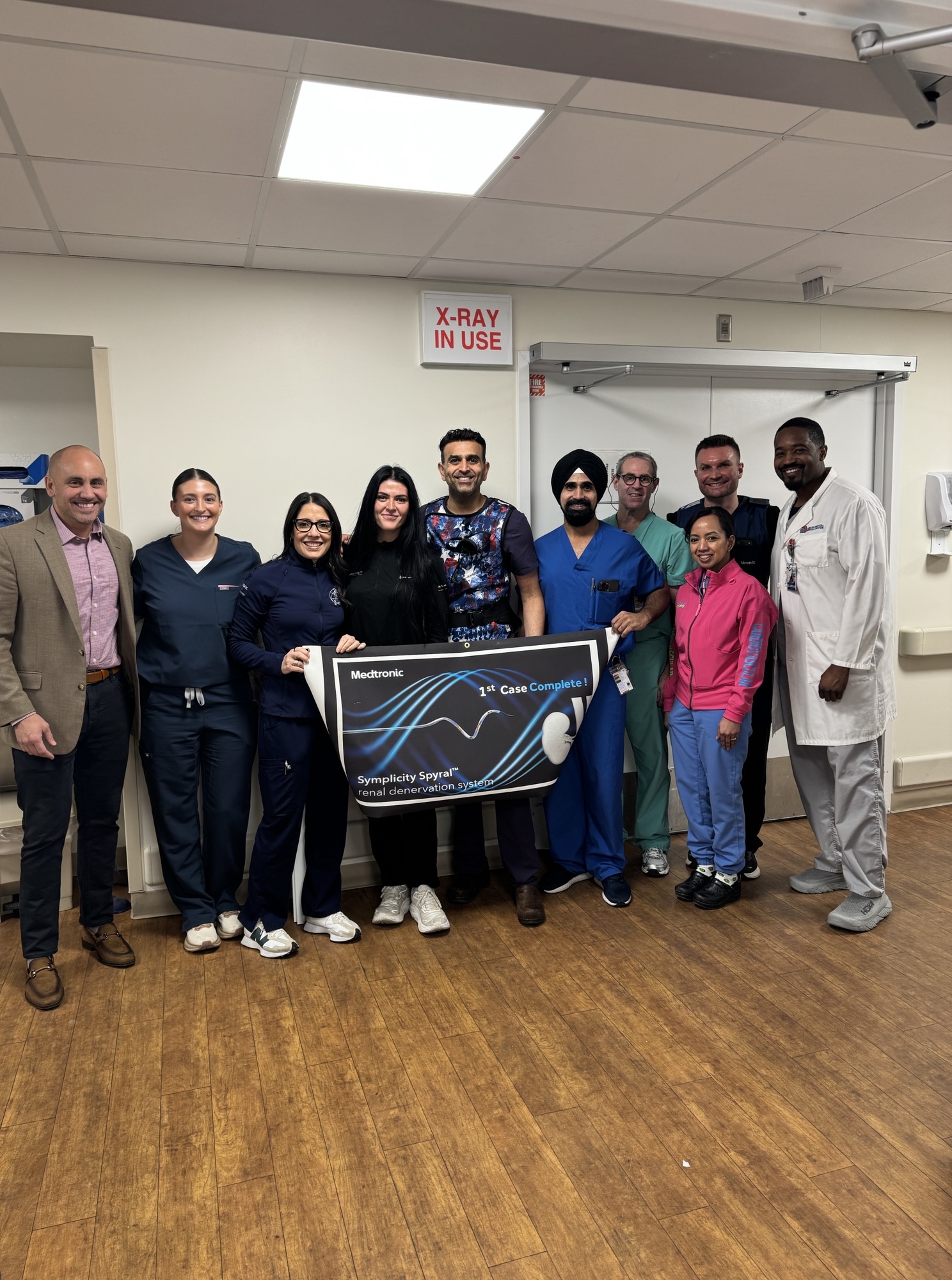
February 2026 – Jamaica Hospital Medical Center is pleased to announce that it is the first hospital in Queens to offer a new renal denervation (RDN) procedure to treat certain patients with high blood pressure. The hospital’s cardiology team recently and successfully completed its first case. 

Approved by the U.S. Food and Drug Administration (FDA) in November 2023, the Symplicity Spyral™ renal denervation (RDN) system involves a minimally invasive procedure that targets nerves near the kidneys that can become overactive, causing high blood pressure. The procedure – also known as the Symplicity™ blood pressure procedure – is approved for use as an adjunctive treatment in patients with high blood pressure (or hypertension) when lifestyle changes and antihypertensive medications do not adequately control blood pressure. 

Hypertension is the single largest contributor to death, and affects about 50% of U.S. adults. Of the U.S. adults who are aware of their hypertension, about 80% do not have it under control.

The Symplicity blood pressure procedure is clinically proven to help reduce high blood pressure, which can lower serious health risks. After mild sedation, the doctor inserts a very thin tube into the artery leading to the kidney. The doctor then administers energy to calm the excessive activity of the nerves connected to the kidney. The tube is removed, leaving no implant behind. 

High blood pressure is a significant issue for patients worldwide. For people with hypertension, medication and/or lifestyle changes can help reduce blood pressure, but studies have shown that many people still don’t have control over their condition. The Symplicity blood pressure procedure can provide patients with a blood pressure reduction benefit that is ‘always on’ and doesn’t require a permanent implant – it can also help patients regain their peace of mind. We are pleased to have treated our first patient with this new technology, and we look forward to the future of hypertension care by offering innovative solutions to the people of Jamaica, Queens. 

Jamaica Hospital’s Hypertension Center provides the highest quality, patient-centered hypertension care. The Hypertension Center was created to treat patients who do not respond well to traditional hypertension medication treatments. The American Heart Association has recognized our Hypertension Practice Center as meeting or exceeding standards for hypertension treatment. 

If you or someone you know is experiencing high blood pressure or difficulty controlling it, talk to your doctor to see if the Symplicity blood pressure procedure is a possible treatment option: visit this link to learn more.  

All content of this newsletter is intended for general information purposes only and is not intended or implied to be a substitute for professional medical advice, diagnosis or treatment. Please consult a medical professional before adopting any of the suggestions on this page. You must never disregard professional medical advice or delay seeking medical treatment based upon any content of this newsletter. PROMPTLY CONSULT YOUR PHYSICIAN OR CALL 911 IF YOU BELIEVE YOU HAVE A MEDICAL EMERGENCY.