
How Energy Drinks Can Increase Blood Pressure

We have all been at the point where we need a “pick-me-up” during the day. Whether it is to start the day in the morning on the way to work or school, or an energy boost in the middle of the day. When this happens, we may reach for a coffee or an energy drink.  

Although energy drinks can give us an energy and productivity boost when we need them, unfortunately, drinking energy drinks daily can significantly raise our blood pressure due to their high caffeine and stimulant content. 

Caffeine can temporarily increase blood pressure by blocking a chemical that relaxes blood vessels called adenosine. When this occurs, blood vessels constrict instead of dilating. This triggers the nervous system to release stress hormones such as adrenaline, causing the heart to beat faster and blood pressure to rise.  

Energy drinks typically increase systolic blood pressure by 5 to 15mmHg and diastolic blood pressure by 5 to 10 mmHg within an hour of consumption. This rise in blood pressure is usually temporary for healthy adults. 

The effects of drinking energy drinks every day may be more dangerous for people with existing hypertension or other cardiovascular problems.  

Caffeine levels in energy drinks can vary between 80 and 350 milligrams (mg) per serving, depending on the brand and size. A standard 8-ounce cup of coffee contains about 100 mg of caffeine. That means one energy drink could contain the same amount of caffeine as an espresso or more than three cups of coffee.  

Energy drinks can also have synthetic caffeine that may be absorbed more quickly than natural caffeine from coffee. What’s more, they can typically contain more than just caffeine. Energy drinks may contain additional stimulants, such as taurine, guarana, and ginseng, that can amplify caffeine’s effects on the cardiovascular system. The combination of these stimulants and high sugar content can contribute to elevated blood pressure. Stimulants like guarana and taurine can further amplify cardiovascular stress by increasing heart rate, enhancing the effects of caffeine, and overstimulating the nervous system.  

Unfortunately, there isn’t a one-size-fits-all answer to how many energy drinks are safe to drink in one day because energy drinks can vary in caffeine and stimulant content. Furthermore, there is no universally safe amount to consume daily due to their potential health risks. 

However, the Food and Drug Administration (FDA) recommends a maximum of 400 milligrams of caffeine per day for healthy adults, which is approximately the equivalent of four small cups of coffee. It is important to know that one or two energy drinks can surpass that limit, especially when combined with other caffeinated beverages throughout the day.  

Energy drinks may cause heart palpitations, arrhythmias, and increased heart rate, especially when consumed in excess or with alcohol and other stimulants. These arrhythmias can lead to complications like stroke, even in younger adults.

It is important to know that you should avoid energy drinks if you have high blood pressure, take heart-related medications, or have any underlying heart conditions. 

If you are experiencing any symptoms of high blood pressure, you can schedule an appointment at Jamaica Hospital Medical Center’s Cardiology Department by calling (718) 206-7100. If you are experiencing an emergency, please dial 911 right away. 

All content of this newsletter is intended for general information purposes only and is not intended or implied to be a substitute for professional medical advice, diagnosis or treatment. Please consult a medical professional before adopting any of the suggestions on this page. You must never disregard professional medical advice or delay seeking medical treatment based upon any content of this newsletter. PROMPTLY CONSULT YOUR PHYSICIAN OR CALL 911 IF YOU BELIEVE YOU HAVE A MEDICAL EMERGENCY.
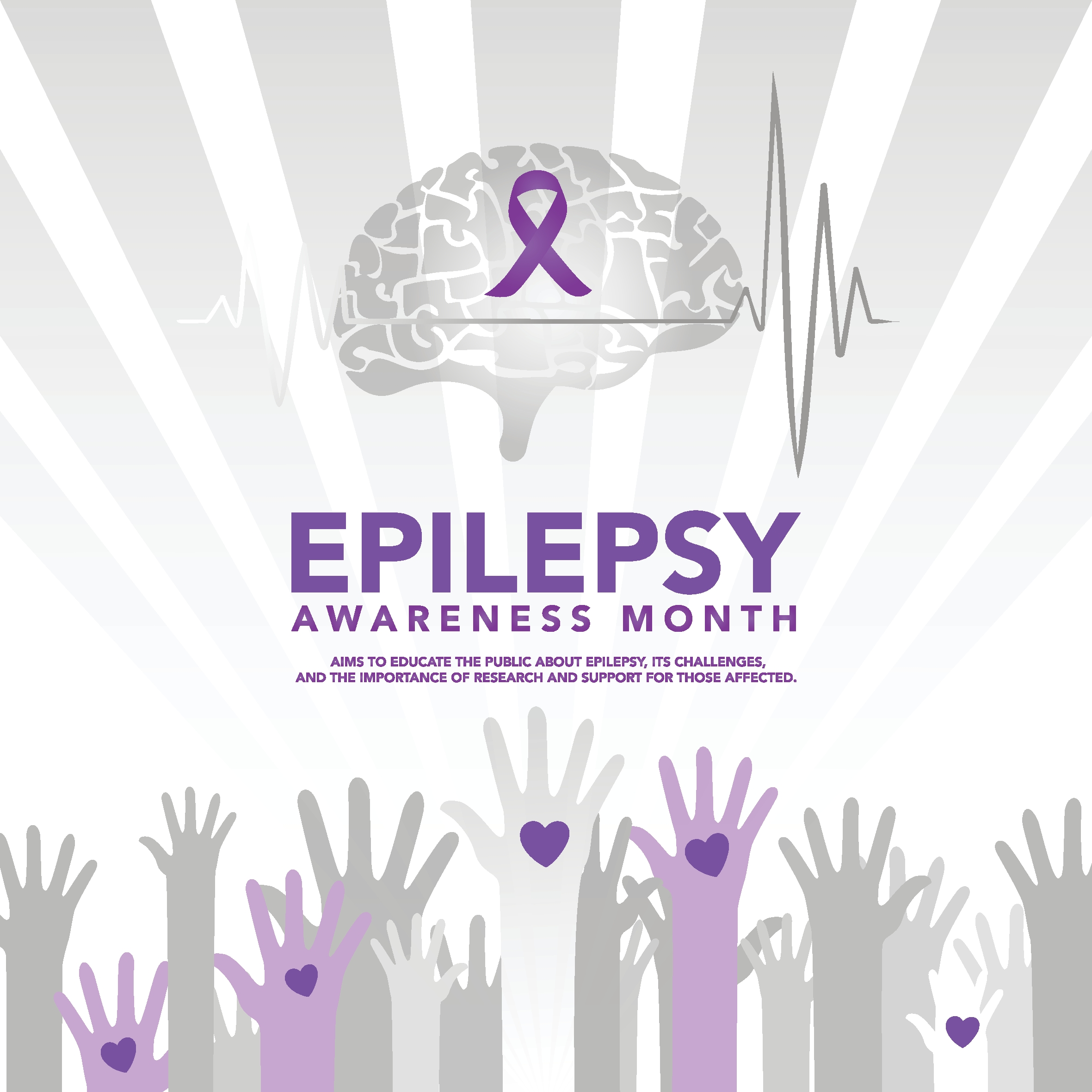

National Epilepsy Awareness Month

November is observed as National Epilepsy Awareness Month. Epilepsy is a neurological disorder characterized by recurrent seizures. It affects people of all ages and can greatly impact daily life.  

Epilepsy is a lot more common than people realize, as approximately one in 26 people will develop epilepsy at some point in their lives. Additionally, 470,000 children in the U.S. live with epilepsy, with approximately one in 150 children diagnosed with epilepsy.  

Epilepsy can manifest in various forms. The disorder is classified based on seizure type and underlying cause: 

  • Generalized epilepsy affects both hemispheres of the brain, resulting in widespread symptoms, such as convulsions or absence seizures 
  • Focal epilepsy is limited to one area of the brain, which often causes localized symptoms, such as sensory changes or motor disruptions 
  • Unknown or idiopathic epilepsy is when the underlying cause of seizures can’t be determined  

Terms like seizures and epilepsy are often used interchangeably. However, these terms are distinct concepts with unique characteristics and implications.  

When a person has had two or more seizures more than twenty-four hours apart that haven’t been brought on by specific events, such as a stroke, brain injury, infection, fever, or fluctuations in blood sugar, they are considered to have epilepsy. A person can also be diagnosed with epilepsy if they have one or more unprovoked seizures and a probability of future seizures. 

A seizure is a single event. It is an electrical disturbance in the brain that interferes with its normal function. Scientists and clinicians compare it to an “electrical storm in the brain” in which brain cells hyper-synchronize in an abnormal pattern, disrupting the brain signal balance.  

Seizures vary from person to person depending on which type of seizures they experience. This is due to epilepsy being a spectrum disorder, which means the causes, type, and severity can differ greatly for those affected by it. 

Common types of seizures include: 

  • Tonic-clonic seizures 
  • Absence seizures 
  • Focal seizures 
  • Febrile seizures 

The exact causes of epilepsy vary and aren’t entirely known. Typically, epilepsy and seizures result from abnormal signals from neurons in the brain. It can be genetic or acquired through events, such as physical injury or infection. What’s more, the cause of up to 50% of epilepsy cases worldwide is idiopathic, which means unknown. 

Some underlying causes of acquired epilepsy include: 

  • Head trauma 
  • Brain structure abnormalities 
  • Infectious disease 
  • Stroke 
  • Tumor 

 Healthcare providers diagnose epilepsy by conducting tests to detect abnormalities in a patient’s brainwaves. Tests can also detect seizure activity, including where a seizure starts in the brain.  

The most common diagnostic test for epilepsy is the EEG. However, other brain scans, such as MRI or PET, can be used depending on the patient’s seizure, epilepsy type, or both. To determine whether a patient has epilepsy, a healthcare provider compares their test results to the guidelines and criteria established by the International League Against Epilepsy (ILAE). 

To treat epilepsy, healthcare providers prescribe a patient’s treatment based on the type or types of seizures they are experiencing.  

Epilepsy treatments available include: 

  • Medications 
  • Dietary changes 
  • Medical devices 
  • Surgery  

It is important to note that finding the right treatment plan may require trial and error. 

Living with epilepsy requires careful management of triggers, following medication regimens, and awareness of safety precautions. Staying informed about epilepsy and building a strong support system can help individuals lead fulfilling lives despite the difficulties the disorder creates. 

If you are experiencing any symptoms of epilepsy, you can consult with a neurologist at Jamaica Hospital Medical Center. To schedule an appointment, please call (718) 206-7246. 

All content of this newsletter is intended for general information purposes only and is not intended or implied to be a substitute for professional medical advice, diagnosis or treatment. Please consult a medical professional before adopting any of the suggestions on this page. You must never disregard professional medical advice or delay seeking medical treatment based upon any content of this newsletter. PROMPTLY CONSULT YOUR PHYSICIAN OR CALL 911 IF YOU BELIEVE YOU HAVE A MEDICAL EMERGENCY.

Wellness Wednesday: Taking Screen Breaks

We all use some type of screen every day in today’s digital age. Whether for professional or personal use, we often use screens more than we should.  

The impact of excessive screen time on mental and physical health cannot be overlooked.  

Staring at a screen for long periods of time can lead to continuous and intense focus, resulting in mental fatigue and other significant mental health challenges, such as increased feelings of anxiety and depression.  

Excessive screen time affects your physical health as it pertains to your weight, cardiovascular fitness, and metabolic health due to time spent being sedentary. 

Additionally, staring at screens for too long can cause digital eye strain, which is now one of the most common complaints in optometry offices. Symptoms of digital eye strain include: 

  • Dry eyes 
  • Blurred vision 
  • Headaches 
  • Difficulty focusing at a distance 

Taking regular breaks from screens offers a chance to reset, reduce stress levels, and encourage a healthier mental state. It can also result in better sleep quality, as reducing screen time before bedtime helps the brain unwind and enables more restful sleep.  

Here are some ways you can incorporate screen time breaks into your daily routine: 

  • Follow the 20-20-20 rule, which consists of every 20 minutes, looking at something 20 feet away for 20 seconds. This gives your focusing muscles a brief rest and reduces the cumulative strain 
  • Engage in physical activity during screen breaks to enhance both mental and physical health 
  • Schedule specific break times during the day to step away from your device 
  • Set a screen curfew by using apps or tools that remind you to take breaks or limit screen time 
  • Create screen-free zones 
  • Replace your screen with a book, board game, coloring book, a sport, or time outside 

Mindfulness can also play a key role in managing screen time effectively. By becoming more aware of screen habits, you can recognize when to step away from your screens and engage in alternative, enriching activities.  

All content of this newsletter is intended for general information purposes only and is not intended or implied to be a substitute for professional medical advice, diagnosis or treatment. Please consult a medical professional before adopting any of the suggestions on this page. You must never disregard professional medical advice or delay seeking medical treatment based upon any content of this newsletter. PROMPTLY CONSULT YOUR PHYSICIAN OR CALL 911 IF YOU BELIEVE YOU HAVE A MEDICAL EMERGENCY.
When Is a Fever an Emergency?

A fever is a temporary rise in body temperature. A fever by itself is not an illness, but a symptom of a range of medical conditions and part of an overall response by the body’s immune system, usually caused by an infection. Fevers can also be a side effect of some medications.  

Fevers are broadly categorized as low-grade, moderate-grade, high-grade, and hyperpyrexia. 

Low-grade fever is an oral temperature of 99.1°F to 100.4°F (37.3°C to 38°C) in adults. Symptoms of a low-grade fever include: 

  • Headache  
  • Feeling hot 
  • Achy eyes 
  • Loss of appetite 
  • Thirst  

Moderate fever is an oral temperature of 100.6°F to 102.2°F (38.1°C to 39°C) in adults. Symptoms of a moderate-grade fever are like those of a low-grade fever, but also include: 

  • Muscle and body aches 
  • Fatigue 
  • Sweating 
  • Dizziness or lightheadedness 
  • Nausea  

High-grade fever is an oral temperature of 102.4°F to 105.8°F (39.1°C to 41°C) in adults. Symptoms of a high-grade fever are like those of a low-grade and moderate-grade fever, but also include: 

  • Increased heart rate 
  • Chills and shivering 
  • Upset stomach 
  • Extreme weakness 
  • Vomiting 
  • Decreased urination 

Hyperpyrexia is an extremely high fever of over 106.7°F (41.5°C). 

Symptoms of hyperpyrexia include: 

  • Hallucinations 
  • Extreme confusion 
  • Rapid but weak heartbeat 
  • Loss of consciousness 
  • Shallow, rapid breathing 
  • Dilated pupils 
  • Seizures 
  • Hot, dry, red skin 
  • Inability to urinate 

Fevers, such as low-grade fevers, don’t always require a hospital visit, as they often improve with medication and home care. However, moderate- or high-grade fever can be dangerous, especially if accompanied by other symptoms. If your fever reaches 105°F (40.5°C), seek medical attention immediately. 

Adults should seek care from their healthcare provider if: 

  • They have a fever of 104°F (40°C) or higher 
  • They are over 65 years of age or immunocompromised, and their fever is higher than 101°F (38.3°C) 
  • They have swelling or severe pain anywhere in their body 
  • They have a stiff neck 
  • They have trouble breathing 

For infants and young children, it is smart to be cautious and seek medical care if their symptoms are concerning, regardless of the temperature reading on the thermometer. You should take your child to receive medical care if: 

  • Your child is three to 12 months and has a fever of 102.2°F (39°C) 
  • Your child is younger than three months and has a fever of 100.4°F (38°C) or higher 
  • Your child is older than 12 months and has a fever above 104°F (40°C) 
  • Your child is under the age of two and has a fever that has lasted longer than 24 hours 
  • Your child is over the age of two and has a fever that has lasted longer than three days 
  • Your child’s symptoms are getting worse 
  • Your child still appears to be sick after taking fever-reducing medication 
  • A child who has not had immunizations or did not get timely immunizations with a temperature of 100.4°F or above 

There are several ways to reduce a fever, such as over-the-counter fever reducers like acetaminophen or ibuprofen, resting and drinking plenty of fluids, and taking a lukewarm bath. 

If you or your child is experiencing moderate- or high-grade fever symptoms, you can schedule an appointment with a physician at Jamaica Hospital Medical Center’s Ambulatory Care Center. Please call (718) 206-7001. 

All content of this newsletter is intended for general information purposes only and is not intended or implied to be a substitute for professional medical advice, diagnosis or treatment. Please consult a medical professional before adopting any of the suggestions on this page. You must never disregard professional medical advice or delay seeking medical treatment based upon any content of this newsletter. PROMPTLY CONSULT YOUR PHYSICIAN OR CALL 911 IF YOU BELIEVE YOU HAVE A MEDICAL EMERGENCY.
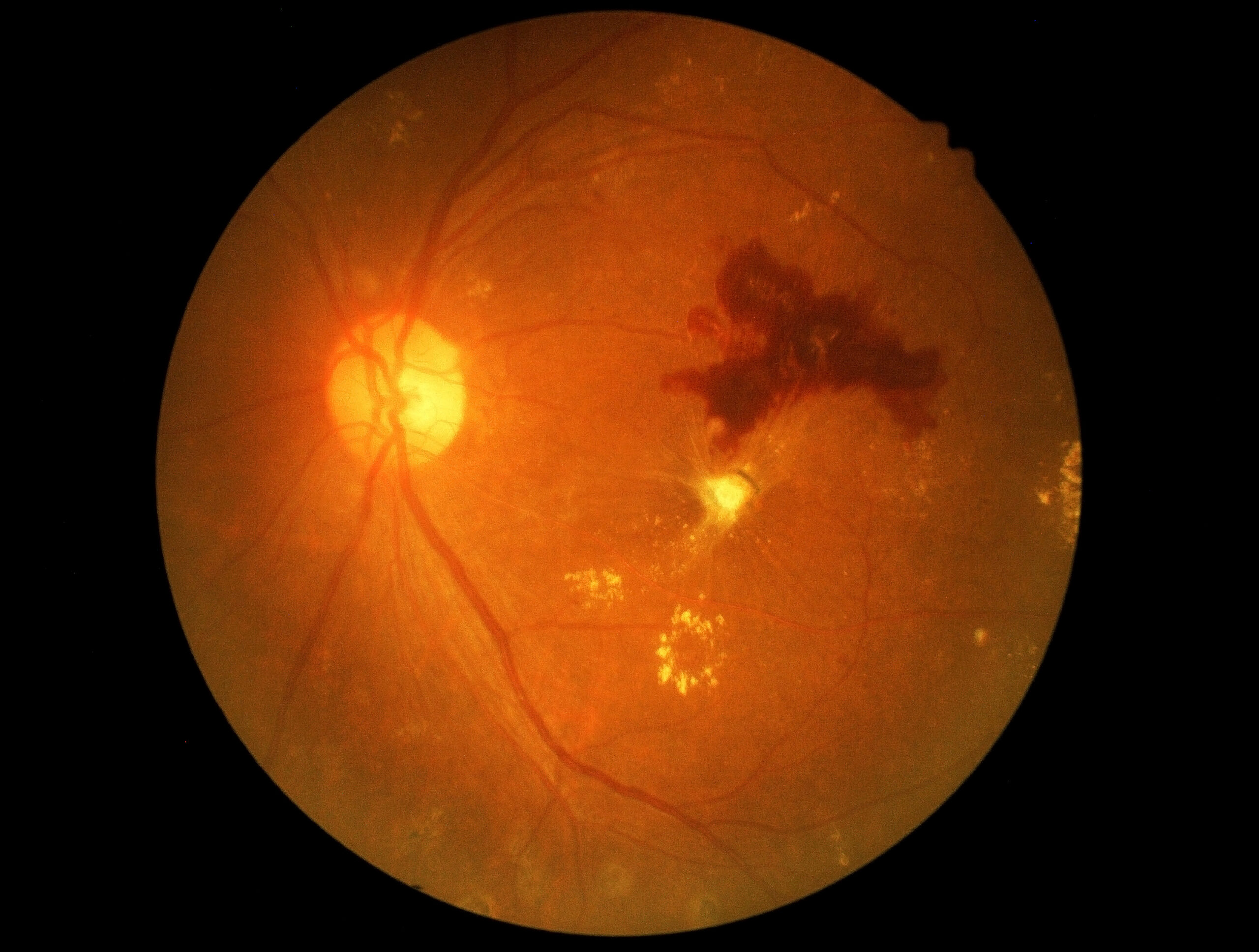
Diabetic Macular Edema

Diabetic macular edema (DME) is a severe complication of diabetic retinopathy that occurs when there is swelling in the central part of the retina in the eye, called the macula. 

Diabetes affects the blood vessels in the eyes, making them weaker and more likely to leak blood. It may also cause new and more fragile blood vessels to grow where they shouldn’t. 

There are several signs and symptoms of diabetic macular edema, including: 

  • Blurry or double vision 
  • Difficulty seeing colors 
  • Dark spots 
  • Straight lines that appear to be bent or curved 
  • Floaters 
  • Difficulty seeing when there’s glare or bright light 
  • Seeing an object as being a different size when looking at it with only one eye and then the other 

Diabetic macular edema can be diagnosed when an ophthalmologist performs a thorough eye examination to see if there is any swelling in your retina. In addition to the eye exam, your ophthalmologist will perform a slit lamp exam, as well as tests to help diagnose and monitor diabetic macular edema, including: 

  • Optical coherence tomography 
  • Fluorescein angiography 
  • Amsler grid 

There are several treatment options for diabetic macular edema. One form of treatment includes drugs that block vascular endothelial growth factor (VEGF), which is a protein that helps new blood vessels grow, and steroids that are injected into the eye to help manage inflammation. Another form of treatment includes laser therapy to seal the blood vessels in your eyes to stop the leakage, and vitrectomy. 

There are several ways to possibly reduce your risk of developing diabetic macular edema, including: 

  • Managing diabetes and other chronic conditions, such as high blood pressure 
  • Getting regular eye exams 
  • Eating a healthy diet 
  • Getting regular physical activity 
  • Quitting smoking 

If you’re experiencing symptoms of diabetic macular edema, you can schedule an appointment at Jamaica Hospital Medical Center’s Ophthalmology Center now by calling (718) 206-5900. 

All content of this newsletter is intended for general information purposes only and is not intended or implied to be a substitute for professional medical advice, diagnosis or treatment. Please consult a medical professional before adopting any of the suggestions on this page. You must never disregard professional medical advice or delay seeking medical treatment based upon any content of this newsletter. PROMPTLY CONSULT YOUR PHYSICIAN OR CALL 911 IF YOU BELIEVE YOU HAVE A MEDICAL EMERGENCY.
Breast Cancer Awareness Month- Breast Cancer Stages

Breast cancer happens when healthy breast cells become abnormal, multiply, and form tumors. Most breast cancers are carcinomas that start in milk ducts or milk-producing glands. Most cases are invasive, which means a tumor can spread to other parts of your body without treatment.  

Breast cancer is one of the most common cancers that affects women. Approximately one in eight women in the U.S. will develop breast cancer in their lifetime. Although it is rare, male breast cancers also occur.  

Most people who have breast cancer survive it. However, what a breast cancer diagnosis means is different for everyone. The cancer type, its stage, and your response to treatment are just a few factors that will shape your outlook. 

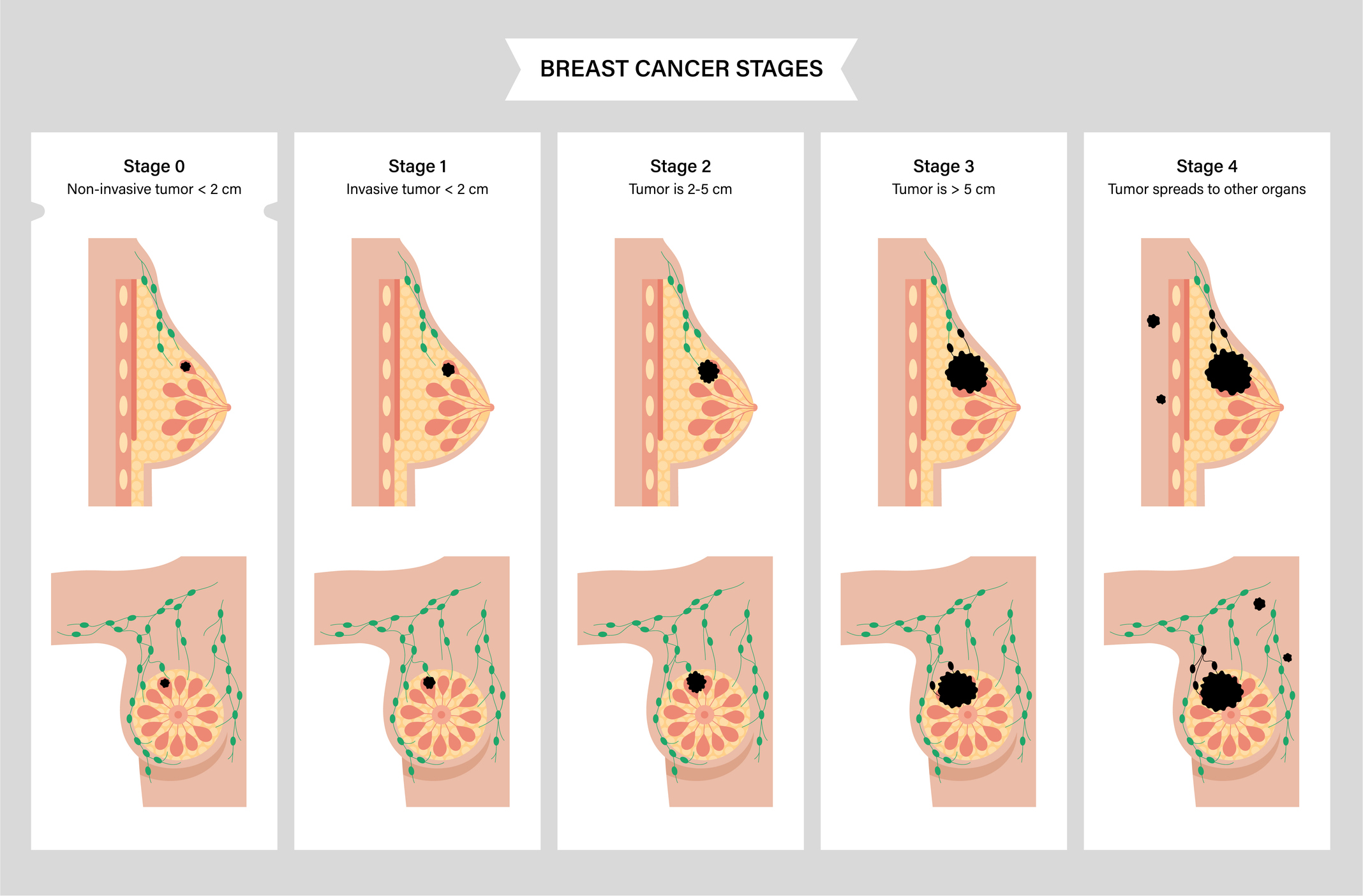
Cancer staging systems help healthcare providers plan treatment and understand your prognosis, or what to expect after treatment. The most well-known one is called the TNM system, which considers (T) tumor size and location, and whether cancer has spread to the (N) lymph nodes or (M) metastasized to other sites. Healthcare providers will use this information to stage breast cancer from 0 to IV. The higher numbered stages mean the disease is more advanced. The TNM stages are: 

  • Stage 0 describes non-invasive breast cancers, such as DCIS (ductal carcinoma in situ). Stage 0 doesn’t show any evidence of cancer cells or non-cancerous abnormal cells breaking out of the part of the breast in which they started or getting through to or invading neighboring normal tissue 
  • Stage I describes invasive breast cancer in which cancer cells break through to or invade normal surrounding breast tissue. Stage I breast cancer is divided into subcategories IA and IB: 
    • Stage IA describes invasive breast cancer that: 
      • Has a tumor that measures up to 2 cm 
      • The cancer has not spread outside the breast, and no lymph nodes are involved 
    • Stage IB describes invasive breast cancer that: 
      • Has no tumor in the breast, but small groups of cancer cells that are larger than 0.2 mm but not larger than 2 mm, and are found in the lymph nodes 
      • There is a tumor in the breast that is no larger than 2 cm, and there are small groups of cancer cells larger than 0.2 mm but not larger than 2 mm in the lymph nodes 
  • Stage II is divided into subcategories IIA and IIB: 
    • Stage IIA describes invasive breast cancer that:  
      • Has no tumor present in the breast, but is found in one to three lymph nodes under the arm or in the lymph nodes near the breastbone and is larger than 2 mm  
      • A tumor that measures 2 cm or smaller and has spread to the axillary lymph nodes 
      • The tumor is larger than 2 cm but not larger than 5 cm and has not spread to the axillary lymph nodes 
    • Stage IIB describes invasive breast cancer that:  
      • Has a tumor larger than 2 cm but no larger than 5 cm, and a small group of breast cancer cells larger than 0.2 mm but not larger than 2 mm are found in the lymph nodes 
      • The tumor is larger than 2 cm but no larger than 5 cm, and the cancer has spread to one to three axillary lymph nodes or to lymph nodes near the breastbone 
      • The tumor is larger than 5 cm but hasn’t spread to the axillary lymph nodes 
  • Stage III breast cancer is divided into subcategories IIIA, IIIB, and IIIC: 
    • Stage IIIA describes invasive breast cancer in which: 
      • No tumor is found in the breast, or the tumor may be any size, or cancer is found in four to nine axillary lymph nodes or in the lymph nodes near the breastbone 
      • The tumor is larger than 5 cm, or small groups of breast cancer cells larger than 0.2 mm but not larger than 2 mm are found in lymph nodes 
      • The tumor is larger than 5 cm, or the cancer has spread to one to three axillary lymph nodes or to the lymph nodes near the breastbone 
    • Stage IIIB describes invasive breast cancer in which: 
      • The tumor may be any size and has spread to the chest wall and/or skin of the breast, causing swelling or an ulcer  
      • May have spread to up to nine axillary lymph nodes  
      • May have spread to lymph nodes near the breastbone 
    • Stage IIIC describes invasive breast cancer in which: 
      • There may be no sign of cancer in the breast, or if there is a tumor, it may be any size and may have spread to the chest wall and/or the skin of the breast  
      • The cancer has spread to 10 or more axillary lymph nodes 
      • The cancer has spread to lymph nodes above or below the collarbone 
  • Stage IV describes invasive breast cancer that has spread beyond the breast and nearby lymph nodes to other organs of the body, such as the lungs, distant lymph nodes, skin, bones, liver, or brain 

Whether you need diagnostic testing or treatment, the MediSys Cancer Center located at Jamaica Hospital Medical Center offers unmatched Queens cancer care for any form of cancer. To schedule an appointment or learn more about our New York hospital’s oncology department, please call 718-206-8263.

All content of this newsletter is intended for general information purposes only and is not intended or implied to be a substitute for professional medical advice, diagnosis or treatment. Please consult a medical professional before adopting any of the suggestions on this page. You must never disregard professional medical advice or delay seeking medical treatment based upon any content of this newsletter. PROMPTLY CONSULT YOUR PHYSICIAN OR CALL 911 IF YOU BELIEVE YOU HAVE A MEDICAL EMERGENCY.

Mental Illness Awareness Week- National Depression Screening Day

National Depression Screening Day was created to bring light to the need for depression awareness and accessible and affordable mental health screenings.

Depression is one of the most common mental illnesses. Clinical depression affects men and women of all ages, races, and socioeconomic groups. Depression results from a mix of environmental, genetic, psychological, biological, and biochemical components.

Not everyone experiences depression in the same way, and it can affect anyone at any time. It is important to take steps to seek out professional help and be screened if you or someone you care about feels they may be depressed.

People suffering from depression often experience some of these key symptoms:

  • A persistent sad, anxious, or “empty” mood
  • Sleeping too little, early morning awakening, or sleeping too much
  • Reduced appetite and weight loss, or increased appetite and weight gain
  • Loss of interest or pleasure in activities once enjoyed
  • Restlessness or irritability
  • Difficulty concentrating, remembering, or making decisions
  • Fatigue or loss of energy
  • Thoughts of death or suicide

There are several reasons why it is important to screen for depression, including:

  • Clinical depression is a serious medical illness
  • Clinical depression can lead to suicide
  • Sometimes people with depression mistakenly believe that the symptoms of depression are a “normal part of life”
  • Depression can co-occur and complicate other medical conditions
  • Screenings are often the first step in getting help

Screenings are not a professional diagnosis. Screenings point out the presence or absence of depressive symptoms and provide a referral for further evaluation if needed. You should see your doctor or a qualified mental health professional if you experience symptoms for longer than two weeks or if the symptoms are severe enough to interfere with your daily routine.

Only about a third (35.3%) of those suffering from severe depression seek treatment from a mental health professional. Not receiving the assistance needed can lead to adverse health outcomes and affect a person’s quality of life. If you need the assistance and support of a mental health professional, you can find out more about the mental health services at Jamaica Hospital Medical Center. Please call 718-206-5575 to schedule an appointment.

All content of this newsletter is intended for general information purposes only and is not intended or implied to be a substitute for professional medical advice, diagnosis or treatment. Please consult a medical professional before adopting any of the suggestions on this page. You must never disregard professional medical advice or delay seeking medical treatment based upon any content of this newsletter. PROMPTLY CONSULT YOUR PHYSICIAN OR CALL 911 IF YOU BELIEVE YOU HAVE A MEDICAL EMERGENCY.

How Short Walks After Eating Help Regulate Blood Sugar Levels

Blood sugar, or blood glucose, is the main sugar found in the blood. It is our body’s primary source of energy and comes from the food we eat. When your blood glucose goes up, it signals your pancreas to release insulin. However, when things aren’t functioning properly, you can develop high blood sugar, which means there is too much sugar in your bloodstream. You may have high blood sugar due to:

  • Your body isn’t using insulin correctly
  • Your pancreas doesn’t make enough insulin

Elevated blood sugar levels can cause blood vessel damage, which can lead to serious complications, such as:

  • Heart attack
  • Stroke
  • Diabetes-related retinopathy, which can cause blindness
  • Diabetes-related nephropathy, which can lead to kidney failure
  • Nerve damage

Our blood sugar naturally rises when we eat and is highest about 30 to 90 minutes after eating. However, frequent or especially high spikes in blood sugar levels can increase the risk of or worsen diabetes.

Fortunately, there are several ways to lower blood sugar levels into a healthy range, such as eating healthy, getting regular exercise, and managing stress. Another way to manage blood sugar levels is to take a short walk after eating.

Research shows that a short walk after a meal can:

  • Prevent your blood sugar from spiking as high as it would if you ate and remained seated
  • Keep your insulin levels stable

Walking for ten minutes, or as little as two to five minutes, can lower your blood sugar.

When walking after a meal, it is important to stay safe. Some safety tips to keep in mind when walking include:

  • Go slow and gradually increase your physical activity
  • Avoid environmental triggers, such as high heat and humidity, environmental allergens, cold air, and safety hazards
  • Fall prevention for those who are 65 years of age and older

Jamaica Hospital’s Division of Endocrinology treats a wide variety of conditions. For more information about Jamaica Hospital’s endocrinology services, or to make an appointment, please call 718-206-7001.

All content of this newsletter is intended for general information purposes only and is not intended or implied to be a substitute for professional medical advice, diagnosis or treatment. Please consult a medical professional before adopting any of the suggestions on this page. You must never disregard professional medical advice or delay seeking medical treatment based upon any content of this newsletter. PROMPTLY CONSULT YOUR PHYSICIAN OR CALL 911 IF YOU BELIEVE YOU HAVE A MEDICAL EMERGENCY.

Fall Allergies

Fall has arrived, and with it, the fall allergy season. Nearly 25% of adults in the U.S. experience seasonal allergies throughout the year. Seasonal allergies typically peak during April, May, and June, however, they can also be severe during September through December.

Fall weather can affect allergies because of warm, dry, and windy days, exacerbating symptoms due to ragweed pollen being widely dispersed. Symptoms you may experience include sneezing, itchy and watery eyes, a runny nose, and post-nasal drainage.

Ragweed pollen and mold spores are the most common allergens in the fall. The ragweed plant can grow wild anywhere but is most prevalent in the eastern and Midwest regions of the U.S. Ragweed pollen typically begins to peak in late August through late September and can last until the first frost. Its lifespan is usually limited to one season, but it can produce up to one billion grains of pollen, which is a lot for one season. Mold spores are also seen during this time of year, especially as the leaves begin to decompose. Early signs of leaves beginning to decompose and possibly being infected with mold are if they start to turn black or white.

If you have an underlying dust mite allergy, it is important to note that you may experience worsening allergy symptoms during the fall due to spending more time indoors.

The American College of Allergy, Asthma, and Immunology (ACAAI) suggests these five tips to help you get ahead of fall allergy season:

  • Avoid allergy triggers by keeping an eye on daily pollen counts, staying indoors as much as possible during high pollen count days, and avoiding going out in the morning when ragweed pollen is at its highest during the fall
  • Change your clothing and remove your shoes as soon as you come in from outdoors, so you don’t track pollen into your home
  • Start taking allergy medication before your symptoms begin
  • Consider immunotherapy if you have severe or chronic allergies
  • Visit an allergist if your allergy symptoms become severe

You can receive an accurate diagnosis and effective treatment for seasonal allergies at Jamaica Hospital Medical Center’s Ambulatory Care Center. To schedule an appointment, please call (718) 206-7001

All content of this newsletter is intended for general information purposes only and is not intended or implied to be a substitute for professional medical advice, diagnosis or treatment. Please consult a medical professional before adopting any of the suggestions on this page. You must never disregard professional medical advice or delay seeking medical treatment based upon any content of this newsletter. PROMPTLY CONSULT YOUR PHYSICIAN OR CALL 911 IF YOU BELIEVE YOU HAVE A MEDICAL EMERGENCY.

Can You Actually Catch Up on Lost Sleep?

For many of us, getting enough sleep during the week can be challenging. Common activities like work, commuting, social life, downtime, and watching TV can cause us to lose sleep. As a result, more than one-third of Americans get less than seven hours of sleep per night, rather than the recommended seven to nine hours. The loss of those one to two hours is called sleep debt. 

Sleep debt, or sleep deficit, is the difference between how much sleep you need and how much you get. Sleep debt is cumulative, so going to sleep a half hour or an hour later than normal over a few days can add up quickly. Two weeks of sleeping just six hours a night produces the same level of cognitive impairment as if you stayed awake for two full days straight. Other side effects caused by sleep debt can include: 

  • Poor vision, hearing, coordination, and balance 
  • Reduced energy and motivation 
  • Slower reaction time 
  • Drowsiness and irritability 
  • Impaired memory, attention, judgment, and decision-making 
  • Decreased performance in many areas, including athletics 

Long-term sleep debt can lead to sleep deprivation, which occurs when you are frequently not getting as much sleep as you need. Not regularly getting an adequate amount of sleep increases the risk of developing health conditions, such as: 

  • Cancer 
  • Heart disease 
  • Dementia 
  • Mental health disorders, such as depression 

Sleep deprivation can also impact your health in other ways, including: 

  • Immune system dysfunction 
  • Poor emotional regulation 
  • Executive function issues 
  • Metabolic dysregulation and weight gain 
  • Inhibited sex drive  
  • Higher risk of accidents, falls, and other injuries 

Sleeping in on the weekends is the most common strategy to recover lost sleep. It can help with the occasional sleep deficit, but it isn’t good for the long term. 

According to research from the American Academy of Sleep Medicine showed that after five nights of sleeping less than four hours, a single recovery night of about nine hours still left people with residual attention lapses and slower reaction times. A six-week study of high-performing adults found that two nights of eight-hour recovery sleep failed to restore accuracy on tests of spatial orientation and sustained attention. Furthermore, performance declined steadily during the restricted weeknights, and the sleep recovery during the weekend wasn’t enough to cause a reset.  

Additionally, a study done at the University of Colorado brought 36 healthy adults into a sleep lab for two weeks and found that people who slept only five hours a night gained about three pounds and saw a 13% decrease in insulin sensitivity. The group that slept five hours during the week and was allowed to sleep in on weekends fared even worse, as they also gained three pounds and experienced a 27% decrease in insulin sensitivity. What’s more, their liver and muscle metabolism suffered more than the group that never got recovery sleep at all.  

When you finally get the opportunity to sleep longer, your brain prioritizes deep sleep, the sleep stage that restores daytime alertness and cognitive function, first. This is called a rebound effect. Your brain categorizes the sleep stages and recovers the most critical stages before anything else, which is why the first long recovery sleep feels so restorative even if you are far from fully recharged.  

Complete recovery from weeks of sleep debt and deprivation will require many nights of quality sleep, rather than making up the sleep during the weekend. The first step in getting sufficient sleep is to improve your sleep hygiene. There are several ways to improve your sleep hygiene and reduce your chances of accumulating sleep debt, including: 

  • Keeping a set sleep schedule 
  • Developing a nightly routine 
  • Considering daytime habits 
  • Improving the bedroom environment 

When recovering lost sleep, the most effective strategy is to add sleep in small, consistent increments instead of overhauling your schedule. Some techniques that can be useful to help you properly catch up on sleep and eliminate sleep debt include: 

  • Staying consistent 
  • Keeping a sleep diary 
  • Trying an afternoon nap 
  • Giving time to the process 
  • Talking to your healthcare provider 

If you are having difficulty sleeping and would like help, Jamaica Hospital’s state-of-the-art sleep center can help diagnose and treat various sleep disorders. For more information or to make an appointment, please call 718-206-5916.  

All content of this newsletter is intended for general information purposes only and is not intended or implied to be a substitute for professional medical advice, diagnosis or treatment. Please consult a medical professional before adopting any of the suggestions on this page. You must never disregard professional medical advice or delay seeking medical treatment based upon any content of this newsletter. PROMPTLY CONSULT YOUR PHYSICIAN OR CALL 911 IF YOU BELIEVE YOU HAVE A MEDICAL EMERGENCY.