MediSys Cancer Center Hosts Town Hall Meeting

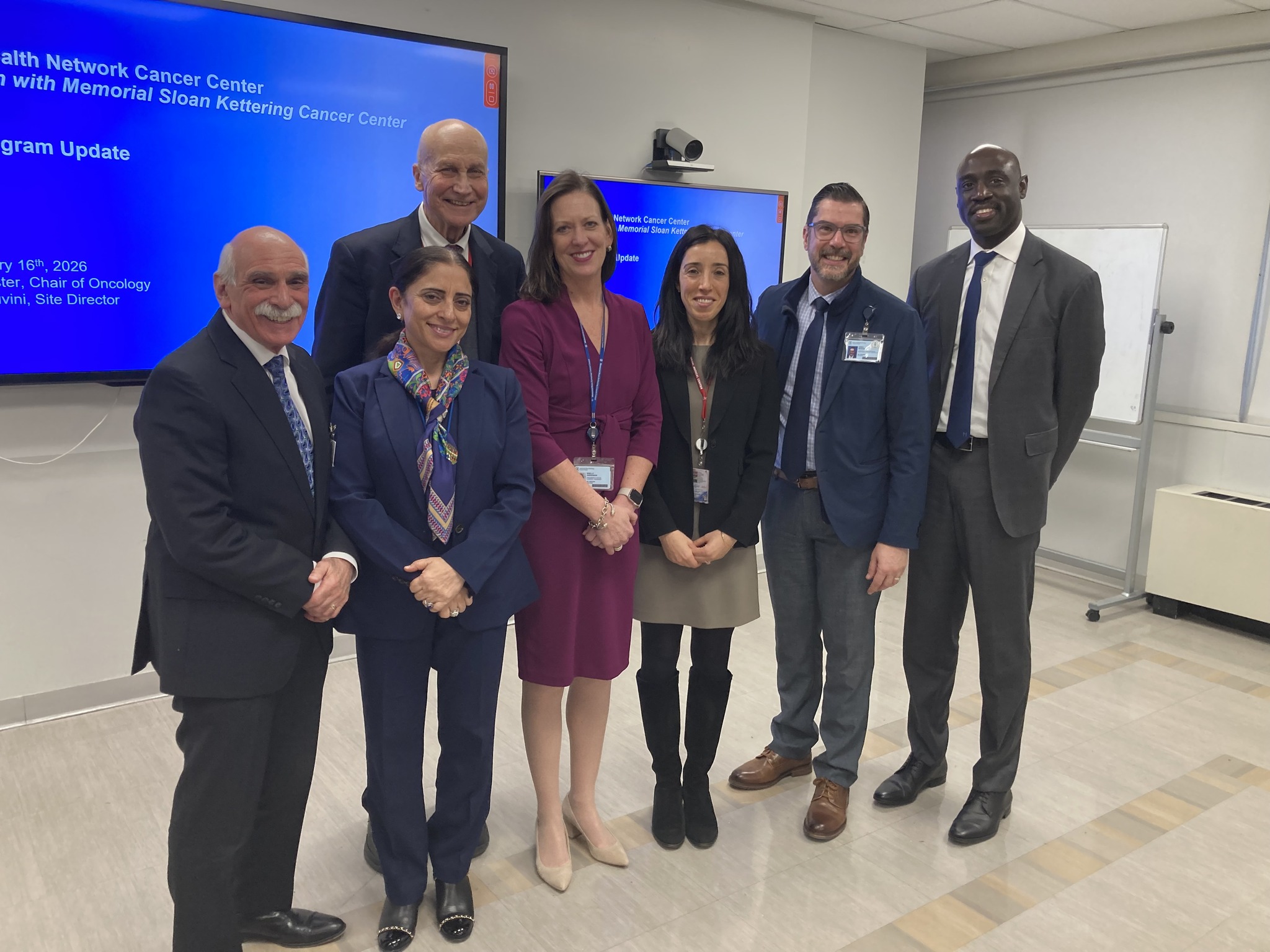
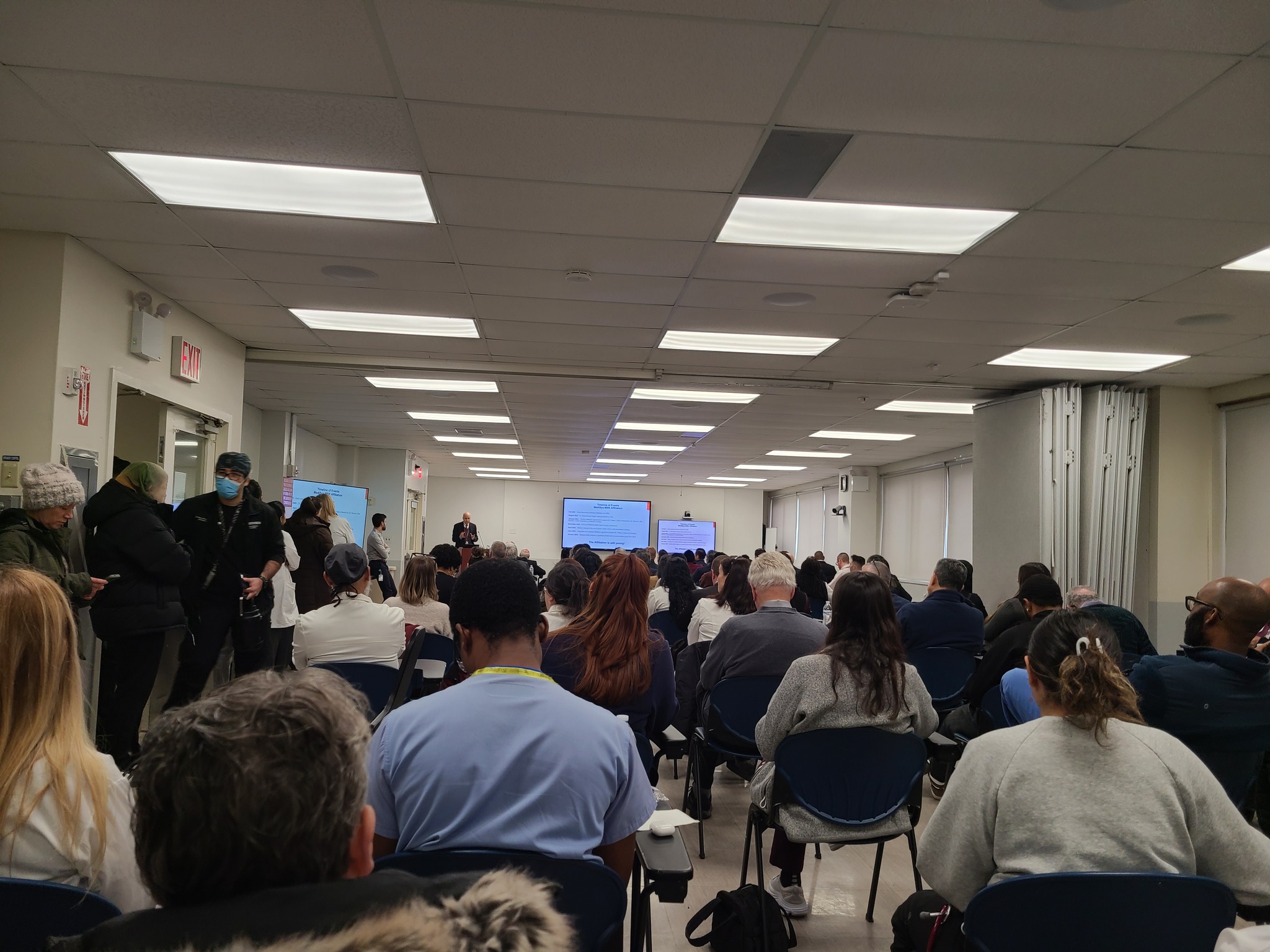
The MediSys Health Network Cancer Center, located on Jamaica Hospital’s campus, recently held a town hall meeting to share updates on the program’s latest accomplishments and new developments.

The network’s leadership, along with Shelly Anderson, Hospital President of Memorial Sloan Kettering Cancer Center, presented to a packed auditorium of attendees eager to learn about the center’s progress.

The presentation focused on key achievements, important patient cases, the formation of medical boards, research efforts, community engagement, educational outreach, and the expansion of the cancer program.

Speakers included MediSys Health Network President and CEO Bruce J. Flanz and Chief Medical Officer Dr. Sabiha Raoof, who chronicled the center’s growth from its inception in 2021. What started as a concept aimed at providing high-quality cancer care to an underserved community has transformed into a rapidly growing program recognized for its commitment to equitable cancer care.

Mr. Flanz and Dr. Raoof discussed significant milestones, such as the signing of the first affiliation agreement between the MediSys Health Network Cancer Center and MSK in 2023, and the receipt of a $188 million transformation grant in 2025 from New York Governor Kathy Hochul to build a brand-new facility, with construction set to begin this year.

Clinical leaders from the MediSys Health Network Cancer Center, Dr. David Pfister, Chair of Oncology, and Dr. Rosa Nouvini, Site Director, proudly shared the program’s latest advancements, including the:

  • Growth of the cancer care team, and the introduction of new staff members and leadership
  • Establishment of a cancer research steering committee
  • Establishment of a breast tumor board
  • Acquisition of new technology and delivery of new therapies
  • Completion of a circle of care for a specialized patient case
  • Execution of successful community and educational outreach initiatives
  • Successful integration of MSK expertise
  • Successful application of supportive services
  • Introduction of a bone marrow biopsy program

The town hall meeting offered valuable insights about the MediSys Health Network Cancer Center. The future looks promising as the program continues to expand. Leadership presented their vision for the center, aiming to establish it as one of the most trusted cancer treatment facilities in the community. Their goal is to ensure that everyone feels confident they are receiving world-class care right in their own neighborhood.
All content of this newsletter is intended for general information purposes only and is not intended or implied to be a substitute for professional medical advice, diagnosis or treatment. Please consult a medical professional before adopting any of the suggestions on this page. You must never disregard professional medical advice or delay seeking medical treatment based upon any content of this newsletter. PROMPTLY CONSULT YOUR PHYSICIAN OR CALL 911 IF YOU BELIEVE YOU HAVE A MEDICAL EMERGENCY.

Meet Our Doctors- Dr. Melvin Mathai

We are pleased to introduce Dr. Melvin Mathai, the newest member of our pediatrics team at Jamaica Hospital Medical Center.  

Dr. Mathai attended Hofstra University for his undergraduate degree and The New York Institute of Technology College of Osteopathic Medicine (NYITCOM) for his medical degree. He completed his residency at Maimonides Medical Center in Brooklyn, New York. Dr. Mathai is board-eligible and holds certifications in ACLS, PALS, and NRP. 

Dr. Mathai was drawn to a career in medicine because it combines science, problem-solving, and making a meaningful difference in people’s lives, as well as the ability to build long-term relationships with his patients while positively impacting their health and well-being. He chose pediatrics as his specialty because it felt like a natural fit for him, and he enjoys working with children and families. “I wanted to be a part of a child’s growth and development over time. I love the energy, honesty, and resilience of children, and I find it incredibly rewarding to help guide parents through each stage of their child’s life, from newborn care to adolescence.” Dr. Mathai believes that pediatrics allows him to focus on prevention, education, and building trust with families. “I hope to provide compassionate, thoughtful, and accessible care while creating a welcoming environment where families feel heard and supported”, he said.  

As a pediatrician, Dr. Mathai provides comprehensive outpatient pediatric care, which includes well-childcare visits, newborn care, vaccinations, developmental and behavioral concerns, and adolescent health. He also evaluates and manages common child illnesses, which include asthma, allergies, eczema, infections, minor injuries, anxiety, and school-related issues. 

Born and raised in Queens, Dr. Mathai is proud to serve as a pediatrician in such a close-knit, family-oriented community like Howard Beach because it is the community in which he grew up. He returned home to provide compassionate, culturally informed care to the families who shaped him. “I’ve always loved the diversity, energy, and incredible food that make this area so special, and I’m grateful for the opportunity to give back to the community,” he said.  

Dr. Mathai is a proud Gold Humanism Award recipient, a massive Knicks fan (yes, he still believes every year is their year), and an anime geek at heart. When he’s not in the office, he is usually chasing after his two little kids, who keep him laughing—and humbled—daily. 

His goal as a pediatrician is simple: “Partner with parents, answer questions honestly, and help families feel confident about their child’s health. I strive to practice evidence-based and personable medicine while treating every child as if they were my own,” he said. He wants to make families feel supported, make kids feel safe, and bring high-quality, down-to-earth care to every visit. “I hope to help build a healthier, happier community, one tiny sneaker at a time,” he said. 

His hours at the Jamaica Hospital, Howard Beach location are: 

M: 7 AM – 5 PM 

T: 9 AM – 7 PM 

W: Off 

R: 7 AM – 5 PM 

F: 7 AM – 5 PM 

Every third Saturday of the month 

All content of this newsletter is intended for general information purposes only and is not intended or implied to be a substitute for professional medical advice, diagnosis or treatment. Please consult a medical professional before adopting any of the suggestions on this page. You must never disregard professional medical advice or delay seeking medical treatment based upon any content of this newsletter. PROMPTLY CONSULT YOUR PHYSICIAN OR CALL 911 IF YOU BELIEVE YOU HAVE A MEDICAL EMERGENCY.

Age-Related Macular Degeneration Awareness Month

Age-related macular degeneration (AMD) is an eye disease that can blur your central vision. It occurs when aging damages the part of the eye that controls sharp, straight-ahead vision, called the macula. The macula is part of the retina, the light-sensitive tissue at the back of the eye. 

Age-related macular degeneration is a common condition and the most common cause of severe loss of eyesight among people 50 and older. It is important to note that people rarely go blind from it. However, losing your central vision makes it harder to see faces, read, drive, or do close-up work like cooking or fixing things around the house. 

There are two types of age-related macular degeneration: dry and wet. Most people with age-related macular degeneration have dry AMD, also called atrophic AMD. This is when the macular gets thinner with age. Dry AMD happens in three stages: 

  • Early 
  • Intermediate 
  • Late 

Wet AMD, also called advanced neovascular AMD, is a less common type of late AMD that causes faster vision loss. Dry AMD can turn into wet AMD at any stage; however, wet AMD always occurs in the late stage. 

The most common symptoms of age-related macular degeneration can include: 

  • Blurry or fuzzy vision 
  • Difficulty recognizing familiar faces 
  • Seeing straight lines appearing wavy 
  • A dark, empty area or blind spot appears in the center of a person’s vision 

The presence of tiny yellow deposits in the retina called drusen is one of the most common early signs of age-related macular degeneration. It can mean the eye is at risk of developing more severe age-related macular degeneration. 

Several risk factors that can contribute to developing age-related macular degeneration include: 

  • Eating a diet high in saturated fat 
  • Smoking 
  • High blood pressure or hypertension 

To diagnose age-related macular degeneration, an eye doctor will look at your medical history and perform an eye exam. They may also perform other tests to help diagnose AMD, including: 

  • A visual acuity test 
  • Pupil dilation 
  • Fluorescein angiography 
  • Amsler grid 

Specific treatment for age-related macular degeneration is determined by your eye doctor based on: 

  • Your age, overall health, and medical history 
  • The extent and nature of the disease 
  • Your tolerance for specific medications, procedures, or low-vision therapies 
  • The expectations for the course of the disease 
  • Your opinion or preference 

There is no current treatment for dry AMD; however, vision rehabilitation programs and low-vision devices can be used to build visual skills, develop new ways to perform daily living activities, and adjust to living with age-related macular degeneration. 

The main treatment for wet AMD is an injection of medications called anti-VEGF agents. VEGF stands for vascular endothelial growth factor. 

There is no cure for age-related macular degeneration. However, research shows that you may be able to lower your risk of AMD, or slow vision loss from AMD by: 

  • Quitting smoking 
  • Getting regular exercise 
  • Maintaining healthy blood pressure and cholesterol levels 
  • Eating healthy foods that include leafy green vegetables and fish 

AMD happens very slowly in some people and faster in others. If you have early AMD, you may not notice vision loss for a long time. It is important to get regular eye exams to find out if you have AMD. 

If you’re experiencing symptoms of dry or wet AMD, you can schedule an appointment at Jamaica Hospital Medical Center’s Ophthalmology Center by calling (718) 206-5900. 


All content of this newsletter is intended for general information purposes only and is not intended or implied to be a substitute for professional medical advice, diagnosis or treatment. Please consult a medical professional before adopting any of the suggestions on this page. You must never disregard professional medical advice or delay seeking medical treatment based upon any content of this newsletter. PROMPTLY CONSULT YOUR PHYSICIAN OR CALL 911 IF YOU BELIEVE YOU HAVE A MEDICAL EMERGENCY.

How Does Negative News Affect Your Mental Health?

Current events in the news have been very tense, stressful, and depressing. The constant barrage of negative news on local and cable news stations, as well as social media, feels never-ending.  

Watching or reading the news can have a negative impact on our mental health.  

When we watch news footage that upsets us, our body’s “fight or flight” response is activated. Adrenaline and the stress hormone cortisol are released, causing us to experience symptoms similar to those we feel when we are in danger, such as a rapid heart rate, shallow breathing, and an upset stomach, among others. 

Negative news can increase symptoms of depression and anxiety. According to Mental Health America (MHA), one study found that people showed an increase in symptoms after only 14 minutes of news consumption. The symptoms worsen when people feel they have no ability to improve the situations they are learning about on the news.  

As these symptoms worsen, they can cause a person to doomscroll. Doomscrolling is when a person actively seeks saddening or negative material to read or scroll through on social media or news media outlets. Doomscrolling can also greatly impact your mental health as it reinforces negative thoughts and a negative mindset, and can also cause feelings of: 

  • Apprehension 
  • Sadness and anger 
  • Uncertainty about the future 

Doomscrolling has many potential effects, including: 

  • May worsen mental health issues 
  • May lead to insomnia 

Doomscrolling can be attributed to someone relying on social media for their news, which can drive addictive behavior. In 2020, the Pew Research Center found that about 53% of U.S. adults said they “often” or “sometimes” get their news from social media. Among the social media sites where they get their news from, 36% of Americans regularly get their news from Facebook, 23% from YouTube, and 15% from Twitter/X.  

Regularly getting your news can be detrimental as clickbait headlines, mis- and disinformation, and social media algorithms are designed to keep you coming back for more, making it difficult to stop returning to apps for your news.  

People are more likely to be negatively affected by the news when it is personally relevant to them and when they share an identity with the people involved in the news story. This is the case for members of the BIPOC and LGBTQIA+ communities because they are more often targets of violence and hate crimes. 

With all the negative news, there are many ways to support ourselves and each other during these times, such as: 

  • Identifying your triggers by taking time to think about the topics that cause symptoms of anxiety and depression, so you can limit your consumption of media with triggering content 
  • Reading the news instead of watching news videos. Studies done by the American Psychological Association (APA) show that this can be less triggering due to written news articles containing less disturbing imagery 
  • Limiting your time watching or reading the news. Although doomscrolling may help you feel more informed, it ultimately does more harm than good. Aim for no more than 30 minutes a day if possible 
  • Engaging in an enjoyable activity after taking in the news to help you decompress 
  • Getting involved with a group that is working on the issues you are passionate about can help you feel empowered to make a change instead of feeling helpless about the world around you 
  • Joining a supportive community of people who share a common identity, such as an affinity group, can help foster resilience and create solidarity during these difficult times of prejudice or injustice 
  • Being conscious of where your news sources come from, as some can be more based on opinions than facts. Make sure the information you’re getting is accurate and provides diverse perspectives 
  • Focusing more on what brings you joy and happiness, such as engaging in social activities, spiritual practices, physical movement, mindfulness and gratitude practices, creative hobbies, journaling, or spending time with a pet 

Today’s 24-hour news cycle can seem difficult to stay clear of. If you need the assistance and support of a mental health professional at Jamaica Hospital Medical Center, please call 718-206-5575 to schedule an appointment. 

All content of this newsletter is intended for general information purposes only and is not intended or implied to be a substitute for professional medical advice, diagnosis or treatment. Please consult a medical professional before adopting any of the suggestions on this page. You must never disregard professional medical advice or delay seeking medical treatment based upon any content of this newsletter. PROMPTLY CONSULT YOUR PHYSICIAN OR CALL 911 IF YOU BELIEVE YOU HAVE A MEDICAL EMERGENCY.

How Does Winter Weather Increase Your Risk of Cardiovascular Disease?

As we get deeper into this winter season, extreme, record-low cold temperatures have brought snow and frigid winds with them. These conditions can severely affect your heart, especially if you already suffer from or are at risk of cardiovascular disease.  

The cold temperatures affect the heart by causing blood vessels to constrict, which is the body’s natural reaction to send blood deeper into the body. This doesn’t cause problems for those with healthy arteries. However, if someone has arteries that were narrowed by fatty plaque, cold-related blood vessel constriction can leave them more vulnerable to chest pain or a heart attack. This is especially true when engaging in a strenuous outdoor activity such as walking quickly in a strong wind or shoveling snow, which can commonly trigger a heart attack. 

Strenuous outdoor activity in cold weather isn’t the only thing that can put the heart at risk. Cold temperatures also increase the risk of suffering from hypothermia. Hypothermia means the body’s temperature has fallen below 95 degrees Fahrenheit or 35 degrees Celsius, and the body can’t produce enough energy to keep its temperature warm enough. Cold-related blood vessel constriction keeps vital organs warm and helps reduce heat loss. If a person has narrowed blood vessels, the heart must work harder to pump blood through the body, which then raises blood pressure and puts stress on the heart. Hypothermia has several symptoms, including: 

  • Lack of coordination 
  • Slowed reaction time 
  • Mental confusion 
  • Shivering 
  • Sleepiness 

Hypothermia can be life-threatening, so it is extremely important to take proper precautions to stay warm by dressing in layers, keeping your head and ears covered, and keeping your hands and feet warm. 

If you are going to engage in any strenuous outdoor activities, here are some tips to keep you safe: 

  • Take frequent breaks 
  • Learn the warning signs of a heart attack and listen to your body 
  • Learn CPR 
  • Be aware of the dangers of hypothermia 
  • Don’t drink alcohol before or immediately after a strenuous activity 
  • Consult with your healthcare provider 

If you have, or are at risk of developing, or are experiencing symptoms of a heart condition, you should consult a cardiologist to explore the most effective precautions you can take to protect your heart health during the winter season. You can schedule an appointment at Jamaica Hospital Medical Center’s Cardiology Department by calling (718) 206-7100. If you are experiencing an emergency, please dial 911 right away. 


All content of this newsletter is intended for general information purposes only and is not intended or implied to be a substitute for professional medical advice, diagnosis or treatment. Please consult a medical professional before adopting any of the suggestions on this page. You must never disregard professional medical advice or delay seeking medical treatment based upon any content of this newsletter. PROMPTLY CONSULT YOUR PHYSICIAN OR CALL 911 IF YOU BELIEVE YOU HAVE A MEDICAL EMERGENCY.