
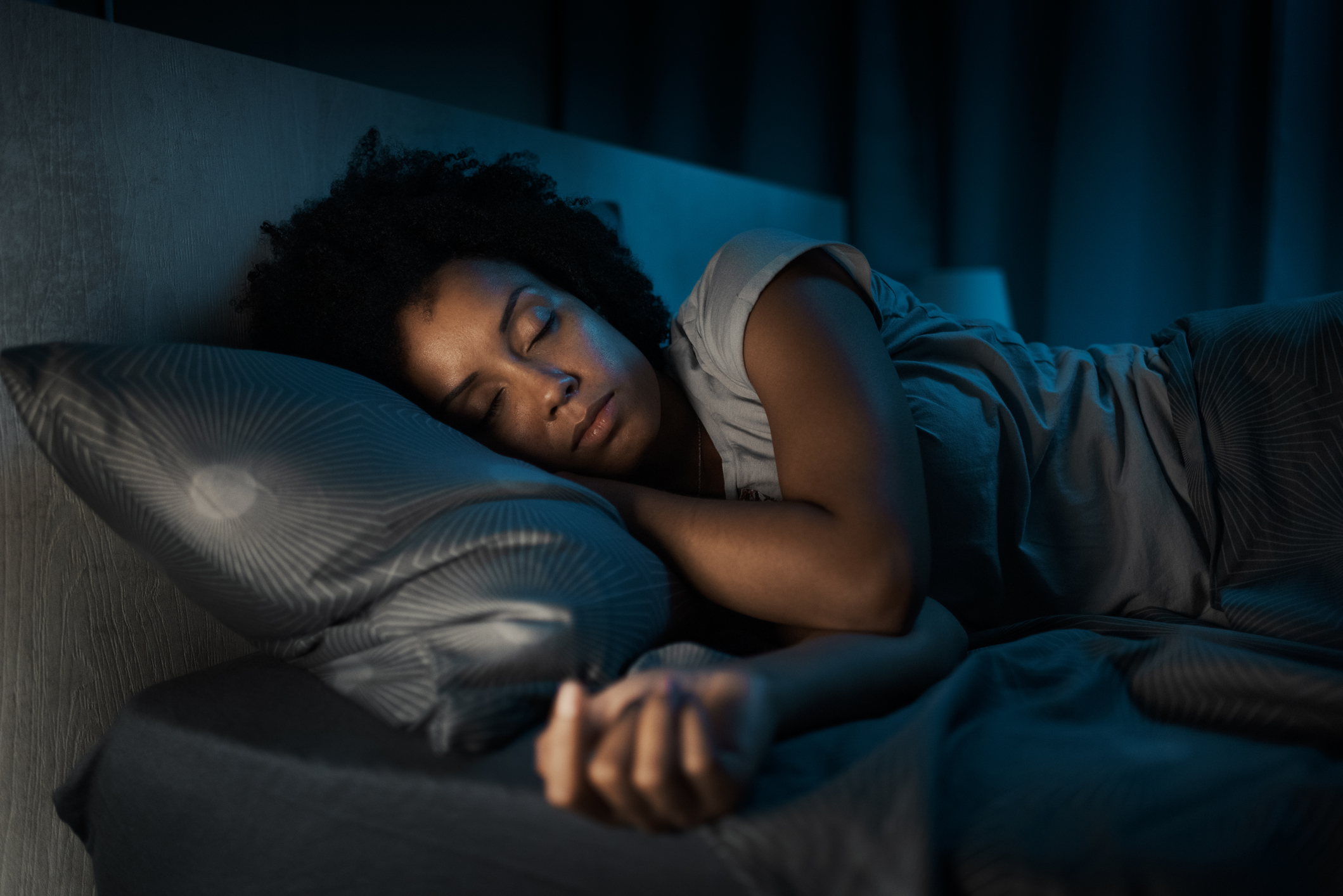
 A false awakening is when a sleeping person believes they are awake, only to realize they were dreaming.
False awakenings usually occur during rapid eye movement (REM) sleep, which is the sleep stage most closely associated with dreaming. Common dreamed activities experienced during false awakenings include:
- Waking up and getting ready for the day
- Waking up in the middle of the night and going to the bathroom or kitchen, then returning to bed
- Exploring or wandering around the dream environment
- Thinking about a dream you just had before the false awakening, believing you are now awake
False awakenings differ greatly from normal dreams because they are typically realistic compared to the fantastical nature of normal dreams. A person may believe they woke up in their own bedroom, or are in another familiar place, such as their workplace or school. This dream setting may be identical to real life, or there may be tiny details that are different, such as doors that don’t lead where they’re supposed to, lights that don’t turn on, or odd shadows. Oftentimes, it isn’t until later that they realize they’re dreaming.
The imagery in false awakenings most commonly feels like that of waking life, especially when they are experienced right before waking up in the morning. However, as with regular dreams, some false awakening dreams may be strangely vivid. Others may be vague and dimly lit, especially those that occur in the middle of the night. What’s more, people tend to remember dreams from false awakenings more easily than regular dreams.
Researchers have suggested that despite the dreamer believing they are awake after a false awakening, they retain a certain sense of consciousness. Unlike in a regular dream, the sleeper who dreams of a false awakening is aware that both dreams and reality exist. They may also have a suspicion that something is out of place, without being fully aware they are dreaming.
Although false awakenings have been described as vivid and uncanny, experts do not believe they are harmful. However, like other events that occur during the time between wake and sleep, false awakenings may sometimes cause feelings of fear, unease, or anxiety.
You may have an out-of-body experience or sense a presence in the room during a false awakening, which may be followed by a feeling of dread. Earlier sleep researchers classified these ominous experiences as type 2 false awakenings, as opposed to the more neutral type 1 false awakenings.
False awakenings can also happen multiple times in a row, which may be troubling if the sleeper feels like they are unable to wake up. Similarly, false awakenings may lead to false memories, in which the person recalls having done something but later finds evidence that it was all a dream.
A recent survey found that people who experience false awakenings are more likely to experience other REM-related sleep phenomena as well. Other REM-related phenomena include:
- Sleep paralysis
- Out-of-body experiences
- Lucid dreaming
Experiencing REM phenomena may also be linked to the ability to recall dreams.
False awakenings, sleep paralysis, and lucid dreaming are all considered to arise from a state halfway between REM sleep and wakefulness.
Sleep paralysis occurs when a person is falling asleep or is waking up, and they are mentally awake but are unable to move most of their muscles, mirroring muscle paralysis that happens naturally during REM sleep. It is more likely to happen to people with insomnia symptoms, poor sleep quality, or significant stress.
Researchers have found that hallucinations occur with sleep paralysis 75% of the time.
Lucid dreaming occurs when the sleeper remains asleep but gains awareness that they are dreaming. People who have frequent lucid dreams also tend to experience higher-than-usual rates of false awakenings. Sometimes lucid dreams and false awakenings happen together. However, lucid dreams may be ended by a false awakening, and a false awakening can happen before a lucid dream.
Although false awakenings aren’t dangerous, people have found them to be distressing. If false awakenings are impacting your quality of sleep or daily life, consult with your healthcare provider on how to improve your sleep quality. They may also be able to treat any underlying sleep disorders that are causing fragmented sleep.
If you are having difficulty sleeping and would like help, the staff at Jamaica Hospital’s state-of-the-art sleep center can help diagnose and treat various sleep disorders. For additional information or to make an appointment, please call 718-206-5916.
 Follow
All content of this newsletter is intended for general information purposes only and is not intended or implied to be a substitute for professional medical advice, diagnosis or treatment. Please consult a medical professional before adopting any of the suggestions on this page. You must never disregard professional medical advice or delay seeking medical treatment based upon any content of this newsletter. PROMPTLY CONSULT YOUR PHYSICIAN OR CALL 911 IF YOU BELIEVE YOU HAVE A MEDICAL EMERGENCY.