Kidney Stones

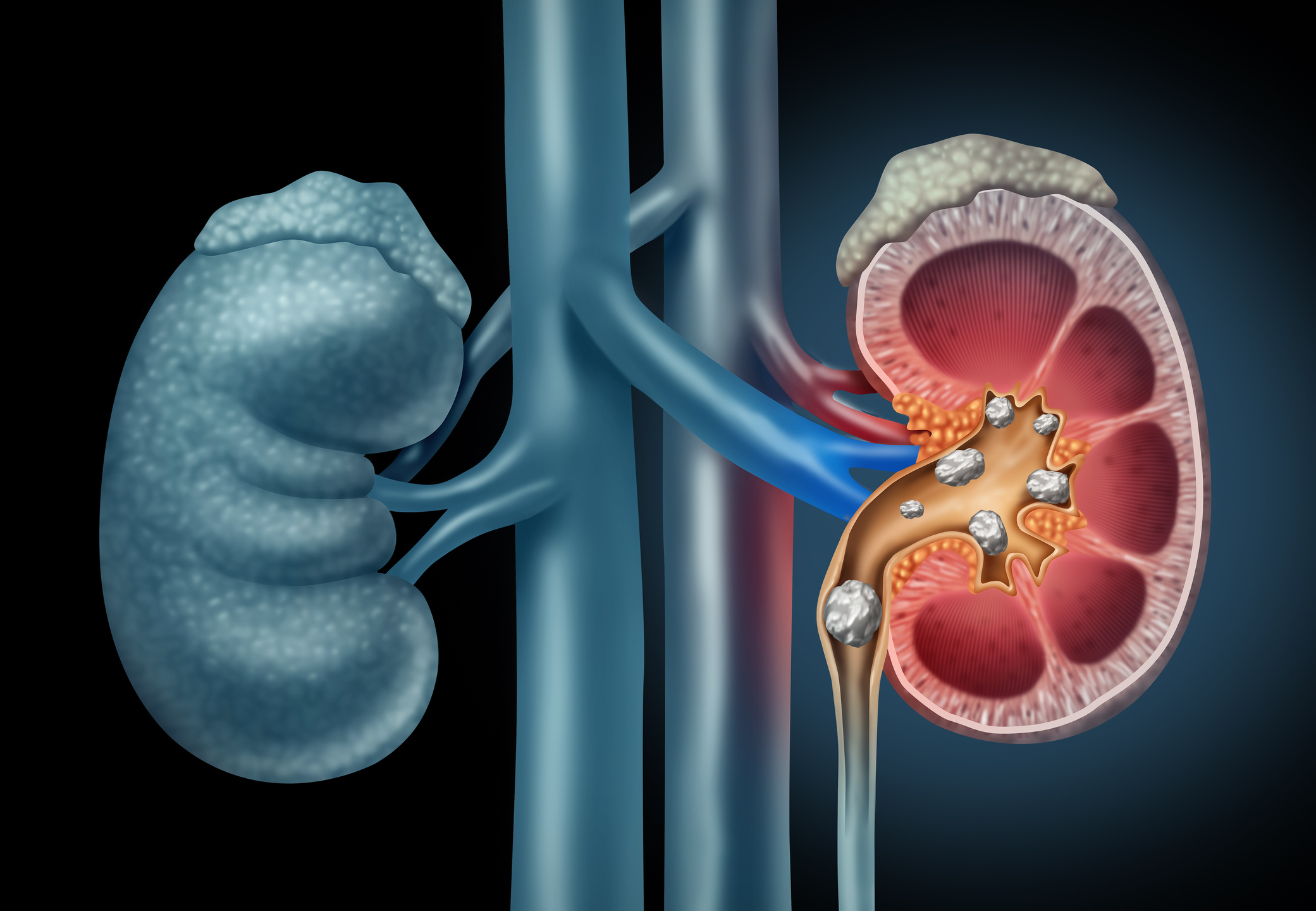
Kidney stones are solid masses or clusters of crystals that form from substances such as minerals, acids, and salts in the kidneys. These stones can be as small as a grain of sand, or in rare cases, larger than a golf ball. 

Kidney stones occur when there is little liquid and too many of the minerals, acids, and other substances, such as calcium, sodium, oxalate, and uric acid, in the urine, causing them to stick together and form crystals or stones. Kidney stones can form over months or years.  

There are four types of kidney stones, and they are named after the kind of crystal that they are made from. They include: 

  • Calcium-oxalate and calcium phosphate stones are the most common types of kidney stones 
  • Uric acid stones 
  • Struvite stones  
  • Cystine stones  

Depending on the size of kidney stones, a person may not even realize that they have them. Smaller-sized stones can pass through the urinary tract in the urine without symptoms. However, larger-sized kidney stones can get trapped in the ureter, the tube that drains urine from the kidney down to the bladder, causing pee to back up and limit the kidney’s ability to filter waste from the body, which can also cause bleeding.  

Kidney stones can take as long as three weeks to pass on their own. Sometimes, small stones can cause extreme pain as they go through the urinary tract and out of the body. If a kidney stone can’t pass on its own, a healthcare provider will need to break it up and remove it.  

Kidney stones are common. About one in 10 people will get a kidney stone during their lifetime. They are most common in men who are in their 30s and 40s and among non-Hispanic white people.  

The most common symptom of kidney stones is pain in the lower back, belly, or side, which might feel like it extends from the groin to the side. This pain can be dull, or it can be sharp and severe, and comes in waves. Other symptoms of kidney stones include: 

  • Bloody urine 
  • Pain when urinating 
  • The inability to urinate 
  • Feeling the urge to urinate a lot 
  • Cloudy or foul-smelling urine 
  • Nausea and vomiting 
  • Fever or chills 

Several risk factors can cause someone to develop kidney stones, including: 

  • Not drinking enough fluids 
  • Eating foods high in sodium or sugars 
  • Eating meat and other protein-rich foods 
  • Having a family history of kidney stones 
  • Having a blockage in the urinary tract  
  • Taking vitamin C supplements 
  • Having had stomach or intestine surgery, including gastric bypass surgery 
  • Taking certain medications, such as diuretics, calcium-based antacids, and some antiseizure medications 
  • Having certain medical conditions, such as: 
  • Cystic fibrosis 
  • Diabetes 
  • Gout 
  • High blood pressure 
  • High levels of calcium in the urine 
  • Inflammatory bowel disease (IBD) 
  • Kidney cysts 
  • Obesity 
  • Osteoporosis 
  • Parathyroid disease 
  • Primary hyperoxaluria 
  • Hemiplegia or paraplegia, which are types of paralysis 

Kidney stones can cause many complications, including: 

  • Chronic kidney disease (CKD)  
  • A blockage that backs up urine into the kidney, causing it to swell 
  • Acute kidney injury 
  • Kidney infection 
  • Frequent urinary tract infections (UTIs) 

A healthcare provider can diagnose kidney stones by performing urine, imaging, and blood tests.  

To treat a small kidney stone, a healthcare provider will have the person monitor their symptoms until the stone passes in their urine. They may also prescribe medications to keep them comfortable and help the stone pass on its own. Larger kidney stones need treatment depending on their size, location, whether they are causing infections or symptoms, and other factors.  

Medications to treat kidney stones help relax the ureter to help pass the stone more easily, help manage any nausea and vomiting, and help manage pain.  

Procedures to remove large kidney stones include: 

  • Shockwave lithotripsy 
  • Ureteroscopy 
  • Percutaneous nephrolithotomy 
  • Laparoscopic surgery 

It is important to note that the things we eat and drink impact our risk for kidney stones. Talk to your healthcare provider or a dietitian about ways to reduce your risk of developing kidney stones. They may recommend: 

  • Drinking plenty of water 
  • Limiting consumption of foods high in sugar and sodium 
  • Limiting consumption of animal proteins 
  • Maintaining a weight that is healthy for you 
  • Eating foods that are good sources of calcium 
  • Limiting consumption of foods high in oxalates 
  • Prescription medications 

If you are experiencing symptoms of kidney stones, and would like more information about receiving treatment from a urologist at Jamaica Hospital Medical Center. To make an appointment, please call 718-206-7001.   

All content of this newsletter is intended for general information purposes only and is not intended or implied to be a substitute for professional medical advice, diagnosis or treatment. Please consult a medical professional before adopting any of the suggestions on this page. You must never disregard professional medical advice or delay seeking medical treatment based upon any content of this newsletter. PROMPTLY CONSULT YOUR PHYSICIAN OR CALL 911 IF YOU BELIEVE YOU HAVE A MEDICAL EMERGENCY.


Reactive Arthritis

Reactive arthritis is a condition that occurs when the immune system reacts to an infection somewhere in the body and causes joint pain and inflammation. This infection usually starts in the digestive system, genitals, or urinary tract. Reactive arthritis usually affects the knees, ankles, and feet, but it can also cause inflammation in the eyes, skin, and urethra. Reactive arthritis is considered a form of a group of inflammatory diseases that mainly affect the spine, joints, and places where tendons and ligaments attach to bones called spondyloarthritis (SpA). 

Although reactive arthritis isn’t contagious, the bacteria that cause it can spread through sex or food. Several types of bacteria can trigger reactive arthritis, including: 

  • Chlamydia trachomatis 
  • Clostridium difficile (C. Difficile) 
  • Escherichia coli (E. Coli) 
  • Campylobacter 
  • Salmonella 
  • Shigella 
  • Yersinia  

While only a small number of people who are exposed to these bacteria develop reactive arthritis, certain factors increase the risk of developing the condition, including: 

  • Infection  
  • Age 
  • Sex assigned at birth 
  • Genetics  

The symptoms of reactive arthritis usually start one to four weeks after a triggering infection. Common symptoms include: 

  • Pain and stiffness 
  • Urinary issues 
  • Swollen toes or fingers 
  • Eye inflammation 
  • Inflammation of tendons and ligaments where they attach to bone 
  • Skin issues 
  • Lower back pain 

Reactive arthritis isn’t common and usually happens for a short period of time. For most people who experience this condition, symptoms can come and go, usually disappearing within a year.  

A healthcare provider can diagnose reactive arthritis with a physical exam, as they check the eyes and joints for inflammation, warmth, and tenderness, as well as the skin for rashes. They may also order blood tests, joint fluid tests, and imaging tests to help diagnose the condition. 

The main goals of treatment for reactive arthritis are to relieve symptoms and treat any infection that may still be present. Since reactive arthritis can affect different parts of the body, there may need to be multiple doctors or healthcare providers involved in treating this condition. Treatments for reactive arthritis can include: 

  • Medicines such as nonsteroidal anti-inflammatory drugs (NSAIDs), steroids, and rheumatoid arthritis medicines 
  • Physical therapy exercises that strengthen the muscles around the affected joints, improve flexibility, and prevent stiffness 

Although genetics is a risk factor for developing reactive arthritis, that risk can be lowered by reducing exposure to bacteria that cause infections by: 

  • Practicing food safety 
  • Preventing sexually transmitted infections 

If you are experiencing any symptoms of reactive arthritis, you can schedule an appointment with a rheumatologist at Jamaica Hospital Medical Center’s Ambulatory Care Center. Please call (718) 206-7001. 

All content of this newsletter is intended for general information purposes only and is not intended or implied to be a substitute for professional medical advice, diagnosis or treatment. Please consult a medical professional before adopting any of the suggestions on this page. You must never disregard professional medical advice or delay seeking medical treatment based upon any content of this newsletter. PROMPTLY CONSULT YOUR PHYSICIAN OR CALL 911 IF YOU BELIEVE YOU HAVE A MEDICAL EMERGENCY.

Symptoms of Autoimmune Disease

Autoimmune diseases are health conditions that happen when the immune system attacks the body instead of defending it. They are also called autoimmune disorders by healthcare providers. 

The immune system is the body’s built-in defense system. It automatically detects substances that shouldn’t be in the body, such as viruses, bacteria, or toxins. It sends out white blood cells to eliminate them before they can damage the body or make a person sick.  

If a person has an autoimmune disease, their immune system is overactive. When it doesn’t have anything to attack, the immune system turns on the body and damages healthy tissue.  

Autoimmune diseases are chronic conditions, which means a person will have to manage them and the symptoms they cause for the rest of their life.  

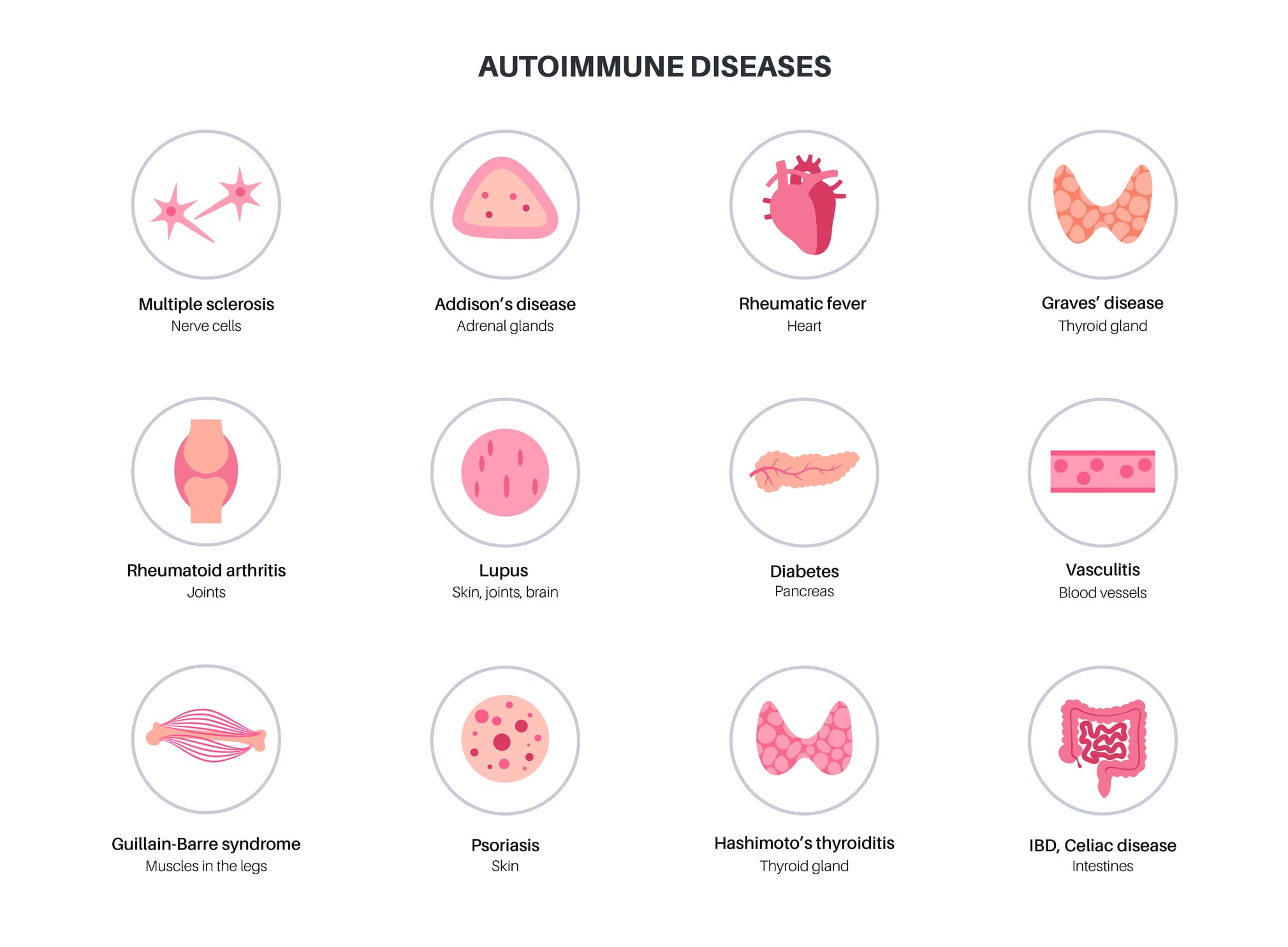
There are more than 100 different autoimmune diseases, and they can affect almost any tissue or organ in the body, depending on where the immune system malfunctions. These autoimmune diseases can include: 

  • Joints and muscles 
  • Rheumatoid arthritis (RA) 
  • Lupus 
  • Myositis 
  • Skin and blood vessels 
  • Sjögren’s syndrome 
  • Psoriasis 
  • Psoriatic arthritis 
  • Dermatomyositis 
  • Scleroderma 
  • Vasculitis 
  • Rheumatoid vasculitis 
  • Urticarial vasculitis 
  • Vitiligo 
  • Digestive system 
  • Crohn’s disease 
  • Celiac disease 
  • Ulcerative colitis 
  • Autoimmune gastritis 
  • Endocrine system 
  • Type 1 diabetes 
  • Addison’s disease 
  • Hashimoto’s thyroditis 
  • Graves’ disease 
  • Nervous system 
  • Multiple sclerosis (MS) 
  • Myasthenia gravis (MG) 
  • Guillain-Barré syndrome 
  • Chronic Inflammatory Demyelinating Polyneuropathy (CIPD) 

Autoimmune diseases are very common due to there being so many different types, with experts estimating that around 1 in 15 people in the U.S. has an autoimmune disease. 

Autoimmune diseases can cause a wide range of symptoms that can affect a person’s body from head to toe. Conditions that affect the muscles can cause muscle weakness, joint pain, swelling, or stiffness, indicating a condition such as rheumatoid arthritis. Type 1 diabetes causes high blood sugar. And some autoimmune diseases can affect a person’s vision. 

Many autoimmune diseases can cause inflammation, which causes a feeling of warmth, discoloration or redness of the skin, swelling, and pain.  

Additionally, a lot of autoimmune diseases can cause recurring symptoms. These episodes of more noticeable or more severe symptoms are called flares or attacks.  

Unfortunately, experts don’t know for certain what causes autoimmune diseases, and researchers are still studying what makes the immune system start attacking the body in the first place.  

However, some studies have found certain factors, or triggers, that might increase the risk of developing an autoimmune disease. They include: 

  • Viral infections such as COVID-19 and the Epstein-Barr virus 
  • A person’s sex, as women are more likely to have an autoimmune condition 
  • Having biological relatives with autoimmune diseases, as some are genetic and can be passed through generations of a biological family 
  • Having one autoimmune disease can increase a person’s odds of developing another one. This is called multiple autoimmune syndrome 
  • Exposure to chemicals or other environmental factors may trigger autoimmune diseases 
  • Smoking and other types of tobacco use can cause many health issues, including potentially triggering autoimmune diseases 

A healthcare provider diagnoses autoimmune diseases when they perform a physical exam and discuss a person’s health history with them. They will examine their body, specifically if they are experiencing symptoms in a specific area. They will ask about the person’s symptoms and when they first noticed them.  

A healthcare provider will perform tests for several different conditions that can cause the symptoms until they find a cause. This is called a differential diagnosis. They may order blood tests to look for specific markers, or clues the immune system leaves behind after it damages the body or causes specific issues, of autoimmune diseases.  

They may also perform imaging tests to look inside the body, including: 

  • X-rays 
  • MRI 
  • CT scan 
  • Ultrasound 

Autoimmune diseases may need a variety of treatments, since they cause a variety of symptoms. Which treatment is needed depends on which condition a person has. Everyone’s immune system, genetics, and environment are different, which means the treatments will be unique to each person. Some common treatments to manage autoimmune disease symptoms include: 

  • Pain relievers 
  • Anti-inflammatory medications such as NSAIDs or corticosteroids 
  • Immunosuppressants 
  • Physical therapy 
  • Occupational therapy 
  • IVIG infusions 

A person may need specific treatment based on what condition they have. People with Type 1 diabetes will need insulin therapy. People with celiac disease will need to eat a gluten-free diet. 

The Division of Rheumatology at Jamaica Hospital provides consultations for patients in Queens, NY, who develop rheumatological disorders. If you would like to make an appointment, please call 718-206-6742. 

All content of this newsletter is intended for general information purposes only and is not intended or implied to be a substitute for professional medical advice, diagnosis or treatment. Please consult a medical professional before adopting any of the suggestions on this page. You must never disregard professional medical advice or delay seeking medical treatment based upon any content of this newsletter. PROMPTLY CONSULT YOUR PHYSICIAN OR CALL 911 IF YOU BELIEVE YOU HAVE A MEDICAL EMERGENCY.

Meet Our Doctors: Dr. Jevon Fragoso

We are pleased to introduce Dr. Jevon Fragoso, the newest member of the rheumatology team.

Dr. Jevon Fragoso was born and raised in Queens, New York. He graduated Magna cum Laude from Stony Brook University with a degree in Pharmacology and then received his medical degree at Temple University in Philadelphia. After medical school, Dr. Fragoso completed his Internal Medicine Residency and Rheumatology Fellowship at North Shore University Hospital/Long Island Jewish Medical Center with Northwell Health. Dr. Fragoso has extensive training in managing rheumatoid arthritis, lupus, gout, myositis, and systemic sclerosis. Outside of the clinic, Dr. Fragoso enjoys cooking and martial arts.

We are proud to welcome Dr. Fragoso to our team and look forward to the work he and the rest of the Rheumatology Department will do to provide high-quality care to our community.

All content of this newsletter is intended for general information purposes only and is not intended or implied to be a substitute for professional medical advice, diagnosis or treatment. Please consult a medical professional before adopting any of the suggestions on this page. You must never disregard professional medical advice or delay seeking medical treatment based upon any content of this newsletter. PROMPTLY CONSULT YOUR PHYSICIAN OR CALL 911 IF YOU BELIEVE YOU HAVE A MEDICAL EMERGENCY.

Podiatry: What Your Feet Can Tell You about Your Health

Our bodies present many signs and symptoms to show us that we are sick, such as a runny nose, fever, and body aches. However, your feet can tell us a lot about our health, including:

  1. Dry, flaking, itchy, or peeling skin may be signs of a thyroid condition or a fungal infection.
  2. Foot numbness may be a sign of circulation problems such as peripheral artery disease (PAD), peripheral neuropathy associated with type 2 diabetes, other neurological problems, arthritis, or long-standing alcoholism.
  3. A foot sore that won’t heal may be a sign of diabetes or peripheral vascular disease. In addition to causing nerve damage, high blood sugar might also damage the blood vessels that supply nerves, causing circulation problems that prevent healing.
  4. Swollen ankles and feet may be signs of heart failure, kidney disease, liver disease, or a blood clot. Painless swelling in the feet is gravity in action. If your heart, liver, or kidneys aren’t working properly, you will have excess fluid in the body that leaks into your tissues and drains down to the feet.
  5. A suddenly, intensely painful, and swollen big toe may be a sign of gout, inflammation caused by a buildup of uric acid that forms crystals in the joints.
  6. Pain in the foot when walking or exercising that goes away when resting may be a sign of a stress fracture or osteoporosis.
  7. Sore toe joints in both feet may be a sign of rheumatoid arthritis.
  8. Frequent foot cramping may be a sign of dehydration and nutritional deficiencies.
  9. Heel pain may be a sign of plantar fasciitis, the strain of the ligament that supports the arch in your foot.
  10. Yellow toenails may be a sign of a fungal infection, such as athlete’s foot.
  11. Balding or hairless feet and toes may be a sign of circulation problems, such as peripheral artery disease.
  12. Foot or heel pain upon standing or rising in the morning may be a sign of arthritis or plantar fasciitis.
  13. Frequently cold feet may be a sign of hypothyroidism, peripheral artery disease, or Raynaud’s disease, a condition where blood vessels spasm and constrict when experiencing cold temperatures.

Some ways you can care for your feet include:

  • Wash and examine your feet daily
  • Keep the skin on your feet moisturized
  • Treat any callouses and corns
  • Trim toenails weekly or as needed
  • Wear protective clothing on your feet
  • Maintain blood flow to the feet

If you are experiencing any of these foot ailments, contact Jamaica Hospital Medical Center’s Queens Podiatry Center at (718) 206-6713-6712 to make an appointment.

All content of this newsletter is intended for general information purposes only and is not intended or implied to be a substitute for professional medical advice, diagnosis or treatment. Please consult a medical professional before adopting any of the suggestions on this page. You must never disregard professional medical advice or delay seeking medical treatment based upon any content of this newsletter. PROMPTLY CONSULT YOUR PHYSICIAN OR CALL 911 IF YOU BELIEVE YOU HAVE A MEDICAL EMERGENCY.

Sjogren’s Syndrome

Woman using eye drop, woman dropping eye lubricant to treat dry eye or allergy, sick woman treating eyeball irritation or inflammation woman suffering from irritated eye, optical symptomsSjögren’s syndrome is a chronic autoimmune disease that causes the immune system to attack and damage the glands that produce and control moisture in the body.

Sjögren’s is classified into two types: primary and secondary. In primary Sjögren’s, there are no other autoimmune diseases present. Secondary Sjögren’s is diagnosed in someone who also has other rheumatic conditions.

Parts of the body that are most affected by the disease are the eyes and mouth. However, the skin, joints, kidneys, nerves, lungs, and thyroid can also be impacted over time.

Dry eyes and mouth are the most common symptoms of Sjögren’s. But people living with the disease may also experience:

  • Tooth decay
  • Vaginal dryness
  • Dry skin
  • Skin rashes
  • Joint pain
  • Swollen lymph nodes
  • Muscle pain
  • Heartburn
  • Acid reflux
  • Shortness of breath
  • Light sensitivity

Health complications that could potentially develop as a result of  Sjögren’s include:

  • Lymphomas
  • Damage to the nervous system
  • Gastroparesis
  • Eye infections
  • Abnormal liver function
  • Irritable bowel
  • Yeast infections
  • Recurrent bronchitis

The cause of Sjögren’s syndrome is unknown. Research suggests that a combination of genetics, environment, and hormones may be linked. Certain factors can increase the risk of developing the disease.  These are:

  • Age – Sjögren’s is typically diagnosed in people older than 40
  • Gender- women are more likely than men to develop the disease
  • Rheumatic disease- having rheumatic conditions such as lupus and rheumatoid arthritis
  • Genetics- having one or both parents living with Sjögren’s

There is no cure for Sjögren’s syndrome; however, there are several ways to treat and manage the disease. Treatment may include medication, the use of artificial saliva or tears, the use of special moisturizers or lubricants, hormone therapy, or tear duct surgery.  Applying lifestyle changes such as quitting smoking, increasing fluid intake, wearing protective glasses, increasing the humidity in your home, and reducing stress can help you manage symptoms.

If you are experiencing symptoms associated with Sjögren’s syndrome, please contact your doctor to schedule an examination. Your doctor may diagnose the disease by conducting blood tests, eye exams, x-rays, or biopsies.

To schedule an appointment with a rheumatologist at Jamaica Hospital Medical Center, please call 718-206-7001


All content of this newsletter is intended for general information purposes only and is not intended or implied to be a substitute for professional medical advice, diagnosis or treatment. Please consult a medical professional before adopting any of the suggestions on this page. You must never disregard professional medical advice or delay seeking medical treatment based upon any content of this newsletter. PROMPTLY CONSULT YOUR PHYSICIAN OR CALL 911 IF YOU BELIEVE YOU HAVE A MEDICAL EMERGENCY.