Hand Hygiene for Children

Hand hygiene is essential for overall health. Parents and caretakers play an important role in teaching children how to wash their hands. Good hand washing is the first line of defense against the spread of many illnesses as it is the best way to keep children from getting sick.

Here are some tips you can use to turn handwashing into a healthy habit for life:

  • Explain the benefits of handwashing
  • Demonstrate the correct steps of handwashing
    • Step 1: Wet hands with running water
    • Step 2: Apply enough soap to cover wet hands
    • Step 3: Scrub all surfaces of the hands, including the back of the hands, between the fingers, and under the nails
    • Step 4: Rinse hands thoroughly with running water
    • Step 5: Dry hands with a clean cloth or a single-use towel
  • Hands should be washed with soap for at least 20-30 seconds. An easy way to determine the time is by singing the entire “Happy Birthday” song twice.
  • Set the times when they should be washing their hands
    • When they are visibly dirty
    • Before and after eating
    • After using the toilet
    • After touching animals and pets
    • After blowing their nose or when they cough or sneeze
    • Before and after visiting friends and relatives
  • Turn it into a fun family activity

There might be moments when children can’t get to a bathroom to wash their hands with soap and water. Teach them how to use hand sanitizer, especially one that contains at least 60% alcohol.

Handwashing can become a lifelong habit if you start teaching it to children at an early age. The time you spend at the sink could save you trips to the doctor’s office.

All content of this newsletter is intended for general information purposes only and is not intended or implied to be a substitute for professional medical advice, diagnosis or treatment. Please consult a medical professional before adopting any of the suggestions on this page. You must never disregard professional medical advice or delay seeking medical treatment based upon any content of this newsletter. PROMPTLY CONSULT YOUR PHYSICIAN OR CALL 911 IF YOU BELIEVE YOU HAVE A MEDICAL EMERGENCY.

Updated Vaccine for Returning Students

The new school year is right around the corner. That means parents will be taking their children shopping for new school supplies and clothes. In addition to updating their child’s wardrobe and supplies, parents should remember to schedule vaccinations before the school year begins.

Vaccines are the best way to prevent your child from getting many illnesses and spreading them to others. Each age group has recommended vaccines they need to receive before starting their new grade:

Vaccines for children aged four to six before they start kindergarten:

  • Flu – needed every year
  • COVID-19
  • Measles, mumps, and rubella (MMR)
  • Diphtheria, tetanus, and pertussis (DTaP)
  • Chickenpox
  • Polio

Vaccines for children aged seven to 10 before they start elementary school:

  • Flu
  • COVID-19

Vaccines for children aged 11 to 12 before they begin middle school:

  • Flu
  • COVID-19
  • Tetanus, diphtheria, and pertussis (Tdap)
  • Meningococcal conjugate (MenACWY)
  • HPV

Vaccines for children aged 13-18 before they enter junior and high school:

  • Flu
  • COVID-19
  • Meningococcal conjugate (MenACWY)
  • HPV

Vaccines for college-aged teenagers:

  • Flu
  • COVID-19
  • Meningococcal conjugate (MenACWY)
  • HPV

You can find the complete schedule of recommended vaccines for your child by age on the Centers for Disease Control and Prevention’s website. To schedule an appointment for your child to receive the vaccines needed, you can call Jamaica Hospital Medical Center’s Ambulatory Care Center at 718-206-7001.


All content of this newsletter is intended for general information purposes only and is not intended or implied to be a substitute for professional medical advice, diagnosis or treatment. Please consult a medical professional before adopting any of the suggestions on this page. You must never disregard professional medical advice or delay seeking medical treatment based upon any content of this newsletter. PROMPTLY CONSULT YOUR PHYSICIAN OR CALL 911 IF YOU BELIEVE YOU HAVE A MEDICAL EMERGENCY.

What Parents Should Know About Oral Nicotine Pouches

According to the Centers for Disease Control and Prevention, cigarette smoking hit a historic low in 2023, with the adult smoking rate dropping to 11%. Because of the steady decline of smokers over the years, tobacco companies have tried other ways to retain customers as well as attract new ones by introducing new products.

One of those new products is oral nicotine pouches. Oral nicotine pouches are small permeable pouches typically placed between the lip and the gum containing crystalized nicotine powder in various flavors. Although little is known about the product, nicotine pouches have become one of the fastest-growing categories, increasing sales from about 126 million units to over 800 million units between 2019 and 2022.

Oral nicotine pouches are aimed at adults who are looking for a tobacco-less, smoke-free alternative to cigarettes as they try to stop smoking. However, according to the 2023 National Youth Tobacco Survey conducted by the Food and Drug Administration and the Centers for Disease Control and Prevention, in October of 2023, 1.5% of middle and high school students reported using nicotine pouches in the previous 30 days.

Tobacco companies sell nicotine pouches in attractive packaging and assorted flavors, including citrus, berry, peppermint, coffee, and mango. Researchers are concerned that this marketing tactic is likely to appeal to young people who may not be aware of the harmful effects of nicotine. Some social media influencers have promoted the use of nicotine pouches by showing how they use them in their daily lives, discreetly placing them in their mouths at work and school, as well as doing taste tests.

“Nicotine pouches are marketed as a nicotine product that provides a buzz without the harmful effects of tobacco or smoking. However, people using these products should be aware that ‘tobacco-free’ does not mean ‘risk-free’”, says Alexandra Howell, DMD, Oral Medicine Specialist and Assistant Professor in the Department of Oral Diagnostic Services at Virginia Commonwealth’s University’s School of Dentistry.

Despite the long-term health impact of nicotine pouches being unknown, the side effects of its use can include:

  • Nicotine addiction
  • Irritation of the gums
  • Lung problems
  • Infertility problems
  • Stomach problems
  • Sore mouth
  • Hiccups
  • Nausea

Nicotine pouches can also present several cardiovascular risks. The use of these products can lead to increased heart rate and blood pressure increasing the risk of developing cardiovascular diseases such as hypertension, heart disease, and potential heart attacks.

To speak with a Family Medicine doctor at Jamaica Hospital Medical Center about smoking cessation, please call (718) 206-6942.


All content of this newsletter is intended for general information purposes only and is not intended or implied to be a substitute for professional medical advice, diagnosis or treatment. Please consult a medical professional before adopting any of the suggestions on this page. You must never disregard professional medical advice or delay seeking medical treatment based upon any content of this newsletter. PROMPTLY CONSULT YOUR PHYSICIAN OR CALL 911 IF YOU BELIEVE YOU HAVE A MEDICAL EMERGENCY.

Group B Strep Awareness Month

Group B Strep (GBS), or Strep B, is a bacteria that lives naturally in our bodies and comes and goes without showing symptoms or causing harm unless it enters a part of the body free from bacteria. If the bacteria infects the lining around the brain it causes it to swell resulting in meningitis.

GBS bacteria live in the gastrointestinal and genital tracts. It can cause many types of infection which can be life-threatening. These infections and their symptoms include:

  1. Bacteremia (bloodstream infection)
  • Fever
  • Chills
  • Low alertness.
  1. Sepsis (the body’s extreme response to an infection)
  • Fever
  • Chills
  • Low alertness.
  1. Bone and joint infections
  • Fever
  • Chills
  • Swelling
  • Stiffness or inability to use the affected limb or joint.
  1. Urinary tract infections
  • Pain or burning while urinating.
  • Frequent urination.
  • Feeling the need to urinate despite having an empty bladder.
  • Bloody urine.
  • Pressure or cramping in the groin or lower abdomen.
  1. Meningitis
  • Fever
  • Headache
  • Stiff neck.
  • Nausea and vomiting.
  • Sensitivity to light.
  • Confusion
  1. Pneumonia
  • Chest pain when breathing or coughing.
  • Confusion
  • Cough
  • Fatigue
  • Fever or chills.
  • Nausea, vomiting, or diarrhea.
  • Shortness of breath.
  1. Skin and soft tissue infections
  • Fever
  • Red skin.
  • Swollen skin or infected area.
  • Skin or infected area is warm to the touch.
  • Skin or infected area is full of pus or other drainage.

GBS bacteria most commonly causes bacteremia, sepsis, pneumonia, and meningitis in newborns. This occurs when bacteria is passed on to the newborn as it goes through the birth canal during vaginal delivery.

GBS disease symptoms in newborns and babies include:

  • Fever
  • Difficulty when feeding.
  • Irritability or lethargy in the infant.
  • Difficulty breathing.
  • A blueish color to their skin.

Doctors diagnose GBS disease by taking samples of a patient’s blood, urine, or spinal fluid depending on the type of infection.

Treatment for GBS depends on the type of infection. Doctors usually treat GBS disease with antibiotics. People with soft tissue and bone infections may need surgery.

It is important to start treatment as soon as possible.

If you would like to get screened for GBS bacteria, you can schedule an appointment with an OB/GYN at Jamaica Hospital Medical Center’s Women’s Health Center. To learn more, please call (718) 291-3276.


All content of this newsletter is intended for general information purposes only and is not intended or implied to be a substitute for professional medical advice, diagnosis or treatment. Please consult a medical professional before adopting any of the suggestions on this page. You must never disregard professional medical advice or delay seeking medical treatment based upon any content of this newsletter. PROMPTLY CONSULT YOUR PHYSICIAN OR CALL 911 IF YOU BELIEVE YOU HAVE A MEDICAL EMERGENCY.

Scoliosis Awareness Month

Scoliosis is a spinal disorder that causes an abnormal spine curvature, in which the spine resembles the letters “S” or “C”.

The most common type of scoliosis is idiopathic scoliosis, which means the cause is unknown but is thought to be genetic. There are three types of idiopathic scoliosis:

  • Infantile idiopathic scoliosis- occurs from birth to three years old.
  • Juvenile idiopathic scoliosis- occurs from three to nine years old.
  • Adolescent idiopathic scoliosis- occurs from 10 to 18 years old.

Some other forms of scoliosis include:

  • Congenital scoliosis- when scoliosis is present at birth.
  • Neuromuscular scoliosis- when scoliosis is caused by an underlying systemic condition such as cerebral palsy, muscular dystrophy, spina bifida, spinal cord tumors, or paralysis.
  • Syndromic scoliosis- when a unique group of spine conditions causes scoliosis. The most common diseases that cause syndromic scoliosis are:
    • Marfan’s syndrome
    • Ehlers-Danlos syndrome
    • Osteogenesis Imperfecta
    • Neurofibromatosis
    • Prader-Willi syndrome
    • Arthrogryposis
    • Riley-Day syndrome

There are a wide range of causes and ages for when scoliosis can occur. However, scoliosis may appear during the main growth years for children (years 10 to 12), which is the growth spurt period for children before puberty.

During this time, scoliosis will often present with the following symptoms:

  • One of the child’s shoulder blades is higher than the other.
  • The appearance of the child’s head is not centered with the rest of the body.
  • Uneven hips or one hip sticks out more than the other.
  • Pushed-out ribs
  • Difficulty breathing due to a reduced area for lung expansion.
  • Back pain and discomfort
  • When the child bends forward, it appears that the two sides of the back are different heights.

The main goal for patients with scoliosis is to get an early diagnosis. Scoliosis is diagnosed when a pediatric orthopedist uses a physical exam and X-rays to diagnose early-onset scoliosis.

Scoliosis can be treated non-surgically and surgically. Some non-surgical treatments for scoliosis include:

  • Observation
  • Bracing
  • The Risser cast

Some surgical treatments for scoliosis include:

  • Spinal fusion surgery
  • The growing rod technique

Scoliosis is treatable. The sooner a child is diagnosed, the less likely they will need surgery and the healthier they will be.

If you think your child may have an abnormal spine curvature, consult your pediatrician about an evaluation. To schedule an appointment with a pediatrician at Jamaica Hospital Medical Center, please call 718-206-7001.

All content of this newsletter is intended for general information purposes only and is not intended or implied to be a substitute for professional medical advice, diagnosis or treatment. Please consult a medical professional before adopting any of the suggestions on this page. You must never disregard professional medical advice or delay seeking medical treatment based upon any content of this newsletter. PROMPTLY CONSULT YOUR PHYSICIAN OR CALL 911 IF YOU BELIEVE YOU HAVE A MEDICAL EMERGENCY.
Choosing Safe Toys For Children This Holiday Season

The holiday season is the best time of the year to buy toys for children. However, parents are often overwhelmed by a larger selection, and choosing the best toy can become challenging.  The most important thing to remember when choosing toys for toddlers is picking safe and appropriate toys for their age.

Each year hospital ERs are visited by over 200,000 young children, typically under the age of three, who have incurred toy-related injuries.   These injuries can be avoided if parents keep these guidelines in mind when buying toys:

  • Carefully read warning labels
  • Do not buy toys with small and removable parts
  • Check to see if toys are on a recall list by visiting sites such as recalls.gov or cpsc.gov.
  • Avoid buying toys with parts that launch or projects
  • Do not purchase toys with sharp edges or points
  • Make certain that cords or strings are shorter than seven inches
  • Avoid buying toys that make extremely loud noises

Most toys come with warning labels that advise parents of potential choking hazards and compatibility by age group. Parents should pay close attention to these labels and do due diligence by researching toys and inspecting them for further dangers.

All content of this newsletter is intended for general information purposes only and is not intended or implied to be a substitute for professional medical advice, diagnosis or treatment. Please consult a medical professional before adopting any of the suggestions on this page. You must never disregard professional medical advice or delay seeking medical treatment based upon any content of this newsletter. PROMPTLY CONSULT YOUR PHYSICIAN OR CALL 911 IF YOU BELIEVE YOU HAVE A MEDICAL EMERGENCY.
What is Pediatric Diabetes?

Approximately 10% of all Americans have diabetes, with an increasing number of these cases occurring in children and teenagers under the age of 20. Diabetes that occurs within this age range (referred to as pediatric diabetes) usually presents as type 1 diabetes, which causes the body to stop producing insulin. However, type 2 diabetes, which causes insufficient insulin production and causes cells to absorb less sugar from the bloodstream, has begun to account for more of these cases over time.

According to Dr. Hariram Ganesh, a pediatric endocrinologist at Forest Hills Pediatrics, increasing rates of obesity and economic factors are largely to blame for the increased prevalence of pediatric type 2 diabetes.

“Rising obesity rates have caused rates of type 1 and type 2 diabetes in children to even out,” said Dr. Ganesh. “Junk food is much cheaper and more accessible than healthy options. Many families would rather spend a dollar on fast food than 60 dollars on something healthy at the grocery store. “

Children with prediabetes may exhibit certain signs, such as excessive thirst and the frequency with which they need to use the bathroom. Additionally, black marks may occur around the neck, armpits, groin, or other parts of the body due to abnormally high insulin levels. Some other signs you may notice include:

  • Yellow, brown, or red patches of skin
  • Hardened or thickened skin on the fingers or toes
  • Blisters (in rare cases)
  • Skin infections or rashes

If you notice any of these signs, you should bring your child to your primary physician as soon as possible. They can help determine whether your child’s symptoms warrant a referral to an endocrinologist or are indicative of a less severe problem.

While neither type 1 nor type 2 diabetes has a cure, both are treatable. For children with type 2 diabetes, an initial plan of three to six months of dietary changes and exercise coupled with medication may help manage the condition. In cases of type 1 diabetes, however, treatment options are more limited.

“Type 1 primarily involves insulin dependence and cannot be managed with diet and exercise alone,” said Dr. Ganesh. “Even if a child loses weight, they’ll continue to need insulin. Otherwise, they may end up in the hospital.”

Still, Dr. Ganesh emphasizes the importance of diet and exercise, regardless of any diabetes diagnoses your child may or may not have received.

“Diabetes is just one problem among many related to childhood obesity, and in many cases, a diagnosis may only be a matter of time. Parents should make a point to emphasize a healthy diet and physical activity for their children, whether that involves playing with them or finding a local place for them to regularly participate in physical recreation,” said Dr. Ganesh.

If your child is exhibiting signs that may be indicative of prediabetes, schedule an appointment at Jamaica Hospital Medical Center’s Ambulatory Care Center now by calling (718) 206-7001.

All content of this newsletter is intended for general information purposes only and is not intended or implied to be a substitute for professional medical advice, diagnosis or treatment. Please consult a medical professional before adopting any of the suggestions on this page. You must never disregard professional medical advice or delay seeking medical treatment based upon any content of this newsletter. PROMPTLY CONSULT YOUR PHYSICIAN OR CALL 911 IF YOU BELIEVE YOU HAVE A MEDICAL EMERGENCY.
What is RSV?

RSV (respiratory syncytial virus) is a respiratory illness that is typically most prevalent during the fall, winter, and early spring seasons. Most children born in the United States will have experienced it at some point before their second birthday.

The virus often presents symptoms similar to those of a cold, including a runny nose, coughing or wheezing, fever, and decreased appetite. These symptoms usually appear approximately four to six days after infection, but may not appear all at once.

While it usually does not lead to hospitalization, RSV can be particularly dangerous to children if it causes bronchiolitis or pneumonia to develop; it’s the most common cause of both of these illnesses in children under the age of one. If an infant develops either of these conditions, becomes dehydrated, or experiences significant difficulty breathing, the situation could become more serious and require hospital care.

RSV can also be especially dangerous for older adults, accounting for approximately 177,000 hospitalizations in adults over the age of 65.

The virus is usually spread through:

  • Bodily fluids such as mucus, saliva, or droplets
  • Surfaces that have the virus on them
  • Direct contact such as kissing an infected person

The best way to decrease the risk of an older adult or infant developing RSV is to prevent as many means of transmission as possible and promptly get them medical care if their symptoms seem to be worsening.

People and children who are at risk of developing severe cases of RSV should:

  • Avoid close contact with infected people and, if possible, close-contact settings such as daycare centers where RSV can more easily spread
  • Frequently wash their hands with soap and water for 20 seconds and refrain from touching their face until after they’ve done so

If you are sick with RSV, you should:

  • Avoid close contact with non-infected people
  • Frequently clean surfaces you’ve touched with disinfectant
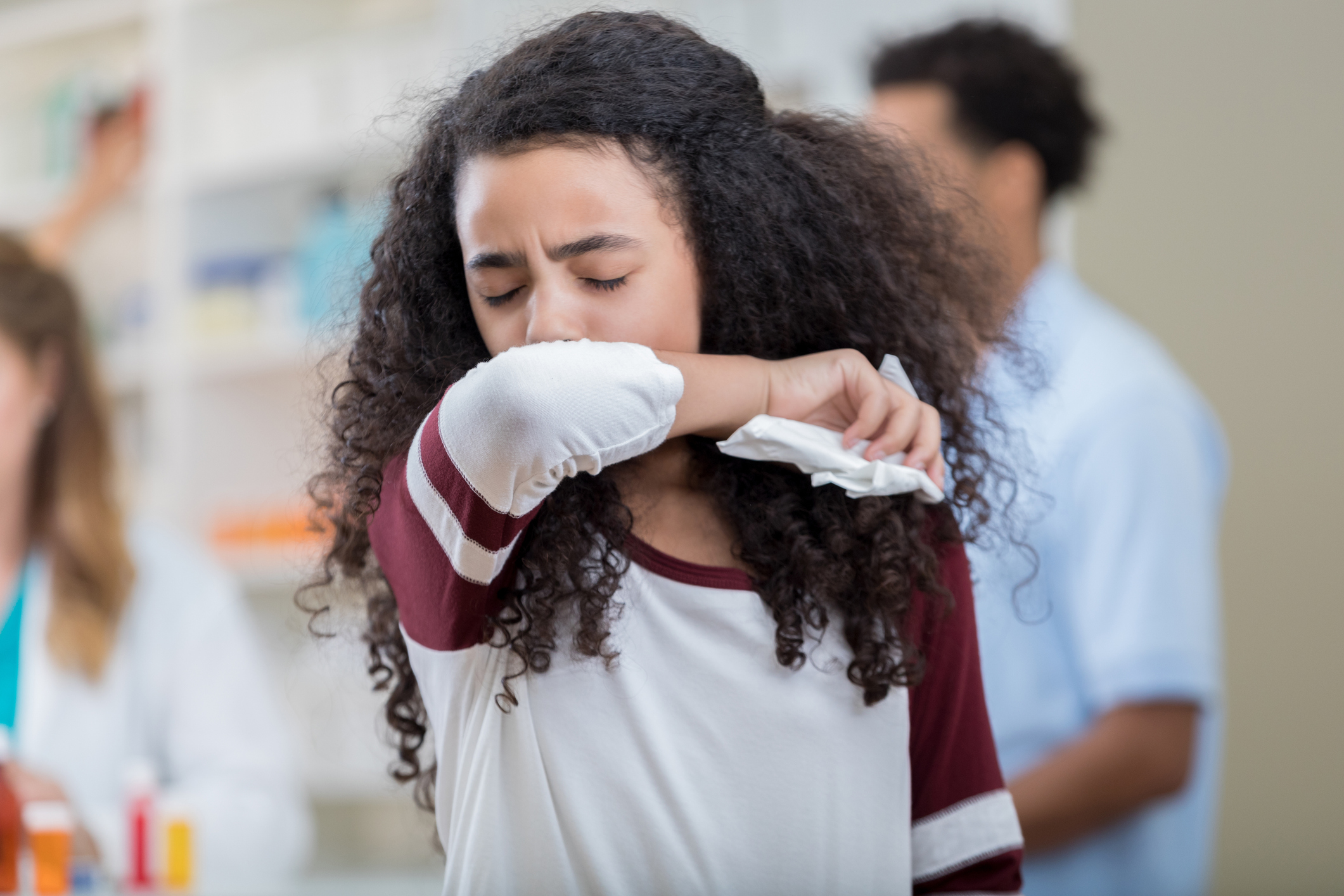
  • Wear a mask and/or cover coughs and sneezes with a sleeve or tissue
  • Frequently wash your hands with soap and water for 20 seconds

If you or someone you know has developed RSV symptoms that require medical attention, you can schedule an appointment at Jamaica Hospital Medical Center’s Ambulatory Care Center by calling (718) 206-7001 now.

All content of this newsletter is intended for general information purposes only and is not intended or implied to be a substitute for professional medical advice, diagnosis or treatment. Please consult a medical professional before adopting any of the suggestions on this page. You must never disregard professional medical advice or delay seeking medical treatment based upon any content of this newsletter. PROMPTLY CONSULT YOUR PHYSICIAN OR CALL 911 IF YOU BELIEVE YOU HAVE A MEDICAL EMERGENCY.
Head Lice Prevention Month

Since 1985, healthcare organizations have informed communities about head lice symptoms, diagnosis, and prevention for National Pediculosis Prevention Month, also known as Head Lice Prevention Month.

Although reliable data isn’t available on this condition, pediculosis (head lice infestation) is fairly common. According to the Centers for Disease Control and Prevention, approximately six to 12 million infestations affect children between the ages of three to 11 each year. Adults can also develop infestations through contact with both children and other adults.

Head lice typically spread through contact with the hair of an infested person, though it can also occur when people share clothes or lay on furniture after an infested person has recently used them. Lice typically remain on a person’s scalp; however, in rare instances, they may move to the eyelashes or eyebrows.

Signs of pediculosis include the feeling of something moving through the hair, itching, the development of sores on the scalp, and difficulty sleeping due to the increased activity of head lice in the dark. A diagnosis is generally made when live head lice are found on the scalp.

You can prevent the spread of head lice by teaching your child to avoid sharing clothes or supplies, using furniture recently used by an infested person, or coming into head-to-head contact with friends or classmates. It’s also helpful to encourage them to regularly comb their hair. You can keep yourself free of head lice by following these recommendations, as well.

If an infestation has already developed, lice removal kits are a non-chemical solution for combing lice out of an infested person’s hair. Several over-the-counter and prescription lice removal shampoos, creams, lotions, and drugs are also available.

If you or your child need a diagnosis or treatment for head lice, schedule an appointment at Jamaica Hospital Medical Center’s Ambulatory Care Center at (718) 206-7001.

All content of this newsletter is intended for general information purposes only and is not intended or implied to be a substitute for professional medical advice, diagnosis or treatment. Please consult a medical professional before adopting any of the suggestions on this page. You must never disregard professional medical advice or delay seeking medical treatment based upon any content of this newsletter. PROMPTLY CONSULT YOUR PHYSICIAN OR CALL 911 IF YOU BELIEVE YOU HAVE A MEDICAL EMERGENCY.

Parents – Know The Symptoms Oppositional Defiant Disorder

Every parent has experienced their children display difficult or defiant behavior at times. It is normal part of parenting.  Some children and teens, however, may exhibit these traits along with others including anger, irritability, and vindictiveness persistently and for a prolonged period of time.  These children may have a condition known as Oppositional Defiant Disorder, or ODD.

ODD is a type of behavioral disorder, mostly diagnosed in childhood. Those with ODD typically act uncooperative, defiant, and hostile toward their peers, parents, teachers, and other authority figures. According to the American Psychiatry Association, children diagnosed with ODD exhibit this pattern of behavior for a minimum of six months.

The cause of oppositional defiant disorder is still unknown, but likely involves a combination of genetic and environmental factors. Children with ODD are generally considered more troubling to others than they are to themselves. The disorder can impact their relationships with friends and family and affect their educational and social interactions.

Symptoms of ODD typically begin during pre-school years, but in some cases, they can develop later. They almost always occur before a child enters their early teen years. Sometimes it is difficult to recognize the difference between a strong-willed or emotional child and one with oppositional defiant disorder, as it is normal for children to exhibit oppositional behavior at certain stages of their development.

Typical symptoms of ODD include:

  • Anger and irritability – Those diagnosed with ODD are characterized as easily losing their temper, are frequently annoyed by others, and are often resentful.
  • Argumentative and defiant behavior – Children with ODD often argue with adults or authority figures, defy or refuse to comply with rules, and often blame others for their mistakes.

  • Vindictiveness – This is defined by repetitive acts of spitefulness or revenge. Children with ODD typically display vindictive behavior multiple times over a six-month period.

It is important for parents to understand that managing a child with ODD is not something you have to do alone.  Recognizing the symptoms and getting help from qualified professionals can be beneficial.

Speak to your pediatrician about recommending a child psychologist or a child psychiatrist with expertise in disruptive behavior problems. A mental health expert can coordinate a behavioral health treatment plan that includes developing learning skills to help build positive family interactions and manage problematic behaviors. Additional therapy, and possibly medications, may also be needed based on the severity of the disorder.

To make an appointment with a pediatric mental health professional, please call 718-206-5575.

All content of this newsletter is intended for general information purposes only and is not intended or implied to be a substitute for professional medical advice, diagnosis or treatment. Please consult a medical professional before adopting any of the suggestions on this page. You must never disregard professional medical advice or delay seeking medical treatment based upon any content of this newsletter. PROMPTLY CONSULT YOUR PHYSICIAN OR CALL 911 IF YOU BELIEVE YOU HAVE A MEDICAL EMERGENCY.