
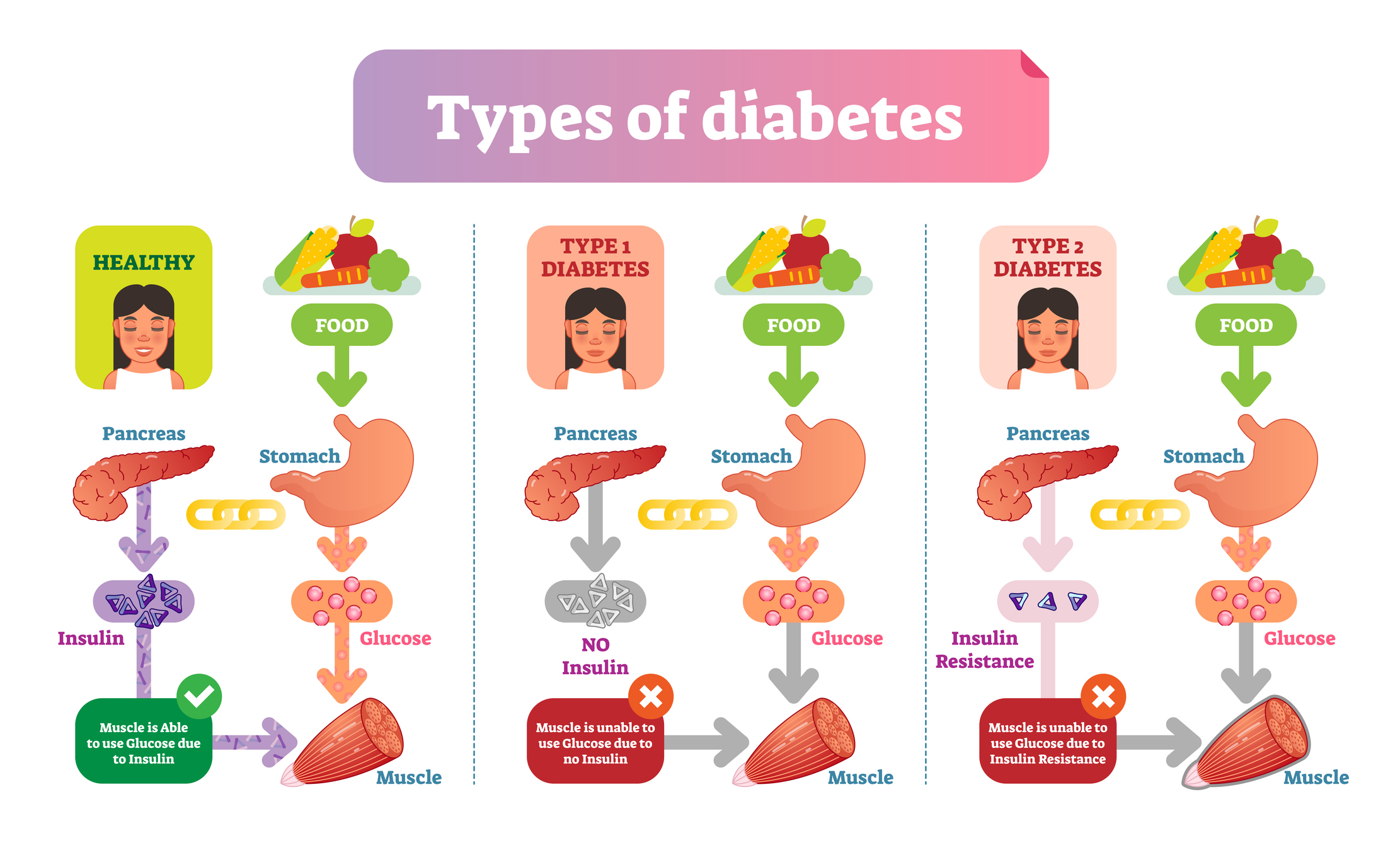
 Diabetes is a chronic disease that occurs when the body doesn’t produce enough insulin or can’t use the insulin it produces effectively.
There are two main types of diabetes: type 1 and type 2.
Type 1 and type 2 diabetes have similar names, however, they are different diseases with distinctive causes.
A key difference between type 1 and type 2 diabetes is type 1 is caused by an autoimmune reaction and develops early in life. Type 2 diabetes develops over several years and is related to lifestyle factors such as being inactive and carrying excess weight, and is usually diagnosed in adults.
Type 1 diabetes is believed to be caused by an autoimmune reaction where the immune system attacks and destroys the insulin-producing beta cells in the pancreas, mistaking them for foreign invaders. After the beta cells are destroyed, the body can no longer produce insulin.
Researchers are unsure why the immune system attacks the body’s cells. They believe it may be due to genetic and environmental factors, such as being exposed to viruses.
People who have type 2 diabetes have an insulin resistance. The body can still produce insulin but is unable to use it effectively.
Researchers aren’t sure why some people become insulin-resistant and others don’t, but several lifestyle factors may contribute to it, such as being inactive and carrying excess weight.
Other genetic and environmental factors may also play a role. When a person develops type 2 diabetes, the pancreas will overcompensate by producing more insulin. Because the body can’t effectively use the insulin, glucose accumulates in the bloodstream.
Risk factors for type 1 diabetes are less clear than risk factors for type 2 diabetes.
The known risk factors for type 1 diabetes include:
- Family history
- Age
Risk factors for type 2 diabetes include:
- Having prediabetes or slightly elevated blood sugar levels
- Carrying excess weight or having obesity
- Having a lot of belly fat
- Being physically active less than three times a week
- Being over the age of 45
- Having had gestational diabetes
- Giving birth to a baby weighing more than nine pounds
- Being Black, Hispanic or Latino, American Indian, or Alaska Native due to structural inequities contributing to health disparities
- Having an immediate family member with type 2 diabetes
- Having polycystic ovary syndrome (PCOS)
If not managed properly, type 1 and type 2 diabetes can lead to symptoms that can include:
- Urinating frequently
- Feeling very thirsty and drinking a lot of fluids
- Feeling very hungry
- Feeling very fatigued
- Having blurry vision
- Having cuts or sores that don’t heal properly
- Having very dry skin
- Having more infections than usual
People with type 1 and type 2 diabetes can also experience irritability, mood changes, and unintentional weight loss.
Unfortunately, type 1 diabetes can’t be prevented. However, it is possible to lower the risk of developing type 2 diabetes through lifestyle changes that include:
- Maintaining a moderate weight
- Working with a healthcare provider to develop a healthy weight-loss plan, if you are overweight
- Increasing activity levels
- Eating a balanced diet and reducing the intake of sugary foods and overly processed foods
If you are experiencing diabetes symptoms, you can call to schedule an appointment with an endocrinologist at Jamaica Hospital Medical Center’s Ambulatory Care Center at (718) 206-7001.
 Follow
All content of this newsletter is intended for general information purposes only and is not intended or implied to be a substitute for professional medical advice, diagnosis or treatment. Please consult a medical professional before adopting any of the suggestions on this page. You must never disregard professional medical advice or delay seeking medical treatment based upon any content of this newsletter. PROMPTLY CONSULT YOUR PHYSICIAN OR CALL 911 IF YOU BELIEVE YOU HAVE A MEDICAL EMERGENCY.
