
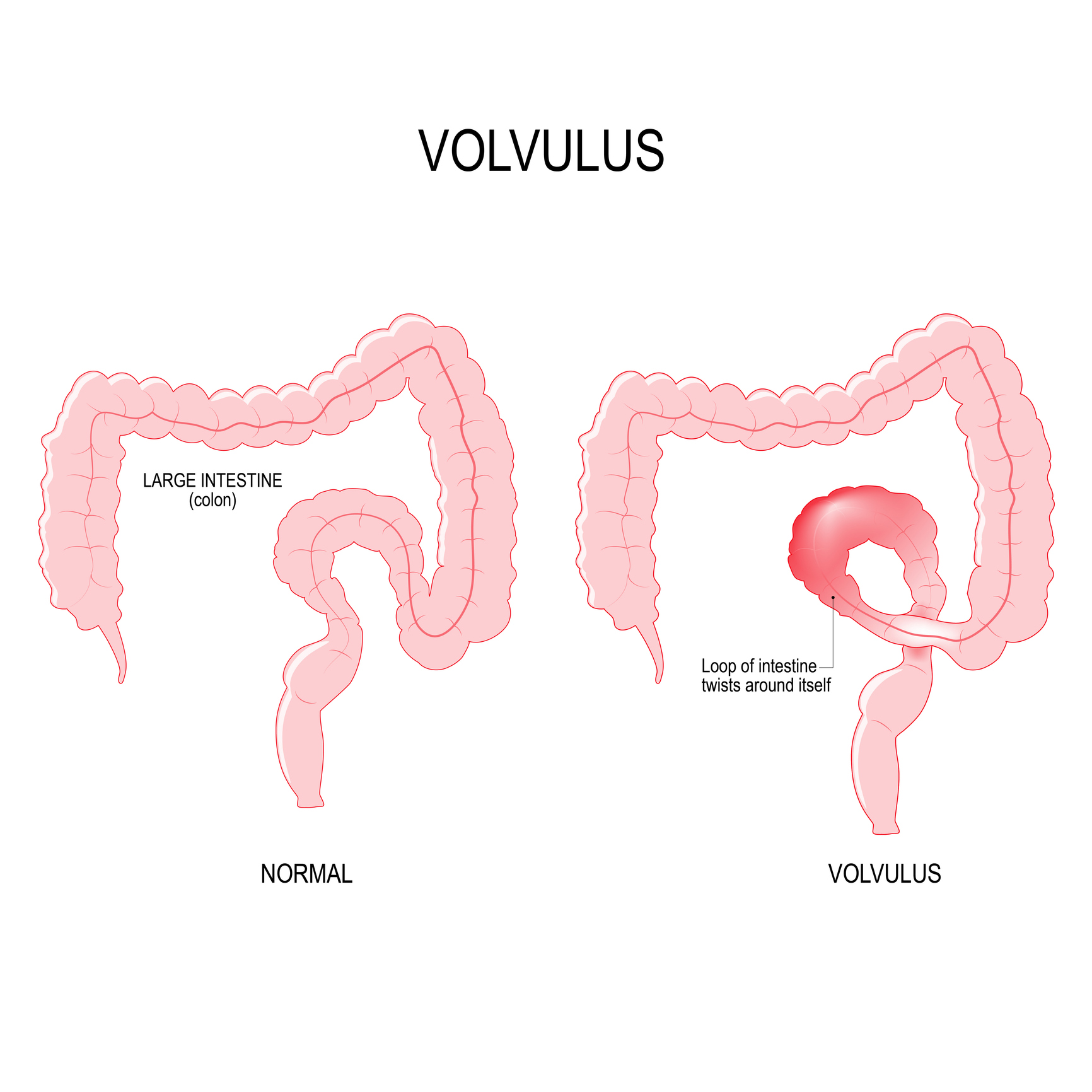
 Volvulus is a condition that occurs when the intestine twists on itself, obstructing the flow of material through the bowel. This can cut off the blood supply to the intestine. Volvulus is commonly due to a birth defect called malrotation. This complication can cause the intestinal tissue to die, and can lead to the following symptoms:
- Yellow or green vomit
- Severe abdominal pain
- Abdominal swelling or distention
- Rapid heart rate
- Rapid breathing
- Bloody stools
- Constipation
- Shock
Volvulus of the small intestine usually occurs in infants and children. Children with volvulus may not have long-term problems if the condition is treated promptly. However, surgery is required within hours of the onset of symptoms for this to occur.
Volvulus in adults typically forms in the colon. This is known as sigmoid volvulus.
Some factors that may increase the risk of volvulus include:
- Chronic constipation
- A high-fiber diet
- Past abdominal surgery
Volvulus is diagnosed based on its symptoms, which include abdominal pain, nausea, abdominal distention, constipation, and inability to pass gas. A healthcare provider may suspect volvulus based on the symptoms and begin looking for a possible cause. This can be done by performing a physical exam and ordering:
- Lab tests
- CT scan
- X-rays
- Contrast enema
Volvulus treatment focuses on two goals, fixing the twisted intestine and preventing future episodes. The process of untwisting the intestines is called “reducing” the volvulus. This requires a flexible sigmoidoscopy procedure, which uses a flexible, tube-like instrument equipped with a light and camera. Inserting and advancing the instrument can help untwist a sigmoid volvulus and restore blood supply while allowing the gastroenterologist to see and assess any tissue damage. This may help determine if surgery is necessary.
If you or your child is suffering from symptoms of volvulus, you can schedule an appointment with a gastroenterologist at Jamaica Hospital Medical Center by calling (718) 206-6742.
 Follow
All content of this newsletter is intended for general information purposes only and is not intended or implied to be a substitute for professional medical advice, diagnosis or treatment. Please consult a medical professional before adopting any of the suggestions on this page. You must never disregard professional medical advice or delay seeking medical treatment based upon any content of this newsletter. PROMPTLY CONSULT YOUR PHYSICIAN OR CALL 911 IF YOU BELIEVE YOU HAVE A MEDICAL EMERGENCY.