
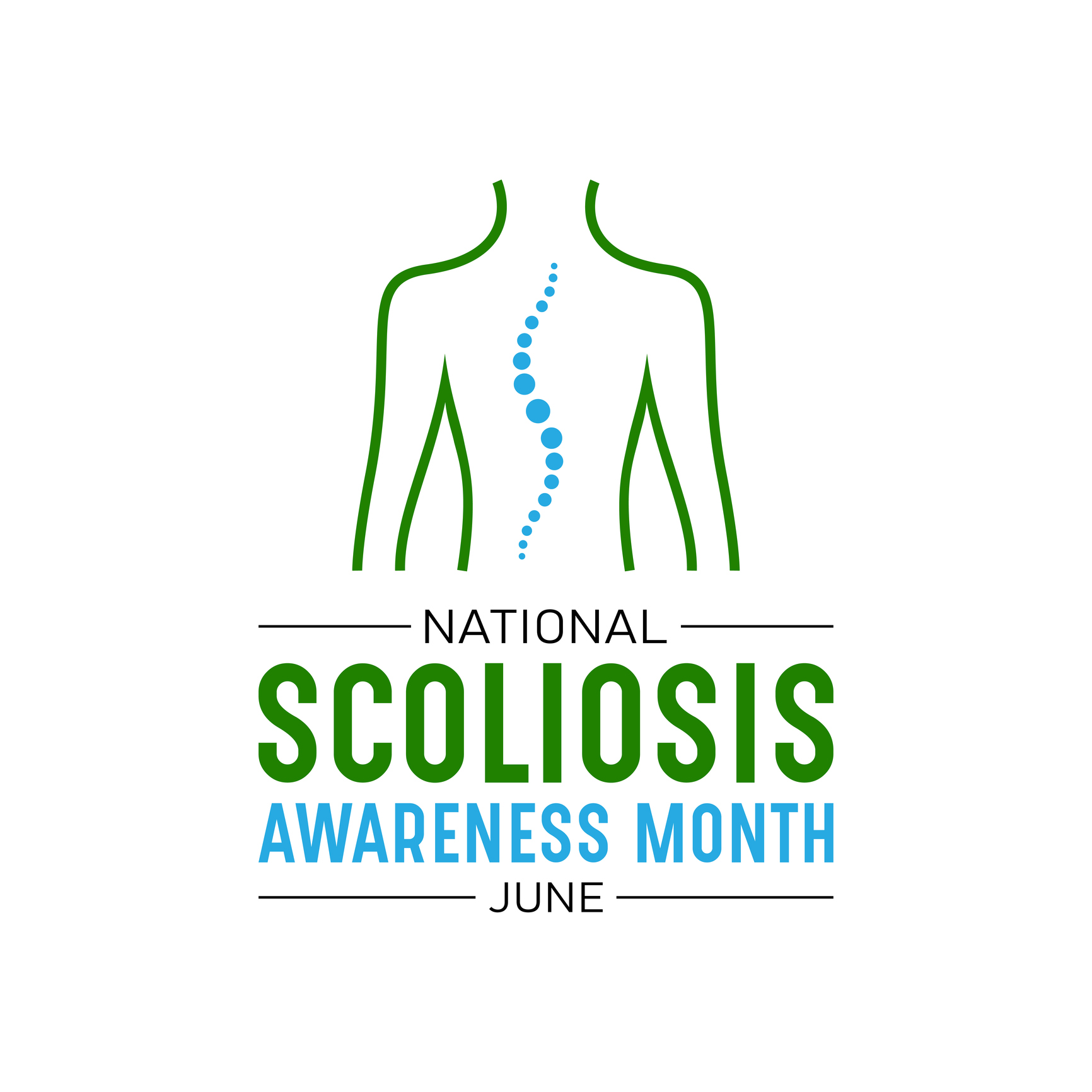
 Scoliosis is a spinal disorder that causes an abnormal spine curvature, in which the spine resembles the letters “S” or “C”.
The most common type of scoliosis is idiopathic scoliosis, which means the cause is unknown but is thought to be genetic. There are three types of idiopathic scoliosis:
- Infantile idiopathic scoliosis- occurs from birth to three years old.
- Juvenile idiopathic scoliosis- occurs from three to nine years old.
- Adolescent idiopathic scoliosis- occurs from 10 to 18 years old.
Some other forms of scoliosis include:
- Congenital scoliosis- when scoliosis is present at birth.
- Neuromuscular scoliosis- when scoliosis is caused by an underlying systemic condition such as cerebral palsy, muscular dystrophy, spina bifida, spinal cord tumors, or paralysis.
- Syndromic scoliosis- when a unique group of spine conditions causes scoliosis. The most common diseases that cause syndromic scoliosis are:
- Marfan’s syndrome
- Ehlers-Danlos syndrome
- Osteogenesis Imperfecta
- Neurofibromatosis
- Prader-Willi syndrome
- Arthrogryposis
- Riley-Day syndrome
There are a wide range of causes and ages for when scoliosis can occur. However, scoliosis may appear during the main growth years for children (years 10 to 12), which is the growth spurt period for children before puberty.
During this time, scoliosis will often present with the following symptoms:
- One of the child’s shoulder blades is higher than the other.
- The appearance of the child’s head is not centered with the rest of the body.
- Uneven hips or one hip sticks out more than the other.
- Pushed-out ribs
- Difficulty breathing due to a reduced area for lung expansion.
- Back pain and discomfort
- When the child bends forward, it appears that the two sides of the back are different heights.
The main goal for patients with scoliosis is to get an early diagnosis. Scoliosis is diagnosed when a pediatric orthopedist uses a physical exam and X-rays to diagnose early-onset scoliosis.
Scoliosis can be treated non-surgically and surgically. Some non-surgical treatments for scoliosis include:
- Observation
- Bracing
- The Risser cast
Some surgical treatments for scoliosis include:
- Spinal fusion surgery
- The growing rod technique
Scoliosis is treatable. The sooner a child is diagnosed, the less likely they will need surgery and the healthier they will be.
If you think your child may have an abnormal spine curvature, consult your pediatrician about an evaluation. To schedule an appointment with a pediatrician at Jamaica Hospital Medical Center, please call 718-206-7001.
 Follow
All content of this newsletter is intended for general information purposes only and is not intended or implied to be a substitute for professional medical advice, diagnosis or treatment. Please consult a medical professional before adopting any of the suggestions on this page. You must never disregard professional medical advice or delay seeking medical treatment based upon any content of this newsletter. PROMPTLY CONSULT YOUR PHYSICIAN OR CALL 911 IF YOU BELIEVE YOU HAVE A MEDICAL EMERGENCY.