Treatments to Reduce Alzheimer’s Disease

Alzheimer’s disease is a degenerative brain disease and the most common type of dementia. It causes a slow decline in memory, thinking, and reasoning skills. Age is the biggest risk factor for the disease, followed by sex and family history.

There is currently no cure for Alzheimer’s disease. However, there is progress in Alzheimer’s and dementia research that is creating promising new treatments for those living with the disease.

The U.S. Food and Drug Administration (FDA) has approved medications for Alzheimer’s disease, which fall into two categories:

· Drugs that change disease progression in people living with early Alzheimer’s

· Drugs that temporarily ease some symptoms of Alzheimer’s

Drugs that change disease progression target the underlying biology of the disease process by aiming to slow the decline of memory and thinking, as well as function.

Anti-amyloid treatments work by removing a protein that accumulates into plaques in the brain, called beta-amyloid. Each treatment works differently and targets beta-amyloid at a different stage of plaque formation.

These treatments change the course of the disease significantly for those who are in the early stages by giving them more time to be able to participate in daily activities and live independently.

The two treatment therapies that change disease progression are Donanemab and Lecanemab.

Donanemab is an anti-amyloid antibody intravenous (IV) infusion therapy that is delivered every four weeks to treat early Alzheimer’s disease, which includes people who are living with mild cognitive impairment (MCI) or mild dementia due to Alzheimer’s who have been diagnosed with elevated beta-amyloid in the brain.

Donanemab was the third therapy that demonstrated that removing beta-amyloid from the brain decreases cognitive and functional decline in people living with early Alzheimer’s disease.

Lecanemab was the second therapy to demonstrate that removing beta-amyloid from the brain decreases cognitive and functional decline in people living with early Alzheimer’s disease.

It is important to note that anti-amyloid treatments do have side effects, such as allergic reactions, amyloid-related abnormalities (ARIA), infusion-related reactions, headaches, and falls.

As Alzheimer’s progresses, brain cells die, and the connections among those cells are lost. When this occurs, it causes cognitive and noncognitive symptoms to worsen.

Although these medications don’t stop the damage that Alzheimer’s disease causes to brain cells, they may lessen or stabilize symptoms for a limited time by affecting specific chemicals involved in delivering messages among and between the brain’s nerve cells.

The medications that are prescribed to treat symptoms related to memory and thinking include:

Cholinesterase inhibitors are prescribed to treat symptoms related to memory, thinking, language, judgment, and other thought processes. These medications prevent the breakdown of a chemical messenger important for memory and learning, called acetylcholine. Cholinesterase inhibitors support communication between nerve cells. The most prescribed cholinesterase inhibitors include:

· Benzgalantamine treats mild-to-moderate dementia due to Alzheimer’s disease

· Donepezil treats mild-to-severe dementia due to Alzheimer’s disease

· Galantamine treats mild-to-moderate dementia due to Alzheimer’s disease

· Rivastigmine treats mild-to-moderate dementia due to Alzheimer’s disease as well as mild-to-moderate dementia due to Parkinson’s disease

Possible side effects for these medications include:

· Headache

· Dizziness

· Diarrhea

· Increased frequency of bowel movements

· Nausea

· Vomiting

· Loss of appetite

Glutamate regulators are medications prescribed to improve memory, attention, reasoning, language, and the ability to perform simple tasks. This medication regulates the activity of glutamate, a different chemical messenger that helps the brain process information.

Memantine is a glutamate regulator that treats moderate-to-severe Alzheimer’s disease. It can cause side effects that include headaches, constipation, confusion, and dizziness.

A cholinesterase inhibitor combined with a glutamate regulator, such as donepezil and memantine, treats moderate-to-severe Alzheimer’s disease. Possible side effects can include nausea, vomiting, loss of appetite, confusion, dizziness, increased frequency of bowel movements, and constipation.

Alzheimer’s disease doesn’t just impact memory and thinking. It also impacts a person’s quality of life by affecting a variety of behavioral and psychological symptoms that come with dementia, such as agitation, hallucinations and delusions, and sleep disturbances. Some medications focus on treating these non-cognitive symptoms for a time; however, it is important to try non-drug strategies to manage behaviors before adding medications.

The FDA has approved only one drug to manage symptoms of insomnia that has been tested in people who are living with dementia, and one that treats agitation.

Orexin receptor antagonists are prescribed to address symptoms of insomnia and inhibit the activity of a type of neurotransmitter involved in the sleep-wake cycle called orexin.

Suvorexant treats insomnia and has been shown in clinical trials to be effective for people who are living with mild to moderate Alzheimer’s disease. Possible side effects can include a risk of impaired alertness and motor function, worsening depression or suicidal thinking, complex sleep behaviors, sleep paralysis, and compromised respiratory function.

Atypical antipsychotics are a group of antipsychotic drugs that target the serotonin and dopamine chemical pathways in the brain. These drugs are mainly used to treat schizophrenia and bipolar disorder, as well as add-on therapies for major depressive disorder. The FDA requires that all atypical antipsychotics carry a safety warning that the medication has been associated with an increased risk of death in older patients who are experiencing dementia related psychosis.

Many atypical antipsychotic medications are used “off-label” to treat dementia-related behaviors, and there is only one FDA-approved atypical antipsychotic to treat agitation associated with dementia due to Alzheimer’s disease. It is important to try non-drug strategies to help manage non-cognitive symptoms such as agitation before adding any medications.

Brexpiprazole treats agitation associated with dementia due to Alzheimer’s disease. Possible side effects may include weight gain, sleepiness, common cold symptoms, dizziness, and restlessness.

If you or a loved one is experiencing any symptoms of Alzheimer’s disease or would like to learn more about treatment options, you can consult with a neurologist at Jamaica Hospital Medical Center. To schedule an appointment, please call (718) 206-7246.

All content of this newsletter is intended for general information purposes only and is not intended or implied to be a substitute for professional medical advice, diagnosis or treatment. Please consult a medical professional before adopting any of the suggestions on this page. You must never disregard professional medical advice or delay seeking medical treatment based upon any content of this newsletter. PROMPTLY CONSULT YOUR PHYSICIAN OR CALL 911 IF YOU BELIEVE YOU HAVE A MEDICAL EMERGENCY.


How to Care for a Loved One Who Has Dementia

Caring for a loved one with dementia comes with many emotional and physical challenges. Whether you are providing round-the-clock care at home, or visiting them at a homecare facility a couple or few times a week, understanding how to better care for a loved one with the condition can have a transformative effect on your relationship with them.

Dementia is a general term that represents a group of diseases and illnesses that cause the loss of cognitive functioning to the point that it interferes with a person’s daily life and activities.

Cognitive changes they may experience include:

  • Memory loss, usually noticed by someone else
  • Problems communicating or finding words
  • Trouble with visual and spatial abilities, such as getting lost while driving
  • Problems with reasoning or problem-solving
  • Trouble performing complex tasks
  • Trouble with planning and organizing
  • Poor coordination and control of movements
  • Confusion and disorientation

Some people with dementia can’t control their emotions, and they may also have psychological changes, such as:

  • Personality changes
  • Depression
  • Anxiety
  • Agitation
  • Inappropriate behavior
  • Hallucinations

Dementia is caused by damage to your brain, affecting its nerve cells and destroying the brain’s ability to communicate with its various areas. Dementia can also result from blocked blood flow to the brain, depriving it of oxygen and nutrients. Without oxygen and nutrients, brain tissue dies.

Progressive dementias get worse over time. Types of dementias that worsen and aren’t reversible include:

  • Alzheimer’s disease (the most common cause of dementia)
  • Vascular dementia
  • Lewy body dementia
  • Frontotemporal dementia
  • Mixed dementia

As your loved one may be experiencing changes in thinking, remembering, and reasoning in ways that affect their daily life and activities, they will need more help with simple, everyday tasks. Here are some ways you can care for a loved one to ensure they are provided with compassionate and effective support:

  • Establish a consistent daily routine that offers a sense of security for your loved one. Schedule their meals, medications, and activities at the same times each day. This can help reduce confusion and anxiety and make the caregiving process smoother.
  • Communicate clearly and calmly with your loved one. This can be achieved by doing the following:
    • Using simple words and short sentences
    • Maintaining eye contact and speaking slowly
    • Being patient and giving them time to process and respond
  • Making your loved one’s environment dementia-friendly to ensure the home is safe and easy to navigate. You can do this by:
    • Removing tripping hazards
    • Labeling drawers and rooms with words and pictures
    • Using night lights to reduce nighttime disorientation
  • Encourage their independence and dignity by allowing them to do as much as they can on their own, breaking tasks into manageable steps, and offering gentle guidance when needed
  • Avoid arguing and correcting a misstatement or memory error. Use validation therapy by acknowledging their feelings and redirecting the conversation gently, as this can reduce their agitation
  • Engage in meaningful activities that stimulate the mind and body, which can boost their mood and cognitive function. These activities can include:
    • Listening to music
    • Looking at old photos
    • Simple puzzles and crafts
  • Watch for signs of discomfort as individuals with dementia may not always clearly express their pain or discomfort. Watch for non-verbal cues, such as restlessness, facial expressions, or changes in behavior
  • Take care of yourself. As a caregiver of a loved one with dementia, burnout is common. Prioritize your own health by taking breaks, seeking emotional support, and joining caregiver support groups
  • Plan for your loved one’s future by making early decisions about legal documents, long-term care options, and financial planning
  • Use assistive technology and tools such as reminder clocks, GPS trackers, and medication dispensers

If your loved one is experiencing any of these dementia symptoms, you can schedule an appointment with a neurologist at Jamaica Hospital Medical Center’s Ambulatory Care Center by calling (718) 206-7001. If they are experiencing an emergency, call 911.


All content of this newsletter is intended for general information purposes only and is not intended or implied to be a substitute for professional medical advice, diagnosis or treatment. Please consult a medical professional before adopting any of the suggestions on this page. You must never disregard professional medical advice or delay seeking medical treatment based upon any content of this newsletter. PROMPTLY CONSULT YOUR PHYSICIAN OR CALL 911 IF YOU BELIEVE YOU HAVE A MEDICAL EMERGENCY.
ALS

Amyotrophic lateral sclerosis, commonly referred to as ALS, is a neurological disorder that affects nerve cells in the brain and spinal cord. ALS causes loss of muscle control.

ALS is often called Lou Gehrig’s disease after the baseball player who was diagnosed with it. There is no exact known cause of the disease. However, a small number of cases, about 10%, are inherited. For the other cases, there isn’t a known cause.

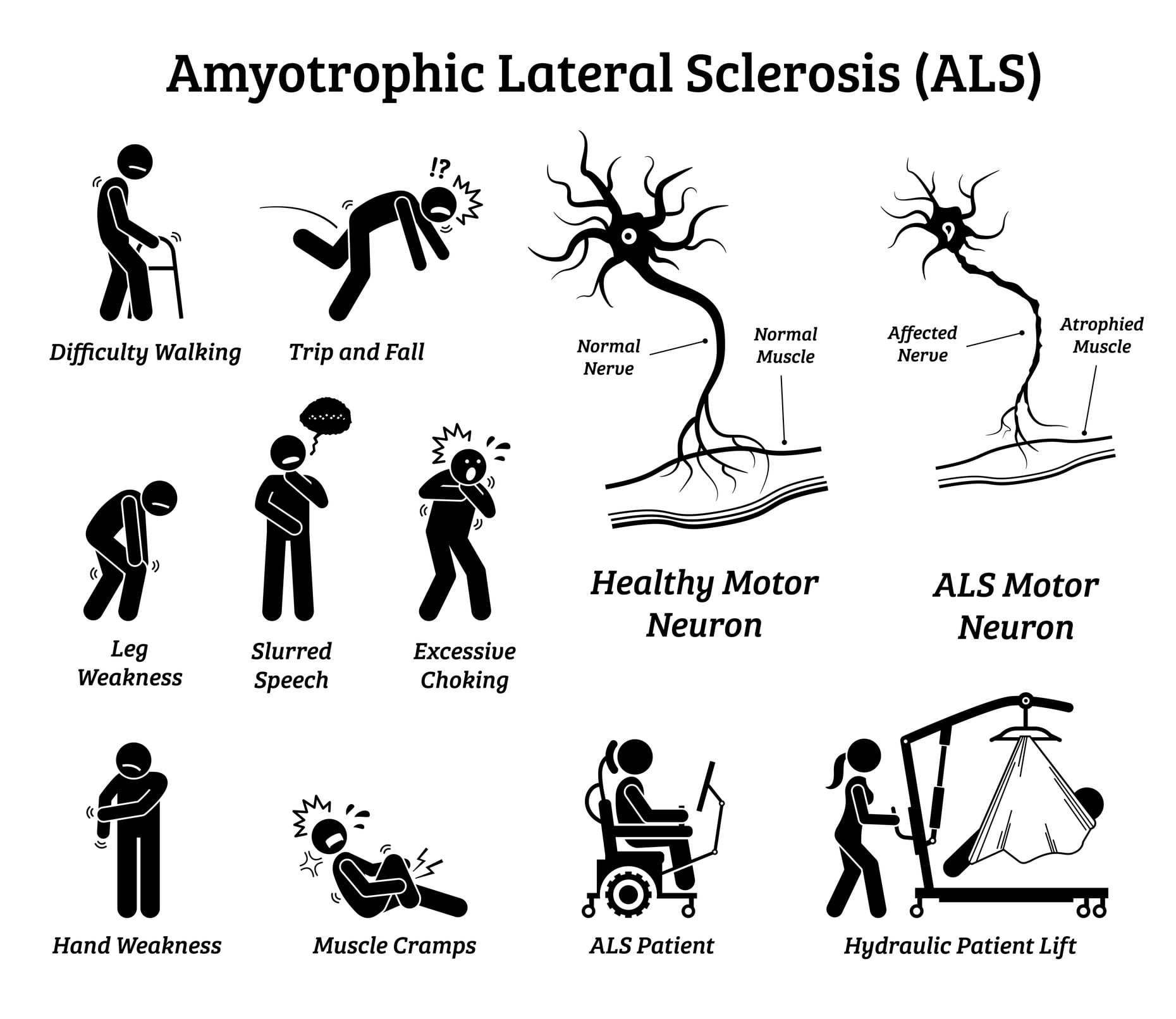
The symptoms of ALS can vary from person to person. Symptoms depend on which nerve cells are affected. ALS typically begins with muscle weakness that gradually worsens over time. Symptoms might include:

  • Trouble walking or doing usual daily activities
  • Tripping and falling
  • Weakness in the legs, feet, or ankles
  • Hand weakness or clumsiness
  • Weakness associated with muscle cramps and twitching in the arms, shoulders, and tongue
  • Untimely crying, laughing, or yawning
  • Thinking or behavioral changes

ALS often starts in the hands, feet, arms, or legs, with muscle twitching and weakness in an arm or leg. It then spreads to other parts of the body, causing muscles to get weaker as more nerve cells die. The disease eventually affects control of the muscles needed to move, speak, chew, eat, swallow, and breathe. Unfortunately, there is no cure for this fatal disease.

There is generally no pain in the early stages of ALS. Pain is also not common in the later stages. ALS usually doesn’t affect bladder control. And it also doesn’t affect the senses, including the ability to taste, smell, touch, and hear.

There are several risk factors for ALS, including:

  • Genetics
  • Age
  • Sex

Several environmental factors have been associated with an increased risk of ALS. They include:

  • Smoking
  • Environmental toxin exposure
  • Military service

ALS can cause several complications as the disease progresses, including:

  • Breathing problems
  • Speaking problems
  • Eating problems
  • Dementia

ALS can be hard to diagnose early because it can have similar symptoms to other diseases. Tests that can rule out other conditions or help diagnose the disease can include:

  • Electromyogram (EMG)
  • Nerve conduction study
  • MRI
  • Blood and urine tests
  • Spinal tap
  • Muscle biopsy
  • Nerve biopsy

Treatments for ALS can’t reverse the damage, but they can slow the progression of symptoms. They can also prevent complications and make you more comfortable and independent.

You may need a team of healthcare providers and doctors trained in many areas to provide your care. This team will work together to prolong your survival and improve your quality of life. They will work to select the right treatment options for you.

The Food and Drug Administration (FDA) has approved two medicines for treating ALS:

  • Riluzole
  • Edaravone

There are many forms of therapy and forms of support when ALS affects your ability to breathe, speak, and move. They include:

  • Breathing care
  • Physical therapy
  • Occupational therapy
  • Speech therapy
  • Nutritional support
  • Psychological and social support

If you are experiencing any symptoms of ALS, you can consult with a neurologist at Jamaica Hospital Medical Center. To schedule an appointment, please call (718) 206-7246.

All content of this newsletter is intended for general information purposes only and is not intended or implied to be a substitute for professional medical advice, diagnosis or treatment. Please consult a medical professional before adopting any of the suggestions on this page. You must never disregard professional medical advice or delay seeking medical treatment based upon any content of this newsletter. PROMPTLY CONSULT YOUR PHYSICIAN OR CALL 911 IF YOU BELIEVE YOU HAVE A MEDICAL EMERGENCY.