 Integrative health is a progressive approach to healthcare in which leading treatment services offered by modern medicine are combined with a deep understanding of the nature of illness, healing, and wellness.
This approach combines modern and holistic medicines to help prevent the onset of disease, address existing chronic conditions, and promote healing in patients at the center of a treatment plan that considers their physical, emotional, and social needs.
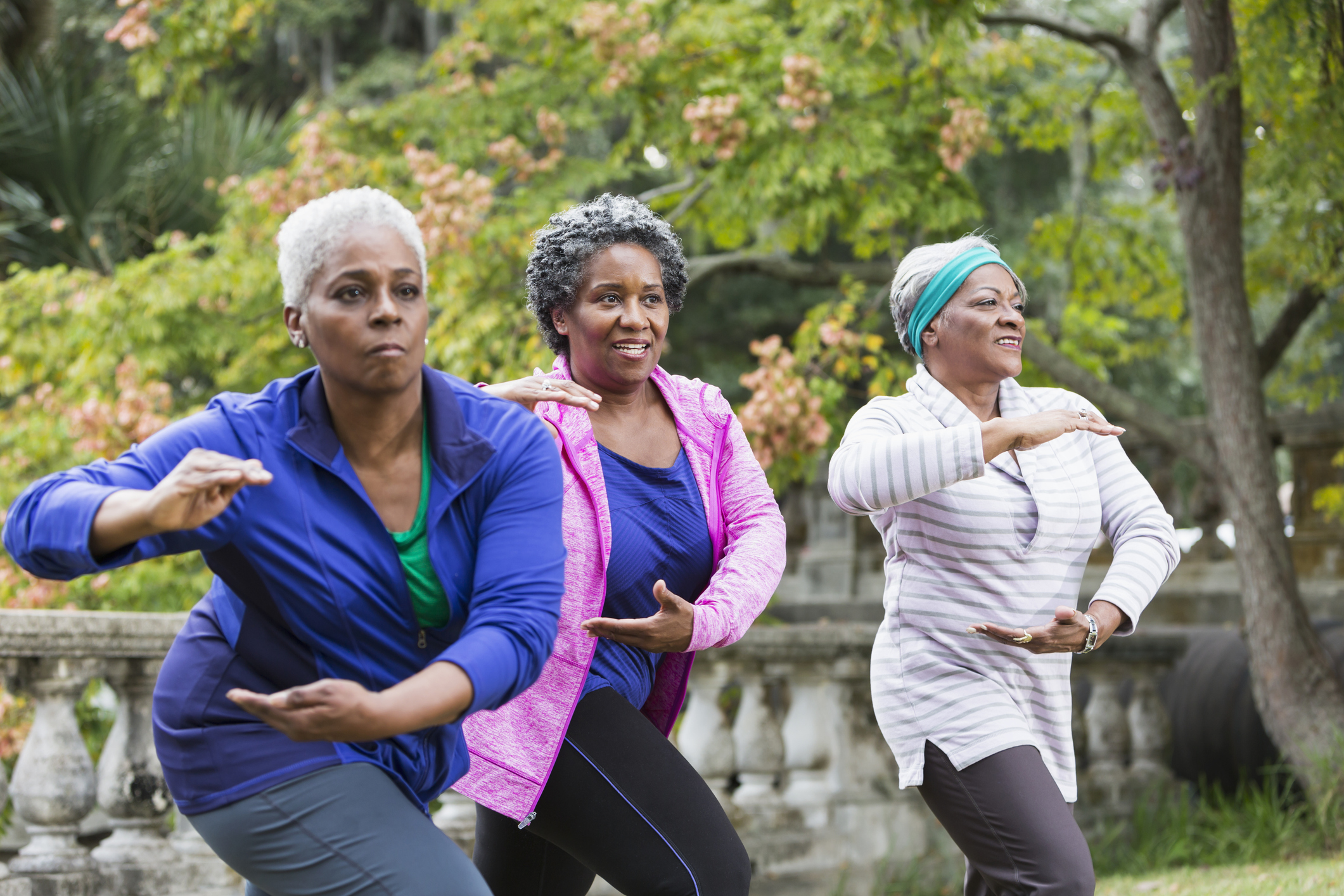
A treatment plan that accomplishes this is tai chi. Tai chi has been a tenet of traditional Chinese medicine (TCM) for centuries. Sometimes called meditation in motion, tai chi is a series of exercises that help bring harmony between the body’s energy and mind, by using slow, highly coordinated movements and physical postures with meditation and controlled breathing, aimed to energize and balance the body’s energy, known as qi, pronounced “chi”. According to traditional Chinese principles, when the qi is balanced, the body functions at its best.
Although tai chi is a low-impact exercise with movements that look leisurely, these movements are bodyweight exercises with physical demand.
There are hundreds of studies on tai chi, with researchers finding that tai chi has several benefits that may help with numerous health concerns. Here are some health benefits of tai chi:
- According to the Centers for Disease Control and Prevention (CDC), falls are the leading cause of death for older adults, with about one in four adults 65 years and older experiencing a fall every year. A review of ten studies on tai chi and balance found that people who practiced it had up to 50% fewer falls than those who didn’t. Both the CDC and the American Geriatric Society recognize tai chi as an effective way to lower fall risk as it helps build stability and strength, increasing balance, which helps prevent falls.
- Research indicates that practicing tai chi can slow the progression of dementia by boosting cognition and brain health, as it can help with learning, memory, and other mental functions. Researchers found that older adults who practiced tai chi daily for 12 weeks had more activity in their prefrontal cortex, the area of the brain responsible for higher-level thinking skills. A study conducted by tai chi researcher and Chief of Geriatrics in the Division of General Internal Medicine and Geriatrics at Oregon Health & Science University, Elizabeth Eckstrom, showed that people who practiced a simple form of tai chi called Tai Ji Quan twice a week for six months improved their score on a cognitive test by one and a half points. Additionally, the study showed that if they added a cognitive challenge while practicing tai chi, such as counting backwards from 20 or spelling words backward, their scores jumped by another three points.
- Tai chi can bring a sense of calmness and quiet as it focuses on breathing and movement, which takes the mind away from any stressors, helping the stress melt away. One study conducted on participants who are deemed healthy but stressed showed that practicing tai chi for 12 weeks lowered their anxiety levels substantially.
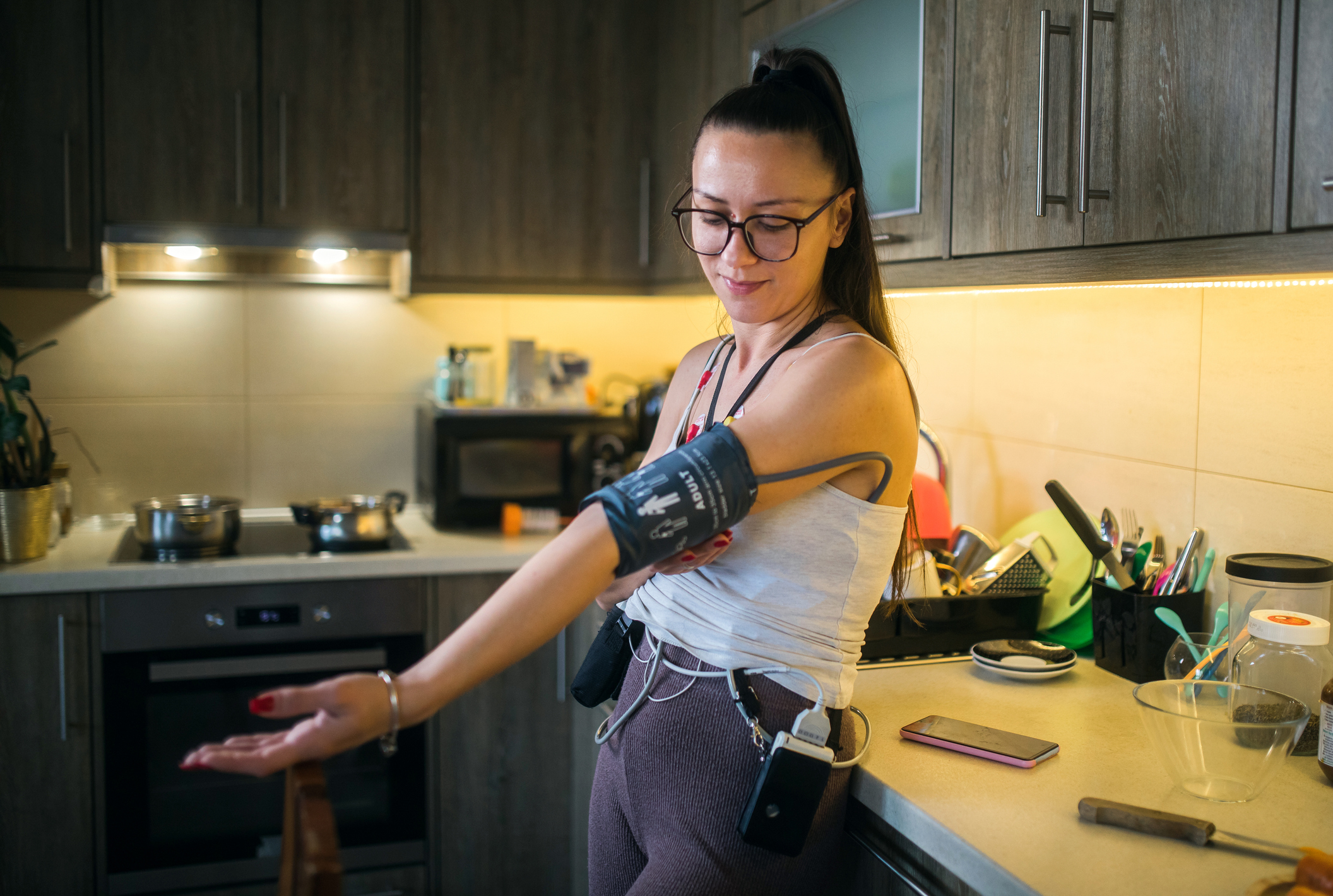
- There are studies that have shown that tai chi can reduce blood pressure as well as or better than antihypertensive drugs or other types of exercise. In 2024, one randomized controlled trial published in the Journal of the American Medical Association (JAMA) Open Network assigned 342 people with prehypertension to two groups: one group performed four sessions of tai chi each week, and the other group performed four sessions of aerobic exercise. After a year, both groups displayed lower systolic blood pressure readings. However, the group that practiced tai chi experienced a larger decline of 7.01 mg Hg on average, compared to the aerobic group, which was 4.61 mm Hg.
- According to the CDC, one in five people in the U.S. lives with chronic pain that affects their daily life and activities. One review of people with chronic knee osteoarthritis found that they had significantly less pain and better physical function after practicing tai chi. The American College of Rheumatology and the Arthritis Foundation strongly recommend practicing tai chi to manage both chronic knee and hip osteoarthritis, as it helps improve muscle and core strength and coordination, leading to better joint stability. Studies have also indicated that tai chi can help people with fibromyalgia, with research showing it may relieve symptoms even better than aerobic exercise.
- In 2021, a review of 23 studies by the National Center for Complementary and Integrative Health found that tai chi improved the exercise capacity, lung function, and quality of life for patients with chronic obstructive pulmonary disease (COPD) due to tai chi’s focus on deep abdominal breathing and movement, which can help increase breathing efficiency and oxygen intake.
- Practicing tai chi can help the 10%-30% of older adults who suffer from insomnia. One systematic review of nine randomized trials published in the Journal of Sleep Disorders and Therapy reported that older adults who practiced tai chi one and a half to three hours a week significantly improved their sleep quality and had an enhanced functional ability. What’s more, Elizabeth Eckstrom’s research showed that people fell asleep 17 minutes sooner and slept 42 minutes longer after doing tai chi.
There is also other research that has linked tai chi to lower cholesterol and inflammation levels, and evidence that it may help reduce complications of Parkinson’s disease as well.
If you are interested in learning more about any of our integrative health services, events, or classes, or would like to schedule an appointment, please call us at (718) 206-5675.
 Follow
All content of this newsletter is intended for general information purposes only and is not intended or implied to be a substitute for professional medical advice, diagnosis or treatment. Please consult a medical professional before adopting any of the suggestions on this page. You must never disregard professional medical advice or delay seeking medical treatment based upon any content of this newsletter. PROMPTLY CONSULT YOUR PHYSICIAN OR CALL 911 IF YOU BELIEVE YOU HAVE A MEDICAL EMERGENCY.