
Quinoa Edamame Salad

QUINOA EDAMAME SALAD aka Traffic Light Salad

Yields:  Approximately 12 – 15 servings

Preparation time and cook time: total 15 minutes


Salad Ingredients:

1 cup uncooked quinoa, prepared according to package direction

1 12 oz bag frozen shelled edamame, defrosted

3 scallions chopped

1 red pepper chopped

1 can of yellow corn

1 avocado chopped

Dressing Ingredients:

¼ cup red wine vinegar

3 Tbsp water

½ cup olive oil

1 Packet Good Seasons Italian Salad Dressing Packet (0.7oz)

Directions:

In a small pot, combine quinoa and 1 cup water. Bring to a boil; reduce heat. Cover; simmer for 12 – 15 minutes or until water is absorbed. Remove from heat; set aside.

In a large bowl combine the quinoa, edamame, corn, red pepper, scallions, and avocado; toss to combine. Add dressing; toss to coat.

Source: Anonymous

Registered Dietitians at Jamaica Hospital Medical Center assist patients to grow their knowledge about nutrition, wellness, and healthy eating. An appointment with a Registered Dietitian consists of a comprehensive nutrition assessment, nutrition education, behavior modification counseling and goal setting. Each goal established is individually tailored to patient’s specific nutritional and medical issues. Our outpatient Registered Dietitians specialize in weight management counseling, diabetes, as well as pediatric and prenatal nutrition.

To schedule an appointment, please call 718-206-7056.

All content of this newsletter is intended for general information purposes only and is not intended or implied to be a substitute for professional medical advice, diagnosis or treatment. Please consult a medical professional before adopting any of the suggestions on this page. You must never disregard professional medical advice or delay seeking medical treatment based upon any content of this newsletter. PROMPTLY CONSULT YOUR PHYSICIAN OR CALL 911 IF YOU BELIEVE YOU HAVE A MEDICAL EMERGENCY.

Jamaica Hospital Reducing Pressure Injuries for Hospital Patients Through Wound Care Service

Jamaica Hospital now provides a comprehensive consultative wound care service for all inpatients.

The purpose of the service, offered though the Nursing Department and run by Rosalyn Beswick, Clinical Nurse Manager and Certified Wound Care Nurse, is to prevent pressure injuries from occurring through education and intervention.

A pressure injury (previously known as pressure ulcer) is defined as localized damage to the skin and/or underlying soft tissue usually over a bony prominence. The injury can present as intact skin or an open ulcer and may be painful. Pressure injuries usually occur as a result of intense and/or prolonged pressure.

Rosalyn and her team of specially trained wound care technicians provide around the clock coverage for all patients in need of their services. The team performs approximately 50 consults every week with the number growing steadily. “As the providers become more familiar with the services we provide and learn how we can contribute to the recovery of the patients, they are utilizing us more and more” states Rosalyn.

One of the main focuses of the wound care team is to provide instructions on how to properly position patients to allow for the appropriate distribution of weight.  Another service offered includes monitoring the nutritional status of the patient to ensure they receive a diet high in protein and vitamins as well as adequate hydration.  Lastly, the wound care specialists assess patients and offer the necessary moisture management, needed to prevent a breakdown of the skin. To support this effort, hospital administration has made an investment to purchase over 200 new bed surfaces and additional foam wedges, which will greatly benefit the team and the patients they serve.

The results of this program have been overwhelmingly positive. Since the inception of the service, the hospital’s pressure injury incidence rate went from 3.48 to .93, well below the national average. As a result Jamaica Hospital’s patients have benefited by reporting decreased pain and suffering and improved quality of life.

Rosalyn is very excited about how well the service has been received, “The patients are thankful for their improved quality of life and the staff is appreciative to have the resource available to them.” With more and more doctors, nurses and discharge planners counting on the services offered by the wound care team, Jamaica Hospital is confident that this service will continue to improve the overall quality of care provided to our patients.”

All content of this newsletter is intended for general information purposes only and is not intended or implied to be a substitute for professional medical advice, diagnosis or treatment. Please consult a medical professional before adopting any of the suggestions on this page. You must never disregard professional medical advice or delay seeking medical treatment based upon any content of this newsletter. PROMPTLY CONSULT YOUR PHYSICIAN OR CALL 911 IF YOU BELIEVE YOU HAVE A MEDICAL EMERGENCY.

June is Men’s Health Month

The month of June has been recognized as Men’s Health Month. The reason for this designation is to bring awareness of preventable health issues and to encourage early detection and treatment of diseases prevalent in men.
The leading causes of death among men are:
• Heart Disease
• Cancer
• Diabetes
• Lung Disease
• Injuries
• Stroke
• HIV/AIDS
Some of the reasons that men tend to have more serious chronic illnesses is because more men than women don’t have health insurance, men tend to have more physically demanding jobs with greater safety risks. Additionally  more men smoke than women and they also tend to  take greater risks with unsafe behavior.
Women tend to live five years longer than men and one of the reasons for this is that women usually take better care of their health. Men are often guilty of waiting until a disease has progressed to a more serious level before they seek help. There is an old adage that if a man is in a doctor’s waiting room, most likely a woman brought him there for an exam.
During the month of June, organizations across the country hold health awareness campaigns to educate men about various health issues that they may be at risk for and to encourage them to see a doctor regularly. If you would like to schedule an appointment with a doctor at Jamaica Hospital, please call 718-206-7001.

All content of this newsletter is intended for general information purposes only and is not intended or implied to be a substitute for professional medical advice, diagnosis or treatment. Please consult a medical professional before adopting any of the suggestions on this page. You must never disregard professional medical advice or delay seeking medical treatment based upon any content of this newsletter. PROMPTLY CONSULT YOUR PHYSICIAN OR CALL 911 IF YOU BELIEVE YOU HAVE A MEDICAL EMERGENCY.

What is the right way to brush your teeth?

What is the right way to brush your teeth?

A.  From side to side

B.  Up and down

C.  In small circles

If you answered A, you’re right! According to the American Dental Association you should:

  • Place your toothbrush at a 45-degree angle to the gums.
  • Gently move the brush from side to side in short (tooth-wide) strokes.
  • Brush the outer surfaces, the inner surfaces, and the chewing surfaces of the teeth.
  • To clean the inside surfaces of the front teeth, tilt the brush vertically and make several up-and-down strokes.
  • Brush your tongue to remove bacteria and keep your breath fresh.

The ADA also recommends brushing your teeth twice a day with a soft-bristled brush. The size and shape of your brush should fit your mouth allowing you to reach all areas easily. You should replace your toothbrush every three or four months, or sooner if the bristles are frayed.

To make an appointment with a dentist at Jamaica Hospital Medical Center’s Dental Center call 718-206-6980.

All content of this newsletter is intended for general information purposes only and is not intended or implied to be a substitute for professional medical advice, diagnosis or treatment. Please consult a medical professional before adopting any of the suggestions on this page. You must never disregard professional medical advice or delay seeking medical treatment based upon any content of this newsletter. PROMPTLY CONSULT YOUR PHYSICIAN OR CALL 911 IF YOU BELIEVE YOU HAVE A MEDICAL EMERGENCY.

Jamaica Hospital Now Incorporates Holistic Care For Our Patients

Patient-centered care has always been a major focus at Jamaica Hospital Medical Center but the Nursing Department’s newest effort really demonstrates how important satisfying our patients’ needs and improving their experience is to the hospital.

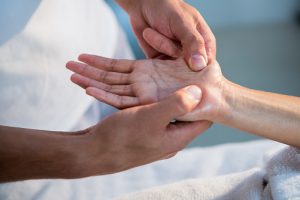
Jamaica Hospital is now incorporating a holistic approach to the care we provide in multiple areas. Through the addition of a Certified Holistic Nurse trained in various holistic modalities, hand and foot massages (reflexology) are now being provided as a consultative service and have been shown to be very beneficial to both patients and providers.

One important benefit of reflexology is that it relaxes the patient during what can be an anxiety-filled time for them. Patients often find that a few minutes of quiet time and gentle touch offers them an opportunity to release tension and feel more at ease.  When patients feel more comfortable, it creates an atmosphere that allows for better communication leading to better care.

According to Janis Sharkey, Certified Holistic Nurse, “the healing power of touch can make all the difference for the patient’s experience. By taking a holistic approach, we are focusing on healing the many factors that influence us mentally and emotionally as well as physically.” Research has indicated that gentle touch not only reduces stress and anxiety, but it can also minimize pain, increase blood circulation, and support immune function.

Additionally, Ms. Sharkey has worked with new mothers by teaching them movement skills based on the Alexander Technique, an educational process that develops the ability to realign posture and avoid unnecessary muscular tension. By applying the Alexander principles when lifting or carrying they can avoid back and neck injuries. She also teaches these and other principles to hospital staff and new hires during orientation to equip them with the skills to avoid injury and nurture self-care.

In the hospital’s Ambulatory Surgery Unit Janis has trained staff to provide holistic care to patients awaiting surgery. They provide reflexology to patients in a quiet environment surrounded by soothing music selected for relaxation. Since this protocol has been initiated there has been a notable decrease in requests for pain medication as well as faster recovery times.

Whether being offered to our patients or our staff, the benefits of holistic care are numerous and Jamaica Hospital is happy to offer this service to all.

All content of this newsletter is intended for general information purposes only and is not intended or implied to be a substitute for professional medical advice, diagnosis or treatment. Please consult a medical professional before adopting any of the suggestions on this page. You must never disregard professional medical advice or delay seeking medical treatment based upon any content of this newsletter. PROMPTLY CONSULT YOUR PHYSICIAN OR CALL 911 IF YOU BELIEVE YOU HAVE A MEDICAL EMERGENCY.

History of Dentistry

Dentistry is one of the world’s oldest medical professions. As early as 5000BC tooth decay was described as being caused by dental worms and this belief was not proven false until the 1700’s.
In 166 – 200 AD Italy the Etruscans began to work on dental repair with crowns made from gold as well as bridgework.  The Chinese began using silver paste to repair cavities in the 700’s. The first organized group of dentists were described in France in the 1200’s and were actually barbers who in addition to cutting hair, had been trained to work on teeth.
Beginning in the 1700’s developments in dentistry were coming along at a quicker pace. In 1723 Pierre Fauchard, considered to be the father of modern dentistry wrote  one of the first complete books on dental practice. In the early 1800’s porcelain teeth began to be commercially manufactured to serve as replacement teeth. In 1839 vulcanized rubber was first used as a base for false teeth. Ether was first used as an anesthetic in 1846.
During the late 1800’s dental tools were being improved upon. The first mechanical drill was commercially manufactured in 1871, the first hydraulic dental chair was manufactured in 1877 and in 1895 x-rays were coming into practice for dentistry.  In 1905 the local anesthetic novocain was developed.
Oral hygiene and prevention of tooth decay became popular in the 1900’s. Toothpaste in tubes became popular with the general public as opposed to powders and pastes that had been used previously. Cities across the country began to fluoridate the water supply to aid in the prevention of cavities, and the first nylon toothbrush was manufactured.  High speed air driven drills which were developed in the late 1950’s made visits to the dentist less painful.
Dentistry is constantly evolving with new techniques being developed to make dental care better for both the dentist and the patient. If you would like to schedule an appointment with a dentist at Jamaica Hospital, please call 718-206-6980.

All content of this newsletter is intended for general information purposes only and is not intended or implied to be a substitute for professional medical advice, diagnosis or treatment. Please consult a medical professional before adopting any of the suggestions on this page. You must never disregard professional medical advice or delay seeking medical treatment based upon any content of this newsletter. PROMPTLY CONSULT YOUR PHYSICIAN OR CALL 911 IF YOU BELIEVE YOU HAVE A MEDICAL EMERGENCY.

Planning End of Life Care

Planning for end of life is difficult but also necessary.  Taking the time to prepare for this stage of life can help you and loved ones with making challenging decisions about your care that may arise in the future.

When planning your end-of-life care it is important to consider what your wishes are and how they should be carried out.  Your wishes typically reflect your personal concerns, values or beliefs.  A few questions to ponder during this process are:

  • How will religious or spiritual beliefs be honored?
  • If possible, would you rather last moments to be at your home?
  • How do you feel about life-prolonging measures, such as resuscitation, ventilators or life support?

Once you have come up with a plan of care, it is recommended that you write instructions or advance directives in a document to record your end -of-life wishes and provide guidance for loved ones.

Choosing a family member or loved one to be your healthcare proxy is usually the next step in planning your end-of-life care.   It is important that you communicate to them your wishes so that they can make desired decisions on your behalf. These requirements should also be shared with your physician or medical team.

If you are unable to designate a person to carry out your wishes, you can give specific instructions by writing a living will. According to The National Institutes of Health (NIH Senior Health), “A living will records your end-of-life care wishes in case you are no longer able to speak for yourself. It spells out what life-sustaining treatment you do or do not want if you are terminally ill, permanently unconscious, or in the final stage of a fatal illness. You may wish to meet with your health care provider before preparing a living will to discuss treatment options for a variety of medical situations.”

To receive further information about planning end –of-life care, Jamaica Hospital Medical Center’s Palliative Care Division recommends utilizing comprehensive resources such as The Conversation Project.  The organization provides a starter kit, “as a useful tool to help people have conversations with their family members or other loved ones about their wishes regarding end-of-life care.”  For more information, visit www.theconversationproject.org.

All content of this newsletter is intended for general information purposes only and is not intended or implied to be a substitute for professional medical advice, diagnosis or treatment. Please consult a medical professional before adopting any of the suggestions on this page. You must never disregard professional medical advice or delay seeking medical treatment based upon any content of this newsletter. PROMPTLY CONSULT YOUR PHYSICIAN OR CALL 911 IF YOU BELIEVE YOU HAVE A MEDICAL EMERGENCY.

Are Social Smokers “Real Smokers?”

Today, May 31, 2017, is World No Tobacco Day. On this day, the World Health Organization (WHO) asks that healthcare providers highlight the negative effects that smoking can have on a person’s health. This year’s theme is “Tobacco – a threat to development.”

Jamaica Hospital Medical Center would like to participate in World No Tobacco Day by addressing the myth that “social smoking” is not hazardous to your health.

Myth: People who are light or occasional smokers have less of a risk for developing diseases.

Truth: People within this group are usually in denial of the frequency of their use of cigarettes and believe that they are not at risk of developing tobacco-related illnesses.

  • Research has found that one third of people who classify themselves as social smokers actually smoke more than six times per day
  • Smoking a lot or a little, increases the risk for developing diseases caused by tobacco
  • The damage of one puff of nicotine is instant. It takes 10 seconds for nicotine to be transported throughout the body and to the brain. It slows down circulation and increases blood pressure and heart rate
  • A study conducted by the Center for Tobacco Control Research and Education, found that “light” smoking may result in several health complications such as stroke, COPD, peripheral artery disease, lower respiratory tract infections, weakened immune systems Smoking occasionally or socially does not exclude you from developing the health complications associated with tobacco use. Over time smoking will take its toll on your body. The best thing you can do for your health is quit smoking.

If you or someone you know needs help in quitting smoking please contact Jamaica Hospital’s Freedom From Smoking program at or visit for more information.


All content of this newsletter is intended for general information purposes only and is not intended or implied to be a substitute for professional medical advice, diagnosis or treatment. Please consult a medical professional before adopting any of the suggestions on this page. You must never disregard professional medical advice or delay seeking medical treatment based upon any content of this newsletter. PROMPTLY CONSULT YOUR PHYSICIAN OR CALL 911 IF YOU BELIEVE YOU HAVE A MEDICAL EMERGENCY.

Safe Driving This Holiday Weekend

A holiday weekend is upon us and that means many people will be hitting the road to visit family and friends, taking shopping trips to the mall, the beach, barbeques, or just celebrating at home. Many people get time off from work and everyone wants to have a good time. By taking a few precautions you can get to your destination safely and have a wonderful time.
Safe driving is a key component of having a happy holiday weekend. To make sure that everything goes well, here are some safety tips to follow:
• Do not speed
• Do not text while driving
• Do not drink and drive
• Plan your route in advance
• Make sure your car is operating properly – check fluids, brakes and lights
• Make sure that you are well rested before getting behind the wheel
• Make sure that everyone in the vehicle is buckled up
Following these safe driving tips will make sure your holiday weekend will be a lot happier.

All content of this newsletter is intended for general information purposes only and is not intended or implied to be a substitute for professional medical advice, diagnosis or treatment. Please consult a medical professional before adopting any of the suggestions on this page. You must never disregard professional medical advice or delay seeking medical treatment based upon any content of this newsletter. PROMPTLY CONSULT YOUR PHYSICIAN OR CALL 911 IF YOU BELIEVE YOU HAVE A MEDICAL EMERGENCY.

What Is OAS?

Peaches, melons, corn, cherries and cucumbers are hands down some of the seasonal fruits and vegetables that we look forward to eating during summer. While these summertime favorites are enjoyable for most, others may experience itchiness of the mouth or other discomforts after consuming them. This reaction may be due to a condition known as oral allergy syndrome (OAS).

According to the American Academy of Allergy Asthma and Immunology, OAS is defined as “a form of contact allergy reaction that occurs upon contact of the mouth and throat with raw fruits or vegetables.”   This happens because your body is unable to tell the difference between proteins in these foods and pollen. “The immune system recognizes the pollen and similar proteins in the food and directs an allergic response to it,” states the American College of Allergy, Asthma and Immunology.  Therefore if a person is allergic to pollen there is a chance they can develop OAS.

Most cases of OAS are attributed to an allergy to birch pollen. Those who are allergic to birch pollen may experience symptoms when eating fruits or vegetables such as cherries, zucchini, peaches and plums.  Allergies to other types of pollen from grass or ragweed may trigger a reaction when consuming produce such as melons, cucumbers or bananas.

Symptoms of OAS are typically mild and last for only a few minutes; they may include:

  • Itching
  • Tingling
  • Redness
  • Mild swelling of the lips or tongue
  • Irritation of the throat and gums

In most cases these symptoms do not need treatment as they resolve in minutes.  Avoidance of trigger foods is highly recommended; however, if you must have a fruit or vegetable, consider peeling or cooking it to potentially lessen the reaction.  These recommendations may not work for everyone because each person’s tolerance is different.

OAS is diagnosed by an allergy specialist who will conduct an evaluation.  The specialist may recommend skin testing to pollens or other allergens that may be causing your symptoms.  It is also possible that your allergy specialist will ask you to eat certain foods while observing your reaction; this is called a food challenge.

It is important to keep in mind that OAS is a cross reaction to pollen rather than an allergic reaction to the actual fruit itself. The symptoms of a true food allergy can be more severe and can lead to anaphylaxis. The following symptoms should not be ignored and receive medical attention immediately:

  • Vomiting or stomach cramps
  • Shortness of breath
  • Hives
  • Shock
  • Tightness of the throat or trouble swallowing
  • Dizziness

The Division of Allergy and Immunology at Jamaica Hospital Medical Center focuses on the diagnosis and long-term treatment of allergic and immunologic conditions. To speak with an Allergy Specialist at Jamaica Hospital about OAS or food allergies, please call 718-206-6742

All content of this newsletter is intended for general information purposes only and is not intended or implied to be a substitute for professional medical advice, diagnosis or treatment. Please consult a medical professional before adopting any of the suggestions on this page. You must never disregard professional medical advice or delay seeking medical treatment based upon any content of this newsletter. PROMPTLY CONSULT YOUR PHYSICIAN OR CALL 911 IF YOU BELIEVE YOU HAVE A MEDICAL EMERGENCY.