

Diabetes Prevention

According to the Centers for Disease Control and Prevention(CDC), “Approximately 88 million American adults—more than 1 in 3—have prediabetes. Of those with prediabetes, more than 84% don’t know they have it. Prediabetes puts you at increased risk of developing type 2 diabetes, heart disease, and stroke.”

Pre-diabetes is a silent health condition that has no symptoms and is almost always present before you develop type 2 diabetes.

It is a condition in which blood glucose levels are higher than normal, but not high enough to be classified as full-blown diabetes. If you haven’t visited your doctor, a good way to see if you are at increased risk for pre-diabetes is to take the American Diabetes Association’s (ADA) Diabetes risk test by visiting https://www.diabetes.org/risk-test

Those who should be screened for pre-diabetes include overweight adults age 45 and older, or those who are under age 45 and has one or more of the following risk factors:

  • Habitually physically inactive
  • Overweight or obese
  • Have previously been identified as having impaired fasting glucose (IFG) or impaired glucose tolerance (IGT)
  • Have a family history of diabetes
  • Are members of certain ethnic groups (including Asian, African-American, Hispanic or Native American)
  • Have had gestational diabetes or have given birth to a child weighing more than 9 pounds
  • Have elevated blood pressure
  • Have elevated cholesterol
  • Have polycystic ovary syndrome
  • Have a history of vascular disease

That said, if you have pre-diabetes, your risk of developing type 2 diabetes can be reduced by a sustained modest weight loss and increased moderate-physical activity, such as walking 30 minutes a day.

Through weight loss and increased physical activity, a dietitian may direct you on how to make food choices that cut down on the amount of fat and carbohydrates by:

  • Eating more foods that are broiled and fewer foods that are fried
  • Decrease the amount of butter you use in cooking
  • Eat more fish and chicken
  • Eat more meatless meals
  • Re-Orient your meals to reflect more vegetables and fruit

If you have symptoms such as increased thirst, frequent urination, fatigue and blurred vision, you may have crossed from pre-diabetes to type 2 diabetes.

Jamaica Hospital Medical Center now offers a free and innovative approach to treat patients who are at risk for developing diabetes. The Diabetes Prevention Program (DPP) was developed by the National Institute of Health and is aimed at managing the health of individuals with either prediabetes or borderline diabetes.

These meetings are facilitated by “Lifestyle Coaches” who are specially trained and certified Jamaica Hospital Patient Navigators with strong interpersonal and group facilitation skills.For more information about eligibility or to sign up for the Diabetes Prevention Program, please visit  https://jamaicahospital.org/pre-diabetes/ or  call 718-206-8494.

All content of this newsletter is intended for general information purposes only and is not intended or implied to be a substitute for professional medical advice, diagnosis or treatment. Please consult a medical professional before adopting any of the suggestions on this page. You must never disregard professional medical advice or delay seeking medical treatment based upon any content of this newsletter. PROMPTLY CONSULT YOUR PHYSICIAN OR CALL 911 IF YOU BELIEVE YOU HAVE A MEDICAL EMERGENCY.

The Importance of Monitoring Chronic Illnesses During the COVID-19 Crisis

Many health care facilities have seen a decrease in people seeking care for chronic conditions due to the COVID-19 outbreak. This can be attributed to fears of being exposed to the virus in public places or the temporary suspension of certain services offered by healthcare providers.

Although the outbreak has caused alterations in the way we live, one thing that should remain unchanged for those living with chronic illnesses is monitoring their health. It is important that they pay attention to symptoms that warn of serious health problems, because ignoring them may put their lives at risk.

Symptoms of chronic illnesses that should not be ignored include:

  • Chest pain, pressure in your chest, shortness of breath or other heart attack symptoms
  • Sudden numbness, weakness, confusion, loss of vision or other stroke symptoms
  • Difficulty breathing
  • Heavy bleeding
  • High fever
  • Spikes in blood sugar (Diabetes)
  • Nausea

If these symptoms are persistent, please contact a physician for a medical consultation or seek emergency treatment. Medical facilities are well equipped to safely treat non-COVID-19 patients and many doctors are offering telehealth appointments. Some hospitals are also reopening their outpatient locations. 

In addition to monitoring symptoms, it is important to maintain healthy habits. This can be achieved by keeping routine appointments (virtually or in person), taking prescribed medications, exercising, and eating a well-balanced diet.  

If you have a non-COVID-19 related chronic medical condition or symptoms and would like to see a doctor, please contact Jamaica Hospital Medical Center’s Ambulatory Care Center at 718-206-7001, to schedule an appointment.

All content of this newsletter is intended for general information purposes only and is not intended or implied to be a substitute for professional medical advice, diagnosis or treatment. Please consult a medical professional before adopting any of the suggestions on this page. You must never disregard professional medical advice or delay seeking medical treatment based upon any content of this newsletter. PROMPTLY CONSULT YOUR PHYSICIAN OR CALL 911 IF YOU BELIEVE YOU HAVE A MEDICAL EMERGENCY.

Tips On How To Prepare for a Telemedicine Appointment

The COVID-19 pandemic has changed the way we conduct our day-to-day routines.  To prevent the spread of the disease, most of our activities are now done from home. In some instances, this includes seeing our doctors for medical appointments.

Telehealth or telemedicine appointments have become the norm for many who require consultations from their physicians during the pandemic.  These appointments connect patients and doctors by utilizing video conferencing technology.  Although these virtual visits may not take place physically in a doctor’s office, they are private.  Information and conversations shared between participants remain confidential. Many of Jamaica Hospital Medical Center’s doctors are now accepting appointments for virtual visits.

To prepare for your telemedicine appointment at Jamaica Hospital, please follow these helpful tips:

  • Sign up for Medisys MyChart. (This is preferred, however, if you do not have MyChart, we can still schedule a virtual visit through Zoom directly through zoom.us/join). 
  • Have access to a smartphone, tablet, or computer with a camera enabled with visual and audio.
  • Download the Zoom video communications application.
  • Test your equipment before your scheduled virtual visit.
  • Close other running programs or unnecessary tabs to avoid delays or pauses in your connection.
  • Find a quiet space.
  • Adjust the lighting in your space. Utilize overhead lights if they are available and block sunlight from windows. ( This will prevent you from having too much background light)
  • Prepare to answer questions pertaining to your medical history, symptoms, lifestyle changes, or any aspect of your health.
  • Have a pen and paper ready to write down your doctor’s recommendations or information about your treatment plan.

It is important to note that while most virtual visits are like normal appointments, there may be limitations based on your condition.  Please contact your doctor’s office if you have questions about scheduling a virtual visit.

All content of this newsletter is intended for general information purposes only and is not intended or implied to be a substitute for professional medical advice, diagnosis or treatment. Please consult a medical professional before adopting any of the suggestions on this page. You must never disregard professional medical advice or delay seeking medical treatment based upon any content of this newsletter. PROMPTLY CONSULT YOUR PHYSICIAN OR CALL 911 IF YOU BELIEVE YOU HAVE A MEDICAL EMERGENCY.

Q & A: Can COVID-19 Affect My Pregnancy?

A:   According to the Centers for Disease Control and Prevention (CDC), “We do not currently know if pregnant women have a greater chance of getting sick from COVID-19 than the general public nor whether they are more likely to have serious illness as a result.”

COVID-19 is a new disease. Therefore, we are learning more about how it spreads and the effects it can have on our health every day.  While we continue to learn more about COVID-19, we encourage women who are pregnant to exercise all recommended precautions to protect their health.  These measures include:

  • Frequently washing and sanitizing your hands
  • Frequently cleaning surfaces of your home
  • Avoiding people who are sick
  • Practicing social distancing

If you are pregnant and experiencing symptoms that include fever, cough, difficulty breathing, chills, headache, a new loss of smell, or taste please inform your doctor. Testing may be required to see if these symptoms are the result of COVID-19. If you have tested positive, you may require specialized care during pregnancy and delivery. After giving birth, there is the possibility that your baby may need to be separated from you. This separation helps to prevent you from infecting your baby.

It is important to remember that prenatal care is unique to each individual. Speak with your OB/GYN about their plans to monitor your pregnancy and protect your health during the COVID-19 outbreak.

All content of this newsletter is intended for general information purposes only and is not intended or implied to be a substitute for professional medical advice, diagnosis or treatment. Please consult a medical professional before adopting any of the suggestions on this page. You must never disregard professional medical advice or delay seeking medical treatment based upon any content of this newsletter. PROMPTLY CONSULT YOUR PHYSICIAN OR CALL 911 IF YOU BELIEVE YOU HAVE A MEDICAL EMERGENCY.

Stay At Home Tips

Practicing social distancing and staying at home is crucial in preventing the spread of the coronavirus, but isolating ourselves from others and disrupting our daily routines can be challenging.

Here are some tips to help you during this difficult time:

  • Structure your day – Try creating a daily schedule. Make your own routines and break up the day in order to stave off monotony and keep everyone as busy as possible.
  • Stay active – Try an at home workout that can help keep you moving and combat the sense of malaise and boredom that can come from being stuck inside day after day.
  • Identify new activities – Whether it is tackling a project at home that you have been putting off or discovering a new hobby, new activities can provide a sense of purpose or achievement.
  • Communicate – Staying in contact with others via telephone, text or social media not only staves off boredom, but it is also critical for minimizing the sense of isolation.

We hope these tips will help you get through this challenging time.

All content of this newsletter is intended for general information purposes only and is not intended or implied to be a substitute for professional medical advice, diagnosis or treatment. Please consult a medical professional before adopting any of the suggestions on this page. You must never disregard professional medical advice or delay seeking medical treatment based upon any content of this newsletter. PROMPTLY CONSULT YOUR PHYSICIAN OR CALL 911 IF YOU BELIEVE YOU HAVE A MEDICAL EMERGENCY.
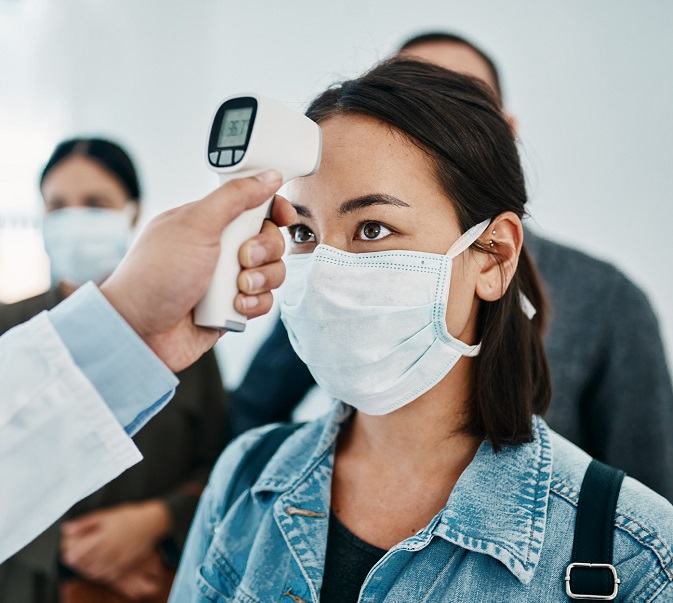
Do’s and Don’ts: Wearing A Surgical Mask

We’re sharing some Do’s and Don’ts of wearing surgical masks to help you to protect your health.

DO:

1. Wash and sanitize your hands before putting on the mask

2. Check for defects such as holes or tears

3. Make sure that the mask fits snugly to your face

4. Wash and sanitize your hands after removing the mask

DON’T:

1. Touch the mask once it’s on your face, doing so can expose you to pathogens

2. Hang the mask around your neck

3. Reuse single-use masks

4. Touch the front of the mask when removing it

All content of this newsletter is intended for general information purposes only and is not intended or implied to be a substitute for professional medical advice, diagnosis or treatment. Please consult a medical professional before adopting any of the suggestions on this page. You must never disregard professional medical advice or delay seeking medical treatment based upon any content of this newsletter. PROMPTLY CONSULT YOUR PHYSICIAN OR CALL 911 IF YOU BELIEVE YOU HAVE A MEDICAL EMERGENCY.

STI (STD) Awareness Month

Sexually transmitted infections (STIs), also known as sexually transmitted diseases (STDs) are infections that are spread by sexual contact. April marks National STI Awareness Month, a campaign sparked by the Centers for Disease Control and Prevention as an effort to counter the nation’s high rates of sexually transmitted infections. The United States currently has one of the highest rates of sexually transmitted diseases among all countries in the developed world.

There is a lot of misinformation out there about sex, sexual health, and sexually transmitted infections. The best way to prevent STI’s is to not have sexual intercourse but that isn’t realistic for most. However, knowledge of prevention is the second best option. To prevent the transmission of STIs, people need to be taught how to effectively use condoms.  The Centers for Disease Control and Prevention (CDC), outlines the steps on their website https://www.cdc.gov/condomeffectiveness/male-condom-use.html

All content of this newsletter is intended for general information purposes only and is not intended or implied to be a substitute for professional medical advice, diagnosis or treatment. Please consult a medical professional before adopting any of the suggestions on this page. You must never disregard professional medical advice or delay seeking medical treatment based upon any content of this newsletter. PROMPTLY CONSULT YOUR PHYSICIAN OR CALL 911 IF YOU BELIEVE YOU HAVE A MEDICAL EMERGENCY.
Tips for Exercising at Home

When you’re starting a home workout program it can be hard to figure out what exercises you should perform, particularly if you don’t have the budget for pricey equipment or personal training.
Most experts will tell you that a home training program for fitness should target all your major muscle groups are targeted at least once each week. It is recommended that your program includes 30 to 60 minutes of moderate to vigorous aerobic exercise no more than three to five times a week.”
Most importantly, stretching should be a part of the workout regime. Stretching helps with both strength and flexibility.
Some proven home exercises that won’t break your piggy bank are:
• Squats. Standing upright, feet wider than shoulders apart. With your arms extended forward or your hands on your hips for balance, squat down. Push your knees outward as you descend until your thighs are parallel with the floor. Continue pushing your knees outward as you stand.
• Partial-body push-ups (with knees on the floor).
• Modified jumping jacks. Instead of moving your arms over your head, do these while you press the palms of your hands together at chest level, holding your elbows out to make a straight line.
• Chair crunches. Sit on a chair with your hands under your behind, arms straight, and fingers facing inward toward one another. Contract your pelvis and lower abs, and, keeping your knees bent at a 90-degree angle, lift your feet off the floor and tuck your knees in toward your chest while bending your upper body slightly toward your knees. Do as many as you can until you reach fatigue.
• Chair dips. Place your hands on the side of the chair and wrap your fingers around the edge. Scoot forward until your bottom is on the edge of the chair and your arms are fully extended. Keep your feet about 3 inches apart with your legs extended, so your knees are at approximately a 150 degree angle with your heels grounded. With your elbows pointed back and tucked in tight alongside your body, do 15 to 20 dips, 3 seconds down and 1 second up. Keep your chest up and your shoulders back.
It is important to speak with your Physician before beginning any exercise program, even if it is an at home program.

All content of this newsletter is intended for general information purposes only and is not intended or implied to be a substitute for professional medical advice, diagnosis or treatment. Please consult a medical professional before adopting any of the suggestions on this page. You must never disregard professional medical advice or delay seeking medical treatment based upon any content of this newsletter. PROMPTLY CONSULT YOUR PHYSICIAN OR CALL 911 IF YOU BELIEVE YOU HAVE A MEDICAL EMERGENCY.

Jamaica Hospital Makes America’s 250 Best Hospitals List

There are over 5,000 hospitals in the United States, so to be listed as one of the top 250 in the country is quite an accomplishment.

Healthgrades, a leading resource that connects consumers, physicians and health systems, announced its list of America’s 250 Best Hospitals for 2020 and Jamaica Hospital Medical Center was one of only a select few in New York City to be recognized.

This accomplishment places Jamaica Hospital in the top 5% of hospitals in the nation, demonstrating the hospital’s commitment to delivering superior patient care outcomes year after year.

To determine America’s Best Hospital recipients, Healthgrades analyzed the performance of all participating hospitals nationwide. Clinical quality outcomes for 32 conditions and procedures, including heart attack, heart failure, pneumonia, respiratory failure, sepsis and stroke were evaluated over a three year period. Healthgrades recognized only those hospitals that “consistently exhibit exceptional, comprehensive quality care.”

Healthgrades has concluded that hospitals receiving this award provide significantly better care and, the most important measurement of any hospital, superior outcomes to its patients.

In addition to the recognition as one of America’s Best Hospitals, Healthgrades also awarded Jamaica Hospital with the following:

  • America’s 100 Best Hospitals For Coronary Intervention Award – 2020
  • America’s 100 Best Hospital for Stroke Care Award – 2020
  • Neurosciences Excellence Award – 2020, 2019
  • Patient Safety Excellence Award – 2018, 2017

“We are honored to be recognized by Healthgrades as one of America’s Best Hospitals. This achievement signifies Jamaica Hospital’s commitment to delivering the highest quality care to our patients,” stated Bruce J. Flanz, President and CEO of Jamaica Hospital Medical Center. “Over the years we have initiated many programs and services that focus on providing patient-centered care to our community, knowing that it would ultimately lead to better patient outcomes.  This acknowledgment by Healthgrades reaffirms that we are on the right path to becoming a high-reliability organization.”

All content of this newsletter is intended for general information purposes only and is not intended or implied to be a substitute for professional medical advice, diagnosis or treatment. Please consult a medical professional before adopting any of the suggestions on this page. You must never disregard professional medical advice or delay seeking medical treatment based upon any content of this newsletter. PROMPTLY CONSULT YOUR PHYSICIAN OR CALL 911 IF YOU BELIEVE YOU HAVE A MEDICAL EMERGENCY.

Eosinophilic Esophagitis

Eosinophilic esophagitis is a condition where a large number of white blood cells accumulate on the lining of the esophagus as the result of a reaction to certain foods, acid reflux or allergens.

The accumulation of white blood cells can cause irritation and scarring in the esophagus. This eventually can lead to severe narrowing, and the potential obstruction of the esophagus.

What are the symptoms of eosinophilic esophagitis?

In adults this can include:

  • Difficulty swallowing
  • Chest pain
  • Heartburn
  • Upper abdominal pain
  • Food getting stuck in esophagus

In children the symptoms can include:

  • Frequent regurgitation
  • Abdominal pain
  • Vomiting
  • Food getting stuck in the esophagus
  • Weight loss
  • Poor growth

There are several environmental and genetic factors that may put some at risk of eosinophilic esophagitis more than others.  The condition tends to run in families and is more common in males than females. It is seen more frequently in colder climates. There are more diagnoses in the spring and fall due to higher levels of pollen in the air.

How is this condition diagnosed?  A physician will take a complete medical history, and order a test to check the levels of eosinophils in the blood. Doctors may also order an endoscopy to visually inspect the lining of the esophagus or a biopsy of the lining of the esophagus.

Treatment for this condition will require eliminating exposure to whatever is determined as the cause of an allergic reaction.  Doctors may also recommend keeping the head of the bed elevated at night to prevent acid reflux and maintaining a healthy weight.  They may also eliminate certain foods from a patient’s diet. Medications can also be prescribed to help keep symptoms under control.

If you would like to schedule an appointment with a physician at Jamaica Hospital Medical Center, please call 718-206-6742.

All content of this newsletter is intended for general information purposes only and is not intended or implied to be a substitute for professional medical advice, diagnosis or treatment. Please consult a medical professional before adopting any of the suggestions on this page. You must never disregard professional medical advice or delay seeking medical treatment based upon any content of this newsletter. PROMPTLY CONSULT YOUR PHYSICIAN OR CALL 911 IF YOU BELIEVE YOU HAVE A MEDICAL EMERGENCY.