September is National Traumatic Brain Injury Month

September is recognized as National Traumatic Brain Injury Awareness Month. The main purpose of this observance is to raise awareness about traumatic brain injuries and how to recognize, prevent, and treat it one if it occurs.

The most common type of head injury is called a concussion, which is known as a mild traumatic brain injury. These can happen to anyone, at any age that has experienced a blow to the head. Signs and symptoms of a concussion can include:

  • Headache
  • Blurry vision
  • Nausea
  • Feeling tired
  • Anxiety
  • Sadness
  • Difficulty thinking clearly
  • Sensitivity to light
  • Loss of consciousness

In most cases, people will recover from a concussion in a week to ten days, with adults usually recovering faster than children. While many times traumatic brain injuries can’t be prevented because they are due to an accident, there are a few things a person can do to protect themselves:

  • Anyone who participates in a sport that has physical contact should wear proper head gear
  • When riding in a car everyone should wear a seat belt
  • Helmets should always be worn when riding a bicycle
  • People who are prone to falling should walk with the assistance of a cane, a walker or have someone with them for assistance.

If you or someone you know experiences a head trauma, it is advised that they to be seen immediately by a physician or be taken to the nearest emergency room.

All content of this newsletter is intended for general information purposes only and is not intended or implied to be a substitute for professional medical advice, diagnosis or treatment. Please consult a medical professional before adopting any of the suggestions on this page. You must never disregard professional medical advice or delay seeking medical treatment based upon any content of this newsletter. PROMPTLY CONSULT YOUR PHYSICIAN OR CALL 911 IF YOU BELIEVE YOU HAVE A MEDICAL EMERGENCY.

Information About Sickle Cell Disease

Sickle cell disease is an inherited form of anemia – a condition in which red blood cells are unable to carry oxygen throughout the body. For most, red blood cells are round and can move easily through blood vessels, but the red blood cells in people with sickle cell disease are crescent, or half-moon shaped. These irregular shaped cells can get stuck in blood vessels, which can slow or block the flow of oxygen to certain parts of the body.

In addition to being irregular in shape, sickle cells are fragile and break apart easily. Normal red blood cells live an average of four months before they die and need to be replaced. Sickle-shaped cells however only live an average of 20 days. The result of this shortage of blood cells is a loss of energy and general sense of fatigue.
Other symptoms of sickle cell disease include:

• Hand-Foot Syndrome – Often the first sign of sickle cell disease. It is caused by a lack of blood flow to the hands and feet

• Episodes of Pain – Referred to as a “crisis”, these episodes of pain occur when blood flow is blocked to the chest, abdomen, and joints. The frequency and duration of the episodes vary from person to person, but in severe cases, they can result in hospitalization.

• Frequent Infections and Fever– Sickle Cell can cause damage to the spleen, an organ that fights infection, making those with sickle cell at greater risk of developing an infection and an accompanying fever.

• Changes in Skin – People with sickle cell disease can develop a yellow tint to their skin or the whites of their eyes. Skin and nail beds can often become pale.

• Delayed growth – By not receiving enough oxygen rich red blood cells, those with sickle cell disease may also not get the necessary nutrients essential for growth.

The risk of inheriting sickle cell disease is a genetic one. For a baby to be born with it, both parents must carry the sickle cell gene. Doctors can diagnose sickle cell disease before a child is born. Couples who are at risk for passing on this disease to their children may want to talk with a genetic counselor about prenatal testing. The sickle cell gene is more common in families that come from Africa, India, Carribbean islands, and Central and South America.

To determine if you have sickle cell disease, your doctor can order a test to check for hemoglobin S, the defective form of hemoglobin that underlies sickle cell anemia. Further tests can confirm the existence of one gene (carrying the sickle cell trait) or two genes (sickle cell anemia). For those who have sickle cell anemia, treatment is aimed at treating the symptoms and avoiding crisis. Regular check-ups to monitor your red blood cell count are important. Medications are available to reduce pain and prevent complications can be prescribed, and blood transfusions, supplemental oxygen and even bone marrow transplants may also be necessary.

Jamaica Hospital serves a culturally rich and diverse population. Many members of our community are from the parts of the world most often affected by sickle cell disease. We encourage anyone living with sickle cell disease to carefully manage their condition. The hospital also recommends all potential parents to be tested for the sickle cell trait.

All content of this newsletter is intended for general information purposes only and is not intended or implied to be a substitute for professional medical advice, diagnosis or treatment. Please consult a medical professional before adopting any of the suggestions on this page. You must never disregard professional medical advice or delay seeking medical treatment based upon any content of this newsletter. PROMPTLY CONSULT YOUR PHYSICIAN OR CALL 911 IF YOU BELIEVE YOU HAVE A MEDICAL EMERGENCY.

Jamaica Hospital Opens the New Thomas Santucci Jr., MD Cardiovascular Interventional Suite

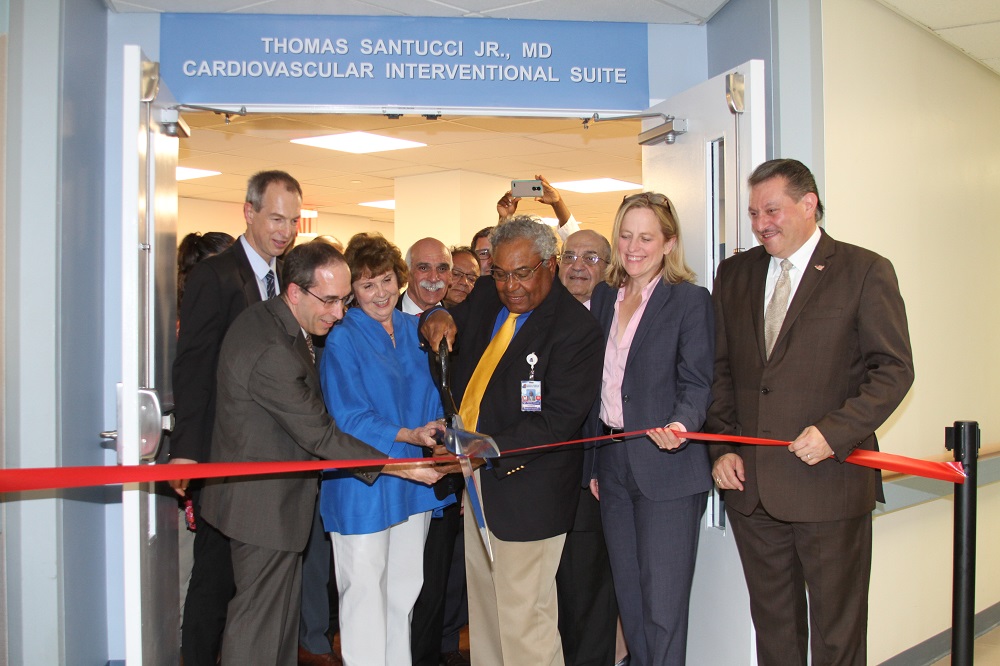
This summer, Jamaica Hospital Medical Center held a ribbon-cutting ceremony to commemorate the opening of the Thomas Santucci Jr., MD Cardiovascular Interventional Suite, named in honor of the late and beloved cardiologist and former Chairman of the Department of Medicine.

Cath Lab Jamaica QueensJoining the hospital for the occasion were special guests of honor: the family of Dr. Thomas Santucci Jr., Queens Borough President Melinda Katz, Senator Joseph Addabbo and members of Jamaica Hospital’s Board of Trustees. Over 100 guests and the media were also in attendance.

Jamaica Hospital President and CEO, Mr. Bruce J. Flanz welcomed everyone as they buzzed with excitement, to the new, state-of-the-art cardiovascular care facility.

The suite covers 6500 square feet of space and includes two interventional labs, a six-bed recovery unit, a preparation area, as well as viewing, treatment and examination rooms. The facility is also equipped with the latest and most advanced technologies in cardiac and stroke care. Both labs feature Siemens Artis Zee Ceiling- Mounted Systems which provide high patient-positioning flexibility, affording doctors easier and full-body access to patients.

Mr. Flanz explained to guests that all features and amenities of the Cardiovascular Interventional Suite were carefully selected by the Cardiology Department with the goal in mind of meeting the growing needs of patients.

“There is a significant prevalence of diabetes mellitus, hypertension, hyperlipidemia and obesity in our area, all of which contribute to the growing incidence of all types of cardiovascular disease, including heart attacks and strokes,” shared Dr. Robert Mendelson, Director of Cardiology and Chairman of the Department of Medicine. It is anticipated that admissions for cardiac disease to Jamaica Hospital will increase by 12% in the next five years and stroke admission by 11% during that period.

In addition to treating patients who live within the hospital’s service area, the Cardiovascular Interventional Suite will provide emergency cardiovascular care to the many travelers who fly through JFK Airport.  Each year, approximately 2,500 people are transported to Jamaica Hospital from JFK and 10% of those emergency cases are the result of a cardiac issue or stroke.

“Given the high volume of cardiovascular and stroke cases received by the hospital, the new Thomas Santucci Jr., MD  Cardiovascular Interventional Suite will certainly be of great benefit to a significant number of people,” said Mr. Flanz.


All content of this newsletter is intended for general information purposes only and is not intended or implied to be a substitute for professional medical advice, diagnosis or treatment. Please consult a medical professional before adopting any of the suggestions on this page. You must never disregard professional medical advice or delay seeking medical treatment based upon any content of this newsletter. PROMPTLY CONSULT YOUR PHYSICIAN OR CALL 911 IF YOU BELIEVE YOU HAVE A MEDICAL EMERGENCY.

How Much Exercise Do We Need?

Physical activity is a vital component of healthy living. It is a well-known fact that being physically active reduces the risk of many chronic diseases and also improves quality of life.

Given the benefits, it is evident that it is important for everyone to keep fit and active. However, statistics show that most people living in the United States are not getting enough exercise. In fact, more than half do not meet the recommended guidelines for weekly physical activity.

According to the American Family Physician guidelines, each week, adults should participate in at least 150 minutes of moderate-intensity aerobic activity and at least two days of resistance training or 75 minutes of vigorous-intensity aerobic activity in addition to a minimum of two days of resistance training.

Aerobic exercises work on endurance and utilize large muscle groups. Examples include walking, stationary biking, swimming or dancing. An example of moderate-intensity activity is briskly walking, while vigorous intensity activity includes jogging or running. Resistance or strength exercises involve the use of resistance bands or weights (machines or free) and can be performed while doing simple activities such as carrying groceries.

For optimal health benefits, physical activity should be performed at high intensity with greater frequency and longer duration, but any activity is preferred over doing nothing at all.

Beginning an exercise routine or increasing levels of physical activity can be intimidating. Setting goals that include specific activities and instructions can make this process easier. Doctors recommend starting slowly and gradually working up to a level that meets physical activity guidelines.

To avoid injury, be sure to stretch prior to exercising in order to increase flexibility and preserve joint motions. You should discontinue exercising and rest if you experience the following warning signs: feelings of lightheadedness, chest pain, palpitations, blurry vision, or being unable to catch your breath. If you experience any of these symptoms, you should stop your exercise routine immediately and consult your doctor.

Remember to drink plenty of water while exercising, as this is essential in helping you to remain hydrated. It is also important that you make sure to eat healthily. Good nutrition combined with exercise can help you to maintain a healthy weight and reduce the risks of chronic illnesses.

You should speak with your physician before starting a new exercise regimen. Some activities may not be safe for people diagnosed with certain medical conditions. Your doctor can also share helpful resources to assist you in your journey of leading a healthier life.

To  schedule an appointment with a Family Medicine Doctor at Jamaica Hospital Medical Center, please call 718-206-6942

Dr. Colleen Hautzinger, Family Medicine

All content of this newsletter is intended for general information purposes only and is not intended or implied to be a substitute for professional medical advice, diagnosis or treatment. Please consult a medical professional before adopting any of the suggestions on this page. You must never disregard professional medical advice or delay seeking medical treatment based upon any content of this newsletter. PROMPTLY CONSULT YOUR PHYSICIAN OR CALL 911 IF YOU BELIEVE YOU HAVE A MEDICAL EMERGENCY.

Jamaica Hospital Offers Information to Parents About Sports-Related Concussions

This fall, millions of children and teens across America will be returning to school and many of them will be trying out and playing for their school’s various sports teams.

While the health benefits, exercise and comradery associated with youth sports is undeniable, parents must also educate themselves and their children about the potential dangers of sports-related concussions.

According to the Centers for Disease Control and Prevention (CDC) a concussion is “a type of traumatic brain injury—or TBI—caused by a bump, blow, or jolt to the head or by a hit to the body that causes the head and brain to move quickly back and forth. This fast movement can cause the brain to bounce around or twist in the skull, creating chemical changes in the brain and sometimes stretching and damaging the brain cells.”

Largely associated with football, concussions are actually prevalent in many major sports including soccer, gymnastics, hockey and lacrosse and they can occur while participating in any physical activity.

To minimize the chances of sustaining a concussion, it is important for coaches and parents to create a culture of safety in youth athletics. This includes teaching proper safety techniques on the field of play and making sure that children follow those rules.  Another key to reduce the chances of a child or teen suffering complications from a concussion is to educate them on their signs and symptoms. If children are aware of not only the symptoms, but the dangers of not reporting a concussion, they are more likely to inform a coach or parent when they experience one.

Symptoms of a concussion can include:

  • Loss of consciousness
  • Headache or “pressure” in head
  • Nausea or vomiting
  • Balance problems or dizziness, or double or blurry vision.
  • Sensitivity to light or noise
  • Feeling sluggish, hazy, foggy, or groggy
  • Confusion, or concentration or memory problems
  • Just not “feeling right,” or “feeling down.”

It is important to understand that not all concussions are created equal. Those who suffer one many experience some, but not all symptoms and the severity of those symptoms may vary from person to person.

If you believe that your child has suffered a concussion, you should remove them from play immediately and have them seen by their healthcare provider who can assess the severity of his or her injury via an examination and conduct additional tests if necessary. Typically, treatment for a concussion involves rest and restricting the patient from activity.

If your child does not have a healthcare provider, or they are unavailable when they sustain a concussion, you should take your child to a nearby hospital emergency department, such as the one at Jamaica Hospital Medical Center.

All content of this newsletter is intended for general information purposes only and is not intended or implied to be a substitute for professional medical advice, diagnosis or treatment. Please consult a medical professional before adopting any of the suggestions on this page. You must never disregard professional medical advice or delay seeking medical treatment based upon any content of this newsletter. PROMPTLY CONSULT YOUR PHYSICIAN OR CALL 911 IF YOU BELIEVE YOU HAVE A MEDICAL EMERGENCY.

Things You Should Know About Dental Cavities


Did you know that more than 90 percent of the population has had a dental cavity?

The American Dental Association (ADA) defines a dental cavity as, “The destruction of your tooth enamel (the hard outer layer of your teeth) that causes a hole in the tooth.

They further state that when plaque forms on your teeth, combined with eating and drinking foods that contain sugar, the collective bacteria produced attack the tooth enamel.

Some ways you can prevent tooth decay are:

  • Brush your teeth twice a day using fluoride toothpaste.
  • Use floss or interdental cleaner to clean between your teeth daily.
  • Eat healthy, well balanced meals.
  • Limit snacking.

Since cavities mostly happen in adolescents, your dentist may suggest the use of supplemental fluoride or dental sealants (a plastic proactive coating) applied to the chewing surfaces of the back teeth.

Nothing combats tooth decay more than regular visits to your dentist for professional cleanings and oral examinations.  If you are at low risk of cavities or gum disease, it is recommended that you see your dentist once yearly.  If you are at higher risk, you may need to visit your dentist every three or four months.

If your teeth are in need of a check -up, you can make an appointment with one of our board certified dentists at Jamaica Hospital Medical Center’s Dental Center by calling 718-206-6980.


All content of this newsletter is intended for general information purposes only and is not intended or implied to be a substitute for professional medical advice, diagnosis or treatment. Please consult a medical professional before adopting any of the suggestions on this page. You must never disregard professional medical advice or delay seeking medical treatment based upon any content of this newsletter. PROMPTLY CONSULT YOUR PHYSICIAN OR CALL 911 IF YOU BELIEVE YOU HAVE A MEDICAL EMERGENCY.

Employee Spotlight on Louise Senior

This month we shine our employee spotlight on Louise Senior, a telephone operator at the Trump Pavilion For Nursing and Rehabilitation, and perhaps better known as the woman who is always smiling at the reception desk in the lobby. Louise started working at the nursing home in 1994. She is extremely proud to tell everyone that five generations of her family have been affiliated with the facility. Her grandmother was a patient and her mother, her daughter and her granddaughter have all worked there.

Louise was born in the Bronx but she really considers herself a native of Queens having moved to Queens Village at the age of eight.  Her early school years were spent at Public School 98 in Bayside, the Louis Pasteur Middle School and Cardozzo High School. Currently, she resides in St. Albans.

Her personal story began at Trump Pavilion when she was 13 years old and would visit her mom who worked there. Years later she experienced a fall and her doctor recommended that she receive physical therapy.  On Louise’s last day of therapy, she happened to see the Director of Communication who asked if she would be interested in coming to work for the facility.  That was 24 years ago and she is still very happy that she said yes to the offer.

Louise feels very fortunate to be working with a wonderful team of people. She enjoys interacting with the patients, their families, and all of her colleagues. She is very proud of the work that she does and feels like she is making a difference in the lives of others.

When Louise is not working she enjoys spending time with her family. She has four granddaughters who she spends a lot of time with. Louise likes to listen to music, especially R&B and she has a passion for cooking all different types of food. Everyone who knows Louise will tell you about her warm personality. She is the nice lady who greets people as they enter with a smile.

All content of this newsletter is intended for general information purposes only and is not intended or implied to be a substitute for professional medical advice, diagnosis or treatment. Please consult a medical professional before adopting any of the suggestions on this page. You must never disregard professional medical advice or delay seeking medical treatment based upon any content of this newsletter. PROMPTLY CONSULT YOUR PHYSICIAN OR CALL 911 IF YOU BELIEVE YOU HAVE A MEDICAL EMERGENCY.

Safety Tips on How to Avoid Being a Distracted Pedestrian

There has been a great deal of attention paid to the dangers associated with distracted driving.  We have seen the public service announcements warning drivers not to text or talk on their phones while behind the wheel, but what about the dangers of being a distracted pedestrian?

There has been a recent and dramatic increase in the number of pedestrians struck by automobiles and killed in recent years. While some of this can be attributed to distracted drivers, those not paying attention to their surroundings while crossing the street has also been reported to play a role in many incidents. One study conducted by researchers at Ohio State University concluded that the number of pedestrians (or “petextrians” as they are commonly referred to) injured while on their cellphones has doubled over the last decade.

Studies suggest that distracted walkers take longer to cross the street and are more likely to ignore traffic lights or neglect to look both ways while crossing. These problems are particularly prevalent among teens, but it’s important to note that all age groups are vulnerable to these dangers.

Safety experts agree that the most important advice for pedestrians is to never use a cell phone or other electronic device while walking. Here are some other tips to stay safe and avoid injury while crossing the streets:

  • Look left, right and left again before crossing the street; looking left a second time is necessary because a car can cover a lot of distance in a short amount of time
  • Make eye contact with drivers of oncoming vehicles to make sure they see you
  • Be aware of drivers even when you’re in a crosswalk; vehicles have blind spots
  • Don’t wear headphones while walking
  • If your view is blocked, move to a place where you can see oncoming traffic
  • Never rely on a car to stop
  • Only cross at designated crosswalks
  • Wear bright and/or reflective clothing
  • Walk in groups

Walking is one of the best things we can do to stay healthy, but only if we put safety first. Jamaica Hospital’s Trauma Division wants to warn our community that the risk for injury and death escalates when a pedestrian is not focused on his or her environment and our staff wants to spread the word on how pedestrians can avoid senseless injuries and death.

All content of this newsletter is intended for general information purposes only and is not intended or implied to be a substitute for professional medical advice, diagnosis or treatment. Please consult a medical professional before adopting any of the suggestions on this page. You must never disregard professional medical advice or delay seeking medical treatment based upon any content of this newsletter. PROMPTLY CONSULT YOUR PHYSICIAN OR CALL 911 IF YOU BELIEVE YOU HAVE A MEDICAL EMERGENCY.

Signs of Low Potassium

According to the Centers for Disease Control and Prevention (CDC), people living in the United States are not consuming enough potassium. In fact, it is estimated that less than 2% of people meet the daily nutritional requirement, which is 3,500–4,700 mg each day for adults.

This is concerning because potassium is essential in helping our bodies to function properly.   Our bodies need potassium to control the electrical activity of the heart, build protein, regulate water balance as well as acid-based balance in blood and tissue, maintain healthy nerve function and regulate blood pressure.

A diet rich in potassium is linked to several health benefits such as:

  • Reducing the risk of stroke
  • Preventing osteoporosis
  • Preventing kidney stones
  • Reducing the risk of cardiovascular diseases

When our bodies have significantly low amounts of potassium, we may experience several tell-tale signs which include:

  • Weakness and fatigue
  • Problems with digestion
  • Constipation
  • Dizziness
  • Muscle cramps and spasms
  • High blood pressure
  • Heart palpitations
  • Tingling and numbness, typically in the arms, legs, hands, and feet
  • Difficulty breathing
  • Mood changes or mental fatigue

Eating foods that are rich in potassium is one of the best ways to improve intake.  Some foods that are an excellent source of this important mineral are:

  • Bananas
  • Green leafy vegetables such as spinach
  • Beets
  • White beans
  • Potatoes ( white and sweet potatoes)
  • Oranges
  • Avocados
  • Yogurt
  • Salmon

Low potassium levels may be the result of a deficiency in your diet or a more serious, underlying medical condition.  Talk to your doctor if you are experiencing signs that may indicate that you are deficient.  Your doctor may request a blood test to determine if your levels are low and the cause.

To schedule an appointment with a doctor at Jamaica Hospital Medical Center, please call 718-206-7001.


All content of this newsletter is intended for general information purposes only and is not intended or implied to be a substitute for professional medical advice, diagnosis or treatment. Please consult a medical professional before adopting any of the suggestions on this page. You must never disregard professional medical advice or delay seeking medical treatment based upon any content of this newsletter. PROMPTLY CONSULT YOUR PHYSICIAN OR CALL 911 IF YOU BELIEVE YOU HAVE A MEDICAL EMERGENCY.

Mourning the Loss of a Pet

Losing a loved one is one of the hardest experiences we can have. For most people, a pet is like a member of the family. They love us unconditionally and over the course of our lives and theirs, will give us countless hours of joy and happiness. When a pet passes on, it can be devastating. It is very normal to grieve for the loss of a pet in the same way as we would for anyone else in our lives that we love.

Some of the ways we can handle the loss of a pet:

  • Allow yourself time to mourn
  • Think back on all the memories you and your pet created together
  • Try to continue with your life and your daily routine
  • Allow others to offer their condolences
  • Meditation
  • Write a letter to your pet, hold a memorial service, put some items of the pet in a special place in your home.
  • Seek professional help to speak about your feelings

If you would like to schedule an appointment with a mental health therapist, please call 718-206-7160.

All content of this newsletter is intended for general information purposes only and is not intended or implied to be a substitute for professional medical advice, diagnosis or treatment. Please consult a medical professional before adopting any of the suggestions on this page. You must never disregard professional medical advice or delay seeking medical treatment based upon any content of this newsletter. PROMPTLY CONSULT YOUR PHYSICIAN OR CALL 911 IF YOU BELIEVE YOU HAVE A MEDICAL EMERGENCY.