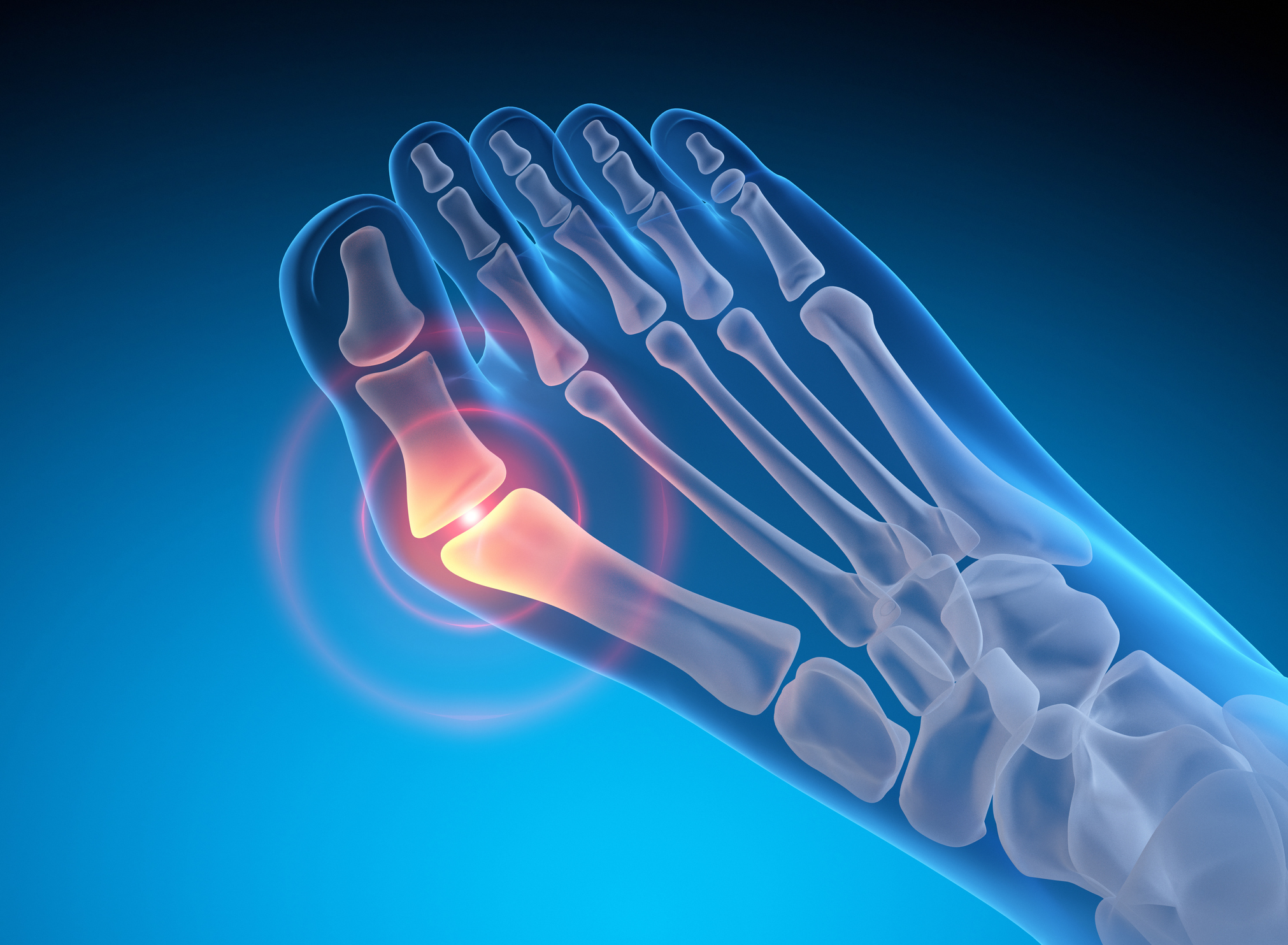
 Flat feet mean you have little to no arch in the soles of your feet. You may be flat-footed from childhood or have lost your arches due to a medical condition.
The arches of your feet play an important role in the mechanics of walking upright. Your arches are made of bones and connective tissues, and they:
- Act as a springboard and shock absorber
- Adapt your foot to uneven walking surfaces
- Protect nerves and vessels in the soles of your feet
- Store and release energy as you walk
Some healthcare providers make a distinction between mildly flat feet that don’t cause any issues and the foot deformity they call pes planus. Flat arches cause other changes to your foot due to pes planus, including:
- The flattened arch causes your heel to point outward and your ankle to roll inward
- The arch on the inner side of your sole is flattened and appears to touch the ground
- Your talus bone, a bone on the inner side of your foot, sticks out
Healthcare providers may classify flat feet as either flexible or rigid, or congenital or acquired.
Flexible flat feet are the most common type of flat feet. You can see the arches in your feet when you aren’t standing on them, but they disappear when you stand.
Rigid flat feet are a rare type of flat feet and mean that your feet have no arches whether you’re standing or sitting.
Congenital flat feet mean a baby has a birth defect that prevents their feet from developing arches. Some hereditary connective tissue disorders can make your arches too weak to hold up. Additionally, some families have flatter arches than others. However, genes can also cause genetic disorders or defects that affect how your arches form or prevent them from forming. These conditions include:
- Down syndrome
- Cerebral palsy
- Osteogenesis imperfecta
- Marfan syndrome
- Clubfoot
- Ehlers-Danlos syndrome
- Joint hypermobility syndrome
- Tarsal coalition
Acquired flat feet, or fallen arches, is a progressive collapsing deformity of the foot that occurs in adulthood, after your feet have developed their natural arches. Arch collapse can happen slowly or rapidly. Diseases and injuries can cause them, including:
- Arthritis
- Injury
- Posterior tibial tendon dysfunction
- Charcot foot
Flat feet don’t always cause symptoms. However, they can change the way you walk and can also transfer too much stress to parts of your lower body that aren’t prepared to bear it.
- Early symptoms might include:
- Foot pain after walking
- Shin splints from overcompensating
- Ankle pain from overpronation
Over time, you may develop:
- Chronic pain even when you’re not walking
- Gait disorders and abnormalities
- Deformities such as bunions or hammertoes
These symptoms may cause you pain in your knees, hips, and lower back. You might also be more at risk of developing secondary conditions, such as:
- Foot and ankle arthritis
- Repetitive strain injuries
- Ankle instability and sprains
An orthopedist or podiatrist can recognize flat feet after performing a physical exam by observing the shape and position of your foot, how it moves, and how you stand and walk on it. They will ask about your health history and any prior injuries or conditions that may have caused it. They might take images by taking a foot X-ray to confirm flat feet or to look deeper into the cause of it.
Many people won’t need treatment for flat feet. If they don’t have symptoms, they won’t need to fix them. If flat feet cause you occasional, mild aches and pains, you can treat them with:
- Over-the-counter (OTC) pain relievers, such as nonsteroidal anti-inflammatory drugs (NSAIDs) or acetaminophen
- Orthotic shoe inserts or other walking supports
- Physical therapy exercises that stretch and strengthen your feet
Flat feet that cause chronic or significant pain, or other complications might need additional treatment. Depending on what’s causing it, some people might need surgery to fix the underlying issue.
It is important to know that there isn’t anything you can do to prevent flat feet. However, staying at a healthy weight may ease pain caused by flat feet.
The Department of Podiatry at Jamaica Hospital Medical Center provides a wide variety of medical treatments and surgical procedures for adults and children. To make an appointment, please call (718) 206-6713/6712
 Follow
All content of this newsletter is intended for general information purposes only and is not intended or implied to be a substitute for professional medical advice, diagnosis or treatment. Please consult a medical professional before adopting any of the suggestions on this page. You must never disregard professional medical advice or delay seeking medical treatment based upon any content of this newsletter. PROMPTLY CONSULT YOUR PHYSICIAN OR CALL 911 IF YOU BELIEVE YOU HAVE A MEDICAL EMERGENCY.