Food Allergy Action Month

May has been designated as Food Allergy Action Month in an effort to educate Americans about food allergies and to support those who suffer from them.

Recent surveys indicate that 15 million Americans now suffer from food allergies. This number indicates that food allergies are much more common than previously believed and the number of people with allergies is steadily growing. It is now estimated that one out of every 13 children has a food allergy.

An allergic reaction occurs when the body’s immune system mistakenly identifies a food component as a hazardous substance and attacks it. The effects of food allergies may appear on the skin, in the respiratory passage, or in the gastrointestinal tract. The symptoms of food allergies may vary from mild to severe, and in extreme cases, they can even be fatal.

Minor reactions include:

  • Skin rash
  • Eczema
  • Diarrhea
  • Stomach cramps
  • Nausea

Serious Reactions Include:

  • Obstructive inflammation of the tongue and respiratory tract
  • Panting and wheezing
  • Lack of oxygen, leading to blue lips
  • Unconsciousness
  • Drop in pulse rate

Anaphylaxis is a very serious allergic reaction that can cause death. This type of allergic reaction requires immediate action and medical attention. If you or a loved one has a severe food allergy, you must be prepared for an emergency. Learn the signs and symptoms of anaphylaxis and know what the emergency care plan is. It may include the administration of epinephrine, a life-saving drug.

Over 170 different foods have been reported to cause an allergic reaction, but the food products that cause the most reactions are:

  • Soy
  • Milk
  • Fish / Shellfish
  • Peanuts / Tree Nuts
  • Eggs
  • Wheat

There is currently no cure for food allergies. To prevent an allergic reaction, it is important for the person with the allergy to stay away from foods that cause symptoms. Contact with even the smallest amounts of the allergen can cause serious problems. To avoid an allergic reaction, take the following precautions:

  • Learn to carefully read food labels and ask about ingredients in prepared foods
  • Wash your hands with soap and warm water before and after touching food
  • Use clean, uncontaminated utensils when preparing foods
  • Educate others about food allergies.

Every year in the United States, approximately 30,000 individuals are brought to hospital Emergency Departments and 150 people die due to severe allergic reactions. Jamaica Hospital joins the effort to raise awareness about food allergies and urges everyone to learn more about this growing, yet manageable issue.

All content of this newsletter is intended for general information purposes only and is not intended or implied to be a substitute for professional medical advice, diagnosis or treatment. Please consult a medical professional before adopting any of the suggestions on this page. You must never disregard professional medical advice or delay seeking medical treatment based upon any content of this newsletter. PROMPTLY CONSULT YOUR PHYSICIAN OR CALL 911 IF YOU BELIEVE YOU HAVE A MEDICAL EMERGENCY.
Could Smoking Be The Cause Of My Infertility?

The last week in April has been designated National Infertility Awareness Week (IVF). The observance is meant to bring awareness to the millions of Americans who are facing challenges when becoming pregnant; while removing any stigmas and barriers that remain in the way of having a child using IVF.

Some causes of infertility in women are issues with ovulation (Polycystic Ovary Syndrome (PCOS), endometriosis, sexually transmitted infections and unhealthy body weight. However, there have been multiple studies to support the theory that smoking has an adverse effect on fertility. Research has found that the prevalence of infertility is higher, and the time it takes to conceive is longer in smokers as compared to nonsmokers. It has also been proven that smoking can affect every stage of the reproductive process in both sexes because the chemicals in cigarettes can cause damage to both male sperm and female eggs.

In women, smoking can lead to many fertility problems, including:

  • Problems with the fallopian tubes, including blockages (preventing egg and sperm from meeting) and an increased risk of ectopic pregnancy.
  • Damage to the eggs as they develop in the ovaries.
  • Increased risk of miscarriage, possibly due to damaged eggs, damage to the developing fetus, or unfavorable changes in the uterine lining, which may make healthy implantation of an embryo less likely.

In addition, smoking can cause a woman’s eggs to age prematurely, leading to an earlier onset of menopause and a shorter window to conceive.

The good news is that the damage done to the female reproductive system as a result of smoking is reversible. Typically, after quitting smoking, your chance of natural fertility should become viable within a year or less.

If you want to have a baby, but you are a smoker, quit now! If you need help, Jamaica Hospital Medical Center offers smoking cessation services to help you. For more information, please call 718-206-8494.


All content of this newsletter is intended for general information purposes only and is not intended or implied to be a substitute for professional medical advice, diagnosis or treatment. Please consult a medical professional before adopting any of the suggestions on this page. You must never disregard professional medical advice or delay seeking medical treatment based upon any content of this newsletter. PROMPTLY CONSULT YOUR PHYSICIAN OR CALL 911 IF YOU BELIEVE YOU HAVE A MEDICAL EMERGENCY.

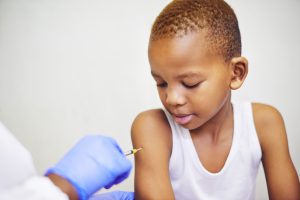
Jamaica Hospital Offers Tips To Manage Your Children’s Vaccinations During World Immunization Week

It is World Immunization Week; an observance led by the World Health Organization (WHO) to raise public awareness about how immunizations can save lives. During this week-long event, efforts are made to encourage parents to vaccinate their children against a variety of preventable diseases.

Immunizations prevent illness, disability and death from many diseases, including:

  • Cervical cancer
  • Diphtheria
  • Hepatitis B
  • Measles, mumps and rubella
  • Pertussis (whooping cough)
  • Pneumonia
  • Polio
  • Rotavirus diarrhea
  • Tetanus

Despite all their benefits, there is still an estimated 18.7 million infants worldwide still missing out on basic vaccines.

One of the best ways for parents to keep track of their children’s immunization history and make sure they are up-to-date on all of their vaccinations is by setting up an electronic medical record (EMR), like MyChart, which is available for free to all Jamaica Hospital patients.

In addition to allowing parents to access to their children’s records, including their immunization history, MyChart also gives patients the ability to:

  • Review test results online
  • Review health education topics
  • Access discharge instructions
  • Request prescription refills online
  • Interact with your provider via email
  • Request an appointment

To create an account is easy. All a patient needs to do is go to the Jamaica Hospital website and click the link to MediSys MyChart: https://mychart.medisys.org and click on the “sign up now” tab.

World Immunization Week is an opportunity for Jamaica Hospital to remind parents of the importance of maintaining their children’s vaccinations and how MyChart can help them do that. My making it easy to access their immunization history, parents can make sure their children are properly protected.

All content of this newsletter is intended for general information purposes only and is not intended or implied to be a substitute for professional medical advice, diagnosis or treatment. Please consult a medical professional before adopting any of the suggestions on this page. You must never disregard professional medical advice or delay seeking medical treatment based upon any content of this newsletter. PROMPTLY CONSULT YOUR PHYSICIAN OR CALL 911 IF YOU BELIEVE YOU HAVE A MEDICAL EMERGENCY.

The MediSys Health Network Recognizes The Accomplishments Dr. Sabiha Raoof During Women’s History Month

March is Women’s History Month.  In recognition of this special observance, the MediSys Health Network would like to honor a woman who is very important to Jamaica Hospital Medical Center and Flushing Hospital Medical Center, Dr. Sabiha Raoof.

Dr. Raoof began her career at MediSys as an attending physician in 1997 after completing her radiology fellowship training. According to Dr. Raoof, “I was young and full of energy, but I was also a mother of two young children, and that aspect of my life has always been very important to me. Working for MediSys allowed me to maintain a balance between my professional goals and my role as a mother.  I never had to compromise my priorities and that gave me the opportunity to grow and thrive professionally. “

After working for a few years as an attending physician, Dr. Raoof was appointed as the Chairperson of Radiology at Jamaica Hospital in 2000 and then at Flushing Hospital in 2001.  Dr. Raoof added “I am so happy that I was given the opportunity to build the department and I am so proud of what we have been able to achieve together.” Under her guidance, the Radiology Departments at both hospitals have earned the Diagnostic Centers of Excellence designation from the American College of Radiology.

Through the years, Dr. Raoof has taken on many additional roles in the healthcare industry that has brought a great deal of positive visibility to the network.  She currently serves as the Vice Chair for the American College of Radiology’s Quality Experience Committee and is a member of their Commission on Clinical Decision Support. She has also been working with CMS for the last four years, initially serving as a national faculty member for the Transforming Clinical Practices Initiative and now serves as one of the Clinical Champions for the Quality Payment Program.

Providing the highest quality care to our patients has always been a major focus for Dr. Raoof, so when she was appointed as the Chief Medical Officer for MediSys in 2017, her main goal was to use the position to improve the quality of care throughout the organization and to do so in a patient and family centered approach to keep patient safety in focus. AS CMO, she has been the driving force behind many initiatives designed to improve the patient experience.

 While Dr. Raoof appreciates the opportunities she has been given in the MediSys Health Network, she realizes that many other women are not as fortunate. “Even today, we have under-representation of female physicians in leadership positions in the healthcare industry. I feel lucky to work for this organization and I commend our administration for being so forward thinking and allowing the most qualified people to progress to leadership roles throughout the organization without any bias against gender, culture, religion or ethnicity.”

Women’s History Month is very important to Dr. Raoof. It not only allows her to thank the many women in her personal and professional life who have supported and been an inspiration to her, but it also serves as an opportunity for her to encourage her female colleagues to step up and be willing to lead.  According to Dr. Raoof, “Women’s History Month is a time to celebrate the tireless half of our population. Women are our future leaders, innovators, and peace-makers. This is a month to celebrate our progress in the face of historic challenge and to dream of our future. “

All content of this newsletter is intended for general information purposes only and is not intended or implied to be a substitute for professional medical advice, diagnosis or treatment. Please consult a medical professional before adopting any of the suggestions on this page. You must never disregard professional medical advice or delay seeking medical treatment based upon any content of this newsletter. PROMPTLY CONSULT YOUR PHYSICIAN OR CALL 911 IF YOU BELIEVE YOU HAVE A MEDICAL EMERGENCY.

Citrus Marinated Salmon with Couscous and Sauteed Haricot Verts

March is National Nutrition Month.  Jamaica Hospital Medical Center’s Department of Nutrition is marking the occasion with a healthy and tasty receipe for Citrus Marinated Salmon with Couscous and Sauteed Haricot Verts.

This receipe serves four (4)

We would like to thank our

INGREDIENTS:

Fish

Marinade:

3 Tablespoon Orange Juice

1 Tablespoon lemon juice

1.5 Tablespoon minced garlic

1 Teaspoon canola oil

Salt and pepper to taste

4- 4 oz Salmon filets

Haricot Verts- French Green beans

1 lb green beans, French, fresh

1 Tablespoon canola oil

3 cloves garlic, peeled, minced

Kosher salt to taste

Couscous:

Prepare according to package

PREPARATION:

To prepare fish:

  1. Combine marinade ingredients bowl, place salmon in marinade
  2. Heat canola oil in sautee pan over high heat
  3. Remove fish from marinade and discard excess marinade
  4. Place fish in hot pan, Flesh side down, cook for 4-5 minutes, flip fish to skin side, cover pan and cook 4 additional minutes or until cooked through and fish is flakey

To prepare green beans

If using fresh green beans – follow steps below. If using frozen – skip to step 5

  1. Trim ends of green beans
  2. Bring pot of water to boil, blanch green beans for 1-2 minutes in boiling water
  3. Shock green beans in ice bath
  4. Drain green beans
  5. Heat oil in sauté pan over medium high heat
  6. Add minced garlic, sauté 30 seconds until fragrant
  7. Add green beans and sauté for 1 minute or until evenly coated and heated through. (if using frozen green beans, will need more time to cook through)
  8. Season with kosher salt to taste

To prepare the couscous

  1. Cook couscous according to the package directions


All content of this newsletter is intended for general information purposes only and is not intended or implied to be a substitute for professional medical advice, diagnosis or treatment. Please consult a medical professional before adopting any of the suggestions on this page. You must never disregard professional medical advice or delay seeking medical treatment based upon any content of this newsletter. PROMPTLY CONSULT YOUR PHYSICIAN OR CALL 911 IF YOU BELIEVE YOU HAVE A MEDICAL EMERGENCY.

Poison Prevention Week- Child Safety Tips

All content of this newsletter is intended for general information purposes only and is not intended or implied to be a substitute for professional medical advice, diagnosis or treatment. Please consult a medical professional before adopting any of the suggestions on this page. You must never disregard professional medical advice or delay seeking medical treatment based upon any content of this newsletter. PROMPTLY CONSULT YOUR PHYSICIAN OR CALL 911 IF YOU BELIEVE YOU HAVE A MEDICAL EMERGENCY.

National Organ Donor Day

There are currently over 120,000 people in the United States who are awaiting an organ donation that could potentially save their lives.

It all started in 1998 when the Saturn company joined together with the United Auto Workers and supported by the U.S. Department of Health to recognize the need. Every year February 14th is a day designated as National Organ Donor Day that serves to make the public aware of the importance of how an organ donation can save a life for someone else.

There are different types of donations:
• Organs
• Tissue
• Marrow
• Platelets
• Blood

Jamaica Hospital Medical Center supports organ donation. To find out how you can register to become an organ donor, go to www.liveonny.org  for more information.

All content of this newsletter is intended for general information purposes only and is not intended or implied to be a substitute for professional medical advice, diagnosis or treatment. Please consult a medical professional before adopting any of the suggestions on this page. You must never disregard professional medical advice or delay seeking medical treatment based upon any content of this newsletter. PROMPTLY CONSULT YOUR PHYSICIAN OR CALL 911 IF YOU BELIEVE YOU HAVE A MEDICAL EMERGENCY.

January is National Glaucoma Awareness Month

Glaucoma is a group of eye diseases that mainly affects people who are middle-aged or older, but it can affect anyone at any age. There are more than three million people in the United States and 60 million people worldwide who suffer from glaucoma.
Glaucoma is the second leading cause of blindness.Typically the disease starts to develop suddenly, often without symptoms,  and once vision is lost, it is permanent. As much as 40 percent of vision can be lost before some people even notice a problem. It usually starts with loss of peripheral vision.Glaucoma is caused by damage to the optic nerve so that the brain isn’t able to receive images from the eyes. There are two types of Glaucoma, Primary Open-Angle Glaucoma where pressure inside the eye increases on its own and damages the optic nerve and Secondary Glaucoma where another disease causes the pressure in the eye to increase and that results in optic nerve damage. Both types will eventually lead to blindness.

Early detection of Glaucoma can help to slow down the progression of the disease. Regular eye exams are very important. To schedule an appointment with an eye doctor at Jamaica Hospital, please call 718-206-5900.

All content of this newsletter is intended for general information purposes only and is not intended or implied to be a substitute for professional medical advice, diagnosis or treatment. Please consult a medical professional before adopting any of the suggestions on this page. You must never disregard professional medical advice or delay seeking medical treatment based upon any content of this newsletter. PROMPTLY CONSULT YOUR PHYSICIAN OR CALL 911 IF YOU BELIEVE YOU HAVE A MEDICAL EMERGENCY.

January is National Birth Defects Prevention Month.

January is National Birth Defects Prevention Month. Jamaica Hospital would like to join the national effort to increase awareness about birth defects and what can cause them.

While not all birth defects are preventable, there are certain healthy behaviors that can be practiced to increase your chances of having a healthy baby.

The Centers for Disease Control and Prevention (CDC) recommends the following tips for preventing birth defects:

  • Take 400 micrograms of folic acid every day. Folic acid is important because it can help prevent some major birth defects of the baby’s brain and spine. Most vitamins contain the recommended amount of folic acid, but women should check the label to be sure it contains 100% of the daily value (DV) of folic acid.
  • Speak with your healthcare provider before you begin or stop taking any medicine. If you are planning to become pregnant, discuss your current medicines with a healthcare provider, such as your doctor or pharmacist. Creating a treatment plan for your health condition before you are pregnant can help keep you and your developing baby healthy.
  • Remain up to date with all vaccines, including your flu shot. Vaccines help protect you and your developing baby against serious diseases. Get a flu shot and whooping cough vaccine (also called Tdap) during each pregnancy to help protect yourself and your baby.
  • Attempt to reach a healthy weight before getting pregnant. Obesity increases the risk for several serious birth defects and other pregnancy complications. If you are overweight (or underweight), speak with your healthcare provider about ways to maintain a healthy weight before you become pregnant.
  • Avoid harmful substances, such as alcohol, tobacco, and other drugs during pregnancy. Smoking during pregnancy can harm the developing baby and can cause certain birth defects. Alcohol can also cause problems for a developing baby throughout pregnancy. Using certain drugs during pregnancy can cause health problems for a woman and her developing baby.

By following these recommended tips, you will be doing what is best for you and your baby.

Speak to your doctor about other ways to increase your chances of having a healthy baby. To make an appointment at Jamaica Hospital’s Women’s Health Center, please call 718- 291-3276.

All content of this newsletter is intended for general information purposes only and is not intended or implied to be a substitute for professional medical advice, diagnosis or treatment. Please consult a medical professional before adopting any of the suggestions on this page. You must never disregard professional medical advice or delay seeking medical treatment based upon any content of this newsletter. PROMPTLY CONSULT YOUR PHYSICIAN OR CALL 911 IF YOU BELIEVE YOU HAVE A MEDICAL EMERGENCY.

November is Bladder Health Awareness Month

November has been recognized as Bladder Health Awareness month, to serve as a reminder to get the facts about common bladder health problems and to encourage patients to take an active role in their bladder health.

There are many conditions that can affect the bladder one of the most common is urinary incontinence. Urinary incontinence is the involuntary loss or leakage of urine. According to the American Urological Association, about 1 out of 2 women and 1 out of 4 men suffer from some type of urinary incontinence.

Urge incontinence also known as overactive bladder and stress incontinence are the two most common forms of this health issue. Urge urinary incontinence is when urine leakage occurs with the sudden and strong desire to urinate.  Stress urinary incontinence is when urine leakage occurs with physical activity such as laughing, sneezing, lifting or exercise. There are instances in which both urge and stress incontinence symptoms occur; this is known as mixed incontinence.

Depending on the type of urinary incontinence, extent of symptoms and treatment goals there may be one or more treatment options.

Treatment options include:

  • Physical therapy
  • Oral Medications
  • Vaginal Devices (pessaries,  incontinence inserts)
  • Bladder Botox
  • Surgery

There are a few things you can do to prevent common bladder health problems. Here are a few helpful health bladder tips.

  • Manage daily fluid intake and reduce bladder irritants like caffeinated beverages and alcohol
  • Limit or avoid very spicy and acidic foods that can bother the bladder
  • Stop Smoking
  • Stay active exercise regularly and don’t forget to keep your pelvic floor muscles strong with kegels
  • Try to maintain a normal weight, excess weight gain can increase your risk of developing urinary incontinence

If fear of leaking urine stops you from doing things you enjoy, it may be time to consider treatment. Here at Jamaica Hospital we have providers who specialize in the treatment of bladder control issues.  To learn more about treatment options for urinary incontinence or to schedule an appointment with one of our Urogynecologist, please call 718-206-7001.

Renee Rolston MD-OB/GYN

All content of this newsletter is intended for general information purposes only and is not intended or implied to be a substitute for professional medical advice, diagnosis or treatment. Please consult a medical professional before adopting any of the suggestions on this page. You must never disregard professional medical advice or delay seeking medical treatment based upon any content of this newsletter. PROMPTLY CONSULT YOUR PHYSICIAN OR CALL 911 IF YOU BELIEVE YOU HAVE A MEDICAL EMERGENCY.