There are many myths being circulated about the COVID-19
vaccine due to a spread of misinformation. It is important to know what is true
and what is not to help you make an informed decision about getting vaccinated.
Is it true that the vaccine was produced too quickly and is
unsafe because it wasn’t tested sufficiently?
The vaccines have all been tested by the Food and Drug Administration and have been deemed to be safe.
All content of this newsletter is intended for general information purposes only and is not intended or implied to be a substitute for professional medical advice, diagnosis or treatment. Please consult a medical professional before adopting any of the suggestions on this page. You must never disregard professional medical advice or delay seeking medical treatment based upon any content of this newsletter. PROMPTLY CONSULT YOUR PHYSICIAN OR CALL 911 IF YOU BELIEVE YOU HAVE A MEDICAL EMERGENCY.
When you’re starting a home workout program it can be hard to figure out what exercises you should perform, particularly if you don’t have the budget for pricey equipment or personal training. Most experts will tell you that a home training program for fitness should target all your major muscle groups are targeted at least once each week. It is recommended that your program includes 30 to 60 minutes of moderate to vigorous aerobic exercise no more than three to five times a week.” Most importantly, stretching should be a part of the workout regime. Stretching helps with both strength and flexibility. Some proven home exercises that won’t break your piggy bank are: • Squats. Standing upright, feet wider than shoulders apart. With your arms extended forward or your hands on your hips for balance, squat down. Push your knees outward as you descend until your thighs are parallel with the floor. Continue pushing your knees outward as you stand. • Partial-body push-ups (with knees on the floor). • Modified jumping jacks. Instead of moving your arms over your head, do these while you press the palms of your hands together at chest level, holding your elbows out to make a straight line. • Chair crunches. Sit on a chair with your hands under your behind, arms straight, and fingers facing inward toward one another. Contract your pelvis and lower abs, and, keeping your knees bent at a 90-degree angle, lift your feet off the floor and tuck your knees in toward your chest while bending your upper body slightly toward your knees. Do as many as you can until you reach fatigue. • Chair dips. Place your hands on the side of the chair and wrap your fingers around the edge. Scoot forward until your bottom is on the edge of the chair and your arms are fully extended. Keep your feet about 3 inches apart with your legs extended, so your knees are at approximately a 150 degree angle with your heels grounded. With your elbows pointed back and tucked in tight alongside your body, do 15 to 20 dips, 3 seconds down and 1 second up. Keep your chest up and your shoulders back. It is important to speak with your Physician before beginning any exercise program, even if it is an at home program.
All content of this newsletter is intended for general information purposes only and is not intended or implied to be a substitute for professional medical advice, diagnosis or treatment. Please consult a medical professional before adopting any of the suggestions on this page. You must never disregard professional medical advice or delay seeking medical treatment based upon any content of this newsletter. PROMPTLY CONSULT YOUR PHYSICIAN OR CALL 911 IF YOU BELIEVE YOU HAVE A MEDICAL EMERGENCY.
Age related Macular Degeneration (AMD) is the leading cause of severe vision loss in older adults. It affects approximately 10 million Americans – more than cataracts and glaucoma combined. With an aging U.S. population, that number is only expected to increase.
AMD occurs when the central portion of the retina, known as the macula, which is responsible for focusing central vision, deteriorates.
In its early stages, Macular Degeneration does not affect vision, but as the disease progresses, people may experience wavy or blurred vision or blurred spot in the center of their vision. If the condition continues to worsen, central vision may be completely lost.
Advanced stages of AMD can affect one’s ability to read, drive a car, watch television, or perform many visual tasks. In fact, those living with AMD are considered legally blind.
There are two types of macular degeneration; dry and wet.
Dry AMD is an early stage of the disease. Approximately 85% to 90% of AMD cases are the dry type. Dry Macular Degeneration is diagnosed when yellowish spots known as drusen begin to accumulate in and around the macula. It is believed that these spots are deposits or debris from deteriorating tissue. A few small drusen may not cause changes in vision; however, as they grow in size and increase in number, they may lead to a dimming or distortion of vision that people find most noticeable when they read.
Approximately 10 percent of the cases of dry AMD progresses to the more advanced and damaging form of the disease known as wet AMD. During this phase, new blood vessels grow beneath the retina and leak blood and fluid. This leakage causes permanent damage to light-sensitive retinal cells, resulting in distorted vision including the appearance of wavy lines, as well as blind spots and loss of central vision. These abnormal blood vessels and their bleeding eventually form a scar, leading to permanent loss of central vision.
As the name implies, the biggest risk factor for AMD is age as the disease is most prevalent in those 55 and older. Another known link to AMD is smoking as it is believed to double the risk of developing the disease. AMD is most common in Caucasians and in females. People with a family history of AMD are also believed to be at a higher risk. Hypertension and obesity are also considered risk factors for Macular Degeneration by some, although there is no conclusive research linking these factors.
There is no cure for AMD, but if detected early, there are medical treatment and lifestyle changes that can delay the progression of the disease. Macular degeneration may not present any symptoms in the early stages and it may be unrecognized until it progresses. For this reason, it is important for older adults to monitor their eye site and visit their eye doctor regularly. Eye care doctors can often detect early signs of Macular Degeneration before symptoms occur. Usually this is accomplished through a retinal exam.
Jamaica Hospital’s Ophthalmology Center can diagnose and treat a wide variety of eye disorders. To make an appointment, please call 718-206-5900.
All content of this newsletter is intended for general information purposes only and is not intended or implied to be a substitute for professional medical advice, diagnosis or treatment. Please consult a medical professional before adopting any of the suggestions on this page. You must never disregard professional medical advice or delay seeking medical treatment based upon any content of this newsletter. PROMPTLY CONSULT YOUR PHYSICIAN OR CALL 911 IF YOU BELIEVE YOU HAVE A MEDICAL EMERGENCY.
This month we are proud to shine our Employee Spotlight on
Navindra “Navie” Santram an Emergency Medical Technician in our Pre-Hospital
Care Department.
Navindra, or as he likes to be called Navie is a native of
Guyana who came to the United States when he was 6 years old. He has lived in
Richmond Hill and Ozone Park, attended PS 226, is a 1992 graduate of Hillcrest
High School and attended LaGuardia College. He continues to live in Queens with
his wife and two sons who are 11 and 12 years of age. Also living in his home are his 2 ½ year old
puppy and an assortment of tropical fish. Family is very important to Navie and
he enjoys spending his free time with them whether it be playing sports, board games,
or traveling to new destinations. Whenever he and his family go on vacation to
places they have never been, they like to learn as much as possible about the
area they are visiting. This includes the history, the culture, and the food
people eat there. Another one of his favorite activities is camping. He likes
being outdoors and enjoying nature.
Navie enjoys many types of food, especially Caribbean, and Italian. He has a deep knowledge of all genres of music particularly music from the Golden ’60s. He and his family enjoy watching action movies together. He also enjoys planting vegetables in his garden and watching them grow.
Working at Jamaica Hospital Medical Center for the past 14 ½
years has given Navie the opportunity to pursue his passion for helping others,
especially those who find themselves in need of medical attention. He greatly
appreciates all the opportunities he has been given to grow professionally and
he feels fortunate to be working with people who are passionate about the work that
they do for people in the community. In 2017 Jamaica Hospital sent a team of
medical professionals to Puerto Rico to help in the Hurricane Maria Relief
effort and Navindra feels fortunate to have been selected to be a part of this
medical mission. Helping people whose lives were devastated was a very
rewarding experience, and one that he will never forget.
We are fortunate to have Navie working for us and we look
forward to having him as a member of our team for many more years to come.
All content of this newsletter is intended for general information purposes only and is not intended or implied to be a substitute for professional medical advice, diagnosis or treatment. Please consult a medical professional before adopting any of the suggestions on this page. You must never disregard professional medical advice or delay seeking medical treatment based upon any content of this newsletter. PROMPTLY CONSULT YOUR PHYSICIAN OR CALL 911 IF YOU BELIEVE YOU HAVE A MEDICAL EMERGENCY.
If you conducted a survey, most people will tell you that between the hours of 3:00PM and 4:00PM each day, a feeling of fatigue may set in which makes them feel less productive.
This is typically the time of day when they may reach for a less healthy choice of food or beverage to “perk-up.”
Many of their snack options are laden with sugar and fat and have no nutritional value. There are several healthy foods available that give us both a boost and essential nutrients.
Some healthy foods that have been proven to help raise energy levels are:
Bananas – Bananas contain carbohydrates, potassium and vitamin B6, all proven to boost energy levels in your body.
Sweet Potatoes – Sweet potatoes contain fiber and complex carbs, as well as manganese, which can help break down nutrients in order to produce energy.
Brown Rice – Brown Rice is less processed than white rice so it retains more fiber, vitamins and minerals. It also has a low glycemic index and could help regulate blood sugar levels to help maintain steady energy levels all day long.
Coffee – Coffee is rich in caffeine. Caffeine quickly passes from your bloodstream to your brain. The result is the production of epinephrine. Epinephrine is a hormone that stimulates the body and brain allowing you to keep more focused.
Eggs – Eggs are rich in protein and leucine. These are both known to stimulate energy.
Water – Not drinking enough water could cause dehydration which can cause your body functions to slow down and make you feel sluggish. It is a good habit to drink water throughout your day, even if you are not thirsty.
Dark Chocolate – Dark chocolate has a high content of cocoa. Cocoa has antioxidants that have proven health benefits, like increasing your blood flow. An increased blood flow helps deliver oxygen to the brain and muscles, improving their functions. Additionally, dark chocolate contains compounds such as caffeine, a known ingredient to enhance mental energy and mood.
All content of this newsletter is intended for general information purposes only and is not intended or implied to be a substitute for professional medical advice, diagnosis or treatment. Please consult a medical professional before adopting any of the suggestions on this page. You must never disregard professional medical advice or delay seeking medical treatment based upon any content of this newsletter. PROMPTLY CONSULT YOUR PHYSICIAN OR CALL 911 IF YOU BELIEVE YOU HAVE A MEDICAL EMERGENCY.
Many
people are spending more time at home these days which provides the perfect
opportunity to get household projects done. The most important thing to know before
undertaking do-it-yourself, home improvement projects is how to protect
yourself from danger. You can do so by following these safety tips:
Keep a working fire extinguisher near to you.
Do not overload extension cords
Keep a first-aid kit near to where you are
working
It is best to work in a well-lit environment
Avoid having debris on the floor
If you are painting, keep the area well
ventilated
Keep power tools away from children
Never leave power tools unattended
Wear protective clothing when working with
hazardous materials
Proper placement of a ladder is very important.
For every four feet of ladder height, keep one foot away from wall
Do not stand on top of a ladder
Wear protective eye gear
Always follow instructions included with any
materials that you will be working with
By following the above recommendations you are helping to
avoid any injuries. It is important to keep emergency numbers and your phone on
you in case something unexpected occurs.
All content of this newsletter is intended for general information purposes only and is not intended or implied to be a substitute for professional medical advice, diagnosis or treatment. Please consult a medical professional before adopting any of the suggestions on this page. You must never disregard professional medical advice or delay seeking medical treatment based upon any content of this newsletter. PROMPTLY CONSULT YOUR PHYSICIAN OR CALL 911 IF YOU BELIEVE YOU HAVE A MEDICAL EMERGENCY.
Nowadays, one of the more frequently asked questions is, “How long can I wear the same mask?”
The answer to that question varies depending on the type of
mask you are wearing.
According to the Centers for Disease Control and Prevention
(CDC) the best practices for cleansing the more commonly used masks are as
follows:
Cloth cotton – Wash you cloth mask whenever it gets dirty or at least daily in warm soapy water or in your washing machine.
Non-medical disposable – Single use masks should be thrown away after one wearing.
Face shields and goggles – Clean and disinfect reusable face shields according to the manufacturer’s instructions. If disposable, wear it once and discard it according to the manufacturer’s instructions.
To learn more about these and other types of masks and how
to care for them, visit:
All content of this newsletter is intended for general information purposes only and is not intended or implied to be a substitute for professional medical advice, diagnosis or treatment. Please consult a medical professional before adopting any of the suggestions on this page. You must never disregard professional medical advice or delay seeking medical treatment based upon any content of this newsletter. PROMPTLY CONSULT YOUR PHYSICIAN OR CALL 911 IF YOU BELIEVE YOU HAVE A MEDICAL EMERGENCY.
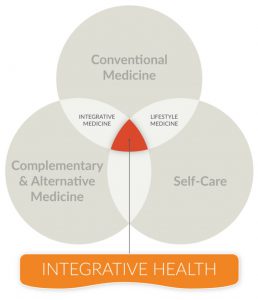
At Jamaica Hospital Medical Center, we are devoted to providing Integrative Health in Queens, New York. We created this program to help prevent disease onset, address existing chronic conditions, and promote healing in our patients. Integrative health is the coordinated delivery of evidence-based conventional medical care, complementary medicine and lifestyle modifications for producing optimal health and well-being. It combines the very best of traditional medicine with a variety of alternative treatment options as well as self-care practices to promote healing and overall wellness
What Does Integrative Health Involve?
Integrative health is an approach that places the patient at the center of a treatment plan that takes into the account the physical, emotional and social needs of that individual.
When creating a treatment plan, Integrative healthcare providers apply healthcare strategies that includes the use of alternative medicine that is supported by medical research. This concept is also referred to as evidence-based care.
Treatment plans may include the use of conventional medicine, such as prescriptions, to manage chronic health conditions, as well as alternative therapies, such as yoga, meditation, acupuncture and massage therapy, as well as self-care strategies to promote healing and wellness. Additionally, patients are encouraged to develop healthy behaviors that they can use on a daily basis to improve their health and prevent the development of certain diseases.
This way of practicing medicine allows our providers to deliver the right care at the right time to the right patient based on their individual needs.
How Can Integrative Health Benefit You?
Integrative health offers many advantages. As a patient you will receive individualized and holistic care that addresses your unique health needs.
An integrative approach to your health can help you to better manage symptoms of conditions that include:
Chronic pain
Fatigue
Joint pain
Anxiety and depression
Cancer
Digestive disorders
Sleep disorders
Diabetes
Hypertension
Fibromyalgia
To learn more about our integrative health program in Queens New York, please call 718-206-7849.
All content of this newsletter is intended for general information purposes only and is not intended or implied to be a substitute for professional medical advice, diagnosis or treatment. Please consult a medical professional before adopting any of the suggestions on this page. You must never disregard professional medical advice or delay seeking medical treatment based upon any content of this newsletter. PROMPTLY CONSULT YOUR PHYSICIAN OR CALL 911 IF YOU BELIEVE YOU HAVE A MEDICAL EMERGENCY.
Glaucoma is a group of eye diseases that mainly affects
people who are middle aged or older, but it can affect anyone at any age. There
are more than three million people in the United States and 60 million people
worldwide who suffer from glaucoma.
Glaucoma is the second leading cause of blindness. Typically
the disease starts to develop suddenly, often without symptoms, and once vision is lost, it is permanent. As
much as 40 percent of vision can be lost before some people even notice a
problem. It usually starts with loss of peripheral vision. Glaucoma is caused by damage to the optic nerve so that
the brain isn’t able to receive images
from the eyes. There are two types of Glaucoma, Primary Open-Angle Glaucoma
where pressure inside the eye increases on its own and damages the optic nerve
and Secondary Glaucoma where another disease causes the pressure in the eye to
increase and that results in optic nerve damage. Both types will eventually
lead to blindness.
Early detection of Glaucoma can help to slow down the
progression of the disease. Regular eye exams are very important. To schedule
an appointment with an eye doctor at Jamaica Hospital Medical Center, please
call 718- 206-5900.
All content of this newsletter is intended for general information purposes only and is not intended or implied to be a substitute for professional medical advice, diagnosis or treatment. Please consult a medical professional before adopting any of the suggestions on this page. You must never disregard professional medical advice or delay seeking medical treatment based upon any content of this newsletter. PROMPTLY CONSULT YOUR PHYSICIAN OR CALL 911 IF YOU BELIEVE YOU HAVE A MEDICAL EMERGENCY.
Have you included taking care of your mental health in this year’s resolutions?
Did you know that mental illness affects millions of Americans, yet many of those who need help do not receive it? There are many reasons why – it could be due to limited availability of services, or a strong distrust of others, or those who are mentally ill might have such a sense of hopelessness that they do not seek care.
While all of these are factors as to why someone doesn’t seek support, perhaps the biggest single reason is a sense of fear and shame associated with admitting help is needed. This sense of shame is very common and it is only reinforced by society, which has attached stigmas to mental illness. The beliefs the public has about mental illness lead those who need help to avoid it so they are not labeled as “crazy” and have their condition negatively affect their personal relationships and career goals.
Getting society to overcome the stigmas associated with mental illness is the key to having more individuals come forward, but unfortunately, negative attitudes and beliefs toward people who have a mental health condition are common. These stigmas can lead to obvious and direct discrimination, such as someone making a negative remark about mental illness or it may be unintentional or subtle, such as someone avoiding an individual because they assume they could be unstable, violent or dangerous due to mental illness.
Those with mental illness should never be ashamed of their condition and here are some reasons why:
According to the World Health Organization, one out of four people will experience mental health problems at some point in their lives.
Shame is pretty much guaranteed to make things worse. Feelings of shame are proven to have detrimental effects on our mental and physical health
Mental illness is no one’s fault. No one asks to have a mental illness and it is definitely not a choice we make.
We’re not ashamed when our bodies get sick, so why should we be ashamed when our minds aren’t in top form.
There is no normal – our minds are complex things and no single brain is the same
Our mental health doesn’t define us. Don’t let your mental illness become who you are, it is just one aspect of you.
It’s time to speak out against the stigmas associated with mental illness and reframe the way we see it. Getting help is not a sign of weakness. It is a sign of strength.
The COVID-19 pandemic has affected the mental health of many individuals. Jamaica Hospital advises anyone who feels they need help to get it. Don’t let the fear of being labeled with a mental illness prevent you from seeking help.
To make an appointment at Jamaica Hospital’s Outpatient Mental Health Center, please call 718-206-7001.
All content of this newsletter is intended for general information purposes only and is not intended or implied to be a substitute for professional medical advice, diagnosis or treatment. Please consult a medical professional before adopting any of the suggestions on this page. You must never disregard professional medical advice or delay seeking medical treatment based upon any content of this newsletter. PROMPTLY CONSULT YOUR PHYSICIAN OR CALL 911 IF YOU BELIEVE YOU HAVE A MEDICAL EMERGENCY.


 Follow