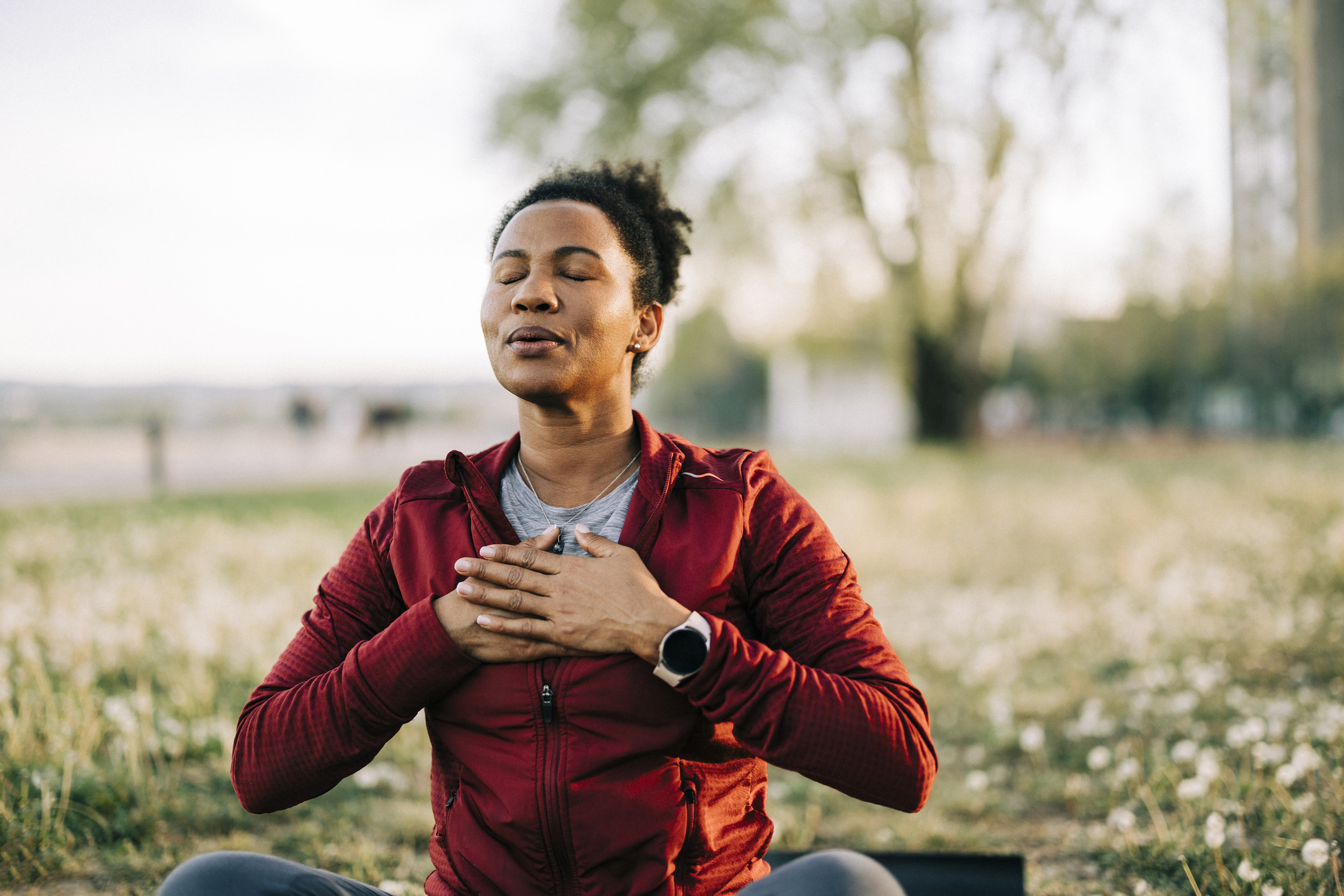
Wellness Wednesday: Meditation

Meditation is the habitual process of training your mind to focus and redirect your thoughts. It can wipe away the day’s stress and bring inner peace. It can also be used as a practice to develop other beneficial habits and feelings, such as a positive mood and outlook, self-discipline, healthy sleep patterns, and even increased pain tolerance.

There are many types of mediation, including:

  • Guided meditation
  • Mantra meditation
  • Mindfulness meditation
  • Qigong
  • Tai chi
  • Yoga

Each type of meditation includes certain features to help you meditate. The most common features include:

  • Focused attention- focusing your attention is one of the most important elements of meditation. It helps free your mind from the many things that cause stress and worry.
  • Relaxed breathing- this meditation technique involves deep, even-paced breathing using the diaphragm to expand your lungs. The purpose is to slow your breathing, take in more oxygen, and reduce the use of shoulder, neck, and upper chest muscles while breathing so that you breathe better.
  • A quiet setting- if you’re a beginner, meditation may be easier to do if you’re in a quiet spot to have fewer distractions. As you get more skilled at meditation, you may be able to do it anywhere, including high-stress places.
  • A comfortable position- you can practice meditation whether sitting, lying down, walking, or in other positions or activities. Ensure you are comfortable to get the most out of your meditation. Aim to keep a good posture during meditation.
  • An open attitude- let thoughts pass through your mind without judging them.

Here are some emotional and physical benefits of meditation:

  • It helps reduce stress
  • It helps to control anxiety
  • It supports emotional health
  • It enhances self-awareness
  • It increases your attention span
  • It may reduce age-related memory loss
  • It can help generate kindness
  • It may help with addiction
  • It helps to improve sleep
  • It helps control pain
  • It can help decrease blood pressure
  • It is accessible anywhere
  • It enables you to be more patient

Meditation is something everyone can do to improve their mental and emotional health without special equipment or costly memberships. Trying a style of meditation suited to your goals is a great way to improve your quality of life, even if you only have a few minutes a day.

If you want to learn more about Jamaica Hospital Medical Center’s integrative health services, events, or classes or would like to schedule an appointment, please call us at (718) 206-5675.


All content of this newsletter is intended for general information purposes only and is not intended or implied to be a substitute for professional medical advice, diagnosis or treatment. Please consult a medical professional before adopting any of the suggestions on this page. You must never disregard professional medical advice or delay seeking medical treatment based upon any content of this newsletter. PROMPTLY CONSULT YOUR PHYSICIAN OR CALL 911 IF YOU BELIEVE YOU HAVE A MEDICAL EMERGENCY.

What Is Brain Fog?

Brain fog is characterized as a mental fuzziness or lack of clarity.  Some of the characteristics of brain fog can include: 

  • Difficultly grasping thoughts
  • Problems finding the right words to say
  • Problems concentrating or remembering what you are doing
  • Mental exhaustion

The term “brain fog” has been associated with many medical conditions including lupus, multiple sclerosis, thyroid disease and menopause. Patients receiving chemotherapy have also reported experiencing brain fog. Most recently, the term has been mentioned as a long-term side effect of COVID-19 patients. Many of these patients, referred to as “long haulers” are currently living with this condition.

Regardless of the cause for your brain fog, Jamaica Hospital Medical Center is offering the following tips to help you manage this condition:

  • Get more sleep – Sleep deprivation can make it difficult for you to think clearly during the day. It is recommended that you receive 8-9 hours of sleep every night.
  • Exercise your body– Physical activity doesn’t only offer benefits for your body, it can also help improve memory and reaction time.
  • Exercise your brain – Regularly challenge your brain power by participating in puzzles and other activities. Also seek other enjoyable activities that will keep your brain engaged.
  • Decrease stress – Identify coping skills such as removing stressful elements in your life and saying no to requests that can cause stress. Meditation and journaling are also good techniques to help you manage stress.
  • Monitor your diet – A diet lacking in vitamins (such as B12) and minerals can lead to poor brain function. Some suggested foods to incorporate into your diet include walnuts, fatty fishes, blueberries and turmeric.
  • Check your medications – Certain migraine and anti-seizure prescriptions as well as over-the-counter sleep aid and allergy medications can have potential side-effects linked to brain fog.

If you are currently living with conditions associated with brain fog as a result of COVID-19, Jamaica Hospital has opened a Post-COVID Care Center to help you manage your long-hauler symptoms.  We incorporate a holistic approach to care for our patients, combining the best of conventional medicine and alternative therapies.

To make an appointment, please call 718-736-8204.

All content of this newsletter is intended for general information purposes only and is not intended or implied to be a substitute for professional medical advice, diagnosis or treatment. Please consult a medical professional before adopting any of the suggestions on this page. You must never disregard professional medical advice or delay seeking medical treatment based upon any content of this newsletter. PROMPTLY CONSULT YOUR PHYSICIAN OR CALL 911 IF YOU BELIEVE YOU HAVE A MEDICAL EMERGENCY.

Can Small Changes Affect Your Health

When seeking a routine that can bring wellness to your entire being, you don’t have to climb a mountain in Tibet or strip away all the food you love.  Experts say that the best way to bring a wellness routine into your life is through a series of small changes that will gradually make a difference.

Changes such as:

  • Meditation – Take a moment in the morning to meditate.  It will set the tone of the day and clear your head to prepare for what the day may bring.
  • Music – Play calming music.  The body’s internal rhythms sync with the rhythms of music.  By focusing on the music and its melody, you will start of feel your breathing and heart rate begin to slow down, bringing you to a much calmer place.
  • Plan a trip – According to research, happiness spikes when planning a trip.  Shut down your smartphone – When the impulse to pick up your phone comes, and you resist it, you may feel a wave of anxiety.  Don’t panic!  Breathy through the anxiety and you will see that there is a calm that will follow.
  • Breathe deeply – Sit in a comfortable place, breathe naturally and settle your attention on your breath.  With each inhale and exhale, mentally repeat the words “in” and “out.”  Even if your mind wanders, don’t get distracted; just bring your attention back to your breathing.
  • Email – Don’t check your email when you first wake up.  Instead, sit silently and allow your mind to wander.  Take 10 minutes to just center yourself before you start your day.
  • Walk – Use part of your lunch break to take a walk.  This activity will aid with digestion, keep you active and relieve stress.

No one likes change and it rarely comes easy.  That’s why slowly incorporating small steps toward your goals overtime can lead to huge changes in the long run.

All content of this newsletter is intended for general information purposes only and is not intended or implied to be a substitute for professional medical advice, diagnosis or treatment. Please consult a medical professional before adopting any of the suggestions on this page. You must never disregard professional medical advice or delay seeking medical treatment based upon any content of this newsletter. PROMPTLY CONSULT YOUR PHYSICIAN OR CALL 911 IF YOU BELIEVE YOU HAVE A MEDICAL EMERGENCY.

National Stress Awareness Month

In 1992, the month of April was designated as Stress Awareness Month.  During this time, health professionals join together to increase the public’s awareness about what causes stress and what can help cure the growing stress epidemic.

Jamaica Hospital Medical Center is participating by reaching out to our social media community and sharing some helpful techniques that can assist you in managing your daily stress, such as:

  • Meditation – is helpful to the brain’s neural pathways, making you more resilient to stress
  • Breathing Deeply – triggers our parasympathetic nervous system, neutralizes stress and elicits a calming feeling
  • Exercise – all forms of exercise can ease depression and anxiety by helping the brain releasing feel-good chemicals giving your body a chance to practice dealing with stress
  • Eating Healthy – choosing a diet rich in vegetables, fruits, and fiber may reduce the chance that stress can boost the body’s natural defense system

Prolonged, excesive periods of stress is unhealthy for any individual. A change of mindset can bring about a healthier lifestyle.  That positive change can help you manage stress and bring far-reaching improvement to your health and well being.

For more information and to find out ways you can make a difference visit –

All content of this newsletter is intended for general information purposes only and is not intended or implied to be a substitute for professional medical advice, diagnosis or treatment. Please consult a medical professional before adopting any of the suggestions on this page. You must never disregard professional medical advice or delay seeking medical treatment based upon any content of this newsletter. PROMPTLY CONSULT YOUR PHYSICIAN OR CALL 911 IF YOU BELIEVE YOU HAVE A MEDICAL EMERGENCY.