Could Stress Be Causing You Crisis Fatigue ?

Crisis fatigue can be defined as how a person reacts to long term stress with feelings of being very tired or numbness to the world around them.

The events of the past few months have caused many of us overwhelming emotions which include depression, sadness, anxiety, and fear. The body’s response to stressful circumstances is to produce the hormones cortisol and adrenaline. When stressful circumstances persist for long periods of time, these higher level of these hormones can lead to depression, anxiety, weight gain, bone loss or high blood pressure. In some cases crisis fatigue can lead to substance abuse, alcoholism and suicidal thoughts.

The signs and symptoms of crisis fatigue include:

  • Increased irritability
  • Excessive emotional responses
  • Lack of sleep
  • Changes in normal routines
  • Changes in appetite

Some of the ways a person can cope during these uncertain times is to learn how to reduce the level of stress in their life by:

  • Reducing the amount of time spent on social media
  • Limiting exposure to news reports
  • Spending more time with family and friends
  • Practicing meditation and yoga
  • Finding activities that are calming like reading, listening to music, and crafts

It isn’t always easy to cope with stressful situations without professional help. If you are experiencing any long term effects, you may benefit by speaking to a mental health professional. You can schedule an appointment with a trained professional at Jamaica Hospital by calling 718-206-7160.

All content of this newsletter is intended for general information purposes only and is not intended or implied to be a substitute for professional medical advice, diagnosis or treatment. Please consult a medical professional before adopting any of the suggestions on this page. You must never disregard professional medical advice or delay seeking medical treatment based upon any content of this newsletter. PROMPTLY CONSULT YOUR PHYSICIAN OR CALL 911 IF YOU BELIEVE YOU HAVE A MEDICAL EMERGENCY.


Kale Salad

With Autumn arriving and our backyard grills safely packed away, we have provided a great kale salad recipe from allrecipies.com to compliment any fall meal choice.

 “If you slice kale thin and toss it with other tasty treats like apple, persimmon, orange, and nuts, the kale mellows out and serves as a perfect foil for other vegetation.” Chef John

 For the entire recipe please follow the link to – 

For this and more delicious recipes visit – http://allrecipes.com/Recipe/Chef-Johns-Raw-Kale-Salad/Detail.aspx?evt19=1

All content of this newsletter is intended for general information purposes only and is not intended or implied to be a substitute for professional medical advice, diagnosis or treatment. Please consult a medical professional before adopting any of the suggestions on this page. You must never disregard professional medical advice or delay seeking medical treatment based upon any content of this newsletter. PROMPTLY CONSULT YOUR PHYSICIAN OR CALL 911 IF YOU BELIEVE YOU HAVE A MEDICAL EMERGENCY.

National Childhood Obesity Awareness Month

September is National Childhood Obesity Awareness Month – an observance that coincides with the return of children to the classroom. This convergence of events leads many parents to ask one question, “how can I ensure that my child receives a nutritious diet now that they are back in school?”

Obesity rates among children have tripled over the past three decades. It’s now estimated that  approximately 18% of children living in the United States are classified as obese. It is also estimated that children who are obese are ten times more likely to become obese as adults than other children. Since most children consume half of their daily caloric intake while in school, concentrating on providing them with a healthy and balanced diet while they are there is essential in the battle against obesity.

For many parents, the decision of whether to pack lunch from home or buy lunch from school is a difficult one. Some parents question the nutritional value of school lunches. Parents who have this concern should know that in recent years, schools have implemented new standards for the nutritional value of meals to align with U.S. dietary guidelines. Processed lunches that used to be high in fat, sugar, and sodium have been replaced with meals that meet or exceed national standards. School meals now also feature a variety of fruits and vegetables, whole grains, and low or fat-free milk.

For those who still opt to pack their child’s lunch, they can improve their child’s diet and reduce their chances of becoming obese by following some simple tips:

  • Choose whole wheat breads instead of white bread when making sandwiches
  • Use fresh fruits instead of canned or processed alternatives
  • Fill a sandwich bag with something other than a sandwich. There are many other food options for your kids to snack on, such as carrots, nuts, granola, or raisins.
  • Initiate a salad day. Prepare the basics the night before and have your child choose some toppings including sliced chicken or turkey or low-fat cheese.
  • Introduce wraps as an option to a boring old sandwich. Give it extra flavor by coating with a low-fat spread and fill it with lettuce and protein.  You can cut the wrap into pinwheel slices for fun.
  • Invest in a thermos and fill it up with mac and cheese or your child’s favorite soup, stew or pasta.
  • Encourage your child to drink plenty of water instead of sugary juice boxes or soda. Sugary drinks are considered one of the leading causes of childhood obesity.

Whether your child buys or packs lunch, it’s important to stay involved. Talk to them about what food choices they made and discuss the many benefits eating a healthy diet has on both their mind and body.

All content of this newsletter is intended for general information purposes only and is not intended or implied to be a substitute for professional medical advice, diagnosis or treatment. Please consult a medical professional before adopting any of the suggestions on this page. You must never disregard professional medical advice or delay seeking medical treatment based upon any content of this newsletter. PROMPTLY CONSULT YOUR PHYSICIAN OR CALL 911 IF YOU BELIEVE YOU HAVE A MEDICAL EMERGENCY.
Reading or Prescription Eyeglasses

If your vision is blurred or you are having issues with your sight, an eye doctor will conduct a regular exam, assessing your overall eye health.  At the end of the exam, it may be suggested that you are in need of glasses.  If you do not have a serious eye condition, the doctor may suggest magnifiers or over the counter (OTC) “readers.”

When making the decision to get glasses, many people wonder if there is difference between prescription lenses and OTC glasses.  The answer is, yes.

Some differences between OTC and prescription glasses are:

  • Over the counter (OTC) readers are best used for age-related presbyopia. Presbyopia is an age-related issue where your eyes become less flexible, making it harder to focus on close objects.
  • OTC readers have the same prescription in each lens. Having the same eyesight in both eyes is extremely rare. Therefore, your vision will not be properly corrected and you may still experience difficulty focusing even when wearing OTC readers.
  • Prescriptions glasses offer more options and benefits, such as quality in materials, accurate vision correction, lens clarity, as well as scratch and glare resistance.  Additionally, unlike OTC readers, prescription glasses can help with astigmatism, myopia or glaucoma.

If you are having difficulty with your vision, you should schedule an appointment to have your eyes examined.  To schedule an appointment with the Jamaica Hospital Medical Center’s Ophthalmology Center call 718-206-5900.

All content of this newsletter is intended for general information purposes only and is not intended or implied to be a substitute for professional medical advice, diagnosis or treatment. Please consult a medical professional before adopting any of the suggestions on this page. You must never disregard professional medical advice or delay seeking medical treatment based upon any content of this newsletter. PROMPTLY CONSULT YOUR PHYSICIAN OR CALL 911 IF YOU BELIEVE YOU HAVE A MEDICAL EMERGENCY.

Summer Migraines

For many people who are prone to migraine headaches, summer can be the season when they are most affected. This doesn’t mean having to stay indoors to avoid symptoms, but instead learning the causes of migraines and taking precautions they should be taking to prevent them.

Migraine headaches are caused by changes in the brain that are brought on by several factors which include stress, hormonal changes, lack of sleep and food allergies. Factors that occur most commonly in summer include:

  • Changes in the weather
  • Sensitivity to bright light
  • Excessive heat and humidity
  • Changes in barometric pressure
  • Dehydration

In order to help prevent some of the causes of summer migraines, one can follow these helpful tips:

  • Make sure that you are drinking water adequately and frequently
  • Avoid beverages containing caffeine and alcohol
  • Wear a hat to keep the sun’s strong rays from your head and eyes
  • Protect your eyes with a good pair of sunglasses
  • Minimize the amount of time spent outdoors during the hottest part of the day
  • Do your errands during the cooler times of the day, if this is not possible, try to take breaks when you can and move into a cooler place.

People who experience frequent summer migraines don’t have to spend the summer indoors. If they take adequate precautions, they too can enjoy their time outdoors.

Speak to your physician if you experience frequent migraines at any time of the year and would like recommendations on  how to manage them. To make an appointment to see a physician at Jamaica Hospital Medical Center, please call 718-206-7001.

All content of this newsletter is intended for general information purposes only and is not intended or implied to be a substitute for professional medical advice, diagnosis or treatment. Please consult a medical professional before adopting any of the suggestions on this page. You must never disregard professional medical advice or delay seeking medical treatment based upon any content of this newsletter. PROMPTLY CONSULT YOUR PHYSICIAN OR CALL 911 IF YOU BELIEVE YOU HAVE A MEDICAL EMERGENCY.
Signs of Poor Circulation You Should Not Ignore

The circulatory system consists of our heart, lungs and blood vessels; all of which are responsible for transporting blood, oxygen, and nutrients throughout our bodies.

When our circulatory system is not functioning well, and blood flow has decreased, we may experience symptoms that include:

  • Muscle cramps
  • Numbness or tingling in hands and feet
  • Cold hands and feet
  • Problems getting or keeping an erection
  • Memory loss or difficulty concentrating
  • Slow healing of wounds
  • Varicose veins
  • Fatigue
  • Edema (the accumulation of fluid in certain parts of the body)

The symptoms of poor circulation should not be ignored as they are sometimes indicative of serious health problems such as:

  • Diabetes
  • Blood clots
  • Atherosclerosis
  • Peripheral artery disease
  • Hypertension

Ignoring symptoms and delaying care can be detrimental to your health. If you are experiencing symptoms that are associated with poor circulation, notify your healthcare provider immediately.  Your doctor can conduct a physical examination or order tests to determine the cause and provide appropriate treatment.

All content of this newsletter is intended for general information purposes only and is not intended or implied to be a substitute for professional medical advice, diagnosis or treatment. Please consult a medical professional before adopting any of the suggestions on this page. You must never disregard professional medical advice or delay seeking medical treatment based upon any content of this newsletter. PROMPTLY CONSULT YOUR PHYSICIAN OR CALL 911 IF YOU BELIEVE YOU HAVE A MEDICAL EMERGENCY.

Psoriasis

Psoriasis

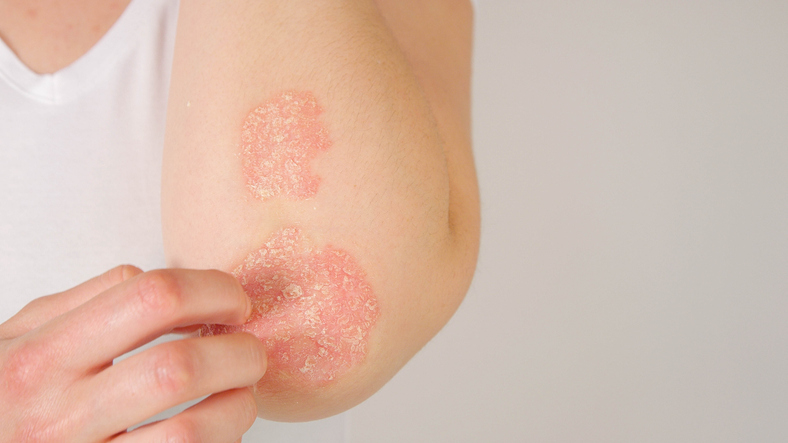
Psoriasis is a condition that is characterized by raised, red scaly patches. It is  often found on the scalp, knees and elbows, but can show up on other parts of the body as well of people who have the disease. The exact cause is not known but there is a correlation between genetics and also the body’s immune system. Psoriasis is a condition where the skin cells multiply at a faster rate than normal cells. This causes a buildup up skin lesions and the area of the body also feels warmer because it contains more blood vessels.   

Psoriasis is not contagious so it does not get passed by coming in to contact with a person who has it. It is a condition that affects men and women equally and  it can develop at any age, most commonly between the ages of 15 and 35.

Common signs of psoriasis include:

  • red patches of skin with thick silvery scales
  • cracked and dry skin that may bleed
  • stiff joints that may be swollen
  • itching, burning and soreness
  • nails that are pitted, thick and ridged

There are certain risk factors for developing psoriasis.  This includes stress, smoking, obesity, alcoholism, skin infections, a vitamin D deficiency, and a family history. Psoriasis is diagnosed by examining the skin and making a diagnosis. A dermatologist will be able to determine if it is psoriasis by the amount of thickness and redness it has. There are different types of psoriasis and they are classified by how they show up on the skin.

There are three ways that treatment for psoriasis can be approached. They can be used by themselves or together, depending on the severity. Topical creams and ointments that contain corticosteroids are usually the most commonly prescribed medications for mild to moderate conditions. Light therapy that is either natural or artificial ultraviolet light  can be used and it is directed at the area of the body that is affected. In severe cases, medications that are either injected or taken orally may be required. There are also alternative treatments that are being used and this includes Aloe vera which comes from a plant and   omega-3 fatty acids that comes from fish oils.

Depending on the severity of the disease, it may have an impact on a person’s quality of life. If you would like to schedule an appointment with a dermatologist at Jamaica Hospital for any type of skin condition, please call 718-206-7001.

All content of this newsletter is intended for general information purposes only and is not intended or implied to be a substitute for professional medical advice, diagnosis or treatment. Please consult a medical professional before adopting any of the suggestions on this page. You must never disregard professional medical advice or delay seeking medical treatment based upon any content of this newsletter. PROMPTLY CONSULT YOUR PHYSICIAN OR CALL 911 IF YOU BELIEVE YOU HAVE A MEDICAL EMERGENCY.

Tips For The Hurricane Season

While we typically associate the summer with delightful temperatures, this time of year can also bring dangerous weather conditions, namely hurricanes.

With a long history of providing relief to places previously devastated by hurricanes, including sending personnel to assist the victims of Hurricanes Katrina and Maria, Jamaica Hospital Medical Center is experienced and knowledgeable about how to properly prepare for such an event. Our hospital would like to share the following safety tips with our community:

  • In case of a need to evacuate, know where the nearest evacuation route is located
  • Keep a supply of non-perishable food that doesn’t require refrigeration or cooking
  • In an easy to locate area of your home keep flashlights, extra batteries, extra cash, a first aid kit, basic tools, charged cell phones and chargers, and a battery operated radio
  • Make sure you have a seven day supply of prescription medications
  • Have a three day supply of drinking water, one gallon per day per person.
  • Fill a bathtub with water to use to flush toilets
  • Make sure that all of your important documents are kept in a place that is high above ground level. Always keep a copy of these documents with you if there is a need to evacuate
  • Give everyone in your household a list of people they should contact in case of an emergency
  • Have a plan to protect your pets and have extra food for them
  • Prepare to put outdoor furniture away or at least firmly secured

By being prepared and following these tips, you can help keep your home and your loved ones safe from disaster.

For more information, please visit https://www.ready.gov/hurricanes and www.fema.gov

All content of this newsletter is intended for general information purposes only and is not intended or implied to be a substitute for professional medical advice, diagnosis or treatment. Please consult a medical professional before adopting any of the suggestions on this page. You must never disregard professional medical advice or delay seeking medical treatment based upon any content of this newsletter. PROMPTLY CONSULT YOUR PHYSICIAN OR CALL 911 IF YOU BELIEVE YOU HAVE A MEDICAL EMERGENCY.

FAQ’S ABOUT INSULIN

Insulin is a proven treatment to control blood glucose levels for people living with type 2 diabetes.

Below is some frequently asked questions (FAQ’s) regarding insulin:

Q.        What is insulin?

A.        Insulin is hormone that would typically be produced by the pancreas.

Q.        Why would I need to take insulin?

A.        When blood glucose levels can no longer be controlled by diet, exercise or oral medication, your doctor may prescribe insulin as a prescription to lower your blood sugar levels. 

Q.        Why is it important to keep my glucose levels as close to normal limits as possible?

A.        High blood sugar levels can obstruct organ function which can lead to kidney failure, heart disease and may eventually cause blindness.

Q.        Does insulin have any side effects?

A.        One of the more common side effects of insulin is low blood sugar or hypoglycemia.  This condition happens when too much insulin is taken causing you to experience anxiety, sweating, dizziness, nausea, confusion and lack of coordination.  Hypoglycemia is remedied by eating or drinking a substance that contains sugar.

Q.        How is insulin administered?

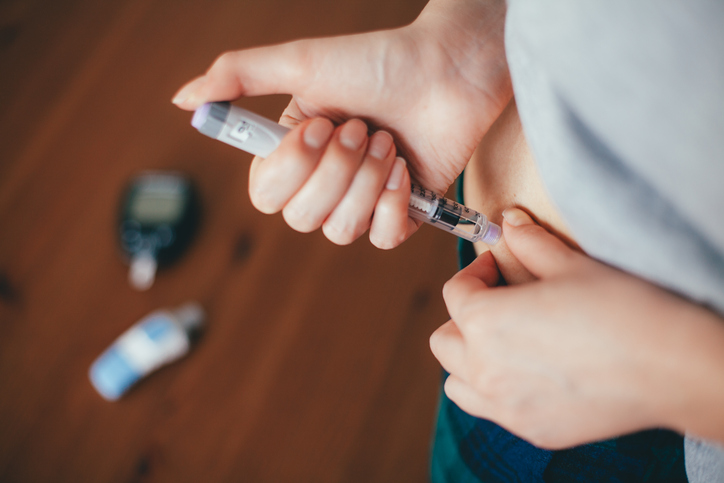
A.        Insulin should be injected into the body’s fatty tissue. Be sure to rotate the injection sites since continual use in the same spot

Q.        How long will I have to take insulin?

A.        If you have type 2 diabetes, caused by a condition such as pregnancy, you may have to take insulin for a short period of time.  If your type 2 diabetes is caused by your pancreas not making enough insulin, you may need to take insulin more regularly in order to remain healthy.

I hope you have found these questions and answers helpful and informative. 

If you have additional questions or concerns regarding your blood sugar levels, diabetes or nutrition, please call the Jamaica Hospital Medical Center’s Ambulatory Care Center at 718-206-7001 to schedule an appointment.

All content of this newsletter is intended for general information purposes only and is not intended or implied to be a substitute for professional medical advice, diagnosis or treatment. Please consult a medical professional before adopting any of the suggestions on this page. You must never disregard professional medical advice or delay seeking medical treatment based upon any content of this newsletter. PROMPTLY CONSULT YOUR PHYSICIAN OR CALL 911 IF YOU BELIEVE YOU HAVE A MEDICAL EMERGENCY.

Keeping Kids Busy During These Challenging Times

During these last few months, with schools closed and social distancing rules in place, it has proven to be very challenging to keep children occupied.

Here are some suggestions that you may find helpful for keeping children occupied based on their age.

Younger children:

  • Go on scavenger hunts around your neighborhood
  • Put painters tape on the floor and make a maze for toy trucks to follow
  • Take a whiteboard or pieces of paper and let your child write a story
  • Make hand puppets with socks and tell stories
  • Plant seeds in paper cups and watch them grow
  • Build a fort with a sheet

Older children :

  • Go on virtual tours of interesting places around the world.
  • Bake cookies
  • Use the internet to learn new skills or to learn how to play an instrument
  • Write letters to people in nursing homes
  • Play board games

While trying new and innovative ways to occupy their time can be difficult at times, there are many benefits. These activities can stimulate them mentally and physically and help them to avoid boredom and depression. There are also many resources on the internet that will help you to find activities that suit everyone’s interests.

https://www.jamaicahospital.org/newsletter/wp-login.php?loggedout=true

All content of this newsletter is intended for general information purposes only and is not intended or implied to be a substitute for professional medical advice, diagnosis or treatment. Please consult a medical professional before adopting any of the suggestions on this page. You must never disregard professional medical advice or delay seeking medical treatment based upon any content of this newsletter. PROMPTLY CONSULT YOUR PHYSICIAN OR CALL 911 IF YOU BELIEVE YOU HAVE A MEDICAL EMERGENCY.