Health Effects Caused By Worrying

stressed couple 91460014Worrying yourself sick is not just a saying; studies prove that being in a constant state of worry can have a harmful effect on your physical health.   Excessive worrying can lead to anxiety and an increase in your levels of stress. This can trigger a number of problems that can make you ill.

High levels of stress produce hormones such as adrenaline and cortisol, both can negatively impact the nervous system, digestive system, the heart and glands; leading to health conditions such as:

  • Stomach ulcers
  • Heart disease
  • Diarrhea
  • Sleep disorders
  • Frequent headaches
  • Fatigue
  • Short term memory loss

There are several lifestyle changes you can make to help decrease how frequently you worry and potentially reduce the risk of developing serious health problems- they include:

  • Exercising
  • Practicing relaxation  techniques such as meditation, yoga or tai chi
  • Drinking caffeine in moderation
  • Maintaining a healthy diet
  • Socializing with people who are supportive

If these tips do not help and you continue to experience stress-related symptoms, please see your doctor immediately.

All content of this newsletter is intended for general information purposes only and is not intended or implied to be a substitute for professional medical advice, diagnosis or treatment. Please consult a medical professional before adopting any of the suggestions on this page. You must never disregard professional medical advice or delay seeking medical treatment based upon any content of this newsletter. PROMPTLY CONSULT YOUR PHYSICIAN OR CALL 911 IF YOU BELIEVE YOU HAVE A MEDICAL EMERGENCY.

Do You Know How to Dispose of your Expired Medications?

If you peek inside your medicine cabinet, there is a good chance it contains a few expired or unnecessary prescription medications. It is probably a good idea to discard them, but what is the right way to do so?

Pills Spilling From Bottle

Disposing of these medications, whether they are expired antibiotics, or pain meds that are no longer needed is very important because they can be harmful if taken by someone other than the person they were prescribed for.

While most medicines can be thrown in the household trash, many others have specific disposal instructions to immediately flush them down the sink or toilet when they are no longer needed. Only flush prescription drugs that specifically note to do so as there is evidence that certain medications can harmful to the water supply. If you are uncomfortable flushing or disposing of your meds, another option is participating in local drug “take-back” programs where they can be turned in and properly disposed of.

If no disposal instructions are given on the prescription drug labeling and no take-back program is available in your area, throw the drugs in the household trash using these tips:

• Remove your meds from their original containers and mix them with coffee grounds, dirt or kitty litter. This makes them less appealing to drug seekers.

• Place this mixture in a sealable bag to prevent the drugs from leaking out of the garbage bag.

• Scratch out all identifying information on the prescription label to protect your identity and privacy.

• Do not give your medicine to friends. Doctors prescribe medicines based on your specific symptoms and medical history. Something that works for you could be dangerous for someone else.

• When in doubt about proper disposal, ask your pharmacist.

Check with your local government officials about any up-coming drug take-back events in your community. If you cannot locate one and you have questions, you can call Jamaica Hospital’s on-site retail pharmacy about how to properly dispose of your medications. For more information, please call 718-206-8515.

All content of this newsletter is intended for general information purposes only and is not intended or implied to be a substitute for professional medical advice, diagnosis or treatment. Please consult a medical professional before adopting any of the suggestions on this page. You must never disregard professional medical advice or delay seeking medical treatment based upon any content of this newsletter. PROMPTLY CONSULT YOUR PHYSICIAN OR CALL 911 IF YOU BELIEVE YOU HAVE A MEDICAL EMERGENCY.
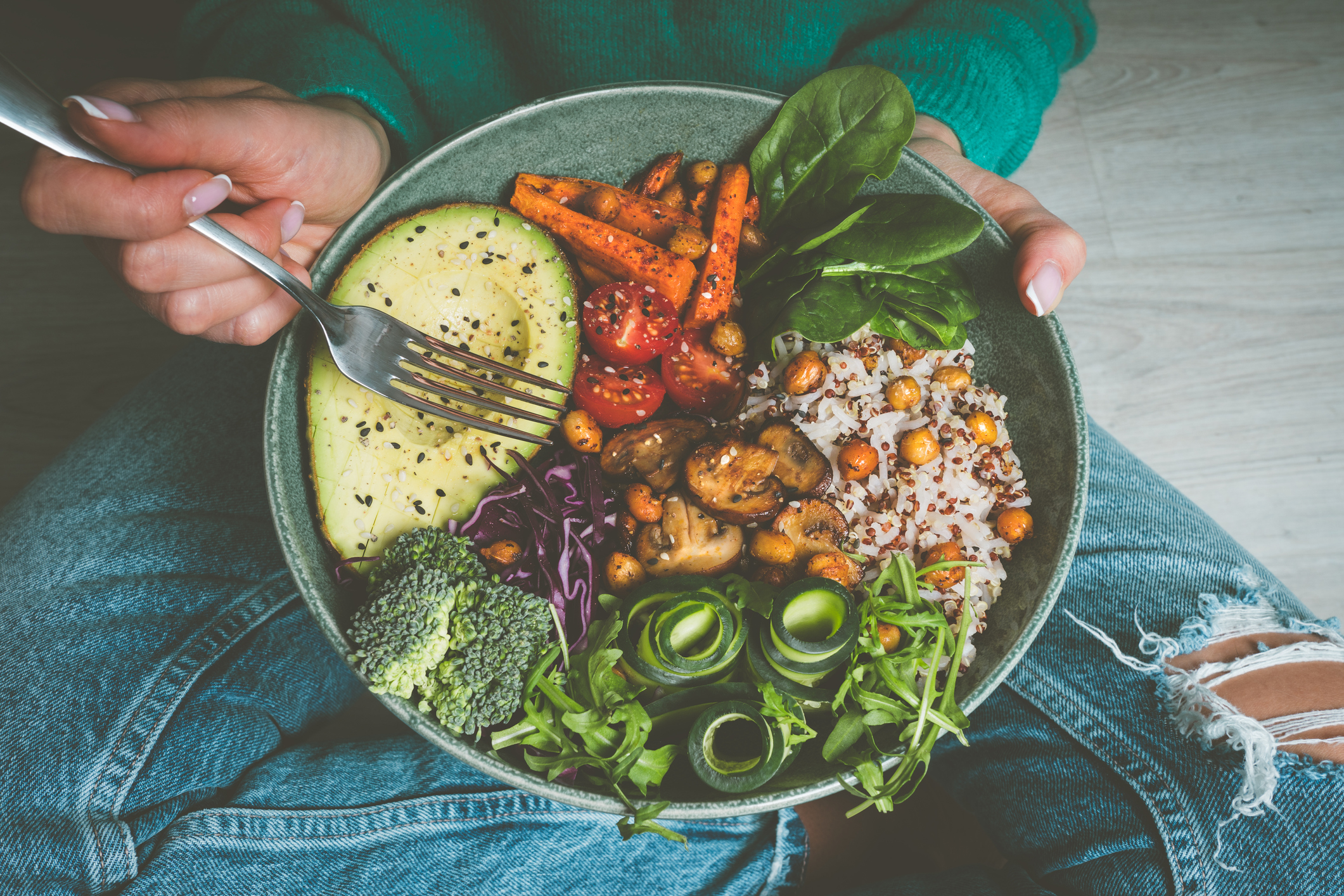
Lamb Kebabs and Lima Bean Salad


National Lima Bean Respect Day is observed on April 20.  Lima beans are a good source of protein, iron, magnesium, potassium and zinc.  Lima beans can increase energy levels by helping to restore iron.  They are delicious in soups, stews, salads, casseroles, by themselves or mixed with other vegetables.

In honor of National Lima Bean Respect Day, try this easy and delicious Lamb Kebabs and Lima Bean Salad recipe:

INGREDIENTS

  • 3 tablespoons olive oil
  • 2 tablespoons red wine vinegar
  • 1 tablespoon chopped fresh oregano
  • 2 cloves garlic, chopped
  • Kosher salt and black pepper
  • 3/2 pound boneless lamb top round steak or shoulder chop, cut into 16 pieces
  • 1 lemon, cut into 8 pieces
  • 1medium red onion, cut into 8 wedges (stem end left intact)
  • 1 pound frozen baby lima beans
  • 1 ounce Feta, crumbled (1/4cup)
  • ¼ cup pitted Kalamata olives, coarsely chopped
  • ¼ cup torn fresh mint leaves

DIRECTIONS

  1. Soak 8 wooden skewers in water for at least 15 minutes. Bring a large saucepan of water to a boil.
  2. Meanwhile, in a medium bowl, make the vinaigrette: whisk together the oil, vinegar, oregano, garlic and ¼ teaspoon each salt and pepper. Transfer half the vinaigrette to another medium brown, add the lamb and toss to coat.
  3. Heat broiler. Thread the lamb, lemon and onion onto the skewers and place on a broiler-proof baking sheet.  Broil 3 to 4 minutes per side for medium-rare.
  4. Add the beans and 1 tablespoon salt to the boiling water and cook until the beans are tender, 2 to 3 minutes. Rinse with cold water, drain well and add to the bowel with the remaining vinaigrette.  Add the Feta, olives and mint and toss to combine.  Serve with the kebabs


Serves:                 4

Total Time:         40 min

For this and other easy recipes visit –


All content of this newsletter is intended for general information purposes only and is not intended or implied to be a substitute for professional medical advice, diagnosis or treatment. Please consult a medical professional before adopting any of the suggestions on this page. You must never disregard professional medical advice or delay seeking medical treatment based upon any content of this newsletter. PROMPTLY CONSULT YOUR PHYSICIAN OR CALL 911 IF YOU BELIEVE YOU HAVE A MEDICAL EMERGENCY.

March is National Colon Cancer Awareness Month

In 2000, President Clinton officially dedicated March as National Colon Cancer Awareness Month. This designation provides patients, survivors, caregivers and advocates throughout the country an opportunity to join together to raise awareness about colon cancer and the importance of early detection.

ThinkstockPhotos-474824404The American Cancer Society recommends that men and women with an average risk of developing colon cancer be tested beginning at age 50. People with certain risk factors, such as a family history of colon cancer or a history of inflammatory bowel disease should be tested earlier.

Early detection can save lives, but unfortunately, less than half of the people age 50 and older get tested for colon cancer. Colorectal cancer is the third most commonly diagnosed cancer and second leading cause of cancer death in the U.S., yet there is a 90 percent cure rate when detected early.

There are a variety of different tests used to diagnose colon cancer. They include:

Standard (or optical) colonoscopy – During this test, the rectum and entire colon are examined using a colonoscope, a flexible lighted tube with a lens for viewing and tool for removing tissue. During a colonoscopy, any abnormal growths in the colon and rectum can be removed.

Sigmoidoscopy – During this test, the rectum and the sigmoid colon are examined using a sigmoidascope. The instrument is inserted through the anus and into the rectum and sigmoid colon as air is passed pumped into the colon to expand it so the doctor can see it more clearly.

High-sensitivity fecal occult blood tests (FOBT) – This exam checks for tiny amounts of blood in feces (stool) that cannot be seen by the naked eye. The stool samples are collected by the patient and the doctor has the samples tested.

Speak with your doctor about when to begin screening for colorectal cancer and what test(s) are best for you. If you do not have a doctor, Jamaica Hospital’s Ambulatory Care Center has doctors that can help. For more information, or to schedule an appointment, call 718-206-7001.

All content of this newsletter is intended for general information purposes only and is not intended or implied to be a substitute for professional medical advice, diagnosis or treatment. Please consult a medical professional before adopting any of the suggestions on this page. You must never disregard professional medical advice or delay seeking medical treatment based upon any content of this newsletter. PROMPTLY CONSULT YOUR PHYSICIAN OR CALL 911 IF YOU BELIEVE YOU HAVE A MEDICAL EMERGENCY.

What do you rely on most for maintaining a healthy heart?


1.   Exercise

2.  Balanced diet

3. Getting plenty of sleep

4.  Reducing stress

5.  All of the above

Answer – 5- All of the above

Although the American Heart Association recommends for overall cardiovascular health – at least 30 minutes of moderate-intensity aerobic activity at least 5 days per week or at least 25 minutes of vigorous aerobic activity at least 3 days per week for a total of 75 minutes with a moderate to high intensity muscle strengthening activity at least 2 days per week for additional benefits, best results are gained when exercise is combined with a balanced diet, getting plenty of rest and reducing stress .

All content of this newsletter is intended for general information purposes only and is not intended or implied to be a substitute for professional medical advice, diagnosis or treatment. Please consult a medical professional before adopting any of the suggestions on this page. You must never disregard professional medical advice or delay seeking medical treatment based upon any content of this newsletter. PROMPTLY CONSULT YOUR PHYSICIAN OR CALL 911 IF YOU BELIEVE YOU HAVE A MEDICAL EMERGENCY.

March is National Kidney Month


March is National Kidney Month and the National Kidney Foundation is urging all Americans to give their kidneys a well-deserved checkup.

The kidneys are two, fist-sized organs in your lower back. They maintain overall health by serving following functions:

  • Filtering waste out of 200 liters of blood each day
  • Regulating of the body’s salt, potassium and acid content
  • Removing toxins from the body.
  • Balancing the body’s fluids
  • Releasing hormones that regulate blood pressure
  • Producing an active form of vitamin D that promotes strong, healthy bones
  • Controlling the production of red blood cells

According to the U.S. Centers for Disease and Control, some quick facts on Kidney Disease are:

  • Kidney disease is the 9th leading cause of death in the country.
  • More than 26 million Americans have kidney disease, and most don’t know it.
  • There are over 95,000 people waiting for kidney transplants.
  • Currently, more than 590,000 people have kidney failure in the U.S. today.

Often times, kidney failure can be prevented or delayed through early detection and proper treatment of underlying disease such as diabetes and high blood pressure which can slow additional damage to the kidneys.

If you are 18 years or older with diabetes, high blood pressure, cardiovascular disease or a family history of kidney disease, you should schedule an appointment with your doctor and ask that you be screened for kidney disease.

If you would like to make an appointment to have your Kidney’s checked, you can call Jamaica Hospital Medical Center’s Ambulatory Care Center at 718-206-7001 for an appointment.

All content of this newsletter is intended for general information purposes only and is not intended or implied to be a substitute for professional medical advice, diagnosis or treatment. Please consult a medical professional before adopting any of the suggestions on this page. You must never disregard professional medical advice or delay seeking medical treatment based upon any content of this newsletter. PROMPTLY CONSULT YOUR PHYSICIAN OR CALL 911 IF YOU BELIEVE YOU HAVE A MEDICAL EMERGENCY.

Sibling Rivalry

Sibling rivalry is defined as a type of competition or animosity among siblings, whether blood related or not.

The sibling bond can be complicated since they generally spend more time together during childhood than they do with their parents. Sibling rivalry can be particularly intense when the children are very close in age and of the same gender.

Although bickering between siblings can drive parents crazy, sibling rivalry is a normal part of growing up.  Parents must create an equal balance of when to step in and play referee and when to let their kids work out their problems themselves.

Below are some of the common reasons for sibling rivalry:

  • Attention – Children are always vying for their parents’ attention. These days, parents are busier than ever and their attention on work or a new baby may cause less of a focus on each child.  Children may act out and misbehave to get attention.
  • Sharing – With limited resources, siblings may have to share at least some of their possessions. Game systems, iPad’s or electronic items can be hard to share and require children to compartmentalize their time on each item.
  • Personality Differences – Some children are headstrong while others can be quieter and more introverted. Differences in temperament can lead to clashes.
  • Fairness issues – Children are always demanding fairness and equality and fighting for what they perceive are their natural born rights. A younger sibling might complain that her older sister gets to go to a concert and she has to stay home, while the older sister whines that she has to baby-sit her little sister instead of going out with her friends.

Your responsibility as a parent is to help your kids to learn to manage the feelings that come along with sibling rivalry. So, how can you stop the bickering? As a parent, you may have to indulge each child once in a while.  Make the effort to spend “just us” time with your children and speak to them about tolerance and the benefits of being part of a family.  Each child has their own unique strong points. Identify how those positive characteristics could cause them to become a role model to the other siblings.

Be sure not to confuse bullying with normal sibling rivalry.  If one of your children bullies his/her siblings and has to be the boss and control the others to the point of getting physical, you will have to determine the difference, especially if there is aggression over and above the bickering.

In most instances of sibling rivalry, approach all situations with a level head and a firm stance on a standard of respect that is expected in your home.  Live the model you would like them to emulate.

All content of this newsletter is intended for general information purposes only and is not intended or implied to be a substitute for professional medical advice, diagnosis or treatment. Please consult a medical professional before adopting any of the suggestions on this page. You must never disregard professional medical advice or delay seeking medical treatment based upon any content of this newsletter. PROMPTLY CONSULT YOUR PHYSICIAN OR CALL 911 IF YOU BELIEVE YOU HAVE A MEDICAL EMERGENCY.

Use Caution When Using a Space Heater This Winter

During the cold, winter months, when your home isn’t always as warm as you would like it to be, electric space heaters might seem like a convenient way of raising the temperature inside for you and your family.

ThinkstockPhotos-521707503When used appropriately, space heaters can be a reliable source of supplemental heat for your home or workplace. Unfortunately for many, space heaters are used improperly or as a primary source of heat. When used under these conditions, space heaters can become dangerous. In fact, they are responsible for approximately one-third of all winter house fires and 80 percent of all winter heating fire deaths.

To ensure you are using a space heater the right way, follow these simple safety tips:

• Read the manufacturer’s instructions and warning labels carefully before operating your space heater.
• Make sure your space heater is assembled correctly. Look for cracks in the unit or loose or frayed wire or plugs.
• Only use your space heater as a heating device. Do not attempt to use it to warm bedding, cook food or dry clothing.
• Space heaters must be kept a safe distance away from anything that can burn, including newspapers, magazines, clothing, curtains or rugs.
• Never leave a space heater unattended. Turn it off when you’re leaving a room or going to sleep.
• Be sure to install smoke alarms on every floor of your home and outside all sleeping areas and test them once a month.
• Plug space heaters directly into a wall outlet. Do not use extension cords or power strips, which can overheat and result in a fire. Do not plug other electrical devices into the same outlet as the heater.
• Space heaters should always be positioned on a level surface. Never place heaters on furniture or uneven flooring.

Failure to comply with these recommendations can result in serious injury or even death.

Jamaica Hospital Medical Center urges everyone to be smart when using space heaters this winter season.

All content of this newsletter is intended for general information purposes only and is not intended or implied to be a substitute for professional medical advice, diagnosis or treatment. Please consult a medical professional before adopting any of the suggestions on this page. You must never disregard professional medical advice or delay seeking medical treatment based upon any content of this newsletter. PROMPTLY CONSULT YOUR PHYSICIAN OR CALL 911 IF YOU BELIEVE YOU HAVE A MEDICAL EMERGENCY.
Is Obesity Culturally Influenced ?

Obesity is a problem that is well known but not well controlled in the United States today. It has become a very big problem for both men and women and affects all racial, socioeconomic and ethnic groups, but how much does culture contribute to someone’s obesity risk factor?  People who are defined as being obese are severely overweight and are also at greater risk of developing circulatory problems, diabetes, hypertension and cardiovascular problems.
Cultural factors play a role in why some groups of people are more likely to become obese during their lifetime. To understand how cultural factors play a role in obesity one has to understand that a culture is a set of rules, learned by sharing experiences, of a certain group of people. A group of people who share the same culture also share the same values and have shared experiences. How that group defines what is an acceptable way of eating, and how they appear to others is what makes them unique. There are some cultures for example that see being overweight as a sign of affluence because food may be scarce in that region.
People who share a cultural background tend to reside in the same neighborhood. An example of this would be when immigrants from other countries or from different parts of the same country, migrate to an area, these people tend to eat foods that are familiar to them.  Those food choices may not be healthy but are comforting and may be eaten in quantities that are excessive.
Where people live and what resources they have available to them also can play a role in what choices they make are available for healthy eating. People who eat a lot of fast food because of its low cost are consuming food that is high in calories, fats, and refined sugars, all of which contribute to becoming obese in the long term.  Fresh fruit and vegetables which are more beneficial to overall weight control tend to be more expensive and therefore not eaten as often.  People living in societies  that are more economically developed tend to be more obese than in parts of the country that are rural because they are more likely to eat prepared , packaged, and processed foods.
There has been a slow increase in the number of people who care considered to be obese in the United States and this is due to poor choices in foods and less physical activity, influenced by culture changes and lifestyles. People make choices in how they live their lives, and a society that allows for poor choices on how they eat, get physical activity and spend their leisure time will be doomed to an even greater population of obese people.
It is important for people with poor eating habits to adopt healthier diets.  To schedule an appointment with a physician at Jamaica Hospital who can help you to improve your diet, please call 718-206-7001.

All content of this newsletter is intended for general information purposes only and is not intended or implied to be a substitute for professional medical advice, diagnosis or treatment. Please consult a medical professional before adopting any of the suggestions on this page. You must never disregard professional medical advice or delay seeking medical treatment based upon any content of this newsletter. PROMPTLY CONSULT YOUR PHYSICIAN OR CALL 911 IF YOU BELIEVE YOU HAVE A MEDICAL EMERGENCY.

Grandma’s Chicken Soup


When you have a cold or flu, it is best to keep hydrated and drink at least eight glasses of fluid a day.  A great way to keep hydrated, help relieve the symptomscongested nose and sore throat is to eat chicken soup.

Researchers believe that substances in chicken soup can help reduce the inflammation associated with a cold or flu.

If you would like to test the effects of chicken soup on your cold or flu you may want to try

Grandma’s Chicken Noodle Soup Recipe –

Ingredients:

2 ½ cups wide egg noodles

1 teaspoon vegetable oil

12 cups chicken broth

1 ½ tablespoons salt

1 teaspoon poultry seasoning

1 cup chopped celery

1 cup diced carrots

1 cup chopped onion

1/3 cup cornstarch

¼ cup water

3 cups diced, cooked chicken meat

Directions:

  1. Bring large pot of lightly salted water to a boil.  Add egg noodles and oil, boil for 8 minutes, or until tender.  Drain and rinse under cool running water.
  2. In a large saucepan or Dutch oven, combine broth, salt, and poultry seasoning.  Bring to a boil.  Stir in celery and onion.  Reduce heat, cover and simmer for 15 minutes.
  3. In a small bowl, mix cornstarch and water together until cornstarch is completely dissolved. Gradually add to soup, stirring constantly.  Stir in noodles and chicken, and heat through.

Serves 12

For this and other easy, delicious recipes you may want to visit .

All content of this newsletter is intended for general information purposes only and is not intended or implied to be a substitute for professional medical advice, diagnosis or treatment. Please consult a medical professional before adopting any of the suggestions on this page. You must never disregard professional medical advice or delay seeking medical treatment based upon any content of this newsletter. PROMPTLY CONSULT YOUR PHYSICIAN OR CALL 911 IF YOU BELIEVE YOU HAVE A MEDICAL EMERGENCY.