MediSys Family Care Center in East New York

This month, we would like to shine our spotlight on the MediSys Family Care Center in East New York, Brooklyn.

The center is located at 3080 Atlantic Avenue and is the only MediSys Health Network facility in the borough. It was originally opened in 1996 and later expanded in 2000.  This site currently offers 30 state-of-the-art exam rooms and is staffed by 45 employees.

The MediSys Family Center in East New York offers a wide range of services including:

Our staff has been warmly embraced by the community and a few of our providers have shared their thoughts as to why they enjoy working at this site. “We treat our patients like family. We love what we do, and we love serving the East New York Community,” said Dr. Anastasia Fokas. Beth Giaquinta, Physician Assistant, shared that she has been at this location for 23 years and has seen generations of patients during that time.  Dr. Angelo Canedo added, “The East New York team is united, and we have one common purpose, to serve a community in need”.

The hours of operation are:

  • Monday 7:30 AM – 7:00 PM
  • Tuesday 7:30 AM – 5:00 PM
  • Wednesday 7:30 AM – 5:00 PM
  • Thursday 7:30 AM – 7:00 PM
  • Friday 7:30 AM – 5:00 PM
  • Saturday 7:30 AM – 4:00 PM

To schedule an appointment at Medisys East New York please call 718-647-0240.

All content of this newsletter is intended for general information purposes only and is not intended or implied to be a substitute for professional medical advice, diagnosis or treatment. Please consult a medical professional before adopting any of the suggestions on this page. You must never disregard professional medical advice or delay seeking medical treatment based upon any content of this newsletter. PROMPTLY CONSULT YOUR PHYSICIAN OR CALL 911 IF YOU BELIEVE YOU HAVE A MEDICAL EMERGENCY.

Interesting Facts and Myths About Using Sunscreen

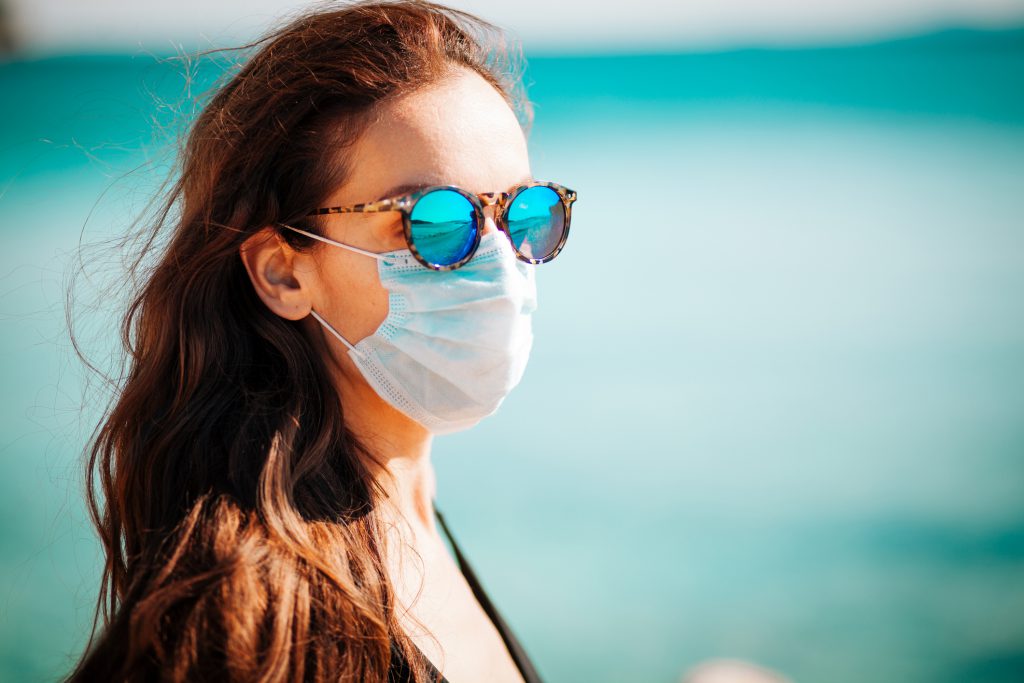
During the summer months, basking in the glow of the sun becomes a national past time.  Bronzed, or tanned skin comes from the sun activating a color pigment in the top layer of your skin, the color only lasts between six to 10 days. However, the long-term effects of your skins over exposure to the sun may cause longer lasting conditions, even if you have a darker skin pigmentation.

Myth:  People with darker skin tones do not need to apply sunscreen because they are not as susceptible to getting sunburned.

Fact: Health experts suggest that no matter your skin tone, you should use sunscreen to prevent sunburn and sun-induced damage to your skin.  People with darker skin tones may believe they do not need to apply sunscreen because they are not as susceptible to getting sunburned as quickly as those with a lighter skin tone, but they are still susceptible to the damage the sun can cause to their skin, such as sunspots and wrinkles and cancer.

To maintain the health of your skin after tanning you should:

  • Exfoliate – The night before you are lying in the sun to ensure that your skin prepped for tanning, slough away dead skin cells with a gentle exfoliator. Dry skin can lead to peeling and, in some cases an uneven tan.  It is easy to create your own body scrubs by combining a few heaping spoonsful of rock salt with essential oils or your regular olive oil from the kitchen.
  • Protect – Wearing sunscreen is vital when exposed to the sun, not only to protect your skin from harmful UV rays, but also if you want a long-lasting tan.  Wearing sunscreen with a skin protection factor (SPF) of 30, will help protect against damaging your skin. Make sure to opt for a sunscreen with a broad spectrum (UVA and UVB) and re-apply throughout the day.
  • Hydrate – Water helps extend the life of your skin cells, so drink as much as possible.  Melons, cucumbers, and celery are also high in water content and make the perfect skin-friendly snack this summer.
  • Moisturize – In addition to drinking lots of water, it is also important to keep the peeling at bay with a daily dose of moisturizer.

While tanning, keep in mind that one in five Americans will develop skin cancer in their lifetime, according to the American Academy of Dermatology.  Exposure to the sun, without the benefit of sunscreen increases the risk of melanoma.

All content of this newsletter is intended for general information purposes only and is not intended or implied to be a substitute for professional medical advice, diagnosis or treatment. Please consult a medical professional before adopting any of the suggestions on this page. You must never disregard professional medical advice or delay seeking medical treatment based upon any content of this newsletter. PROMPTLY CONSULT YOUR PHYSICIAN OR CALL 911 IF YOU BELIEVE YOU HAVE A MEDICAL EMERGENCY.

COVID and Warm Weather

With summer quickly approaching, many are looking forward to enjoying the season and all the activities it brings. However, as we enter our second summer of the pandemic, the question remains as to whether warmer temperatures affect the spread of the COVID-19 virus.

Last year, in June, July, and August, New York state experienced a significant decrease in the number of new COVID cases. This trend led many people to believe that the virus was seasonal and followed a similar pattern to the flu where transmission rates are lower during the summer months.

Although COVID rates were lower in New York, scientific evidence does not support a link between the decline in numbers and warmer weather. While parts of the U.S. experienced lower rates, other countries around the world with consistently warmer climates saw different results. For instance, Brazil- which suffered from a very large increase in COVID cases.

Furthermore, in a study conducted by the World Meteorological Organization, it was found that regulations such as mask requirements, and quarantines had more of an impact on reducing the spread of the virus than higher temperatures. The study also concluded that transmission dynamics were greatly influenced by other factors such as human behavior, demographics, and highly contagious variants.

Statistics from the Centers for Disease Control and Prevention show safety regulations were proven effective in decreasing the number of COVID cases last summer. This year, it is anticipated that new developments will make a difference in COVID-19 numbers. Millions of vaccines have been administered to people all over the United States, we have also gained more insight into how the virus spreads and the most effective ways to prevent it.

Summer is associated with more social interaction than any other time of the year. Now that many establishments have reopened and there is a renewed sense of normalcy, it may be easy to forget that we are still living through a pandemic. Keeping this in mind, it is important to remember to exercise caution and follow guidelines when in large groups so you can keep everyone as safe as possible.

All content of this newsletter is intended for general information purposes only and is not intended or implied to be a substitute for professional medical advice, diagnosis or treatment. Please consult a medical professional before adopting any of the suggestions on this page. You must never disregard professional medical advice or delay seeking medical treatment based upon any content of this newsletter. PROMPTLY CONSULT YOUR PHYSICIAN OR CALL 911 IF YOU BELIEVE YOU HAVE A MEDICAL EMERGENCY.

Alzheimer’s and Brain Awareness Month

June is Alzheimer’s and Brain Awareness Month which gives us the chance to make the public aware of dementia and Alzheimer’s disease being very important health issues.

Dementia and Alzheimer’s have profound effects on many people. There are an estimated 5 million people with the disease and 15 million people who are caring for them. It is said to be the sixth leading cause of death in the United States.

It has been said that Alzheimer’s is the only disease that can lead to death that cannot be slowed down, cured, or prevented. It acts by slowly killing brain cells which affects all of our ability to function normally.

Brain exercises may help mental functionality in areas of memory, focus, concentration and understanding.

Some suggested ways to keep our brains healthy are:

  • Getting enough sleep
  • Staying physically active
  • Eating properly
  • Not smoking
  • Challenging your mind with social interaction
  • Taking classes
  • Being aware of challenges that could lead to depression

If you would like to schedule an appointment at Flushing Hospital, please call 718-670-5486.

All content of this newsletter is intended for general information purposes only and is not intended or implied to be a substitute for professional medical advice, diagnosis or treatment. Please consult a medical professional before adopting any of the suggestions on this page. You must never disregard professional medical advice or delay seeking medical treatment based upon any content of this newsletter. PROMPTLY CONSULT YOUR PHYSICIAN OR CALL 911 IF YOU BELIEVE YOU HAVE A MEDICAL EMERGENCY.
Men’s Health Month

The month of June has been recognized as Men’s Health Month. The reason for this designation is to bring awareness of preventable health issues and to encourage early detection and treatment of diseases prevalent in men.
The leading causes of death among men are:
• Heart Disease
• Cancer
• Diabetes
• Lung Disease
• Injuries
• Stroke
• HIV/AIDS
Some of the reasons that men tend to have more serious chronic illnesses is because more men than women don’t have health insurance, men tend to have more physically demanding jobs with greater safety risks. Additionally  more men smoke than women and they also tend to  take greater risks with unsafe behavior.
Women tend to live five years longer than men and one of the reasons for this is that women usually take better care of their health. Men are often guilty of waiting until a disease has progressed to a more serious level before they seek help. There is an old adage that if a man is in a doctor’s waiting room, most likely a woman brought him there for an exam.
During the month of June, organizations across the country hold health awareness campaigns to educate men about various health issues that they may be at risk for and to encourage them to see a doctor regularly. If you would like to schedule an appointment with a doctor at Jamaica Hospital, please call 718-206-7001.

All content of this newsletter is intended for general information purposes only and is not intended or implied to be a substitute for professional medical advice, diagnosis or treatment. Please consult a medical professional before adopting any of the suggestions on this page. You must never disregard professional medical advice or delay seeking medical treatment based upon any content of this newsletter. PROMPTLY CONSULT YOUR PHYSICIAN OR CALL 911 IF YOU BELIEVE YOU HAVE A MEDICAL EMERGENCY.

June is Men’s Health Month

The month of June has been recognized as Men’s Health Month. The reason for this designation is to bring awareness of preventable health issues and to encourage early detection and treatment of diseases prevalent in men.
The leading causes of death among men are:
• Heart Disease
• Cancer
• Diabetes
• Lung Disease
• Injuries
• Stroke
• HIV/AIDS
Some of the reasons that men tend to have more serious chronic illnesses is because more men than women don’t have health insurance, men tend to have more physically demanding jobs with greater safety risks. Additionally  more men smoke than women and they also tend to  take greater risks with unsafe behavior.
Women tend to live five years longer than men and one of the reasons for this is that women usually take better care of their health. Men are often guilty of waiting until a disease has progressed to a more serious level before they seek help. There is an old adage that if a man is in a doctor’s waiting room, most likely a woman brought him there for an exam.
During the month of June, organizations across the country hold health awareness campaigns to educate men about various health issues that they may be at risk for and to encourage them to see a doctor regularly. If you would like to schedule an appointment with a doctor at Jamaica Hospital, please call 718-206-7001.

All content of this newsletter is intended for general information purposes only and is not intended or implied to be a substitute for professional medical advice, diagnosis or treatment. Please consult a medical professional before adopting any of the suggestions on this page. You must never disregard professional medical advice or delay seeking medical treatment based upon any content of this newsletter. PROMPTLY CONSULT YOUR PHYSICIAN OR CALL 911 IF YOU BELIEVE YOU HAVE A MEDICAL EMERGENCY.
June is Cataract Awareness Month

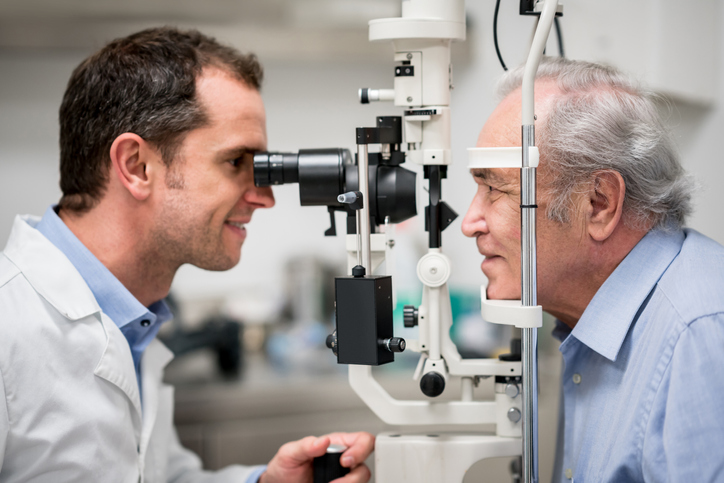
The American Academy of Ophthalmology has designated June as Cataract Awareness Month. The purpose of this designation is to help educate the public on what cataracts are and how to treat them once they are diagnosed.

Cataracts are a clouding of the lens of the eye. This will result in blurry vision, and since less light is being transmitted, objects will appear darker as well.

It is estimated that 25 million people in the United States age 40 and older will be diagnosed with a cataract, and by the time people reach the age of 80, more than half of the population of the United States will be affected with the disease.

Risk factors for developing cataracts include:

  • Age
  • Diabetes
  • Smoking
  • Prolonged exposure to sunlight
  • Obesity
  • High blood pressure
  • Hereditary factors
  • Prior eye injuries

Cataracts are classified by what causes them. Age is the biggest factor, followed by eye trauma, congenital causes and secondary to taking certain medications like steroids.

There are a few ways to lower the risk of developing cataracts, but they may not be completely successful. 

  • Wearing sunglasses when outdoors
  • A diet rich in vitamin C foods
  • Avoiding smoking

Treatment for cataracts involves a surgical procedure which removes the old lens of the eye  and replacing it with a synthetic one. It is a very common procedure and considered relatively safe. If you would like to schedule an appointment with an eye doctor at Jamaica Hospital Medical Center, please call 718-206-5900.

All content of this newsletter is intended for general information purposes only and is not intended or implied to be a substitute for professional medical advice, diagnosis or treatment. Please consult a medical professional before adopting any of the suggestions on this page. You must never disregard professional medical advice or delay seeking medical treatment based upon any content of this newsletter. PROMPTLY CONSULT YOUR PHYSICIAN OR CALL 911 IF YOU BELIEVE YOU HAVE A MEDICAL EMERGENCY.
What is Post-Traumatic Stress Disorder?

When people live through a traumatic event such as a war, an act of violence, a rape, a serious accident, an act of terrorism, or have been seriously threatened, they may experience  Post-Traumatic Stress Disorder, also known as PTSD. This is a mental health disorder that affects approximately 3.5% of the U.S. population. PTSD is known to occur more commonly in women than men and certain ethnic groups including Latinos, African Americans and American Indians.

When people go through traumatic events they may not necessarily experience the effects immediately. It is not uncommon for the symptoms to start anywhere from a month to several years after the event.  Sometimes traumatic events that occur during childhood may not manifest until later in life.

Symptoms of PTSD can vary from person to person and are divided into four groups: Intrusive memories, avoidance, changes in emotional and physical reactions, and negative changes in thinking.

Symptoms of intrusive memories include:

  • Flashbacks
  • Nightmares
  • Severe emotional distress or physical reactions

Symptoms of avoidance include:

  • Avoiding certain places that remind you of the event
  • Avoiding talking about the event

Symptoms of changes in emotional and physical reactions include:

  • Easily frightened
  • Difficulty sleeping
  • Difficulty concentrating
  • Aggressive behavior

Symptoms of negative changes in thinking include:

  • Feeling hopeless
  • Negative thoughts about the world or yourself
  • Difficulty maintain relationships
  • Sense of detachment

Long-term PTSD may lead to alcohol or substance abuse, eating disorders, thoughts of suicide or depression. Complications can also lead to poor coping skills, loss of work, loss of relationships and health complications.

Anyone who has experienced a traumatic event and has any PTSD symptoms that last more than a few weeks should seek professional care. If any of the symptoms are so severe that they may lead to physical danger, for themselves or to someone else, 911 should be called immediately. If you would like to schedule an appointment with a mental health professional at Jamaica Hospital Medical Center please call,  718-206-5575

All content of this newsletter is intended for general information purposes only and is not intended or implied to be a substitute for professional medical advice, diagnosis or treatment. Please consult a medical professional before adopting any of the suggestions on this page. You must never disregard professional medical advice or delay seeking medical treatment based upon any content of this newsletter. PROMPTLY CONSULT YOUR PHYSICIAN OR CALL 911 IF YOU BELIEVE YOU HAVE A MEDICAL EMERGENCY.
Jamaica Hospital Receives Diagnostic Imaging Center of Excellence Designation

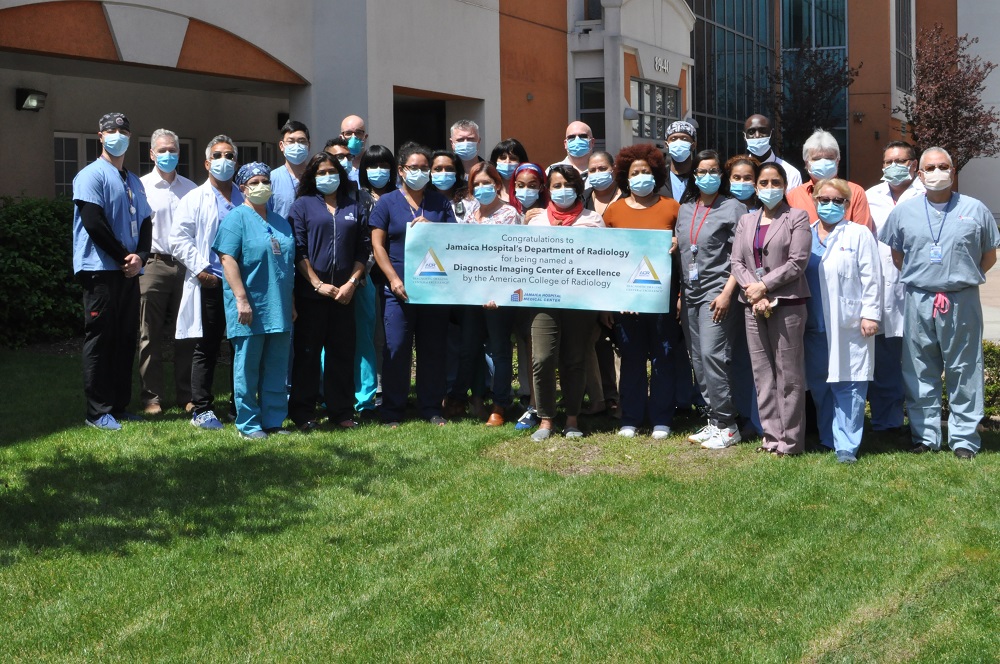
Jamaica Hospital Medical Center is proud to receive Diagnostic Imaging Center of Excellence (DICOE) designation from the American College of Radiology (ACR).

To receive this elite distinction, facilities must be accredited by the ACR in all modalities they provide, and in which the ACR offers an accreditation program. Another requirement is participation in the Dose Index Registry® and General Radiology Improvement Database, as well as Image Wisely® and Image Gently® pledges. All of which are initiatives promoted by the ACR to ensure the delivery of safe, high-quality, and effective imaging care to patients.

Furthermore, facilities must demonstrate excellence at multiple levels.  Performance is measured by the successful completion of comprehensive assessments in the following areas:

  • Governance and personnel
  • Facility organization and management
  • Physical environment
  • Equipment and IT infrastructure
  • Radiation and general safety
  • Quality management
  • Policies and procedures
  • Patient rights and medical records

Jamaica Hospital has exceeded the standard requirements of accreditation to achieve DICOE designation.  Patients of the hospital can be assured they are receiving the highest levels of imaging quality, safety, and care.

All content of this newsletter is intended for general information purposes only and is not intended or implied to be a substitute for professional medical advice, diagnosis or treatment. Please consult a medical professional before adopting any of the suggestions on this page. You must never disregard professional medical advice or delay seeking medical treatment based upon any content of this newsletter. PROMPTLY CONSULT YOUR PHYSICIAN OR CALL 911 IF YOU BELIEVE YOU HAVE A MEDICAL EMERGENCY.

Using A Mouth Guard For Sleep Apnea

America’s expanding waistline may be responsible for another growing problem in our country – sleep apnea. Approximately 18 million Americans suffer from sleep apnea and many of them are overweight or obese. In fact, the most common cause of Obstructive Sleep Apnea in adults is obesity.

Obstructive sleep apnea is a common and serious disorder in which breathing repeatedly stops for 10 seconds or more during sleep. People with this condition often have trouble staying in a deep sleep because their throats close, blocking their airways. As a result, they partially awaken to start breathing properly. They do not realize they’re waking up and may become very sleepy during the day.

Obstructive sleep apnea can lead to high blood pressure, heart disease, stroke, and even death. People with sleep apnea are also at an increased risk of work and driving-related accidents, due to inadequate sleep at night.  It’s important that anyone with signs and symptoms of obstructive sleep apnea — especially loud snoring, repeated nighttime awakenings and daytime sleepiness speak with a physician.

Fortunately, sleep apnea is treatable. Trying to lose weight is the best way to help people sleep better. Recent studies have proven that weight loss can significantly improve and potentially eliminate obstructive sleep apnea symptoms in obese individuals. If, however, weight loss attempts are not successful, a common and effective treatment for sleep apnea is continuous positive airway pressure (CPAP), where patients wear a mask connected to a machine that blows air.

According to WebMD, oral appliances may be an effective treatment option, such as:

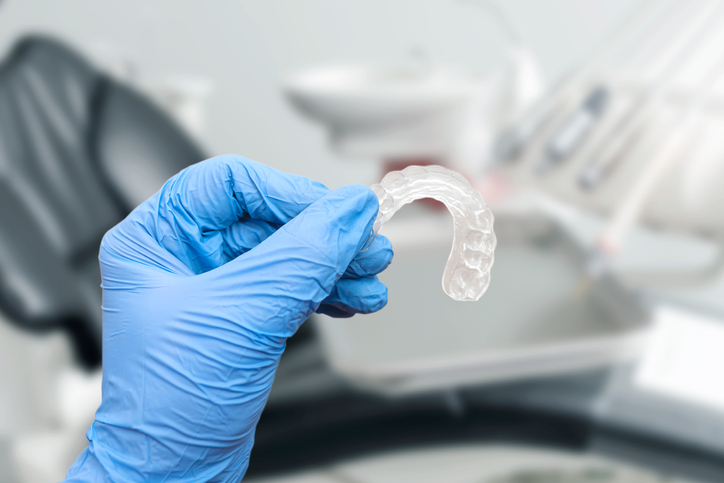
  • Mandibular advancement device (MAD). The most widely used mouth device for sleep apnea, MADs look much like a mouth guard used in sports. The devices snap over the upper and lower dental arches and have metal hinges that make it possible for the lower jaw to be eased forward. Some, such as the Thornton Adjustable Positioner (TAP), allow you to control the degree of advancement.
  • Tongue retaining device. Used less commonly than MAD, this device is a splint that holds the tongue in place to keep the airway open.

These options are effective for people with mild to moderate sleep apnea, particularly those who sleep on their backs or stomachs, dental devices may improve sleep and reduce the frequency and loudness of snoring. Also, people are more likely to use their dental appliances regularly than CPAP.

These devices must be fitted by a Dentist or Orthodontist and worn in the mouth at night.

If you have been diagnosed with obstructive sleep apnea and have not been helped by the CPAP, you can contact Jamaica Hospital Medical Center’s Dental Center to schedule a consultation with a Dentist to see if a mouth guard is a better option of treatment for you.  You can call, 718-206-6980 to schedule an appointment.

All content of this newsletter is intended for general information purposes only and is not intended or implied to be a substitute for professional medical advice, diagnosis or treatment. Please consult a medical professional before adopting any of the suggestions on this page. You must never disregard professional medical advice or delay seeking medical treatment based upon any content of this newsletter. PROMPTLY CONSULT YOUR PHYSICIAN OR CALL 911 IF YOU BELIEVE YOU HAVE A MEDICAL EMERGENCY.