Patient Testimonial- Mohammed Rahman

Patient Mohammed Rahman was taken to Jamaica Hospital Medical Center’s Emergency Room after experiencing a fall at home. He was transferred to the ICU after he was diagnosed with internal bleeding. His daughter Suraya Clemente recounts the care he received. 

My dad, Mr. Mohammed Rahman, is a father of three and a grandfather of four. He is a man of few words. However, his presence speaks for itself. He is admired by not only me and his family and friends, but also his colleagues, neighbors, and the Bangladeshi community. My father is charitable and an active member of a donation-based Bangladeshi organization. 

During the autumn of 2025, my father unfortunately had an accidental fall at home. This fall resulted in a deep laceration and internal bleeding. After being taken to the ER at Jamaica Hospital Medical Center, the bleeding seemed to have stopped. He was then transferred from the ICU to the med-surge unit within two days. Soon after the transition, he started to experience symptoms that suggested further internal bleeding. My family members and I were extremely worried and started to panic. That’s when we met Dr. Benjamin Hartley. He appeared in the hospital room with absolute grace and kindness. He helped us feel seen and heard through his authenticity and empathetic personality. Dr. Hartley explained the CT results and the complications of a brain bleed thoroughly. He was confident and knew exactly how to steer my father towards recovery.  

Dr. Hartley took the time to get to know us during our initial conversation. He was genuine, transparent, and personable while still maintaining professionalism. Dr. Hartley’s presence and competence was significantly comforting to my family members and me. He kept an open line of communication with us through text, which was incredibly generous. 

My family and I felt a sense of relief and knew my father was in good hands after speaking with Dr. Hartley and knowing he’d oversee the surgery. 

My sisters and I are forever grateful to Dr. Hartley for saving our father’s life. He’s the best doctor we’ve met, and he is an irreplaceable gem in Jamaica Hospital. My father is also very grateful to Dr. Hartley, as he explained, “Dr. Hartley is a saint that was sent to me in human form. He helped me in my weakest moment by holding a glass of water with a straw for me to drink. He did not hesitate to recline my hospital bed. He did not hold back in taking the best care of me. He’s down to earth and carries no prejudice.” 

Though it’s been less than three months since his brain surgery, my father feels like he’s slowly getting his old life back. “I can walk long distances alone and without any assistive devices. I also look forward to start driving soon,” he said. 

Thank you, 

Suraya Clemente 

All content of this newsletter is intended for general information purposes only and is not intended or implied to be a substitute for professional medical advice, diagnosis or treatment. Please consult a medical professional before adopting any of the suggestions on this page. You must never disregard professional medical advice or delay seeking medical treatment based upon any content of this newsletter. PROMPTLY CONSULT YOUR PHYSICIAN OR CALL 911 IF YOU BELIEVE YOU HAVE A MEDICAL EMERGENCY.


Helping Kids Cope with Bullying

Many children get teased by siblings or friends at some point in their childhood. Teasing isn’t usually harmful when done in a mutual, friendly, and playful way. When teasing constantly turns hurtful and cruel, it becomes bullying. Unfortunately, bullying is something that children experience at one time or another.   

Bullying is when peers intentionally use physical, verbal, or psychological ways to torment someone else, using a real or perceived power imbalance between the bully and the victim.  

Bullying affects 75% of kids at some point between kindergarten and 12th grade. Sadly, 10%-20% of kids will be chronically bullied and at risk for poor physical and mental health outcomes, such as physical illnesses, depression and anxiety, aggression, and in extreme cases, suicide. Moreover, they may also face lower graduation rates and less successful career placement.  

Chronic bullying has three components: 

  • A power differential between the child and their aggressor 
  • Repeated bullying day after day 
  • Social sanctioning, which regulates another person’s behavior, enforces social standards, and maintains order 

There are several reasons why children bully other children. Sometimes they do it because they need a victim, someone who seems to be emotionally or physically weaker, or acts or looks different in some way that makes the bully feel more important, popular, or in control. It may seem like bullies are bigger and stronger; however, that isn’t always the case.  

Additionally, children can sometimes bully others because that is the way they have been treated. This behavior has been normalized because they may come from families or other environments where everyone regularly gets angry shouts or calls each other names.  

It can be hard to know whether a child is being bullied or not, unless they tell a parent, guardian, or trusted adult, or if they have visible injuries or bruises.  

However, there are some warning signs. A parent may notice a child is: 

  • Not eating, sleeping well, or not doing the things they usually enjoy 
  • Moodier or more easily upset than usual 
  • Acting differently or anxious 
  • Avoiding certain situations, such as going to school or taking the bus 

Kids can be reluctant to tell adults about bullying experiences because they feel embarrassed and ashamed that it’s happening, or worried that their parents will be disappointed, upset, or angry with them. They may feel like getting bullied is their own fault, or that if they looked or acted differently, they wouldn’t get bullied. They may also be reluctant to tell someone about the bullying, because they believe that the bullying will get worse due to the fear of their bully finding out they told someone.  

If a parent suspects that their child is being bullied and their child is hesitant to open up, it is important to find ways to approach the issue. If a child tells their parents that they are being bullied or if they see it happening to someone else, it is important to listen calmly and offer them comfort and support. Parents should praise their child for doing the right thing by talking about it and reminding them that they aren’t alone, as a lot of people get bullied at some point. They should also explain that it is the bully who is behaving badly, not them, and reassure them that they will figure out what to do about the bullying together.  

Parents can help kids learn how to deal with bullying if it happens. Some parents or caregivers may be tempted to tell a child to fight back against their bully; however, it is important to advise them not to respond to bullying by fighting or bullying in return. This can quickly escalate into violence, trouble, and someone getting injured. Instead, advise them that it is best to walk away from the situation, spend time with others, and tell an adult. Some other ways kids can improve the situation and feel better are by: 

  • Telling an adult 
  • Talking about it 
  • Avoiding the bully and using the buddy system 
  • Holding onto the anger 
  • Acting brave, walking away, and ignoring the bully  

A child’s confidence can be greatly affected by bullying. A parent can help rebuild it by encouraging them to spend time with friends who have a positive influence on them. They can also participate in any sports, clubs, or any other activities that they enjoy that build strength and friendships.  

Parents can also provide their child with a sympathetic ear and listen attentively to their tough situations, but they should also encourage them to talk about the good parts of their day, so a line of open communication becomes a habit for everyone. It is important to make sure they know that they are believed and that their parents will do what they can to address the bullying.  

If your child needs the assistance and support of a mental health professional at Jamaica Hospital Medical Center, please call 718-206-5575 to schedule an appointment. 


All content of this newsletter is intended for general information purposes only and is not intended or implied to be a substitute for professional medical advice, diagnosis or treatment. Please consult a medical professional before adopting any of the suggestions on this page. You must never disregard professional medical advice or delay seeking medical treatment based upon any content of this newsletter. PROMPTLY CONSULT YOUR PHYSICIAN OR CALL 911 IF YOU BELIEVE YOU HAVE A MEDICAL EMERGENCY.

Athlete’s Foot

Athlete’s foot, also known as tinea pedis, is a skin infection caused by dermatophytes, which are the same fungi that cause jock itch and ringworm. However, unlike jock itch and ringworm, athlete’s foot can often come back. 

The fungi that cause athlete’s foot thrive in warm, damp places, which can occur when feet get hot and sweaty inside closed shoes, creating sweaty socks. They can also live on wet towels.  

The fungi that cause athlete’s foot can spread easily to other people because they can travel on hands, towels, and other surfaces. A person can get athlete’s foot through contact with someone who has it and by touching surfaces where fungi are present. It can also spread from the feet to other parts of the body and may happen when a person uses a towel to dry their feet and then uses the same towel to dry the rest of their body, such as the groin area, which causes jock itch. 

Athlete’s foot can affect one or both feet, usually starting between the toes. It causes common symptoms that include: 

  • Dry, scaly skin on the bottom and sides of the feet  
  • Itchy skin, occurring especially right after taking off shoes and socks 
  • Swollen skin that may look red, purple, or gray, depending on skin color 
  • A burning or stinging sensation 
  • Blisters 
  • Scaly, peeling, or cracked skin between the toes 

A person has a higher risk of developing athlete’s foot if they: 

  • Sweat a lot  
  • Often wear closed shoes 
  • Walk barefoot in public showers, pools, or locker rooms 
  • Share towels, shoes, rugs, or bed linens with someone who has athlete’s foot 

Athlete’s foot can cause complications for people with weakened immune systems, such as those with diabetes, leading to a bacterial skin infection called cellulitis.  

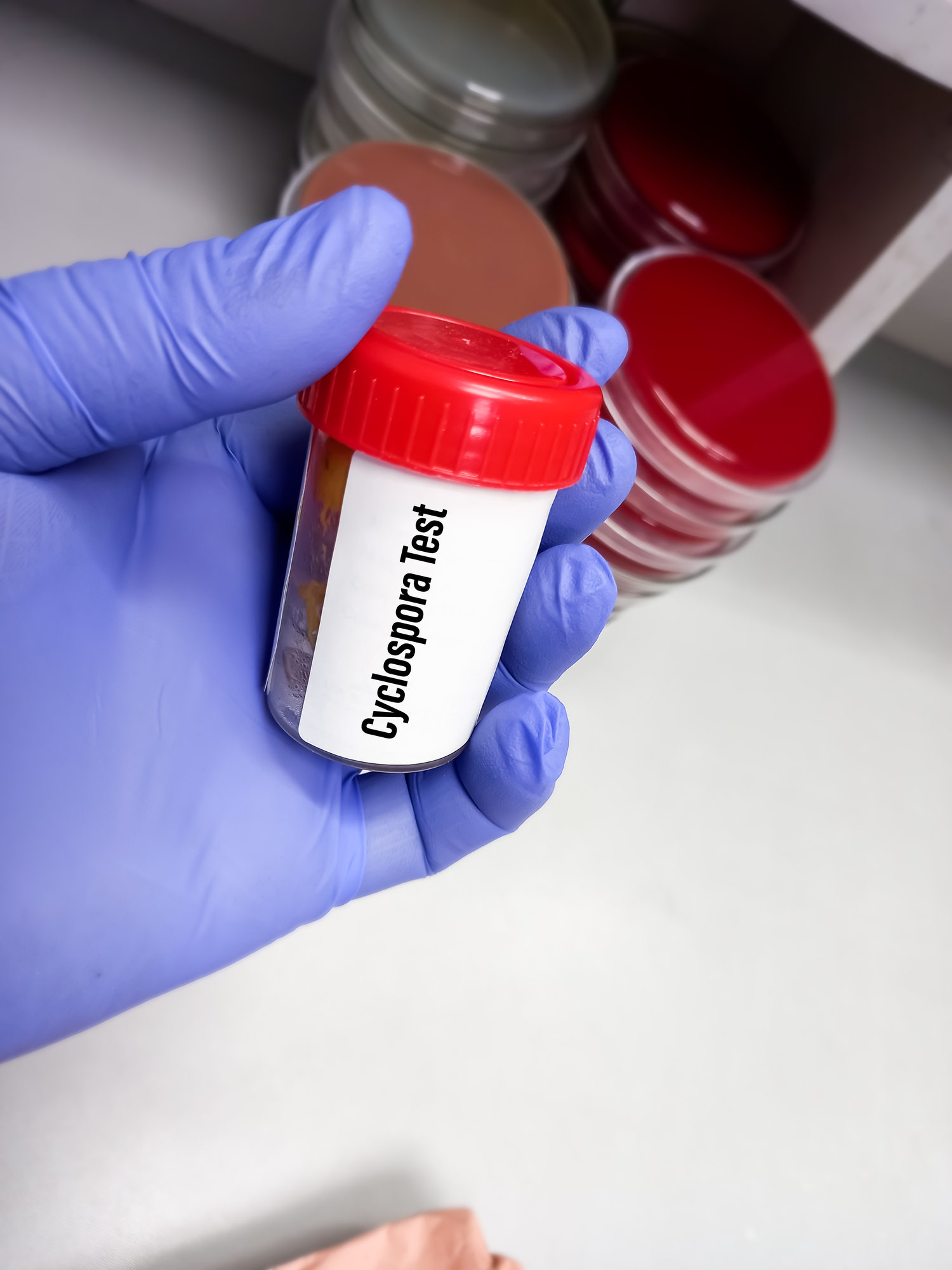
A healthcare provider may be able to diagnose athlete’s foot after an examination. Some types of athlete’s foot can look similar to dry skin or dermatitis. To help rule out other conditions, your provider may take a small skin sample of the affected area for lab testing.  

Treatment for athlete’s foot may involve self-care and over-the-counter products such as antifungal cream, spray, or powder. If these over-the-counter products do not work, a healthcare provider may prescribe a stronger antifungal medicine to apply to the affected area. 

Several tips can help ease the symptoms of athlete’s foot and lower the risk of it coming back. They include: 

  • Keeping your feet clean and dry 
  • Wearing different shoes every day 
  • Changing socks regularly 
  • Wearing breathable and lightweight footwear 
  • Using an antifungal product 
  • Wearing waterproof shoes or sandals around public pools, showers, and locker rooms 
  • Not scratching the rash in the affected area 
  • Not sharing shoes 

If you are experiencing symptoms of athlete’s foot or another fungal infection, you can call (718) 206- 6742 or (718) 206-7001 to make an appointment. 

All content of this newsletter is intended for general information purposes only and is not intended or implied to be a substitute for professional medical advice, diagnosis or treatment. Please consult a medical professional before adopting any of the suggestions on this page. You must never disregard professional medical advice or delay seeking medical treatment based upon any content of this newsletter. PROMPTLY CONSULT YOUR PHYSICIAN OR CALL 911 IF YOU BELIEVE YOU HAVE A MEDICAL EMERGENCY.

Do Using Smart Rings Actually Help You Be Healthier?

Recently, technology has brought us fitness trackers and smart watches that can help us track our workouts, daily steps, and even monitor our sleep, stress, heart rate, and blood oxygen levels.  

However, smart rings have become another way to track our health, and can be used to monitor movement, body temperature, sleep, heart rate, stress, as well as menstrual cycles. 

Unlike smartwatches, smart rings don’t have screens to view these health metrics. Instead, they use a Bluetooth connection to send health data to your smartphone.  

When a smart ring detects a person’s cardiovascular health, it uses infrared photoplethysmography technology (PPG), which uses a light source and a photodetector on the surface of the skin to measure the variations in blood circulation. These variations can estimate heart rate variability, blood oxygen saturation, blood pressure, and artery stiffness.  

Out of the different sensors a smart ring has, the PPG is the most studied one due to its proposed accuracy in tracking heart rate and monitoring overall cardiovascular health. However, most studies note that they are significantly less accurate than medical-grade technology.  

According to the National Library of Medicine, in a study with 35 healthy individuals, researchers compared the heart rate and heart variability measured by a smart ring with an ECG during the night. Results showed that some health parameters matched the medical-grade measurement, but most were inaccurate. 

To monitor body temperature, smart rings use a sensor called a thermistor, which estimates body temperature based on a person’s skin temperature. Smart rings also use this feature to assess stress levels and identify other bodily issues. However, a systematic review of the sensors and functionalities of wearable health technology, like a smart ring, indicates that these devices may not accurately indicate a person’s core body temperature, as researchers point out that a person’s skin temperature is a few degrees Fahrenheit lower than their body’s temperature.  

What’s more, researchers emphasize that a person’s skin temperature fluctuates based on environmental conditions. When considering these two factors, it may be assumed that the thermistor sensor won’t be accurate. 

Companies that produce smart rings have detailed the use of a variety of sensors to support women’s health. This feature relies mostly on the smart ring’s temperature feature, which they claim to use to track menstrual cycles and fertility windows. 

Numerous studies have examined the accuracy of smart rings, which have produced promising results. According to the National Library of Medicine, in a pilot study with 22 participants, researchers used a smart ring to analyze temperature changes during the menstrual cycle. They discovered that the temperature readings were consistent with oral temperatures that were taken with ambulatory equipment.  

In a separate study with 26 participants, it was found that this study was consistent with the previous study’s findings, demonstrating that smart rings could be a beneficial tool for monitoring menstruation. This study also detected that there was a significant temperature drop around ovulation, highlighting that smart rings could be an additional tool to track fertility. 

Although these results are promising based on limited studies on smart rings, further research is needed as they are not 100% accurate.  

Most of the smart rings on the market combine various metrics such as heart rate, heart rate variability, body temperature, and movement, to estimate a person’s daily stress levels and provide tips to reduce them. 

According to the National Library of Medicine, research suggests that there is a connection between stress and decreased parasympathetic regulation, the regulation that affects heart rate, heart rate variability, and respiratory rate. These are changes that a smart ring could potentially detect.  

Additionally, a study with 525 college students explored this subject further. The study indicated that sleep data from smart rings could help predict stress. Notably, some experts do not consider smart rings as promising as research, as they highlight the negative effect smart rings may have on mental health. The reason is that while smart rings are promoted as a tool to shift lifestyle habits, they may cause the opposite effect, noting that constant monitoring of health metrics can create obsessive behaviors and paranoia about a person’s well-being. It could also be harmful to a person’s self-confidence, as a person may feel like they are not meeting the expectations and goals that a smart ring sets for them. 

Smart rings can perform a sleep analysis by tracking a person’s heart rate, blood oxygen, and sleep cycles. They may also include features, such as a snoring score and a recovery metric that indicates energy levels before a person starts their day.  

Polysomnography (PSG) is used to track sleep, which uses a variety of signals such as brain activity, eye movements, muscle activity, blood pressure, heart rate, and more. Although smart rings are not as accurate as PSG, researchers have been drawn to them due to the smart ring’s potential to monitor a person’s sleep at home comfortably.  

Any current evidence on smart rings for tracking sleep is still very limited and conflicting. While some small studies highlight their potential. However, studies with bigger sample sizes indicate that smart rings can over- or underestimate some sleep parameters. A study in the National Library of Medicine compared the accuracy of several health technology devices on 35 individuals overnight. The study found that a smart ring surpassed the accuracy of smartwatches in various sleep parameters such as wake, light sleep, deep sleep, and REM sleep. 

Smart rings can measure a person’s physical activity with two sensors: an accelerometer that tracks movement and speed, and a gyroscope that helps determine orientation. Smart rings gather data from these motion sensors, as well as the PPG and body temperature trackers, to understand how physical activity affects the body.  

Research is limited in this area; however, a study in the National Library of Medicine focused on the accuracy of smart rings in measuring caloric expenditure and steps. The results indicated that smart rings were far from accurate, causing researchers to note the need to improve these devices, specifically their estimation of energy expenditure. 

Another study on step count was consistent with a study that indicated a smart ring overestimated step count, compared to a medical-grade device to detect motion called ActiGraph. 

A systematic review on wearable tech devices supported the findings of the studies, noting that they may be useful for estimating step count but shouldn’t be trusted to measure calorie expenditure. 

Smart rings and other wearable devices that can track a person’s health can be useful. However, it is important not to use them to self-diagnose conditions. It is important to see a healthcare provider when experiencing any symptoms to professionally diagnose conditions.  

If you are experiencing any medical problems, you can schedule an appointment at Jamaica Hospital Medical Center’s Ambulatory Care Center. Please call (718) 206-7001. 


All content of this newsletter is intended for general information purposes only and is not intended or implied to be a substitute for professional medical advice, diagnosis or treatment. Please consult a medical professional before adopting any of the suggestions on this page. You must never disregard professional medical advice or delay seeking medical treatment based upon any content of this newsletter. PROMPTLY CONSULT YOUR PHYSICIAN OR CALL 911 IF YOU BELIEVE YOU HAVE A MEDICAL EMERGENCY.

How Much Protein Do You Really Need?

Protein is essential to maintaining overall good health. However, consuming extra protein often comes from eating meats high in saturated fats, which can add to elevated LDL cholesterol levels or “bad cholesterol”. 

The recommended daily allowance (RDA) is 0.8 g/kg per day for adults 18 years or older. Based on weight, growing children and pregnant or lactating women require more protein than a typical adult man or woman. In terms of calories, the recommendation is that 10% to 35% of your daily calories come from protein. 

You can consume your recommended daily allowance of protein from several food sources. If someone’s body weight is 70kg (154 lbs.), the RDA of protein is 56 g/day. If you drink an 8-ounce glass of milk, you’ll take in about 8 grams of protein. Add a cup of yogurt for about another 11 grams. Follow that up with a 3-ounce piece of lean/extra lean meat, which is about 21 grams of protein, and a cup of dry beans, which is about 16 grams, and you have already reached the 56-gram daily requirement for an adult man. For an adult woman, a 46-gram daily requirement of protein can be reached by eating one serving of low-fat Greek yogurt, a 4-ounce serving of lean chicken breast, and a bowl of cereal with skim milk. 

The American Heart Association has a guided outline of the suggested servings for each food group: 

  • Choose plant-based proteins such as legumes, nuts, lentils, or chickpeas. These are not only high in protein but also in fiber. Legumes, for example, can pack about 16 grams of protein per cup and are low in fat and an inexpensive alternative to meat. 
  • Opt for low-fat or fat-free dairy options instead of full-fat dairy products. 
  • Include regular intake of fish and seafood 2 to 3 times a week, especially oily fish such as salmon, anchovies, herring, mackerel, tuna, and sardines, which are high in polyunsaturated fats. Make sure to avoid seafood that is fried. These forms do not have health benefits. 
  • When choosing meat or poultry, opt for lean cuts, skinless poultry, and avoid processed forms. 
  • Eggs are another good source of protein and provide other sources of nutrients that benefit your health. Healthy individuals can include up to a whole egg or equivalent daily. However, people with dyslipidemia should be cautious about consuming eggs. 
  • Choose main dishes that combine meat and vegetables, such as low-fat soups or stir-fry. 
  • Be aware of portion sizes. Aim for 3-ounce servings (4 ounces raw) of cooked poultry or meat per meal. 

Before you add or make any drastic changes to your diet, it is important to consult with your healthcare provider before doing so. 

The registered dietitians at Jamaica Hospital Medical Center are ready to help you plan a diet that can reduce your risk of disease, maintain a healthy weight, and improve your overall health. To learn more or to schedule an appointment, please call (718) 657-7093. 


All content of this newsletter is intended for general information purposes only and is not intended or implied to be a substitute for professional medical advice, diagnosis or treatment. Please consult a medical professional before adopting any of the suggestions on this page. You must never disregard professional medical advice or delay seeking medical treatment based upon any content of this newsletter. PROMPTLY CONSULT YOUR PHYSICIAN OR CALL 911 IF YOU BELIEVE YOU HAVE A MEDICAL EMERGENCY.

First Patient Treated at Jamaica Hospital Medical Center with New, Minimally Invasive Technology to Help Control High Blood Pressure

February 2026 – Jamaica Hospital Medical Center is pleased to announce that it is the first hospital in Queens to offer a new renal denervation (RDN) procedure to treat certain patients with high blood pressure. The hospital’s cardiology team recently and successfully completed its first case. 

Approved by the U.S. Food and Drug Administration (FDA) in November 2023, the Symplicity Spyral™ renal denervation (RDN) system involves a minimally invasive procedure that targets nerves near the kidneys that can become overactive, causing high blood pressure. The procedure – also known as the Symplicity™ blood pressure procedure – is approved for use as an adjunctive treatment in patients with high blood pressure (or hypertension) when lifestyle changes and antihypertensive medications do not adequately control blood pressure. 

Hypertension is the single largest contributor to death, and affects about 50% of U.S. adults. Of the U.S. adults who are aware of their hypertension, about 80% do not have it under control.

The Symplicity blood pressure procedure is clinically proven to help reduce high blood pressure, which can lower serious health risks. After mild sedation, the doctor inserts a very thin tube into the artery leading to the kidney. The doctor then administers energy to calm the excessive activity of the nerves connected to the kidney. The tube is removed, leaving no implant behind. 

High blood pressure is a significant issue for patients worldwide. For people with hypertension, medication and/or lifestyle changes can help reduce blood pressure, but studies have shown that many people still don’t have control over their condition. The Symplicity blood pressure procedure can provide patients with a blood pressure reduction benefit that is ‘always on’ and doesn’t require a permanent implant – it can also help patients regain their peace of mind. We are pleased to have treated our first patient with this new technology, and we look forward to the future of hypertension care by offering innovative solutions to the people of Jamaica, Queens. 

Jamaica Hospital’s Hypertension Center provides the highest quality, patient-centered hypertension care. The Hypertension Center was created to treat patients who do not respond well to traditional hypertension medication treatments. The American Heart Association has recognized our Hypertension Practice Center as meeting or exceeding standards for hypertension treatment. 

If you or someone you know is experiencing high blood pressure or difficulty controlling it, talk to your doctor to see if the Symplicity blood pressure procedure is a possible treatment option: visit this link to learn more.  

All content of this newsletter is intended for general information purposes only and is not intended or implied to be a substitute for professional medical advice, diagnosis or treatment. Please consult a medical professional before adopting any of the suggestions on this page. You must never disregard professional medical advice or delay seeking medical treatment based upon any content of this newsletter. PROMPTLY CONSULT YOUR PHYSICIAN OR CALL 911 IF YOU BELIEVE YOU HAVE A MEDICAL EMERGENCY.

Meet Our Doctors- Dr. Melvin Mathai

We are pleased to introduce Dr. Melvin Mathai, the newest member of our pediatrics team at Jamaica Hospital Medical Center.  

Dr. Mathai attended Hofstra University for his undergraduate degree and The New York Institute of Technology College of Osteopathic Medicine (NYITCOM) for his medical degree. He completed his residency at Maimonides Medical Center in Brooklyn, New York. Dr. Mathai is board-eligible and holds certifications in ACLS, PALS, and NRP. 

Dr. Mathai was drawn to a career in medicine because it combines science, problem-solving, and making a meaningful difference in people’s lives, as well as the ability to build long-term relationships with his patients while positively impacting their health and well-being. He chose pediatrics as his specialty because it felt like a natural fit for him, and he enjoys working with children and families. “I wanted to be a part of a child’s growth and development over time. I love the energy, honesty, and resilience of children, and I find it incredibly rewarding to help guide parents through each stage of their child’s life, from newborn care to adolescence.” Dr. Mathai believes that pediatrics allows him to focus on prevention, education, and building trust with families. “I hope to provide compassionate, thoughtful, and accessible care while creating a welcoming environment where families feel heard and supported”, he said.  

As a pediatrician, Dr. Mathai provides comprehensive outpatient pediatric care, which includes well-childcare visits, newborn care, vaccinations, developmental and behavioral concerns, and adolescent health. He also evaluates and manages common child illnesses, which include asthma, allergies, eczema, infections, minor injuries, anxiety, and school-related issues. 

Born and raised in Queens, Dr. Mathai is proud to serve as a pediatrician in such a close-knit, family-oriented community like Howard Beach because it is the community in which he grew up. He returned home to provide compassionate, culturally informed care to the families who shaped him. “I’ve always loved the diversity, energy, and incredible food that make this area so special, and I’m grateful for the opportunity to give back to the community,” he said.  

Dr. Mathai is a proud Gold Humanism Award recipient, a massive Knicks fan (yes, he still believes every year is their year), and an anime geek at heart. When he’s not in the office, he is usually chasing after his two little kids, who keep him laughing—and humbled—daily. 

His goal as a pediatrician is simple: “Partner with parents, answer questions honestly, and help families feel confident about their child’s health. I strive to practice evidence-based and personable medicine while treating every child as if they were my own,” he said. He wants to make families feel supported, make kids feel safe, and bring high-quality, down-to-earth care to every visit. “I hope to help build a healthier, happier community, one tiny sneaker at a time,” he said. 

His hours at the Jamaica Hospital, Howard Beach location are: 

M: 7 AM – 5 PM 

T: 9 AM – 7 PM 

W: Off 

R: 7 AM – 5 PM 

F: 7 AM – 5 PM 

Every third Saturday of the month 

All content of this newsletter is intended for general information purposes only and is not intended or implied to be a substitute for professional medical advice, diagnosis or treatment. Please consult a medical professional before adopting any of the suggestions on this page. You must never disregard professional medical advice or delay seeking medical treatment based upon any content of this newsletter. PROMPTLY CONSULT YOUR PHYSICIAN OR CALL 911 IF YOU BELIEVE YOU HAVE A MEDICAL EMERGENCY.

Age-Related Macular Degeneration Awareness Month

Age-related macular degeneration (AMD) is an eye disease that can blur your central vision. It occurs when aging damages the part of the eye that controls sharp, straight-ahead vision, called the macula. The macula is part of the retina, the light-sensitive tissue at the back of the eye. 

Age-related macular degeneration is a common condition and the most common cause of severe loss of eyesight among people 50 and older. It is important to note that people rarely go blind from it. However, losing your central vision makes it harder to see faces, read, drive, or do close-up work like cooking or fixing things around the house. 

There are two types of age-related macular degeneration: dry and wet. Most people with age-related macular degeneration have dry AMD, also called atrophic AMD. This is when the macular gets thinner with age. Dry AMD happens in three stages: 

  • Early 
  • Intermediate 
  • Late 

Wet AMD, also called advanced neovascular AMD, is a less common type of late AMD that causes faster vision loss. Dry AMD can turn into wet AMD at any stage; however, wet AMD always occurs in the late stage. 

The most common symptoms of age-related macular degeneration can include: 

  • Blurry or fuzzy vision 
  • Difficulty recognizing familiar faces 
  • Seeing straight lines appearing wavy 
  • A dark, empty area or blind spot appears in the center of a person’s vision 

The presence of tiny yellow deposits in the retina called drusen is one of the most common early signs of age-related macular degeneration. It can mean the eye is at risk of developing more severe age-related macular degeneration. 

Several risk factors that can contribute to developing age-related macular degeneration include: 

  • Eating a diet high in saturated fat 
  • Smoking 
  • High blood pressure or hypertension 

To diagnose age-related macular degeneration, an eye doctor will look at your medical history and perform an eye exam. They may also perform other tests to help diagnose AMD, including: 

  • A visual acuity test 
  • Pupil dilation 
  • Fluorescein angiography 
  • Amsler grid 

Specific treatment for age-related macular degeneration is determined by your eye doctor based on: 

  • Your age, overall health, and medical history 
  • The extent and nature of the disease 
  • Your tolerance for specific medications, procedures, or low-vision therapies 
  • The expectations for the course of the disease 
  • Your opinion or preference 

There is no current treatment for dry AMD; however, vision rehabilitation programs and low-vision devices can be used to build visual skills, develop new ways to perform daily living activities, and adjust to living with age-related macular degeneration. 

The main treatment for wet AMD is an injection of medications called anti-VEGF agents. VEGF stands for vascular endothelial growth factor. 

There is no cure for age-related macular degeneration. However, research shows that you may be able to lower your risk of AMD, or slow vision loss from AMD by: 

  • Quitting smoking 
  • Getting regular exercise 
  • Maintaining healthy blood pressure and cholesterol levels 
  • Eating healthy foods that include leafy green vegetables and fish 

AMD happens very slowly in some people and faster in others. If you have early AMD, you may not notice vision loss for a long time. It is important to get regular eye exams to find out if you have AMD. 

If you’re experiencing symptoms of dry or wet AMD, you can schedule an appointment at Jamaica Hospital Medical Center’s Ophthalmology Center by calling (718) 206-5900. 


All content of this newsletter is intended for general information purposes only and is not intended or implied to be a substitute for professional medical advice, diagnosis or treatment. Please consult a medical professional before adopting any of the suggestions on this page. You must never disregard professional medical advice or delay seeking medical treatment based upon any content of this newsletter. PROMPTLY CONSULT YOUR PHYSICIAN OR CALL 911 IF YOU BELIEVE YOU HAVE A MEDICAL EMERGENCY.

How Does Negative News Affect Your Mental Health?

Current events in the news have been very tense, stressful, and depressing. The constant barrage of negative news on local and cable news stations, as well as social media, feels never-ending.  

Watching or reading the news can have a negative impact on our mental health.  

When we watch news footage that upsets us, our body’s “fight or flight” response is activated. Adrenaline and the stress hormone cortisol are released, causing us to experience symptoms similar to those we feel when we are in danger, such as a rapid heart rate, shallow breathing, and an upset stomach, among others. 

Negative news can increase symptoms of depression and anxiety. According to Mental Health America (MHA), one study found that people showed an increase in symptoms after only 14 minutes of news consumption. The symptoms worsen when people feel they have no ability to improve the situations they are learning about on the news.  

As these symptoms worsen, they can cause a person to doomscroll. Doomscrolling is when a person actively seeks saddening or negative material to read or scroll through on social media or news media outlets. Doomscrolling can also greatly impact your mental health as it reinforces negative thoughts and a negative mindset, and can also cause feelings of: 

  • Apprehension 
  • Sadness and anger 
  • Uncertainty about the future 

Doomscrolling has many potential effects, including: 

  • May worsen mental health issues 
  • May lead to insomnia 

Doomscrolling can be attributed to someone relying on social media for their news, which can drive addictive behavior. In 2020, the Pew Research Center found that about 53% of U.S. adults said they “often” or “sometimes” get their news from social media. Among the social media sites where they get their news from, 36% of Americans regularly get their news from Facebook, 23% from YouTube, and 15% from Twitter/X.  

Regularly getting your news can be detrimental as clickbait headlines, mis- and disinformation, and social media algorithms are designed to keep you coming back for more, making it difficult to stop returning to apps for your news.  

People are more likely to be negatively affected by the news when it is personally relevant to them and when they share an identity with the people involved in the news story. This is the case for members of the BIPOC and LGBTQIA+ communities because they are more often targets of violence and hate crimes. 

With all the negative news, there are many ways to support ourselves and each other during these times, such as: 

  • Identifying your triggers by taking time to think about the topics that cause symptoms of anxiety and depression, so you can limit your consumption of media with triggering content 
  • Reading the news instead of watching news videos. Studies done by the American Psychological Association (APA) show that this can be less triggering due to written news articles containing less disturbing imagery 
  • Limiting your time watching or reading the news. Although doomscrolling may help you feel more informed, it ultimately does more harm than good. Aim for no more than 30 minutes a day if possible 
  • Engaging in an enjoyable activity after taking in the news to help you decompress 
  • Getting involved with a group that is working on the issues you are passionate about can help you feel empowered to make a change instead of feeling helpless about the world around you 
  • Joining a supportive community of people who share a common identity, such as an affinity group, can help foster resilience and create solidarity during these difficult times of prejudice or injustice 
  • Being conscious of where your news sources come from, as some can be more based on opinions than facts. Make sure the information you’re getting is accurate and provides diverse perspectives 
  • Focusing more on what brings you joy and happiness, such as engaging in social activities, spiritual practices, physical movement, mindfulness and gratitude practices, creative hobbies, journaling, or spending time with a pet 

Today’s 24-hour news cycle can seem difficult to stay clear of. If you need the assistance and support of a mental health professional at Jamaica Hospital Medical Center, please call 718-206-5575 to schedule an appointment. 

All content of this newsletter is intended for general information purposes only and is not intended or implied to be a substitute for professional medical advice, diagnosis or treatment. Please consult a medical professional before adopting any of the suggestions on this page. You must never disregard professional medical advice or delay seeking medical treatment based upon any content of this newsletter. PROMPTLY CONSULT YOUR PHYSICIAN OR CALL 911 IF YOU BELIEVE YOU HAVE A MEDICAL EMERGENCY.

How Does Winter Weather Increase Your Risk of Cardiovascular Disease?

As we get deeper into this winter season, extreme, record-low cold temperatures have brought snow and frigid winds with them. These conditions can severely affect your heart, especially if you already suffer from or are at risk of cardiovascular disease.  

The cold temperatures affect the heart by causing blood vessels to constrict, which is the body’s natural reaction to send blood deeper into the body. This doesn’t cause problems for those with healthy arteries. However, if someone has arteries that were narrowed by fatty plaque, cold-related blood vessel constriction can leave them more vulnerable to chest pain or a heart attack. This is especially true when engaging in a strenuous outdoor activity such as walking quickly in a strong wind or shoveling snow, which can commonly trigger a heart attack. 

Strenuous outdoor activity in cold weather isn’t the only thing that can put the heart at risk. Cold temperatures also increase the risk of suffering from hypothermia. Hypothermia means the body’s temperature has fallen below 95 degrees Fahrenheit or 35 degrees Celsius, and the body can’t produce enough energy to keep its temperature warm enough. Cold-related blood vessel constriction keeps vital organs warm and helps reduce heat loss. If a person has narrowed blood vessels, the heart must work harder to pump blood through the body, which then raises blood pressure and puts stress on the heart. Hypothermia has several symptoms, including: 

  • Lack of coordination 
  • Slowed reaction time 
  • Mental confusion 
  • Shivering 
  • Sleepiness 

Hypothermia can be life-threatening, so it is extremely important to take proper precautions to stay warm by dressing in layers, keeping your head and ears covered, and keeping your hands and feet warm. 

If you are going to engage in any strenuous outdoor activities, here are some tips to keep you safe: 

  • Take frequent breaks 
  • Learn the warning signs of a heart attack and listen to your body 
  • Learn CPR 
  • Be aware of the dangers of hypothermia 
  • Don’t drink alcohol before or immediately after a strenuous activity 
  • Consult with your healthcare provider 

If you have, or are at risk of developing, or are experiencing symptoms of a heart condition, you should consult a cardiologist to explore the most effective precautions you can take to protect your heart health during the winter season. You can schedule an appointment at Jamaica Hospital Medical Center’s Cardiology Department by calling (718) 206-7100. If you are experiencing an emergency, please dial 911 right away. 


All content of this newsletter is intended for general information purposes only and is not intended or implied to be a substitute for professional medical advice, diagnosis or treatment. Please consult a medical professional before adopting any of the suggestions on this page. You must never disregard professional medical advice or delay seeking medical treatment based upon any content of this newsletter. PROMPTLY CONSULT YOUR PHYSICIAN OR CALL 911 IF YOU BELIEVE YOU HAVE A MEDICAL EMERGENCY.