
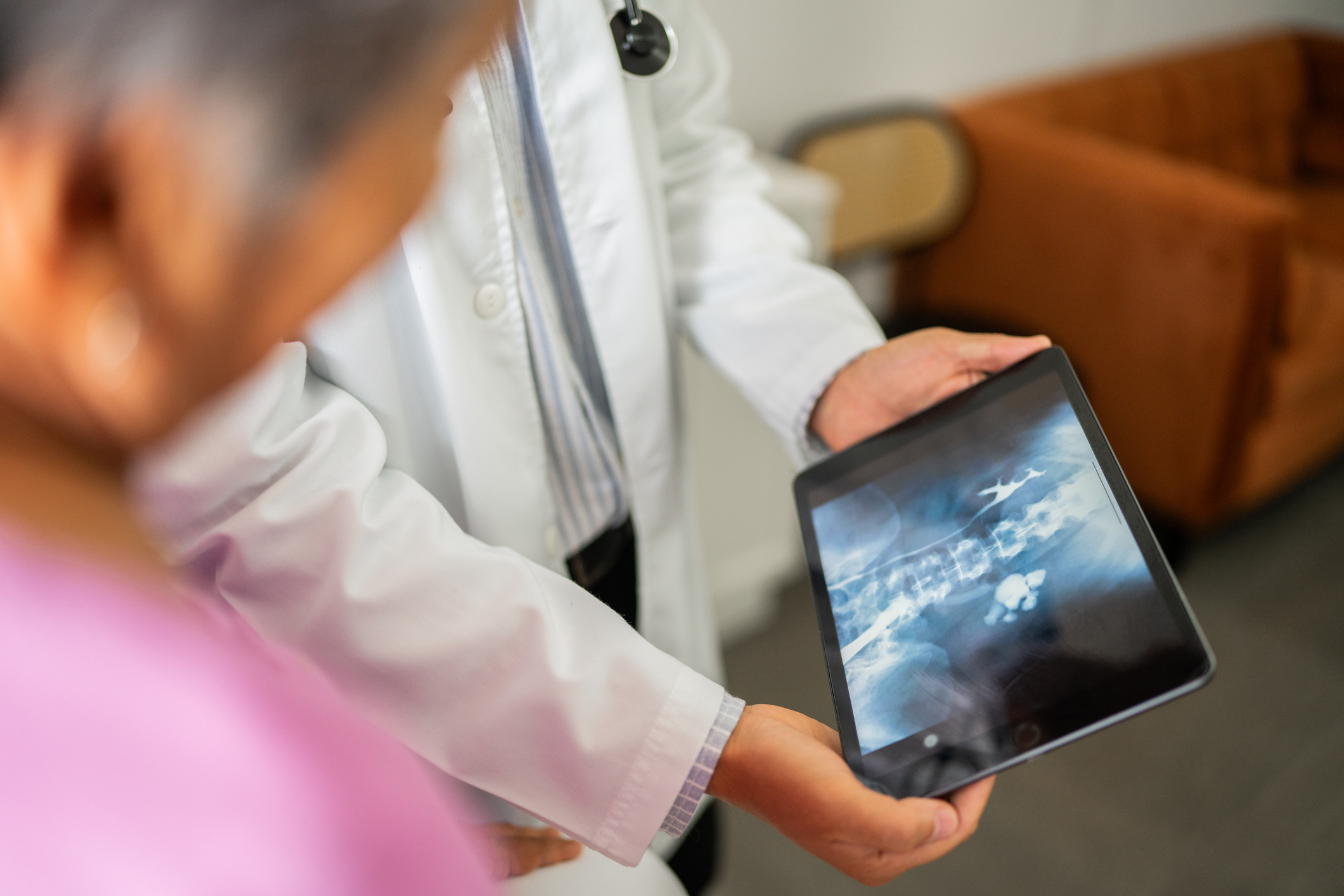
 A herniated disc occurs when one of the discs in the spine tears or ruptures, allowing the jelly-like substance, or nucleus, in the disc to leak and irritate surrounding nerves.
A herniated disc can affect any part of the spine; however, this problem is most likely to occur in the lower spine. Herniated discs in the lumbar spine (the lower back) typically result in symptoms that affect the legs, feet, lower back, or buttocks. A common cause of lower back pain is a herniated disc. This pain is often described as sharp and radiating. In addition to lower back pain, a herniated disc can also cause leg pain, or sciatica.
A herniated disc in the cervical spine (the neck) may lead to neck pain, pain between the shoulder blades, or pain in the arms, hands, or fingers. Herniation in the neck or lower spine may also result in numbness, tingling, or muscle weakness, and in some instances bladder problems.
Herniated discs can be caused by age-related weakening or wear and tear of the discs; this is called disc degeneration. Other causes include:
- Sudden or traumatic injuries
- Repeated minor injuries
- Repeated bending, strain, or twisting
- Improper lifting of heavy objects
- Poor posture
- Obesity or excess body weight
Some people are at risk of getting a herniated disc more than others. Risk factors include:
- Living a sedentary life
- Being overweight
- Smoking
- Working in a career that requires frequent heavy lifting
- Having a previously herniated disc
- Having close blood relatives with spinal disc problems
- Having a connective tissue disorder
- Being seated for long periods
Most herniated discs heal on their own; however, in some instances, they may not. Symptoms of a herniated disc can worsen over time if left untreated, leading to complications such as bladder or bowel dysfunction, significant tingling, numbness, or weakness. It is advisable that you see a doctor if you are experiencing these complications.
Your physician may perform a thorough physical examination and order neurological examinations, imaging tests, or nerve tests to help diagnose a herniated disc. Once diagnosed, treatment may involve medications, physical therapy, spinal injections, or surgery.
To schedule an appointment with a doctor at Jamaica Hospital Medical Center, please call 718- 206-7001.
 Follow
All content of this newsletter is intended for general information purposes only and is not intended or implied to be a substitute for professional medical advice, diagnosis or treatment. Please consult a medical professional before adopting any of the suggestions on this page. You must never disregard professional medical advice or delay seeking medical treatment based upon any content of this newsletter. PROMPTLY CONSULT YOUR PHYSICIAN OR CALL 911 IF YOU BELIEVE YOU HAVE A MEDICAL EMERGENCY.