
What is Post-Traumatic Stress Disorder?

When people live through a traumatic event such as a war, an act of violence, a rape, a serious accident, an act of terrorism, or have been seriously threatened, they may experience  Post-Traumatic Stress Disorder, also known as PTSD. This is a mental health disorder that affects approximately 3.5% of the U.S. population. PTSD is known to occur more commonly in women than men and certain ethnic groups including Latinos, African Americans and American Indians.

When people go through traumatic events they may not necessarily experience the effects immediately. It is not uncommon for the symptoms to start anywhere from a month to several years after the event.  Sometimes traumatic events that occur during childhood may not manifest until later in life.

Symptoms of PTSD can vary from person to person and are divided into four groups: Intrusive memories, avoidance, changes in emotional and physical reactions, and negative changes in thinking.

Symptoms of intrusive memories include:

  • Flashbacks
  • Nightmares
  • Severe emotional distress or physical reactions

Symptoms of avoidance include:

  • Avoiding certain places that remind you of the event
  • Avoiding talking about the event

Symptoms of changes in emotional and physical reactions include:

  • Easily frightened
  • Difficulty sleeping
  • Difficulty concentrating
  • Aggressive behavior

Symptoms of negative changes in thinking include:

  • Feeling hopeless
  • Negative thoughts about the world or yourself
  • Difficulty maintain relationships
  • Sense of detachment

Long-term PTSD may lead to alcohol or substance abuse, eating disorders, thoughts of suicide or depression. Complications can also lead to poor coping skills, loss of work, loss of relationships and health complications.

Anyone who has experienced a traumatic event and has any PTSD symptoms that last more than a few weeks should seek professional care. If any of the symptoms are so severe that they may lead to physical danger, for themselves or to someone else, 911 should be called immediately. If you would like to schedule an appointment with a mental health professional at Jamaica Hospital Medical Center please call,  718-206-5575

All content of this newsletter is intended for general information purposes only and is not intended or implied to be a substitute for professional medical advice, diagnosis or treatment. Please consult a medical professional before adopting any of the suggestions on this page. You must never disregard professional medical advice or delay seeking medical treatment based upon any content of this newsletter. PROMPTLY CONSULT YOUR PHYSICIAN OR CALL 911 IF YOU BELIEVE YOU HAVE A MEDICAL EMERGENCY.
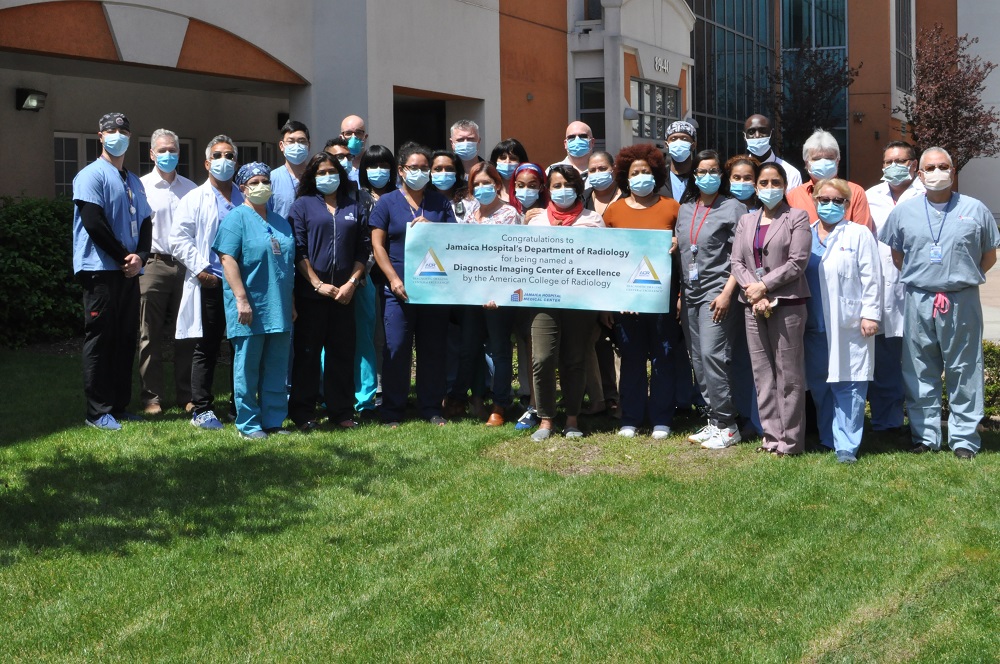
Jamaica Hospital Receives Diagnostic Imaging Center of Excellence Designation

Jamaica Hospital Medical Center is proud to receive Diagnostic Imaging Center of Excellence (DICOE) designation from the American College of Radiology (ACR).

To receive this elite distinction, facilities must be accredited by the ACR in all modalities they provide, and in which the ACR offers an accreditation program. Another requirement is participation in the Dose Index Registry® and General Radiology Improvement Database, as well as Image Wisely® and Image Gently® pledges. All of which are initiatives promoted by the ACR to ensure the delivery of safe, high-quality, and effective imaging care to patients.

Furthermore, facilities must demonstrate excellence at multiple levels.  Performance is measured by the successful completion of comprehensive assessments in the following areas:

  • Governance and personnel
  • Facility organization and management
  • Physical environment
  • Equipment and IT infrastructure
  • Radiation and general safety
  • Quality management
  • Policies and procedures
  • Patient rights and medical records

Jamaica Hospital has exceeded the standard requirements of accreditation to achieve DICOE designation.  Patients of the hospital can be assured they are receiving the highest levels of imaging quality, safety, and care.

All content of this newsletter is intended for general information purposes only and is not intended or implied to be a substitute for professional medical advice, diagnosis or treatment. Please consult a medical professional before adopting any of the suggestions on this page. You must never disregard professional medical advice or delay seeking medical treatment based upon any content of this newsletter. PROMPTLY CONSULT YOUR PHYSICIAN OR CALL 911 IF YOU BELIEVE YOU HAVE A MEDICAL EMERGENCY.

Parents – Know The Symptoms Oppositional Defiant Disorder

Every parent has experienced their children display difficult or defiant behavior at times. It is normal part of parenting.  Some children and teens, however, may exhibit these traits along with others including anger, irritability, and vindictiveness persistently and for a prolonged period of time.  These children may have a condition known as Oppositional Defiant Disorder, or ODD.

ODD is a type of behavioral disorder, mostly diagnosed in childhood. Those with ODD typically act uncooperative, defiant, and hostile toward their peers, parents, teachers, and other authority figures. According to the American Psychiatry Association, children diagnosed with ODD exhibit this pattern of behavior for a minimum of six months.

The cause of oppositional defiant disorder is still unknown, but likely involves a combination of genetic and environmental factors. Children with ODD are generally considered more troubling to others than they are to themselves. The disorder can impact their relationships with friends and family and affect their educational and social interactions.

Symptoms of ODD typically begin during pre-school years, but in some cases, they can develop later. They almost always occur before a child enters their early teen years. Sometimes it is difficult to recognize the difference between a strong-willed or emotional child and one with oppositional defiant disorder, as it is normal for children to exhibit oppositional behavior at certain stages of their development.

Typical symptoms of ODD include:

  • Anger and irritability – Those diagnosed with ODD are characterized as easily losing their temper, are frequently annoyed by others, and are often resentful.
  • Argumentative and defiant behavior – Children with ODD often argue with adults or authority figures, defy or refuse to comply with rules, and often blame others for their mistakes.

  • Vindictiveness – This is defined by repetitive acts of spitefulness or revenge. Children with ODD typically display vindictive behavior multiple times over a six-month period.

It is important for parents to understand that managing a child with ODD is not something you have to do alone.  Recognizing the symptoms and getting help from qualified professionals can be beneficial.

Speak to your pediatrician about recommending a child psychologist or a child psychiatrist with expertise in disruptive behavior problems. A mental health expert can coordinate a behavioral health treatment plan that includes developing learning skills to help build positive family interactions and manage problematic behaviors. Additional therapy, and possibly medications, may also be needed based on the severity of the disorder.

To make an appointment with a pediatric mental health professional, please call 718-206-5575.

All content of this newsletter is intended for general information purposes only and is not intended or implied to be a substitute for professional medical advice, diagnosis or treatment. Please consult a medical professional before adopting any of the suggestions on this page. You must never disregard professional medical advice or delay seeking medical treatment based upon any content of this newsletter. PROMPTLY CONSULT YOUR PHYSICIAN OR CALL 911 IF YOU BELIEVE YOU HAVE A MEDICAL EMERGENCY.
Using A Mouth Guard For Sleep Apnea

America’s expanding waistline may be responsible for another growing problem in our country – sleep apnea. Approximately 18 million Americans suffer from sleep apnea and many of them are overweight or obese. In fact, the most common cause of Obstructive Sleep Apnea in adults is obesity.

Obstructive sleep apnea is a common and serious disorder in which breathing repeatedly stops for 10 seconds or more during sleep. People with this condition often have trouble staying in a deep sleep because their throats close, blocking their airways. As a result, they partially awaken to start breathing properly. They do not realize they’re waking up and may become very sleepy during the day.

Obstructive sleep apnea can lead to high blood pressure, heart disease, stroke, and even death. People with sleep apnea are also at an increased risk of work and driving-related accidents, due to inadequate sleep at night.  It’s important that anyone with signs and symptoms of obstructive sleep apnea — especially loud snoring, repeated nighttime awakenings and daytime sleepiness speak with a physician.

Fortunately, sleep apnea is treatable. Trying to lose weight is the best way to help people sleep better. Recent studies have proven that weight loss can significantly improve and potentially eliminate obstructive sleep apnea symptoms in obese individuals. If, however, weight loss attempts are not successful, a common and effective treatment for sleep apnea is continuous positive airway pressure (CPAP), where patients wear a mask connected to a machine that blows air.

According to WebMD, oral appliances may be an effective treatment option, such as:

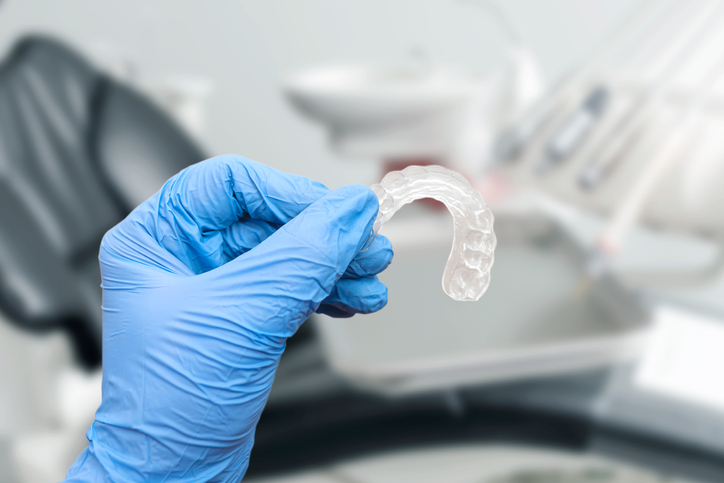
  • Mandibular advancement device (MAD). The most widely used mouth device for sleep apnea, MADs look much like a mouth guard used in sports. The devices snap over the upper and lower dental arches and have metal hinges that make it possible for the lower jaw to be eased forward. Some, such as the Thornton Adjustable Positioner (TAP), allow you to control the degree of advancement.
  • Tongue retaining device. Used less commonly than MAD, this device is a splint that holds the tongue in place to keep the airway open.

These options are effective for people with mild to moderate sleep apnea, particularly those who sleep on their backs or stomachs, dental devices may improve sleep and reduce the frequency and loudness of snoring. Also, people are more likely to use their dental appliances regularly than CPAP.

These devices must be fitted by a Dentist or Orthodontist and worn in the mouth at night.

If you have been diagnosed with obstructive sleep apnea and have not been helped by the CPAP, you can contact Jamaica Hospital Medical Center’s Dental Center to schedule a consultation with a Dentist to see if a mouth guard is a better option of treatment for you.  You can call, 718-206-6980 to schedule an appointment.

All content of this newsletter is intended for general information purposes only and is not intended or implied to be a substitute for professional medical advice, diagnosis or treatment. Please consult a medical professional before adopting any of the suggestions on this page. You must never disregard professional medical advice or delay seeking medical treatment based upon any content of this newsletter. PROMPTLY CONSULT YOUR PHYSICIAN OR CALL 911 IF YOU BELIEVE YOU HAVE A MEDICAL EMERGENCY.

We Shine Our Employee Spotlight on Jayson de Jesus

We are proud to shine our employee spotlight on Jayson de Jesus, a Patient Information Representative on 4 South.

Jayson has worked at Jamaica Hospital Medical Center for over 25 years. He enjoys the daily interactions he has with his colleagues, many of whom he considers to be his friends, as well as with patients and their families. Jayson is very much a “people person” and is known by everyone to be caring, kind and always willing to help. He is always interested in learning about other people’s cultures.

Jayson is originally from the Philippines, where he completed most of his education. He attended elementary school at GSCS, high school at St. Paul College and graduated from the Central Escolar University in Manila.   Jayson continued his education at St. John’s University when he first moved to Hollis, New York.  He now resides with his family in Nassau County. Jayson has been married to his wife for over 18 years and they have a son who is 17 years old and a daughter who is 5 years old. Also sharing their home are their pet birds. Spending time with his family is one of his favorite things to do.

Around the hospital Jayson is known for his skills as a DJ. He has kept every holiday party lively with his musical talent. In his free time Jayson enjoys gardening, carpentry, playing basketball, and camping. His hobbies include working on cars and collecting sneakers.

Jayson enjoys traveling and has visited over 30 of the 50 states so far, the furthest one being Hawaii. He also enjoys eating all types of food.  Jayson is very active in community activities and takes great pride in being an Assistant Scout Master with the Boy Scouts.

We are very proud to have Jayson as part of the Jamaica Hospital team and we look forward to having him with us for many more years.

All content of this newsletter is intended for general information purposes only and is not intended or implied to be a substitute for professional medical advice, diagnosis or treatment. Please consult a medical professional before adopting any of the suggestions on this page. You must never disregard professional medical advice or delay seeking medical treatment based upon any content of this newsletter. PROMPTLY CONSULT YOUR PHYSICIAN OR CALL 911 IF YOU BELIEVE YOU HAVE A MEDICAL EMERGENCY.
Information On COVID-19 Third Dose

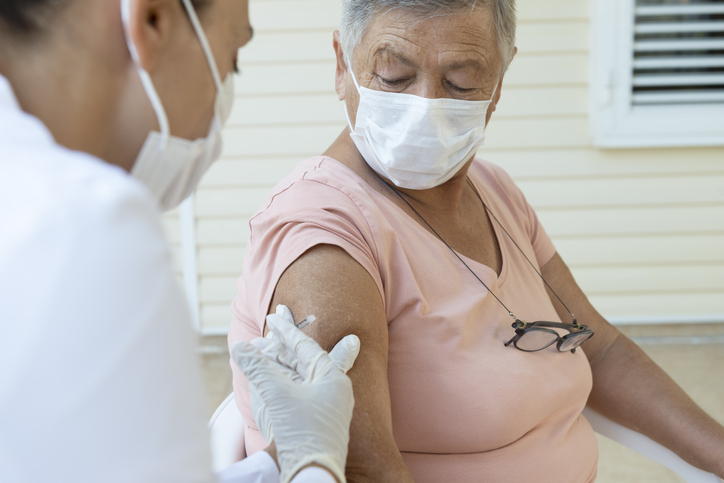
Since the commencement of the COVID-19 vaccine distribution, over 43% of the population in New York has been fully vaccinated. This number is rising daily as age restrictions lower for those eligible to receive the vaccine are announced.

Still, the COVID-19 vaccine continues to be questioned by many members of our community. Jamaica Hospital Medical Center is sharing the following information from the Centers for Disease Control and Prevention (CDC) to answer them.

Some commonly asked questions that people are asking:

  • Is the vaccine safe? The vaccines that are being distributed have undergone rigorous testing and have met the safety standards set forth by the CDC and the Food and Drug Administration (FDA).
  • Are there any side effects of this vaccine? The known side effects of the vaccines currently being distributed include soreness in the arm in which the vaccine was administered and some people have developed low grade fevers. Both of these only lasted less than 48 hours. There may be other side effects that we aren’t aware of yet.
  • Will the vaccine prevent me from getting COVID-19 ? This vaccine, like all other vaccines, will lessen the chances of getting the virus but is not 100 percent guaranteed to be effective for everyone.
  • How long will the vaccine be effective for? Until more time has passed and more people have been vaccinated, the CDC is not sure how long the vaccine will be effective for.

Most recently, there has been another question added which is:

Will there be a need for a third dose (booster) of the vaccine to maintain effectiveness? According to a recent CNBC report, Pfizer CEO Albert Bourla said, “People “likely” need a a booster dose within 12 months of getting fully vaccinated.

Although the “booster” vaccine is not currently available, it is hopeful that it will be available sometime this year.

Jamaica Hospital Medical Center is committed to vaccinating member of its staff and the community with the hope of vaccinating enough of the population to finally eradicate this deadly virus.

All content of this newsletter is intended for general information purposes only and is not intended or implied to be a substitute for professional medical advice, diagnosis or treatment. Please consult a medical professional before adopting any of the suggestions on this page. You must never disregard professional medical advice or delay seeking medical treatment based upon any content of this newsletter. PROMPTLY CONSULT YOUR PHYSICIAN OR CALL 911 IF YOU BELIEVE YOU HAVE A MEDICAL EMERGENCY.

Pericarditis

There are several reasons why chest pain should never be ignored, pericarditis is one of them.

Pericarditis is the swelling and inflammation of the pericardium- the thin, saclike tissue that surrounds the heart. Pericarditis can affect people of all ages, but men ages 16 to 65 are more likely to develop it.

The causes of pericarditis can include:

  • An infection
  • A heart attack
  • Systemic inflammatory disorders such as lupus or rheumatoid arthritis
  • Trauma
  • Certain medications
  • Health disorders such as AIDS, kidney failure, cancer, or tuberculosis

Sharp or stabbing chest pain is the most common symptom of pericarditis; however, other signs and symptoms may also occur.  They include:

  • Coughing
  • A low-grade fever
  • Abdominal or leg swelling
  • Heart palpitations
  • Shortness of breath

According to the American Heart Association, “Pericarditis can be acute, meaning it happens suddenly and typically doesn’t last long. Or the condition may be “chronic,” meaning that it develops over time and may take longer to treat. Both types of pericarditis can disrupt your heart’s normal function. In rare cases, pericarditis can have very serious consequences, possibly leading to abnormal heart rhythm and death.”

Pericarditis is usually mild and may clear up with rest or simple treatments.  Treatment in more severe cases can include medications or surgery.

If you are experiencing chest pains, it is important that you see a doctor right away. Early diagnosis and treatment can help to reduce the risk of complications caused by pericarditis.

To schedule an appointment with a cardiologist at Jamaica Hospital Medical Center, please call 718-206-7100.

All content of this newsletter is intended for general information purposes only and is not intended or implied to be a substitute for professional medical advice, diagnosis or treatment. Please consult a medical professional before adopting any of the suggestions on this page. You must never disregard professional medical advice or delay seeking medical treatment based upon any content of this newsletter. PROMPTLY CONSULT YOUR PHYSICIAN OR CALL 911 IF YOU BELIEVE YOU HAVE A MEDICAL EMERGENCY.

The Benefits of Beets

Beetroot isolated on white background with clipping path, one whole beet with leaves

According to www.healthline.com. Beets are packed with essential nutrients. They are a great source of fiber, folate (vitamin B9), manganese, potassium, iron, and vitamin C. Beetroot and beetroot juice have been associated with numerous health benefits, including improved blood flow, lower blood pressure, and increased exercise performance.

If you are in the mood for a beet based citrus salad delight, try this recipe for a quick, nourishing and delicious salad. INGREDIENTS:

  • 1 bunch kale
  • 1 bunch lettuce
  • 1 kohlrabi
  • 1 beet
  • 2 carrots
  • 1 grapefruit
  • 4 tablespoons olive oil
  • 1 tablespoon honey
  • 1 teaspoon Dijon mustard
  • ½ teaspoon kosher salt
  • ¼ teaspoon freshly ground pepper
  • ¼ cup sunflower seeds or pepitas

DIRECTIONS:

  1. Remove the stems from the kale and chop it into bite-sized pieces. Chop the lettuce into bite-sized pieces. Peel the kohlrabi, beet, and 2 carrots and chop them into matchsticks (julienne) with a knife or using a food processor. Remove the sections from half of the grapefruit and peel them.
  2. In a small canning jar, combine juice from the remaining half grapefruit (around ¼ cup), 4 tablespoons olive oil, 1 tablespoon honey, 1 teaspoon Dijon mustard, ½ teaspoon kosher salt, and ¼ teaspoon freshly ground pepper. Cover the jar and shake vigorously to combine (or whisk all ingredients together in a bowl).
  3. To serve, place vegetables on serving plates or in bowls. Top with grapefruit vinaigrette and sunflower seeds or pepitas.

For this and other delicious seasonal recipes visit –  www.acouplecooks.com

If you want to learn more about the nutritional value of beets, visit: https://www.healthline.com/nutrition/foods/beetroot#:~:text=Packed%20with%20essential%20nutrients%2C%20beetroots,pressure%2C%20and%20increased%20exercise%20performance.

All content of this newsletter is intended for general information purposes only and is not intended or implied to be a substitute for professional medical advice, diagnosis or treatment. Please consult a medical professional before adopting any of the suggestions on this page. You must never disregard professional medical advice or delay seeking medical treatment based upon any content of this newsletter. PROMPTLY CONSULT YOUR PHYSICIAN OR CALL 911 IF YOU BELIEVE YOU HAVE A MEDICAL EMERGENCY.

Can You Get Covid-19 More Than Once ?

The COVID-19 virus is a new disease and there is still much to be learned about it. One of the questions people have is whether or not they can be re-infected if they have already had the virus. The simple answer is “Yes”.

Typically when a person is infected with a virus their body develops a certain amount of immunity which lessens the chances that they will become re-infected with the same virus. However, in the case of COVID-19, a small but significant amount of people have been re-infected. A lot has to do with the amount of time that elapses between the first bout and the second. In some cases the second bout of COVID-19 is less severe than the first but there have been cases where the second bout is more severe than the first. At the present time, nobody knows how long the immunity our bodies develop to the virus lasts. Because the COVID-19 virus is so new, there needs to be more research done and more data gathered to say with certainty how the virus acts.

All content of this newsletter is intended for general information purposes only and is not intended or implied to be a substitute for professional medical advice, diagnosis or treatment. Please consult a medical professional before adopting any of the suggestions on this page. You must never disregard professional medical advice or delay seeking medical treatment based upon any content of this newsletter. PROMPTLY CONSULT YOUR PHYSICIAN OR CALL 911 IF YOU BELIEVE YOU HAVE A MEDICAL EMERGENCY.

Highlighting the Achievements of Jamaica Hospital’s Division of Cardiology

Jamaica Hospital Medical Center is focused on providing the highest quality, cost-effective care to our patients. We continually assess the needs of our community and offer new services.  Over the last few years, we have added a group of talented, sub-specialty trained physicians who have made significant advancements in their respective departments.

We would like to introduce some of our new team members and the services they have added to our network. Today we are highlighting the achievements of our Division of Cardiology.

Under the leadership of Dr. Aditya Mangla and Dr. Zoran Lasic, the hospital’s cardiology service has maintained a robust, high-quality coronary intervention program throughout the COVID pandemic and is now back to pre-pandemic volume. They have created a comprehensive cardiogenic shock program to diagnose and treat patients who suffered a catastrophic heart attack. This treatment is achieved by quickly reestablishing blood flow to the heart, and, if necessary, inserting support devices to patients who experienced severe shock.

Additionally, the Pulmonary Embolism Response Team (PERT) has been working with the national registry for pulmonary embolisms and over the past two years has further developed its ability to perform pulmonary embolism catheter-based therapy. This is important because pulmonary embolisms have been recognized as significant causes for patient mortality and our ability to quickly and effectively provide this service will save countless lives.

Lastly, the cardiology division is collaborating with the Division of Vascular Surgery to begin an endovascular deep venous thrombosis program as an extension of their existing pulmonary embolism program.

The Cardiology Division has also received many accolades for its high-quality care, including being ranked as one of the “Top 100 Hospitals in the U.S. for Coronary Intervention” by Healthgrades. They also received the Gold Plus award for Heart Failure management and the Bronze award for NSTEMI management from the American Heart Association.

Congratulations to Jamaica Hospital’s Cardiology Division for these many achievements.

All content of this newsletter is intended for general information purposes only and is not intended or implied to be a substitute for professional medical advice, diagnosis or treatment. Please consult a medical professional before adopting any of the suggestions on this page. You must never disregard professional medical advice or delay seeking medical treatment based upon any content of this newsletter. PROMPTLY CONSULT YOUR PHYSICIAN OR CALL 911 IF YOU BELIEVE YOU HAVE A MEDICAL EMERGENCY.