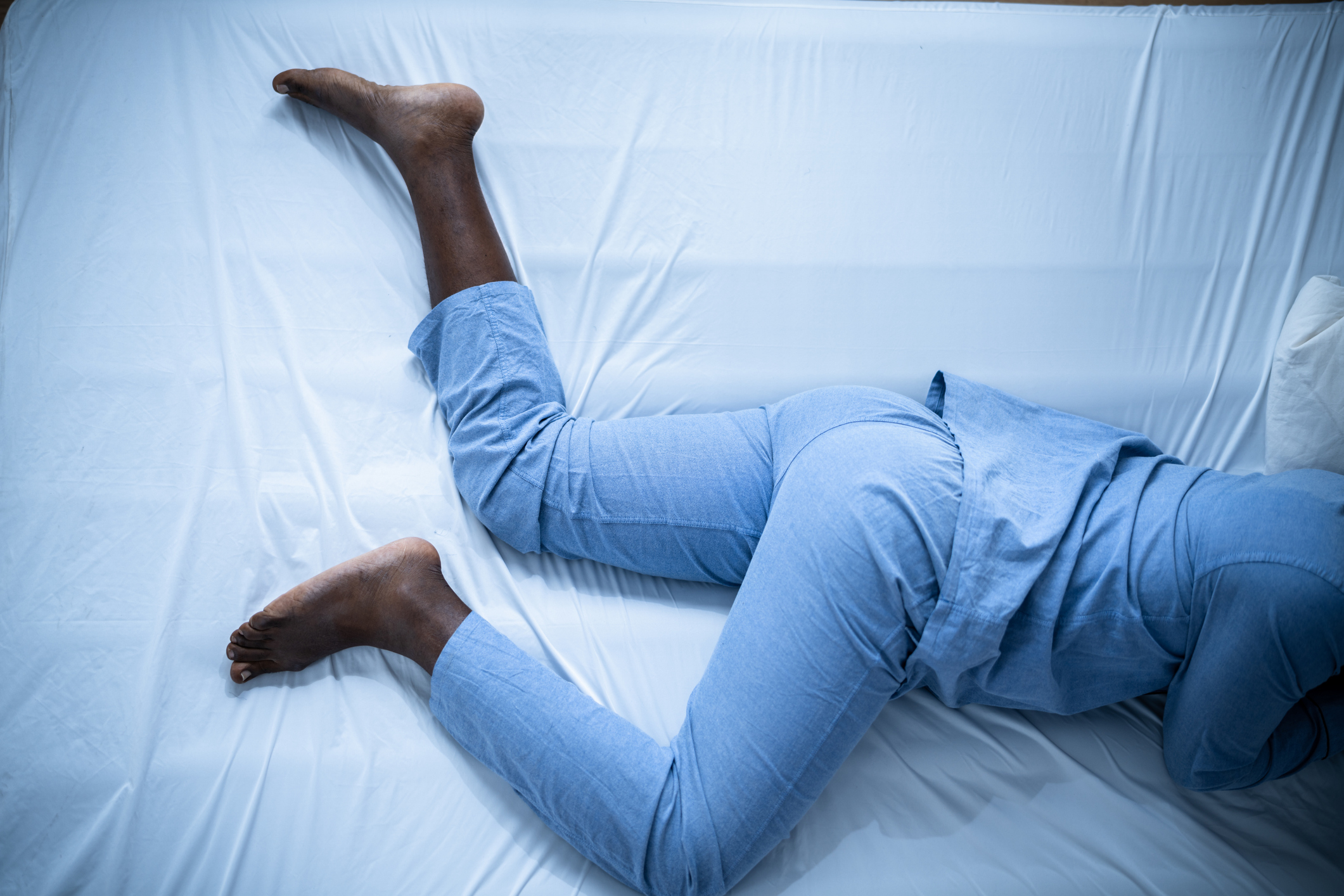
 Restless legs syndrome (RLS), or Willis-Ekbom disease, is a condition that causes a strong urge to move the legs, typically accompanied by an uncomfortable sensation. This sensation usually occurs in the evening or at night when sitting or lying down. Moving the legs eases the discomfort for a short time.
There are two types of restless leg syndrome: early onset and late onset.
Early onset restless leg syndrome is diagnosed before the age of 45, usually runs in your biological family, and progresses slowly.
Late-onset restless leg syndrome is diagnosed after the age of 45 and progresses more quickly.
Restless leg syndrome affects between 7% and 10% of the U.S. population and is more common among Caucasian people and females.
The symptoms of restless leg syndrome include:
- An uncomfortable sensation in the legs that causes the urge to move them
- A temporary feeling of relief when the legs move
- Sensations that worsen while resting
- Twitchy legs or leg jerks in the evening and while sleeping
Restless leg syndrome symptoms can affect sleep and can cause:
- Sleep disruptions, difficulty falling or staying asleep
- Fatigue or daytime sleepiness
- Behavior or mood changes
- An urge to get out of bed to stretch or move the legs
- Depression or anxiety
- Difficulty paying attention, remembering things, or concentrating
When a person experiences restless leg syndrome, they feel sensations that make them want to move their legs and feet. These sensations include:
- Crawling
- Itching
- Aching
- Throbbing
- Pulling or tugging
- Burning
There isn’t a known cause for restless leg syndrome. However, researchers believe it may be caused by an imbalance of dopamine, the brain chemical that sends messages to control muscle movement.
Other factors that may contribute to the risk of developing restless leg syndrome include:
- Genetics
- Medications, such as antihistamines, antidepressants, or anti-nausea medications
- Having an underlying medical condition, such as an iron deficiency
Other medical conditions can cause restless leg syndrome, including:
- Anemia
- Pregnancy
- Diabetes
- Kidney disease
- Peripheral neuropathy
- Substance abuse disorder
There are several triggers, such as alcohol, caffeine, nicotine, stress, and certain medications, that can make restless leg syndrome symptoms worse.
To diagnose restless leg syndrome, a healthcare provider will perform a physical exam to review your symptoms and ask about your medical and family medical history. They may also perform a neurological exam, blood tests, and recommend an overnight sleep study. The criteria they will use to confirm a diagnosis of restless leg syndrome include:
- You have the urge to move your legs, usually occurring with uncomfortable sensations like aching or pulling.
- Symptoms begin or worsen during periods of rest or inactivity.
- You have partial or total relief when stretching, walking, or exercising the affected muscles.
- Your symptoms are worse or only occur in the evening or at night.
- Another medical condition didn’t cause your symptoms.
Treating restless leg syndrome includes taking medications or changing your routine at home by following recommended at-home therapies to help relieve your symptoms and help you feel more comfortable.
If you are experiencing any symptoms of restless leg syndrome, you can consult with a neurologist at Jamaica Hospital Medical Center. To schedule an appointment, please call (718) 206-7246.
 Follow
All content of this newsletter is intended for general information purposes only and is not intended or implied to be a substitute for professional medical advice, diagnosis or treatment. Please consult a medical professional before adopting any of the suggestions on this page. You must never disregard professional medical advice or delay seeking medical treatment based upon any content of this newsletter. PROMPTLY CONSULT YOUR PHYSICIAN OR CALL 911 IF YOU BELIEVE YOU HAVE A MEDICAL EMERGENCY.