#WellnessWednesday

When seeking to achieve a wellness lifestyle, try to keep it simple.

Some simple ways you can bring more wellness into your life are:

  • Drink more fluids
  • Remember to eat a healthy breakfast daily
  • Make a list of goals you’d like to meet
  • Keep healthy snacks on hand so that you do not become too hungry
  • Move around during the course of the day. Take a brisk walk or just get up from your desk chair and stretch
  • Get enough sleep.  It is recommended that six to eight hours of sleep is beneficial
  • Make time for yourself (meditation, yoga, exercise, prayer)
  • Organize and de-clutter your life and surroundings

All content of this newsletter is intended for general information purposes only and is not intended or implied to be a substitute for professional medical advice, diagnosis or treatment. Please consult a medical professional before adopting any of the suggestions on this page. You must never disregard professional medical advice or delay seeking medical treatment based upon any content of this newsletter. PROMPTLY CONSULT YOUR PHYSICIAN OR CALL 911 IF YOU BELIEVE YOU HAVE A MEDICAL EMERGENCY.

MediSys Family Care Center in Hollis

This month, we would like to shine our spotlight on the MediSys Family Care Center in Hollis, New York.

The center located at 188-03 Jamaica Avenue first opened its doors in 1996 and currently sees over 3,000 patient visits each year.

The staff takes great pride in providing quality healthcare and have been embraced by the community. Here are some of the reasons why the providers at the MediSys Family Care Center at Hollis enjoy working at this site. Diana Loor, patient care associate, tells us  ” my favorite part about working at this office in Hollis is being able to assist our community with medical care.  I work with a dedicated team of providers and staff who are welcoming and care deeply about our community.” Adriana Fuentes, office coordinator, explains “what I like most about working at MediSys Hollis is navigating and learning through the challenges how to better serve the community.” Patient navigators Ivonne Ramirez and Ana Mendoza Moreno are proud to say “working at Medisys Hollis is very satisfying. We work as a team and our priority is to take care of our patients in the community.” Dr. Indrani Persaud has been working at this office for seven years and enjoys working here because  she gets to work with a diverse population of patients who come from places like Haiti, Jamaica, the Dominican Republic, Africa and Guyana.

The MediSys Family Care Center in Hollis  offers a wide range of services including:

OB / GYN
Internal Medicine
Podiatry
Pediatrics

The hours of operation are: 

Monday – Friday  8:30 AM – 5 PM

Saturdays 7:30 AM – 4:00 PM.

The office is accessible by  public transportation: Q 110, Q2 & Q3 (buses only)

To schedule an appointment at Medisys Family Care Center in Hollis please call 718-740-2060.

All content of this newsletter is intended for general information purposes only and is not intended or implied to be a substitute for professional medical advice, diagnosis or treatment. Please consult a medical professional before adopting any of the suggestions on this page. You must never disregard professional medical advice or delay seeking medical treatment based upon any content of this newsletter. PROMPTLY CONSULT YOUR PHYSICIAN OR CALL 911 IF YOU BELIEVE YOU HAVE A MEDICAL EMERGENCY.

Strep Throat

Strep pharyngitis—or strep throat is caused by a bacteria called Streptococcus pyogenes, a usual suspect when it comes to throat infections.

After making itself at home in your mouth and tonsils, the bacteria can cause you to have symptoms such as fever, rash, white patches in the throat, and decreased appetite.

Strep throat is often spread from someone who is already infected. It also stays on surfaces and gets inside you after you touch contaminated surfaces then touch your mouth or nose. The key to avoiding transmission is properly washing your hands.

If you think you have strep pharyngitis, you can follow up with your primary care physician for testing. Similar to how you get a COVID test (inserting a swab in your nostrils), a strep test is done by swiping your throat with a swab.

There are two main tests when it comes to testing for strep throat: the rapid antigen test or throat culture. The rapid antigen test is a simple test where the physician will take a sample from your tonsils. They will then run the sample under a special solution to detect bacteria. The other test, the throat culture, is also done with a cotton applicator. The difference is the sample is plated on a dish to see if there will be any bacterial growth—like planting a seed to see if a plant will grow. The throat culture is the gold standard test out of the two, but it takes 1-2 days at least for the results. This is why rapid testing is used more often as the results come back in only a few minutes.

Once diagnosed with strep pharyngitis, it is important to finish the antibiotic treatment your doctor prescribes. Some common antibiotics used include 10 days of amoxicillin or alternatives such as erythromycin if you are allergic to penicillin. Your doctor may also give you medicines such as acetaminophen or ibuprofen for fevers and pain. Some also find gargling with salt water or lozenges helpful.

It is important that you complete your full course of antibiotics because if left untreated, the bacteria can cause further harm. Untreated strep pharyngitis may lead to conditions such as acute rheumatic fever (ARF) and post-streptococcal glomerulonephritis. ARF can cause you to have rashes, pain in your joints, strange arm or leg muscle movements. Post-streptococcal glomerulonephritis can cause you to have dark urine or puffiness of the face, arms, or legs.

To schedule an appointment with a Family Medicine doctor at Jamaica Hospital Medical Center, please call 718-657 -7093.

Kazi Ara D.O.

All content of this newsletter is intended for general information purposes only and is not intended or implied to be a substitute for professional medical advice, diagnosis or treatment. Please consult a medical professional before adopting any of the suggestions on this page. You must never disregard professional medical advice or delay seeking medical treatment based upon any content of this newsletter. PROMPTLY CONSULT YOUR PHYSICIAN OR CALL 911 IF YOU BELIEVE YOU HAVE A MEDICAL EMERGENCY.

E-Scooter Safety

Recently, electric scooters (E- scooters) have been lawfully permitted on New York City roads, and with that, comes a rise in e-scooter accidents.

E-scooters are a fast, accessible, and environmentally friendly means of transportation, however, it is important to take safety precautions to keep yourself and others safe.

Safety precautions should take place prior to getting on the road. One of the ways you can do so is by making sure your e-scooter rides properly. Loss of balance accounts for a significant number of e-scooter injuries; therefore, if you are carrying a bag or a similar item ensure that it is balanced properly before riding to avoid accidents.

The law permits e-scooter riders to be in bicycle lanes and on roads where the speed limit is 30 miles per hour or less, so long as you are 16 years or older. E-scooters are not permitted to be ridden on the sidewalk, which can lead to crashes with pedestrians.

When riding an e-scooter, make sure to comply with NYC law and do not exceed 15 miles per hour. Keep in mind that the faster a rider is moving, that the longer it will take to brake and stop moving. This is important when approaching yellow or red lights, or when pedestrians or cyclists may be crossing the road.

Additionally, as an e-scooter rider, it is important to follow the rules of the road and obey traffic laws to keep yourself safe. This means not riding the wrong way down streets, ignoring red lights, including making a right on red where not permitted, and using an e-scooter under the influence of drugs or alcohol.

A majority of accidents and fatalities take place during dawn and when it is dark out, therefore, increasing visibility is key, especially critical during the winter months. By wearing bright colored clothing, you greatly increase visibility, and by wearing reflective clothing, you triple your visibility as compared to if you wear black clothing.

If you ride an e-scooter, a great way to maintain visibility during early morning or evening hours is to utilize reflect tape on your e-scooter and your helmet.

Wearing a helmet is recommended for all e-scooter riders and is required by law for those who are 16 and 17 years old. A helmet is a vital piece of safety equipment. Wearing a helmet can greatly decrease your risk of injury, brain injury, and even death. According to a meta-analysis, wearing a bike helmet can reduce the risk of a head injury by 48%, serious head injury by 60%, and traumatic brain injury by 53%.

In addition to wearing a helmet, proper footwear is vital for a safe e-scooter ride as well. Similar shoe guidelines apply to e-scooters as they do to bicycles, wearing closed toed shoes with a back to them that secure well to the foot.

Furthermore, just as a cell phone is distracting for car drivers, the same concept applies to e-scooter riders. Make sure not to use a cell phone will using an e-scooter, it is always safer to pull over if you need to check your phone. Listening to music is also distracting and will inhibit the rider’s ability to hear the sounds of oncoming traffic.

Overall, staying safe on an e-scooter is important for personal safety and for the safety of others, by following these guidelines you can prevent accidents and injury.

Jessica Dennehy, Trauma Injury Program Coordinator

All content of this newsletter is intended for general information purposes only and is not intended or implied to be a substitute for professional medical advice, diagnosis or treatment. Please consult a medical professional before adopting any of the suggestions on this page. You must never disregard professional medical advice or delay seeking medical treatment based upon any content of this newsletter. PROMPTLY CONSULT YOUR PHYSICIAN OR CALL 911 IF YOU BELIEVE YOU HAVE A MEDICAL EMERGENCY.

Shining Our Spotlight on the Jamaica MediSys Family Care Center

This month we are proud to shine our spotlight on the MediSys Family Care Center located at 149-18 Jamaica Avenue. This site was originally located on Sutphin Boulevard and moved to the current location in 2015. The site is 3,600 square feet and has 11 modern exam rooms. The services offered are internal medicine, podiatry and pediatrics. Hours of operation are Monday to Thursday 8:30 AM – 7:00 PM and Friday and Saturday 8:30 AM – 5:00 PM. The center is easily accessible by public transportation (Buses Q6, 8, 9, 40, 60, 112 and the J, E, Z trains). This office sees 15,000 patient visits a year.

There are currently 17 staff members who work at this location. Many of them have been here for over 15 years. Dr. Piyali Sen began at the original location on Sutphin Boulevard 21 years ago and moved into the new location in 2015. She tells us “ I feel like I helped to build this medical office into what it is today. The patients and the staff are like family to me”. Debra Hariraj a Patient Care Representative started at the original office in Jamaica 17 years ago. She tells us that she enjoys working at this medical office because “ there is great satisfaction taking care of the patients who come in to be treated and giving them the care that they need”.

If you would like to schedule an appointment with one of the providers at this office, please call 718-523-5500.

All content of this newsletter is intended for general information purposes only and is not intended or implied to be a substitute for professional medical advice, diagnosis or treatment. Please consult a medical professional before adopting any of the suggestions on this page. You must never disregard professional medical advice or delay seeking medical treatment based upon any content of this newsletter. PROMPTLY CONSULT YOUR PHYSICIAN OR CALL 911 IF YOU BELIEVE YOU HAVE A MEDICAL EMERGENCY.

National Home Care and Hospice Month

According to the National Association of Home Care and Hospice, during the month of November, the home care and hospice community honors the millions of nurses, home care aides, therapists, and social workers who make a remarkable difference for the patients and families they serve.

Jamaica Hospital Medical Center (JHMC) is joining with the National Association of Home Care and Hospice to promote raising awareness about hospice and home care professionals.

When you are faced with the decision of choosing whether home care or hospice care better suites the needs of you, or your loved ones; it is best to know the definition and relationship between the two before deciding.

Home care and hospice focus on relieving symptoms that are related to a chronic illness, such as cancer, cardiac disease, respiratory disease, kidney failure, Alzheimer’s and other dementias, AIDS, Amyotrophic Lateral Sclerosis (ALS) and other neurological diseases.

Since most Americans would like to age in place, home care professionals provide a much needed service that provides comfort and high quality healthcare to home bound patients who have chronic illnesses.

When home care is not an option, hospice care may be the choice for your loved one. Keep in mind, hospice care is only offered when the patient has progressed to a point where curative treatment is no longer desired. Hospice care supports the patient, and their families, on the journey to end of life focusing on relieving symptoms and offering comfort from pain, shortness of breath, fatigue, nausea, anxiety and insomnia.

It is important to know that choosing home care or hospice care the focus should be about providing comfort, control, dignity and quality of life and not about giving up. If you, or a loved one should need information on home care or hospice care, please call Jamaica Hospital Medical Center at 718-206-6914 to schedule an appointment for an evaluation, or to just talk, call 718-206-6914.

All content of this newsletter is intended for general information purposes only and is not intended or implied to be a substitute for professional medical advice, diagnosis or treatment. Please consult a medical professional before adopting any of the suggestions on this page. You must never disregard professional medical advice or delay seeking medical treatment based upon any content of this newsletter. PROMPTLY CONSULT YOUR PHYSICIAN OR CALL 911 IF YOU BELIEVE YOU HAVE A MEDICAL EMERGENCY.

November is Diabetes Awareness Month

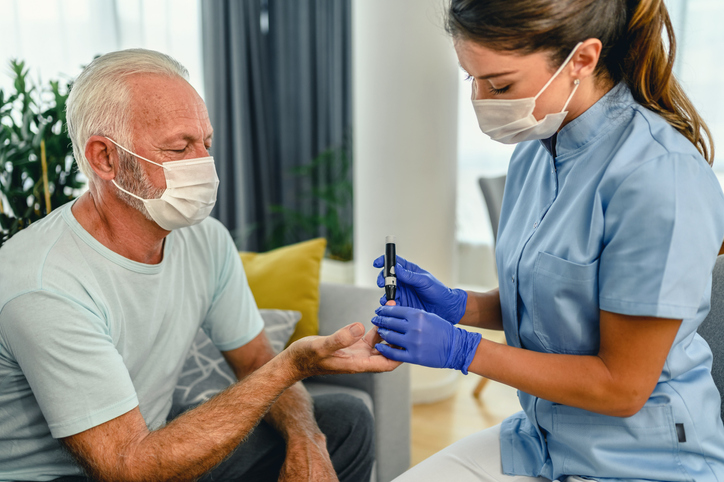
The month of November has been designated American Diabetes Awareness Month by the American Diabetes Association (ADA). Diabetes affects nearly 30 million people in the United States which is ten percent of the total population. According to the Centers for Disease Control and Prevention more than 1 in 3 adults in the United States has prediabetes. This is the equivalent of 88 million people who are at risk of developing type II diabetes during their lifetime. The ADA states that 1 in 5 people in the United States who has diabetes isn’t aware that they even have it.

There is no cure for diabetes but there are many ways for people who have been diagnosed with the disease to live long, healthy lives if it is controlled properly. Learning to live with diabetes is one of the most important components for managing the disease. Proper nutrition, regular physical activity, monitoring blood sugar daily and taking medication to control diabetes are some of the ways complications can be prevented.

Uncontrolled diabetes can lead to many complications. It is the leading cause of blindness, non-traumatic amputations, kidney disease and also increases the risk for heart attacks.

It is also important to have regular medical exams to manage diabetes successfully. To schedule an appointment with a physician at Jamaica Hospital Medical Center please call 718-206-7001.

All content of this newsletter is intended for general information purposes only and is not intended or implied to be a substitute for professional medical advice, diagnosis or treatment. Please consult a medical professional before adopting any of the suggestions on this page. You must never disregard professional medical advice or delay seeking medical treatment based upon any content of this newsletter. PROMPTLY CONSULT YOUR PHYSICIAN OR CALL 911 IF YOU BELIEVE YOU HAVE A MEDICAL EMERGENCY.

Health Benefits of Pumpkins and a Recipe to Enjoy

Did you know that pumpkins are not only tasty, they are quite healthy?

Some health benefits of pumpkins are:

  • They are highly rich in Vitamin A
  • They contain antioxidants and immune boosters that may reduce your risk of chronic illnesses
  • They are high in nutrients and low in calories
  • They contain compounds that promote healthy skin.

Now that you know about some of the health benefits of pumpkin, why not try this tasty gluten free, vegan Creamy Pumpkin Soup recipe. It’s healthy, easy to prepare and delicious.

Serves: 3

Prep time – 5 minutes

Cook time – 25 minutes

Total time – 30 minutes

Ingredients

  • 1 tablespoon olive oil
  • ½ onion, diced
  • ½ pumpkin, peeled and cubed
  • 4 cloves garlic, minced
  • 1 tablespoon fresh rosemary, diced
  • 4-5 cups vegetable broth
  • ½-1 cup coconut milk

Instructions

  1. Heat oil in pot over medium heat. Add onion and cook for a few minutes until translucent. Add pumpkin and garlic and continue to cook for a few more minutes.
  2. Add rosemary and vegetable broth. Bring to a boil, reduce heat to low and simmer until pumpkin is soft and cooked through. Add salt to taste.
  3. Puree soup in a blender (in batches) and return to the pot.
  4. Add coconut milk and simmer for another minute or two.

Give this recipe a try. It is simply delicious and healthy too.

All content of this newsletter is intended for general information purposes only and is not intended or implied to be a substitute for professional medical advice, diagnosis or treatment. Please consult a medical professional before adopting any of the suggestions on this page. You must never disregard professional medical advice or delay seeking medical treatment based upon any content of this newsletter. PROMPTLY CONSULT YOUR PHYSICIAN OR CALL 911 IF YOU BELIEVE YOU HAVE A MEDICAL EMERGENCY.

ACL Tears

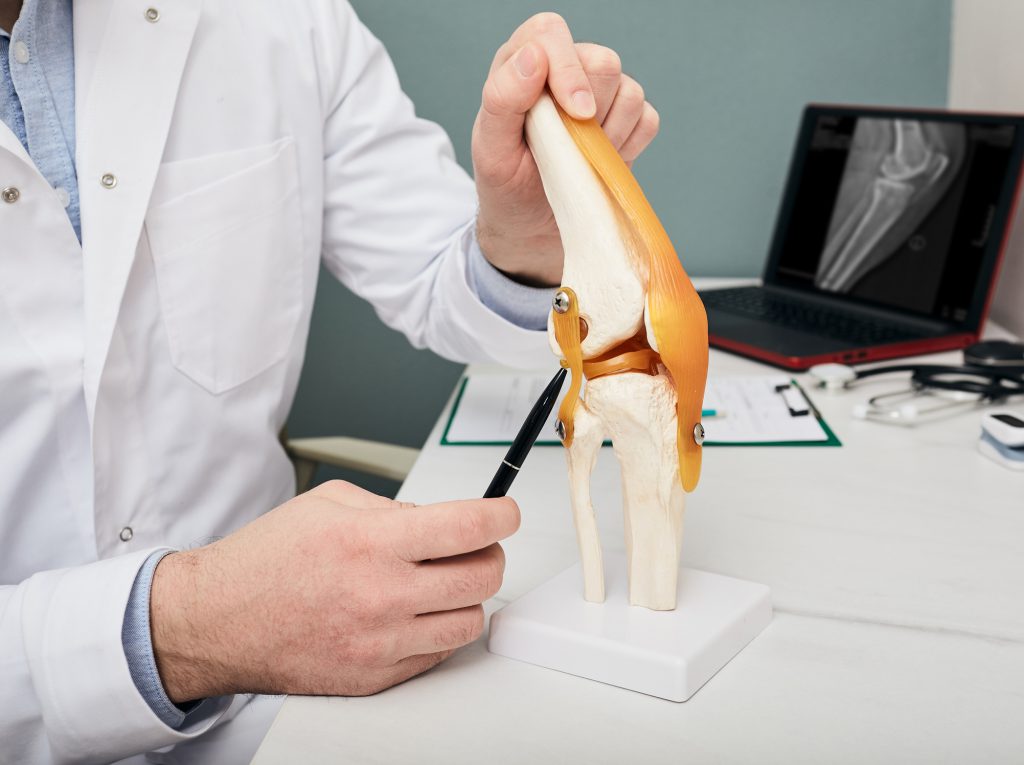
With school in full swing and more children participating in team sports, it is important to talk about injuries that can happen during physical activity. Some of these injuries involve damage to ligaments, which are pieces of connective tissue that connect two bones together.

The anterior cruciate ligament, known as the ACL, is the most injured knee ligament with approximately 100,000 – 200,000 ACL tears occurring each year in the United States.

ACL injuries happen most during sudden, cutting or pivoting movements which are common in sports such as soccer, basketball, and football.

Although anyone can injure their ACL, there are several factors that can place an individual at a greater risk.  Risk factors include:

  • Participating in the aforementioned sports, as well as lacrosse, skiing, tennis and gymnastics
  • A previously torn ACL
  • Being female (Females are more likely to get injured than males due to differences in anatomy)
  • Poor conditioning
  • Wearing poor fitting footwear

Most patients who experience an ACL tear report hearing a pop at the time of injury. Other symptoms can include severe pain or tenderness, swelling and knee instability with walking or a loss of range of motion (Squatting and walking downstairs are particularly difficult movements after obtaining an ACL tear).

If you are experiencing any of these symptoms following an injury to the knee, it is important that you see a doctor immediately.

When you arrive at your doctor, they will ask you for details about how the injury occurred. They will then examine the injured knee by comparing it to the uninjured knee. During the exam, your doctor may perform tests such as the Lachman and Anterior Drawer test to help determine if the ACL was damaged. Several imaging studies such as an x-ray may be ordered to see if there are associated fractures of the surrounding bones.  An MRI may also be required to assess damage to soft tissue and check the extent of the ACL tear.

As with many injuries, acute management begins with RICE therapy which stands for rest, ice compression, elevation. If the knee appears unstable, crutches may be provided. A specially fitted brace may be another option to help stabilize the knee. Over-the-counter pain medications such as ibuprofen can help control the pain. Further treatment options may include physical therapy or surgery.

ACL tears can be prevented by performing stretching and strengthening exercises that focus on the lower body and core, warming up before playing sports, as well as participating in year-round training and conditioning.

If you suspect that you or your loved ones may have injured your ACL or have incurred any other type of injury, our physicians at the Family Medicine Clinic would be happy to evaluate you and discuss a treatment plan based on your goals.

To schedule an appointment with one of our incredible physicians please call our office at (718) 657 -7093.

Abraham Perl, M.D.

All content of this newsletter is intended for general information purposes only and is not intended or implied to be a substitute for professional medical advice, diagnosis or treatment. Please consult a medical professional before adopting any of the suggestions on this page. You must never disregard professional medical advice or delay seeking medical treatment based upon any content of this newsletter. PROMPTLY CONSULT YOUR PHYSICIAN OR CALL 911 IF YOU BELIEVE YOU HAVE A MEDICAL EMERGENCY.

Tremors

A tremor is defined as the unintentional or uncontrollable movement of a part of the body. 

Tremors are sometimes the result of movement disorders, neurological conditions, or other health problems.

There are two types of tremors: resting and action. Resting tremors mostly affect the hands or fingers. They occur when a person is sitting still and tend to go away once an individual begins to move around. Action tremors occur when there is movement of the affected part of the body.

In addition to type, tremors can be further categorized by their appearance and cause. These categories include:

  • Essential tremor- results from a neurological disorder that causes the hands or other parts of the body to shake involuntarily and rhythmically.  Shaking typically tends to worsen during movement than when at rest.
  • Dystonic tremor- occurs in individuals with dystonia, a movement disorder characterized by involuntary muscle contractions. Dystonia causes repetitive or twisting movements.
  • Parkinsonian tremor- is a common symptom of Parkinson’s disease.  Tremors occur mostly at rest. Involuntary and rhythmic tremors often start in one side of the body and eventually progress to both sides.
  • Cerebellar tremor- is caused by lesions or damage to the cerebellum from a tumor, stroke, or diseases such as multiple sclerosis.  Cerebellar tremors can also be caused by inherited degenerative disorders such as ataxia as well damage to the cerebellum resulting from chronic alcoholism.
  • Orthostatic tremor- is a movement disorder characterized by a rapid tremor in the legs that occur when standing.
  • Psychogenic tremor- is the most common psychogenic movement disorder. It occurs often in patients who have conversion disorder. According to the National Institutes of Health, “Conversion disorder is a disorder in which a person experiences blindness, paralysis, or other symptoms affecting the nervous system that cannot be explained solely by a physical illness or injury. Symptoms usually begin suddenly after a period of emotional or physical distress or psychological conflict.”  Many patients with psychogenic tremors have underlying psychiatric disorders such as post-traumatic stress disorder or depression.
  • Physiologic tremor- is barely visible to the naked eye and is typically reversible once the cause is corrected.  It can become more pronounced when there is a reaction to certain drugs, alcohol withdrawal or medical conditions such as hypoglycemia or hyperthyroidism. These tremors may also present during periods of muscular fatigue, anxiety, or emotional stress.

Tremors can be diagnosed during a physical examination.  Your doctor may order urine, blood or neurological tests to check for underlying medical conditions.

Tremors are treated based on the underlying cause and may include physical therapy, psychotherapy Botox injections, medications or surgery.

All content of this newsletter is intended for general information purposes only and is not intended or implied to be a substitute for professional medical advice, diagnosis or treatment. Please consult a medical professional before adopting any of the suggestions on this page. You must never disregard professional medical advice or delay seeking medical treatment based upon any content of this newsletter. PROMPTLY CONSULT YOUR PHYSICIAN OR CALL 911 IF YOU BELIEVE YOU HAVE A MEDICAL EMERGENCY.