March is Bleeding Disorders Awareness Month

March is recognized as Bleeding Disorders Awareness Month. This observance raises awareness for bleeding disorders such as hemophilia.

Hemophilia is a genetic disorder which slows the blood clotting process. It is estimated that hemophilia occurs in 1 in every 5,000 male births in the United States.  The disorder very rarely develops in girls.

According to the Centers for Disease Control and Prevention, “Hemophilia is caused by a mutation or change, in one of the genes, that provides instructions for making the clotting factor proteins needed to form a blood clot. This change or mutation can prevent the clotting protein from working properly or to be missing altogether.”

Because people with hemophilia lack sufficient blood clotting proteins, this causes them to bleed longer than they normally should.  Bleeding can occur spontaneously or following an injury. Other common signs and symptoms that they may experience include:

  • Bleeding into the joints which can lead to swelling, tightness or pain (This most commonly affects the ankles, knees and elbows)
  • Bleeding from the mouth and gums
  • Bleeding after receiving vaccinations or injections
  • Blood in the urine or stool
  • Frequent and hard to stop nosebleeds
  • Bleeding into the skin (bruises)
  • Bleeding into soft tissue and muscle (hematomas)

A diagnosis of hemophilia is determined after blood has been tested to reveal a clotting-factor deficiency.  If it is found that the blood is not clotting as it should, tests known as factor assays are required to explore the cause.  In severe cases, the disorder can be diagnosed within the first year of a child’s life. People with a family history of hemophilia are encouraged to have their baby boys tested soon after birth.

One of the most common approaches for treating hemophilia is to replace the missing blood clotting factor. This treatment is administered through a tube placed in the vein. Other forms of treatment can include taking clot preserving medications, injecting the hormone Desmopressin (DDAVP), applying fibrin sealants and participating in physical therapy.

There are several measures that a person living with hemophilia can take to reduce the chances of injury or excessive bleeding.  The following are recommended: avoid taking blood-thinning medications, exercise regularly (contact sports should be avoided), practice good dental hygiene and avoid certain pain medications that can aggravate bleeding such as aspirin.

If you would like to schedule an appointment with a physician at Jamaica Hospital Medical Center, please call 718-206-7001.

All content of this newsletter is intended for general information purposes only and is not intended or implied to be a substitute for professional medical advice, diagnosis or treatment. Please consult a medical professional before adopting any of the suggestions on this page. You must never disregard professional medical advice or delay seeking medical treatment based upon any content of this newsletter. PROMPTLY CONSULT YOUR PHYSICIAN OR CALL 911 IF YOU BELIEVE YOU HAVE A MEDICAL EMERGENCY.
Shining Our Spotlight on MediSys Clocktower

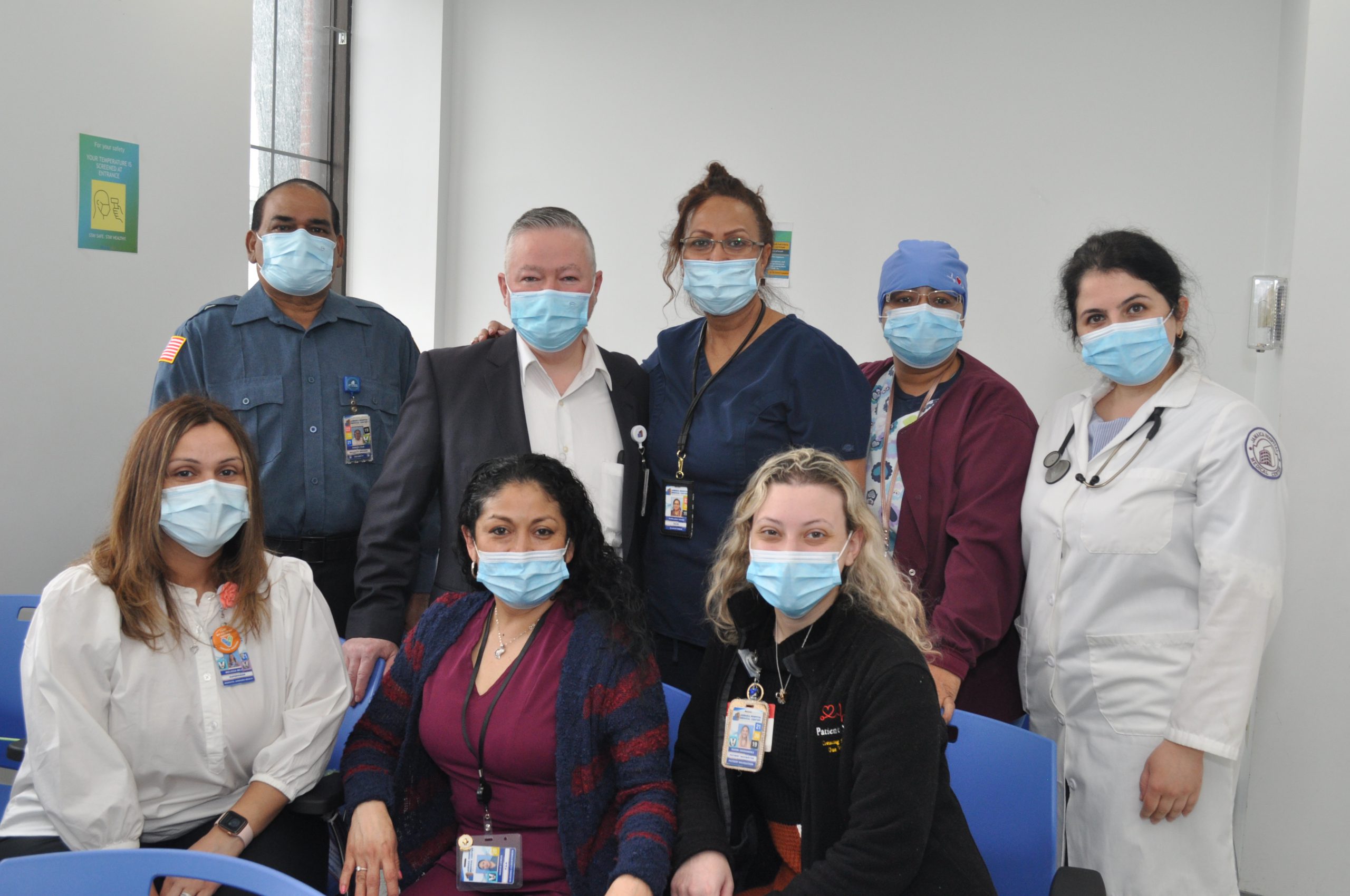
This month we are proud to shine our spotlight on the MediSys Family Care Center located at 91-20 Atlantic Avenue in Ozone Park.

This building has a long history in the community as it once was a part of the Lalance and Grosjean manufacturing complex. It has been known for over a century as “The Clocktower” owing to its distinctive clock which is situated at the highest point of the building. Originally this factory manufactured stamped iron and tin housewares and employed as many as 2100 people, many of whom lived in the community.  Prior to its closing in 1955, the factory produced stainless steel for the U.S. Navy during World War II. The factory closed in 1955 and it became a bank for many years. In 1996 this building opened as MediSys Clocktower.

This image has an empty alt attribute; its file name is DSC_0368-1024x680.jpgMediSys Clocktower is located in a three story building featuring 22 modern exam and treatment rooms. It is staffed by 50 people and annually they see over 30,00 patient visits. The services offered at the center include: pediatrics, family medicine, integrative medicine, OB/GYN, dental, radiology, pediatric endocrinology, pediatric gastroenterology, pulmonary medicine, allergy, breast surgery, and podiatry.  The hours of operation are Monday – Thursday 7:00 AM – 7:00 PM, Friday 7:00 AM – 5:00 PM and Saturday 9:00 AM – 5:00 PM.  The Q 24 bus stops right in front of the building.

A few staff members shared with us their thoughts on why they enjoy working at this site. Stephanie Flaherty a nurse practitioner has been working at this site for over 20 years. She states that “ working at the Clocktower gives her a great sense of pride because she feels she is making a difference in her patients’ lives. The staff all work together as a team to make the patients have a pleasant experience”. Martha Leonardo is an ambulatory care representative who tells us that “there is a great deal of satisfaction making sure that the patients are treated well and there is a sense of family amongst the staff that work here”.  Geovanny Sang is a dental hygienist who has worked for the MediSys HealthThis image has an empty alt attribute; its file name is DSC_0376-1024x680.jpg Network for over 23 years, and at the Clocktower for over two years. She tells us that one of the most important roles she has is “educating the patients about proper dental care. Many patients come from very diverse places in the world and she enjoys spending time with them. The staff works well together as a team”.  Dr. Naira Isakharov is a pediatrician who has worked at the Clocktower for almost five years. She tells us that “the continuity of patient care is very important and educating patients and their families on proper health habits is a major component of how she cares for them”.

If you would like to schedule an appointment with one of the providers at this office, please call 718-641-8207.

All content of this newsletter is intended for general information purposes only and is not intended or implied to be a substitute for professional medical advice, diagnosis or treatment. Please consult a medical professional before adopting any of the suggestions on this page. You must never disregard professional medical advice or delay seeking medical treatment based upon any content of this newsletter. PROMPTLY CONSULT YOUR PHYSICIAN OR CALL 911 IF YOU BELIEVE YOU HAVE A MEDICAL EMERGENCY.

February is National Cancer Prevention Month

February is National Cancer Prevention Month. During this time, Jamaica Hospital Medical Center encourages everyone to adopt healthy lifestyle practices to reduce the likelihood of developing cancer.

Here are a few steps you can take to reduce your risk of developing cancer:

  • Don’t use tobacco – Toxins found in tobacco products have been known to cause lung, colorectal, breast, throat cervical, bladder, mouth, and esophageal cancer. If you are a smoker or use tobacco products the best thing to do for your health is to quit.
  • Eat a healthy diet – Preparing meals focused based on vegetables, fruits, whole grains, and beans will help fortify your body against cancer. Limiting red meat and avoiding processed food are also great defenses.
  • Protect your skin from the sun – Skin cancer is very common and one of the most preventable types of cancer. Wear adequate sun protection when exposed to the sun’s ultraviolet rays.
  • Obesity is linked to breast and colorectal cancer. You can avoid excessive weight gain by maintaining a healthy diet and exercising regularly. Thirty minutes a day of regular exercise have been shown to help your general health. There is a link to obesity and breast and colorectal cancer.
  • Know your family history – Many cancers are known to run in families. Let your physician know if anyone in your family has or had cancer.
  • Get regular cancer screenings – Early detection can be helpful in some cases because it can lead to early diagnosis and treatment.

Discuss with your physician your medical history and your risk for cancer. If you would like to schedule an appointment with a physician at Jamaica Hospital Medical Center, please call 718-206-7001

All content of this newsletter is intended for general information purposes only and is not intended or implied to be a substitute for professional medical advice, diagnosis or treatment. Please consult a medical professional before adopting any of the suggestions on this page. You must never disregard professional medical advice or delay seeking medical treatment based upon any content of this newsletter. PROMPTLY CONSULT YOUR PHYSICIAN OR CALL 911 IF YOU BELIEVE YOU HAVE A MEDICAL EMERGENCY.

February is National Children’s Dental Health Month

February is recognized as National Children’s Dental Health Month. The purpose of this recognition is to promote proper dental education to children and their caregivers.

It is important to develop healthy dental habits early in a child’s life as this can help to prevent cavities and tooth decay.

Caring for children’s dental health should begin when they are infants. A baby’s teeth and gums can be cleaned by using a clean, soft cloth. For children aged two to six, it is recommended that an adult puts the toothpaste on the brush. Use only a pea-sized amount of fluoride toothpaste. Try brushing your child’s teeth first, then let him/her finish.  Until they are seven or eight years old, you will need to help your child brush. Teeth should be brushed twice a day for two minutes each time.

It is recommended that children see their dentist every six months for regular check-ups and cavity prevention. To make an appointment at the dental department at Jamaica Hospital Medical Center, please call 718-206-6980.

All content of this newsletter is intended for general information purposes only and is not intended or implied to be a substitute for professional medical advice, diagnosis or treatment. Please consult a medical professional before adopting any of the suggestions on this page. You must never disregard professional medical advice or delay seeking medical treatment based upon any content of this newsletter. PROMPTLY CONSULT YOUR PHYSICIAN OR CALL 911 IF YOU BELIEVE YOU HAVE A MEDICAL EMERGENCY.

Acute Stress Disorder

Acute stress disorder (ASD) is a trauma and stress-related disorder that typically develops within three days to one month after a traumatic event. Examples of such events are physical or sexual assault, the sudden death of a loved one, a car accident, a natural disaster or receiving a life-threatening medical diagnosis.  According to the American Psychiatric Association, “An estimated 13 to 21 percent of survivors of car accidents develop acute stress disorder and between 20 and 50 percent of survivors of assault, rape or mass shootings develop it.”

Symptoms of ASD generally last up to one month after the traumatic event, and may include:

  • Anxiety
  • Intrusive thoughts and memories
  • Nightmares
  • Avoidance of people, places or things that trigger memories
  • Dissociation
  • Changes in mood
  • Reckless or destructive behavior
  • Heart palpitations, difficulty breathing, abdominal pains or any other physical symptoms that can be caused by elevated stress

If symptoms persist beyond one month, they are often indicative of the development of post-traumatic stress disorder (PTSD).

Anyone can develop ASD after experiencing a traumatic event.  People with ASD are at an increased risk for developing PTSD, this is why it’s important to receive treatment as soon as possible to prevent this progression.

ASD can be diagnosed after a person has experienced symptoms for at least three days.  A mental health provider will perform a series of examinations or evaluations to rule out causes such as health problems, substance abuse, medication side effects or other psychiatric disorders.

Treatment for ASD can involve cognitive behavioral therapy, medication or exposure-based therapies.

To schedule an appointment with a mental health professional at Jamaica Hospital Medical Center, please call 718-206-5575.

All content of this newsletter is intended for general information purposes only and is not intended or implied to be a substitute for professional medical advice, diagnosis or treatment. Please consult a medical professional before adopting any of the suggestions on this page. You must never disregard professional medical advice or delay seeking medical treatment based upon any content of this newsletter. PROMPTLY CONSULT YOUR PHYSICIAN OR CALL 911 IF YOU BELIEVE YOU HAVE A MEDICAL EMERGENCY.

What is Chronic Inflammation ?

Inflammation is one of the body’s way of healing itself. It is the immune system’s response to an internal or external irritant.

Inflammation can be acute, meaning short-lived or it can be chronic (long lasting).

Chronic inflammation can last for weeks, months or even years, leading to damage of healthy cells, tissues and organs. Eventually in some cases this can result in internal connective tissue scarring, DNA damage and even tissue death. Chronic inflammation is linked to the development of asthma, obesity, rheumatoid arthritis, psoriasis, cancer, heart disease and type 2 diabetes.

Symptoms of chronic inflammation include: body pain, anxiety, weight loss or gain, anxiety, gastrointestinal problems (diarrhea or constipation) and general fatigue.

Factors that can contribute to chronic inflammation include:

  • Long-term stress
  • Alcohol abuse
  • Obesity
  • Smoking
  • Lack of sleep
  • Exposure to chemical irritants
  • Autoinflammatory disease
  • Acute inflammation that worsens

One way to diagnose chronic inflammation is through a blood test for C-reactive protein (CRP) which shows up when there is inflammation in the body or high sensitivity C-reactive protein (hsCRP) which shows inflammation of the heart.

Treatment of chronic Inflammation can be achieved with:

  • Nonsteroidal anti-inflammatory drugs (NSAIDS)
  • Steroids
  • Dietary supplements (fish oil and lipoic acid)
  • Weight loss
  • Exercise
  • Stress reduction

Some foods can have an affect on chronic inflammation. Tomatoes, salmon, sardines, olive oil and nuts can help reduce chronic inflammation while fried foods, hot dogs, sausages, highly processed foods like white bread and pastries can make it worse.

If you are experiencing any of the symptoms of chronic inflammation, consult with your physician to see what treatment options may be helpful to you. If you would like to schedule an appointment with a physician at Jamaica Hospital Medical Center, please call 718-206-7001.

All content of this newsletter is intended for general information purposes only and is not intended or implied to be a substitute for professional medical advice, diagnosis or treatment. Please consult a medical professional before adopting any of the suggestions on this page. You must never disregard professional medical advice or delay seeking medical treatment based upon any content of this newsletter. PROMPTLY CONSULT YOUR PHYSICIAN OR CALL 911 IF YOU BELIEVE YOU HAVE A MEDICAL EMERGENCY.

Common Health Conditions of the Prostate

The prostate is a walnut-shaped gland found only in men. It is located below the bladder and surrounds the urethra which is the tube that conducts the flow of urine to the outside of the body.

Health conditions that commonly affect the  prostate are:

Benign prostatic hyperplasia ( BPH)  develops when the prostate becomes enlarged. This often occurs in men as they age. About 50 percent of men between the ages of 51-60 have this condition; however not all require treatment.  Symptoms are:

  • Frequent urination
  • Difficulty urinating
  • Feeling that there is still a need to urinate after emptying the bladder

Treatment includes medications to relieve the constriction of the urethra or those that shrink the prostate. In some cases surgery may be required.

Prostatitis is caused by a bacterial infection and causes an inflammation of the prostate gland. The symptoms include:

  • Difficulty urinating
  • Frequent urination
  • Pain during urination
  • Fever or chills
  • Cloudy urine
  • Pelvic pain

Treatment of prostatitis usually requires an antibiotic.

Prostate Cancer is more common in men over the age of 50. It affects African American men more commonly than other ethnicities. There is a higher incidence in men who have a family history of the disease and there is also a correlation to men who have a high fat diet. Diagnosing prostate cancer is done by performing a blood test known as a prostate specific antigen test (PSA)  and a physical exam called a digital rectal exam. Frequently there are no symptoms.

Treatment of prostate cancer is dependent on the stage when it is diagnosed.  It can include surgery, radiation, chemotherapy, or just watching it to see how it is progressing.

If you are experiencing any symptoms of prostate disease or are in a high risk group for prostate cancer, you should schedule an appointment with your physician to discuss your health. You can schedule an appointment with a urologist at Jamaica Hospital Medical Center by calling 718-206-7001.

All content of this newsletter is intended for general information purposes only and is not intended or implied to be a substitute for professional medical advice, diagnosis or treatment. Please consult a medical professional before adopting any of the suggestions on this page. You must never disregard professional medical advice or delay seeking medical treatment based upon any content of this newsletter. PROMPTLY CONSULT YOUR PHYSICIAN OR CALL 911 IF YOU BELIEVE YOU HAVE A MEDICAL EMERGENCY.

Dr. Philip Cruz Shares His “Jamaica Journey”

Thousands of people work at Jamaica Hospital Medical Center, and each has their own unique story to tell about their career paths. The following is one of them.

The Jamaica Journey of Dr. Philip Cruz began the day he was born. “I was born at Jamaica Hospital and spent my early childhood years living in South Ozone Park. This is one of the many reasons why I have such a strong connection with my patients and the community,” explained Dr. Cruz.

Growing up, Dr. Cruz had a love for the sciences and research. His parents encouraged him to pursue a profession that would allow him to utilize both interests. This led to a successful career in stem cell research.

However, as time went on, Dr. Cruz realized that laboratory research was not his true calling. He decided to follow his intuition and enrolled in medical school in 1997 at the New York College of Osteopathic Medicine, which is now the NYIT College of Osteopathic Medicine.

After graduating medical school, Dr. Cruz did his residency training at the Family Medicine Residency Program at Jamaica Hospital in 2001. Upon the completion of his residency in 2004, he decided to further his medical training.

Over the next year, Dr. Cruz completed a fellowship in Primary Care Sports Medicine at the University of Massachusetts. “Many people don’t know this about me but I was a varsity athlete in my undergraduate years at the University of Pittsburgh. I have always had a desire to enhance my knowledge of sports medicine, and use this information to further help my patients and educate our residents and students,” said Cruz.

At the end of his training in Massachusetts, Dr. Cruz returned to Jamaica Hospital in 2005 as a faculty attending. He spent several years working in the Family Medicine and Emergency Departments.

Today, Dr. Cruz serves as the Director of Osteopathic Education in the Department of Family Medicine . In this role, he is responsible for teaching medical students and supporting residents throughout their career journeys. In addition to teaching, Dr. Cruz continues to see patients regularly. He is known by his colleagues and patients for his kindness and having a service-minded heart.

“My journey at Jamaica Hospital has been positive. I like what I do, where I do it, and the people that I do it with. There is a strong feeling of family and support here,” stated Dr. Cruz. “My colleagues and I also share similar principles and goals. We aim to meet our patients where they are, foster meaningful relationships and provide them with quality healthcare.”

All content of this newsletter is intended for general information purposes only and is not intended or implied to be a substitute for professional medical advice, diagnosis or treatment. Please consult a medical professional before adopting any of the suggestions on this page. You must never disregard professional medical advice or delay seeking medical treatment based upon any content of this newsletter. PROMPTLY CONSULT YOUR PHYSICIAN OR CALL 911 IF YOU BELIEVE YOU HAVE A MEDICAL EMERGENCY.

Have You Had Your Annual Medical Exam ?

An annual medical exam is a good way of tracking your health progress.  Some of the benefits are:

  • Primary prevention
  • To identify risk factors for common chronic diseases
  • To detect disease that has no apparent symptoms (secondary prevention)
  • A way for the doctor to counsel people to promote healthy behavior
  • To update clinical data since your last check-up
  • To enhance the relationship between you and your doctor

If you are interested in scheduling an exam, Jamaica Hospital Medical Center’s Ambulatory Care Center is centrally located and has convenient hours.  Call 718-206-7001 for an appointment.

All content of this newsletter is intended for general information purposes only and is not intended or implied to be a substitute for professional medical advice, diagnosis or treatment. Please consult a medical professional before adopting any of the suggestions on this page. You must never disregard professional medical advice or delay seeking medical treatment based upon any content of this newsletter. PROMPTLY CONSULT YOUR PHYSICIAN OR CALL 911 IF YOU BELIEVE YOU HAVE A MEDICAL EMERGENCY.

This Month Our Employee Spotlight Shines on Eduard Kandov, RN

This month we are proud to shine our Employee Spotlight on Eduard Kandov, RN.

Eduard is a registered nurse who works in the Psychiatric Emergency Department and has been with us for five years. He chose psychiatry because he loves to help people who are in need of mental health support and he does his job with pride.

 Eduard was born in Bukhara, Uzbekistan, and attended elementary through high school there. At the age of 21 he came to the United States and worked as a hairstylist for many years until he made the decision to begin studying at Queensborough Community College where he obtained his nursing degree. Eduard then completed his Bachelor’s and Master’s degrees at Ternopil Medical State University and is currently working towards his Psychiatric Mental Health Nurse Practitioner certification at Fairleigh Dickenson University.

 Eduard previously lived in the Briarwood section of Queens and currently lives in Fresh Meadows. He has three children, who he enjoys spending time with. Eduard likes to travel and has been to many different countries including Italy, Spain, and the Czech Republic which he tells us are all beautiful. His favorite foods are from his native Uzbekistan and he also enjoys Italian cuisine. Eduard enjoys all types of music. When he was a child, he played the accordion. As a hobby he collects money from around the world. One of the sports he is fan of is Mixed Martial Arts.

 Eduard enjoys working at Jamaica Hospital Medical Center because his coworkers make it feel like a family. We are very happy to have Eduard as part of our team and look forward to him remaining with us for many years.

All content of this newsletter is intended for general information purposes only and is not intended or implied to be a substitute for professional medical advice, diagnosis or treatment. Please consult a medical professional before adopting any of the suggestions on this page. You must never disregard professional medical advice or delay seeking medical treatment based upon any content of this newsletter. PROMPTLY CONSULT YOUR PHYSICIAN OR CALL 911 IF YOU BELIEVE YOU HAVE A MEDICAL EMERGENCY.