Prescription Glasses Vs. Readers

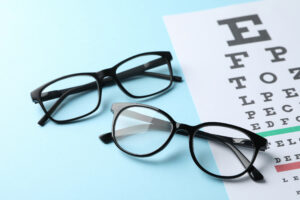
For some people, their eyesight gradually declines. For others, it can happen quickly. When it comes to wearing glasses, the choice can be between getting prescription glasses or non-prescription “readers” also known as “cheaters”.

With either choice, it is important to get an eye examination to determine if you need prescription glasses, if there’s an issue related to your vision, or if readers are okay to use.

Most people can use over-the-counter (OTC) readers if they match the power of their prescription. An example of this is if their eye doctor recommended +2.00 in each eye, and they purchased OTC readers that had the same power.

It is important to note that despite OTC readers being less expensive than prescription glasses, they are mass-produced, and the quality of their lenses and the materials they are made of are usually inferior to those of prescription glasses, which are privately manufactured.

Additionally, there are rare cases when the pupillary distance, which is the distance between the pupils of the eyes, is very small or very wide, and the lenses in the OTC readers can cause eye strain or double vision.

If you experience any of these symptoms with OTC readers, it is recommended to replace them with a pair of prescription glasses.

However, if you do purchase OTC readers, here are some tips to follow to make sure you get the most benefits from them:

Find a pair of readers with the right power. Reading glasses will have signs or stickers describing their power. In many cases, they will range from +1 to +4 diopters, increments of +.25. Diopters are the unit of measurement used to calculate the focusing strength of a pair of glasses or contact lenses. Look for the number that matches your prescription. If you don’t have a prescription, try +1 first, as it is the lowest power

Test the glasses by using them to read. If you have a book or magazine, try using the glasses to read at a comfortable distance. You can also use the eye chart at the eyeglass display to test the glasses. It is important to try different powers until you can read clearly at a distance that is most comfortable for you

Try glasses with larger lenses first, as they offer more of an optimal zone where the prescription is. This will make it easier to use smaller lenses once you get used to wearing glasses.

If you decide to wear prescription glasses instead of OTC readers, you may want to know how to read your prescription.

An eyeglass prescription is made up of an odd series of letters and numbers that are instructions for making your glasses. Here is what they mean:

In a typical prescription, there are two acronyms, one for each eye.

O.D.- is short for oculus dexter, which is your right eye

O.S.- is short for oculus sinister, which is your left eye

The sphere column is often abbreviated as SPH. This is the lens power needed to fix your vision. A minus sign (-) next to the number means nearsightedness. This means you see better up close and need distance correction. A plus sign (+) indicates that you are farsighted and can see better from far away and need your near vision corrected.

Since lens power is measured in diopters, if the sphere field is written as -9.00 D, which means there are 9 diopters of nearsightedness. The measuring system is an integer line, with zero in the middle, needing no correction. The further you get away from zero on either the minus or plus side, the stronger your prescription is.

The cylinder number is how much astigmatism you have, if any. This is when part of the cornea has a different curve. Normally, an eye is shaped like a basketball, rotated in any direction, with the curve staying the same. An eye with astigmatism is oval, or egg-shaped, or more like a football, with one curve being longer than the other. Their CYL number corrects the different second curves.

The axis number tells you where astigmatism is on the cornea. The axis is written in degrees between 1 and 180, indicating which way the astigmatism lines up.

The add column is where any additional lens power is written. For example, some people over the age of 40 may not want an extra pair of glasses for reading and may choose to wear bifocals instead. The lower half of the lens will give them their reading vision.

Additionally, there may be a field for prism on the right side. This is a special type of correction built into the lens for some people with double vision. This means they see two separate images of the same object. The prism fuses the two images together, so they will only see one image.

If you need an eye exam, you can schedule an appointment at Jamaica Hospital Medical Center’s Ophthalmology Center by calling (718) 206-5900.

All content of this newsletter is intended for general information purposes only and is not intended or implied to be a substitute for professional medical advice, diagnosis or treatment. Please consult a medical professional before adopting any of the suggestions on this page. You must never disregard professional medical advice or delay seeking medical treatment based upon any content of this newsletter. PROMPTLY CONSULT YOUR PHYSICIAN OR CALL 911 IF YOU BELIEVE YOU HAVE A MEDICAL EMERGENCY.

Age-Related Macular Degeneration Awareness Month

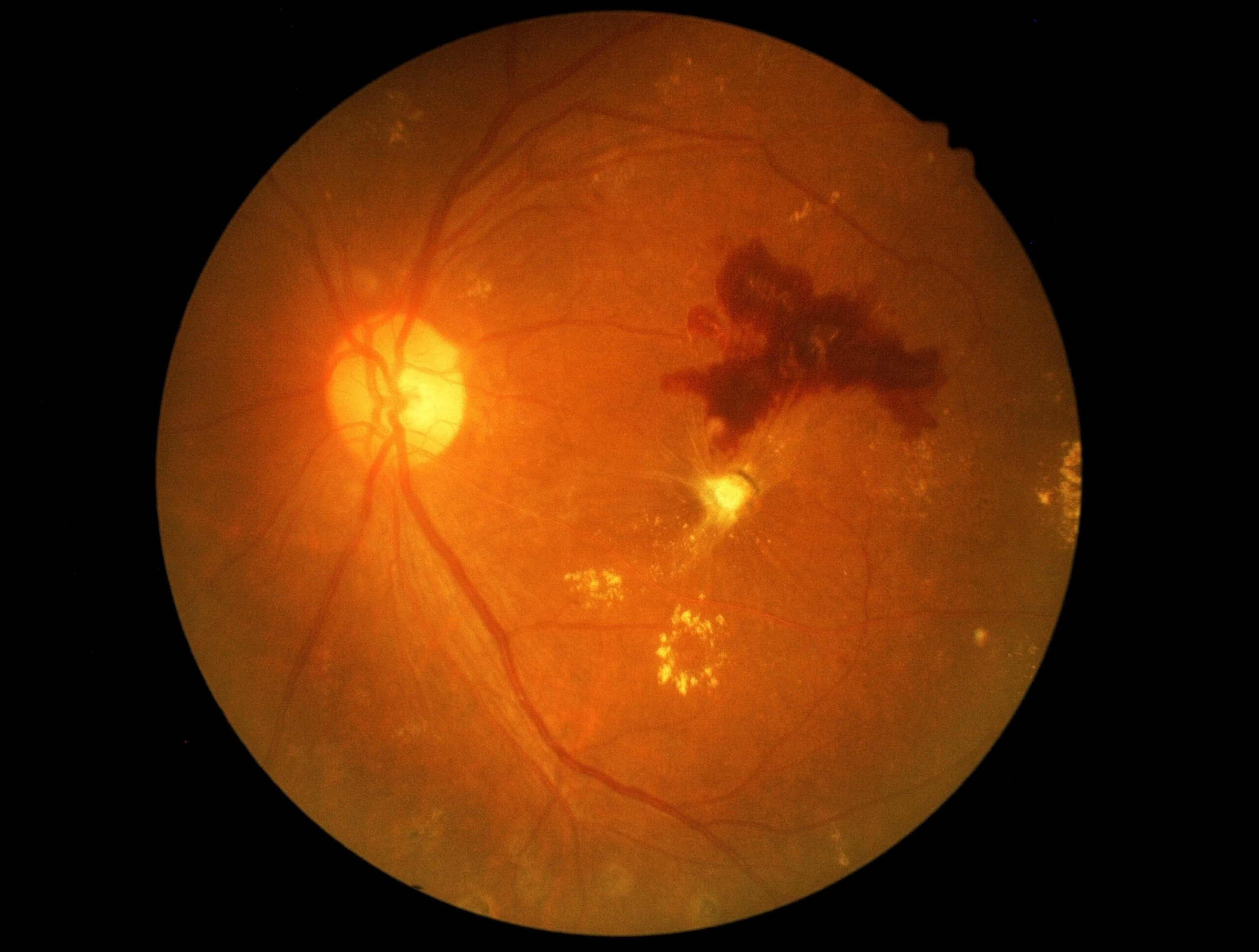
Age-related macular degeneration (AMD) is an eye disease that can blur your central vision. It occurs when aging damages the part of the eye that controls sharp, straight-ahead vision, called the macula. The macula is part of the retina, the light-sensitive tissue at the back of the eye. 

Age-related macular degeneration is a common condition and the most common cause of severe loss of eyesight among people 50 and older. It is important to note that people rarely go blind from it. However, losing your central vision makes it harder to see faces, read, drive, or do close-up work like cooking or fixing things around the house. 

There are two types of age-related macular degeneration: dry and wet. Most people with age-related macular degeneration have dry AMD, also called atrophic AMD. This is when the macular gets thinner with age. Dry AMD happens in three stages: 

  • Early 
  • Intermediate 
  • Late 

Wet AMD, also called advanced neovascular AMD, is a less common type of late AMD that causes faster vision loss. Dry AMD can turn into wet AMD at any stage; however, wet AMD always occurs in the late stage. 

The most common symptoms of age-related macular degeneration can include: 

  • Blurry or fuzzy vision 
  • Difficulty recognizing familiar faces 
  • Seeing straight lines appearing wavy 
  • A dark, empty area or blind spot appears in the center of a person’s vision 

The presence of tiny yellow deposits in the retina called drusen is one of the most common early signs of age-related macular degeneration. It can mean the eye is at risk of developing more severe age-related macular degeneration. 

Several risk factors that can contribute to developing age-related macular degeneration include: 

  • Eating a diet high in saturated fat 
  • Smoking 
  • High blood pressure or hypertension 

To diagnose age-related macular degeneration, an eye doctor will look at your medical history and perform an eye exam. They may also perform other tests to help diagnose AMD, including: 

  • A visual acuity test 
  • Pupil dilation 
  • Fluorescein angiography 
  • Amsler grid 

Specific treatment for age-related macular degeneration is determined by your eye doctor based on: 

  • Your age, overall health, and medical history 
  • The extent and nature of the disease 
  • Your tolerance for specific medications, procedures, or low-vision therapies 
  • The expectations for the course of the disease 
  • Your opinion or preference 

There is no current treatment for dry AMD; however, vision rehabilitation programs and low-vision devices can be used to build visual skills, develop new ways to perform daily living activities, and adjust to living with age-related macular degeneration. 

The main treatment for wet AMD is an injection of medications called anti-VEGF agents. VEGF stands for vascular endothelial growth factor. 

There is no cure for age-related macular degeneration. However, research shows that you may be able to lower your risk of AMD, or slow vision loss from AMD by: 

  • Quitting smoking 
  • Getting regular exercise 
  • Maintaining healthy blood pressure and cholesterol levels 
  • Eating healthy foods that include leafy green vegetables and fish 

AMD happens very slowly in some people and faster in others. If you have early AMD, you may not notice vision loss for a long time. It is important to get regular eye exams to find out if you have AMD. 

If you’re experiencing symptoms of dry or wet AMD, you can schedule an appointment at Jamaica Hospital Medical Center’s Ophthalmology Center by calling (718) 206-5900. 


All content of this newsletter is intended for general information purposes only and is not intended or implied to be a substitute for professional medical advice, diagnosis or treatment. Please consult a medical professional before adopting any of the suggestions on this page. You must never disregard professional medical advice or delay seeking medical treatment based upon any content of this newsletter. PROMPTLY CONSULT YOUR PHYSICIAN OR CALL 911 IF YOU BELIEVE YOU HAVE A MEDICAL EMERGENCY.

Jamaica Hospital Offers Coordinated Care for Diabetics at St. Albans Center

According to the most recent data from the American Diabetes Association, nearly 30 million Americans are living with diabetes, many of whom are undiagnosed. Diabetes is a serious condition that if not managed properly can lead to a variety of health problems and it is the seventh leading cause of death in the United States.

Diabetes diagnosis. Stamp, stethoscope, syringe, blood test and

For many diabetics, living with the disease means juggling medical appointments with various specialists to help them manage their condition. To help those living with diabetes in our community properly maintain their health, Jamaica Hospital has coordinated many services under one roof. The hospital’s MediSys Family Care Center in St Albans recently added ophthalmology, podiatry, and nutritional counseling to its list of services and a schedule was created so that each service would be available on the same day, allowing patients to easily go from one appointment to the next without leaving the building.

DIABETES AND OPTHALMOLOGY
Diabetes can lead to a variety of vision problems. One of the most common diabetic-related eye disorders is glaucoma. People with diabetes are 40% more likely to suffer from glaucoma than people without diabetes. In addition, diabetics are 60% more likely to develop cataracts. If left untreated, these issues can become serious and can even lead to blindness.

DIABETES AND PODIATRY
Uncontrolled diabetes can damage the nerves in your extremities, especially in your feet. This lack of feeling is called sensory diabetic neuropathy. Diabetes also affects the flow of blood. Without good blood flow, it takes longer for a sore or cut to heal. If you have an infection that will not heal because of poor blood flow, you are at risk for developing ulcers or gangrene. For people with diabetes common foot problems can possibly lead to infection and serious complications, including amputation.

DIABETES AND NUTRITION
Healthy eating habits can help keep blood glucose, also called blood sugar, within target range. A nutritionist can help diabetics by teaching them what to eat, how much to eat, and when to eat. For those with diabetes, a proper diet can improve their overall health and reduce the risk of heart disease, stroke and other conditions caused by diabetes.

“We are happy to provide all of these services to our diabetic patients under one roof, especially on the same day” stated Dr. Nicholas Pantaleo Medical Director of the site. “By creating this comprehensive range of services, we are helping those living with diabetes better maintain their health. Our goal is to improve the health of our community and we hope that this coordination of services helps us achieve that goal.”

For more information about the full range of diabetes services at Jamaica Hospital’s MediSys St Albans Family Care Center, including hours of operation, please call 718-206-9888.

All content of this newsletter is intended for general information purposes only and is not intended or implied to be a substitute for professional medical advice, diagnosis or treatment. Please consult a medical professional before adopting any of the suggestions on this page. You must never disregard professional medical advice or delay seeking medical treatment based upon any content of this newsletter. PROMPTLY CONSULT YOUR PHYSICIAN OR CALL 911 IF YOU BELIEVE YOU HAVE A MEDICAL EMERGENCY.