The Mako SmartRobotics Surgical Platform At Jamaica Hospital

Jamaica Hospital Medical Center is proud to introduce the innovative Mako SmartRobotics surgical platform to our Department of Orthopedic Surgery. This state-of-the-art advancement in joint replacement surgery transforms the way total knee, partial knee, and total hip replacements are performed, resulting in better outcomes for our patients.

Mako SmartRobotics uses 3D CT-based planning. To get a detailed three-dimensional model of the surgical area prior to surgery. This allows the surgeon to receive the most accurate images of the joint and surrounding area.  “Through the use of 3D-CT-based planning, we know more about my patients prior to surgery than ever before. This increased knowledge allows our surgeons to make fewer and smaller incisions, resulting in less soft tissue damage for some patients or greater bone preservation for others.” stated Dr. Sanjit Konda, Chairman of Orthopedic Surgery at Jamaica Hospital “Mako’s 3D CT provides me the opportunity to create a personalized plan based on each patient’s unique anatomy before entering the operating room. During surgery, we can validate that plan and make any necessary adjustments while guiding the robotic arm to execute that plan. It’s exciting to be able to offer this transformative technology across the joint replacement service line.”

According to the American Joint Replacement Registry, over 2.2 million hip and knee replacement surgeries are performed in the United States every year and those numbers are projected to increase. The most common reasons someone receives either hip or knee replacement surgery include joint destruction due to arthritis, wear and tear, or a fracture due to injury.  Unfortunately, the increase in joint replacement procedures coincides with a growing number of patients dissatisfied with the results of conventional hip and knee replacement surgery. Some of the most common complaints shared by patients are high levels of pain, increased hospital length of stay, a long rehabilitation process, and restricted flexibility. The Mako SmartRobotics surgical system addresses these issues as patients have reported experiencing less pain, less need for inpatient physical rehabilitation, shorter hospital stays, greater flexibility, and greater soft tissue protection.

The addition of the Mako system is the latest advancement for the Department of Orthopedic Surgery at Jamaica Hospital. “We are proud to offer this highly advanced SmartRobotics technology in our area,” said Dr Konda. “This addition to our orthopedic service line further demonstrates our commitment to provide our community with the highest quality care.”

All content of this newsletter is intended for general information purposes only and is not intended or implied to be a substitute for professional medical advice, diagnosis or treatment. Please consult a medical professional before adopting any of the suggestions on this page. You must never disregard professional medical advice or delay seeking medical treatment based upon any content of this newsletter. PROMPTLY CONSULT YOUR PHYSICIAN OR CALL 911 IF YOU BELIEVE YOU HAVE A MEDICAL EMERGENCY.

Allergic Asthma Testing and Management

Allergic asthma, or allergy-induced asthma, is a type of asthma that is triggered or made worse by allergies. Exposure to allergens (e.g., pollen, dander, mold, etc.) or irritants to which patients are sensitized may increase asthma symptoms and precipitate asthma exacerbations in patients who have asthma. Asthma and allergies often go hand in hand. In fact, up to 90 percent of children and 60 percent of adults with asthma suffer from allergies

With allergic asthma, medical history is often not enough to make an accurate allergy diagnosis. For example, a patient can present with a history indicative of house dust mite or cat allergy but actually not be sensitized. Identifying and reducing exposure to allergens to which patients are sensitized can reduce the risk of induced asthma exacerbations, particularly in the case of house dust mite sensitization.

It is also important to identify and treat other allergic conditions. For example, both allergic rhinitis and non-allergic rhinitis are risk factors for the development of asthma. More than 80 percent of people with asthma also suffer from rhinitis, suggesting the concept of “one airway, one disease.” The presence of allergic rhinitis commonly exacerbates asthma, increasing the risk of asthma attacks, emergency visits, and hospitalizations for asthma.

A blood test—together with an allergy-focused medical history—may help identify underlying allergen triggers.  A specific IgE test is a powerful allergy diagnostic tool that measures the concentration of specific IgE antibodies in the blood. It can test for hundreds of allergic triggers, such as pollen, mold, food, and animal dander.

To schedule a blood test with a Family Medicine doctor at Jamaica Hospital Medical Center, please call (718) 206-6942.

All content of this newsletter is intended for general information purposes only and is not intended or implied to be a substitute for professional medical advice, diagnosis or treatment. Please consult a medical professional before adopting any of the suggestions on this page. You must never disregard professional medical advice or delay seeking medical treatment based upon any content of this newsletter. PROMPTLY CONSULT YOUR PHYSICIAN OR CALL 911 IF YOU BELIEVE YOU HAVE A MEDICAL EMERGENCY.
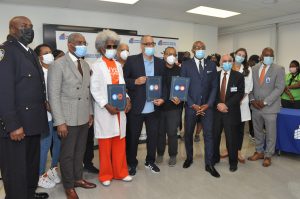
Jamaica Hospital Signs Formal Agreements With Local Cure Violence Groups To Help End Gun Violence In Our Community

On Monday, June 13th, Jamaica Hospital Medical Center held an important event to address the gun violence epidemic in our community.

On that date, the hospital signed official partnerships with three members of The NYC Crisis Management System – King of Kings, Life Camp, and Rock Safe Streets as part of its commitment to end gun violence in our community. The objective of the landmark agreement is for all involved to work together to prevent violence and assist in protecting the health of patients and community members.

According to the formal collaboration, Jamaica Hospital will designate employees who will support the provision of anti-violence and violence interruption services by responding to referrals of traumas associated with gun violence. These designated employees will also assist in coordinating the visitation of Responders (individuals appointed by Cure Violence groups) with patients and loved ones, with their consent and as authorized by the law.

Responders’ duties include conducting follow-up visits during the inpatient stay with identified hospital patients, upon a determination by Jamaica Hospital that the patient is stable. Responders will provide supportive services such as mediation, conflict resolution, and service referrals to assist in the prevention of re-injury to these patients or to prevent retaliation connected to gun violence incidents.

Participating in the event were many local elected officials including Congressman Gregory Meeks, Queens District Attorney Melinda Katz, Queens Borough President Donovan Richards, Senator Leroy Comrie, and Chief Kevin Williams, NYPD Patrol Borough Queens South. Each official praised both Jamaica Hospital and the three members of The NYC Crisis Management System for working together to help end the gun violence crisis.

In addition, Dr. Katherine McKenzie addressed the audience to share information about Jamaica Hospital’s existing Violence Elimination and Trauma Outreach (VETO) program, which aimed to provide support for victims of gun violence as well as the hospital’s plans to create a dedicated center where gun violence victims can have all their clinical and social needs met as part of our Trauma Healing & Recovery Integrative Violence Elimination (THRIVE) Survivor Center.

After the presentation, Jamaica Hospital Medical Center President & CEO, Bruce Flanz signed formal Memos of Understanding to officially mark the occasion.

The event received significant media attention. To see the press clips, please click on the links below:

All content of this newsletter is intended for general information purposes only and is not intended or implied to be a substitute for professional medical advice, diagnosis or treatment. Please consult a medical professional before adopting any of the suggestions on this page. You must never disregard professional medical advice or delay seeking medical treatment based upon any content of this newsletter. PROMPTLY CONSULT YOUR PHYSICIAN OR CALL 911 IF YOU BELIEVE YOU HAVE A MEDICAL EMERGENCY.

Tick-Borne Diseases

With summer in full swing, we will be spending more time participating in activities outdoors in areas such as parks, forests, and hiking trails.  While getting out and keeping physically fit is strongly encouraged it is important to keep in mind that being in these areas can put you at risk for tick-borne diseases such as Lyme disease.

Lyme disease is the most common tick-borne infection in New York City and in the United States.  On the east coast, Lyme disease is spread by the bite of a black-legged tick infected with the bacterium Borrelia burgdorferi.  Not all black-legged ticks carry this bacterium and, even if they are infected, they must be attached for at least 36 – 48 hours after a person is bitten to transmit the disease.

Although Lyme disease is common, it is not the only tick-borne disease to be wary of; other diseases include tularemia, babesiosis, ehrlichiosis, Rocky Mountain Spotted Fever, Southern Tick-Associated Rash Illness, Tick-Borne Relapsing Fever, and anaplasmosis.

The best way to avoid contracting Lyme disease and other tick-borne diseases is to avoid direct contact with ticks.  You can do this by avoiding wooded and brushy areas, and high grass.

The Centers for Disease Control and Prevention (CDC) also recommends the following to reduce exposure to ticks:

  • Wear a hat and light-colored clothing, including long-sleeved shirts and long pants tucked into boots or socks.
  • Use Environmental Protection Agency (EPA)-registered insect repellents containing DEET, picaridin, IR3535, Oil of Lemon Eucalyptus (OLE), para-menthane-diol (PMD), or 2-undecanone
  • Check your skin and clothes for ticks
  • Remember to check your hair, underarms, and groin for ticks.

Some of the tips to find and remove ticks from your body and clothing are:

  • Take a shower soon after returning indoors. If you wash within two hours of returning indoors, the ticks are more easily found and washed off your body.
  • Once you are indoors, take your clothing and place them in the wash using hot water and then put them in the dryer on “high” for at least 10 minutes; if the clothes were washed in cold water, place them in the dryer on “high” for at least 90 minutes

If you have been bitten, please consult a doctor immediately. Tick-borne diseases that are left untreated can cause arthritis, facial palsy, and nervous system problems. To schedule an appointment with a doctor at Jamaica Hospital Medical Center, please call 718-206-7001.

All content of this newsletter is intended for general information purposes only and is not intended or implied to be a substitute for professional medical advice, diagnosis or treatment. Please consult a medical professional before adopting any of the suggestions on this page. You must never disregard professional medical advice or delay seeking medical treatment based upon any content of this newsletter. PROMPTLY CONSULT YOUR PHYSICIAN OR CALL 911 IF YOU BELIEVE YOU HAVE A MEDICAL EMERGENCY.

Cannabis: Driving Under The Influence

The New York State Office of Cannabis Management states, “Cannabis is legal in New York for adults 21 and older.”

Cannabis or marijuana refers to the dried leaves, stems, flowers, or seeds of the Cannabis sativa plant.  It contains the psychoactive or mind-altering chemical tetrahydrocannabinol (THC) and the non-psychoactive cannabidiol (CBD).

Although the use of cannabis is permissible for adults 21 and older, that does not mean it can be smoked or consumed anywhere you want.  Cannabis must be used responsibly and according to law.

According to the NYS Office of Cannabis Management, “Cannabis can be consumed in a private home or at a state-licensed on-site consumption site (coming soon). The smoking of cannabis is prohibited anywhere smoking tobacco is prohibited.”

It is also illegal to drive while under the influence of marijuana. There is a direct link between THC blood level concentration and impaired driving. THC can impair important skills needed to drive safely.  It is known to distort perception, and slow motor coordination and reaction times.

In addition to impairing driving abilities, the use of cannabis can have negative health effects. Some of which are:

  • Hallucinations
  • Psychosis
  • Impaired memory
  • Difficulty thinking and problem solving
  • Increased heart rate
  • Breathing problems
  • Changes in mood
  • Headaches
  • Fatigue
  • Severe nausea and vomiting

Cannabis affects everyone differently. Therefore, it should never be used before driving, operating heavy machinery, or making important decisions. The NYS Office of Cannabis Management also recommends that those who are, “pregnant or breast feeding, have been diagnosed or are predisposed to having a serious mental illness, have a history of respiratory or cardiovascular illness, or are currently taking any prescription medication,” consult a physician before consuming.

To schedule an appointment with a doctor at Jamaica Hospital Medical Center, please call 718-206-7001.

All content of this newsletter is intended for general information purposes only and is not intended or implied to be a substitute for professional medical advice, diagnosis or treatment. Please consult a medical professional before adopting any of the suggestions on this page. You must never disregard professional medical advice or delay seeking medical treatment based upon any content of this newsletter. PROMPTLY CONSULT YOUR PHYSICIAN OR CALL 911 IF YOU BELIEVE YOU HAVE A MEDICAL EMERGENCY.

Learning The Facts About Aphasia

Aphasia is a neurological condition that can affect your speech, as well as your ability to write and understand both spoken and written language.

Aphasia typically occurs after a stroke or a head injury, but it can also have a gradual onset as the result of a slow-growing brain tumor or a disease that causes degenerative damage. Sometimes temporary episodes of aphasia can occur. These can be due to migraines, seizures or a transient ischemic attack (TIA). A TIA occurs when blood flow is temporarily blocked to an area of the brain.

The severity of aphasia varies depending on the cause and the extent of the brain damage.

Some of the symptoms of aphasia include:

  • Speaking in short or incomplete sentences
  • Speaking in sentences that don’t make sense
  • Substituting one word for another or one sound for another
  • Using unrecognizable words
  • Not understanding conversations
  • Writing sentences that don’t make sense

Aphasia can create numerous quality-of-life problems because communication is so much a part of your life. Communication difficulty may affect your job, relationships, and general day-to-day functionality.  Communication difficulties can also lead to feelings of shame and depression.

Once the cause has been addressed, the main treatment for aphasia is speech and language therapy. The person with aphasia relearns and practices language skills and learns to use other ways to communicate. Family members often participate in the process, helping the person communicate.

Because aphasia is often a sign of a serious problem, such as a stroke, seek emergency medical care if you suddenly develop any symptoms.

All content of this newsletter is intended for general information purposes only and is not intended or implied to be a substitute for professional medical advice, diagnosis or treatment. Please consult a medical professional before adopting any of the suggestions on this page. You must never disregard professional medical advice or delay seeking medical treatment based upon any content of this newsletter. PROMPTLY CONSULT YOUR PHYSICIAN OR CALL 911 IF YOU BELIEVE YOU HAVE A MEDICAL EMERGENCY.

Meet Dr. Mina Guerges

Jamaica Hospital Medical Center would like to introduce vascular surgeon Dr. Mina Guerges to our community.

Vascular surgeons are physicians who specialize in treating diseases of the vascular system, also known as the circulatory system.  Diseases of the vascular system include atherosclerosis, carotid artery disease, and peripheral artery disease.

Dr. Guerges is highly trained and skilled in performing minimally invasive endovascular and open-ended procedures.  He received his bachelor’s degree from the University of South Florida and his medical degree from the Ross University School of Medicine.  Dr. Guerges completed his general surgery residency at the St. Joseph Mercy Hospital and his vascular surgery fellowship at Staten Island University Hospital/Northwell.  He serves as a military surgeon in the United States Navy Reserves and is an active New York Police Department trooper surgeon.  Dr. Guerges is RPVI certified and is an active member of the American Board of Surgery as well as the Society of Vascular Surgeons.

Dr. Guerges’ specialties include treating lower extremity peripheral artery disease, carotid stenosis, abdominal aortic aneurysms, and other conditions that affect the vascular system.  He takes great pride in building relationships and helping patients beyond surgery by applying a holistic approach to treatment.  This involves identifying risk factors that can lead to vascular diseases such as diabetes and hypertension and working with patients to develop a lifestyle plan that addresses these issues and ensures long-term success.

“Vascular disease is prevalent in our community. Therefore, it is important that I educate patients about their risk for developing preventable diseases,” shares Dr. Guerges. He also believes that it is important to collaborate with physicians of other specialties such as podiatrists and neurologists to lower the risk for disease and avoid serious problems such as stroke or leg amputation.  “By working together we can create the best plan of treatment to achieve optimal results for our patients.”

Dr. Guerges is extremely happy to join the vascular surgery team at Jamaica Hospital.  He treats patients at 134-20 Jamaica Avenue as well as the hospital’s Ambulatory Care Center. To schedule an appointment, please call 718-206-8755 or 718-206-7001.

All content of this newsletter is intended for general information purposes only and is not intended or implied to be a substitute for professional medical advice, diagnosis or treatment. Please consult a medical professional before adopting any of the suggestions on this page. You must never disregard professional medical advice or delay seeking medical treatment based upon any content of this newsletter. PROMPTLY CONSULT YOUR PHYSICIAN OR CALL 911 IF YOU BELIEVE YOU HAVE A MEDICAL EMERGENCY.

Community Health Needs Assessment Survey

In collaboration with hospitals across the state, the MediSys Health Network (Jamaica and Flushing Hospital Medical Center) is conducting a Community Health Needs Assessment survey to determine the most important health concerns of the community, and we would greatly appreciate your input.

The Community Health Needs Assessment survey will assist in the development of a plan that involves many community partners to improve the health of our community. The results of this survey are very important as they can also impact funding, spending, and other wide-reaching decisions about healthcare delivery systems.

The survey is open to all community members residing in New York. To access it, please click here, and share what issues matter to you most.  Please share the survey with family, friends, and others so that their input can be heard. All responses are confidential.

Thank you for your time and for helping us gain valuable insights into the needs of the community.

All content of this newsletter is intended for general information purposes only and is not intended or implied to be a substitute for professional medical advice, diagnosis or treatment. Please consult a medical professional before adopting any of the suggestions on this page. You must never disregard professional medical advice or delay seeking medical treatment based upon any content of this newsletter. PROMPTLY CONSULT YOUR PHYSICIAN OR CALL 911 IF YOU BELIEVE YOU HAVE A MEDICAL EMERGENCY.

April is Testicular Cancer Awareness Month

The month of April has been designated as Testicular Cancer Awareness Month.  This is a disease where cancer cells form in one or both testicles. The average age of detection is 33 years old. The American Cancer Society estimates that 8,430 new cases are diagnosed each year and more than 380 men will die from the disease. It is considered to be a highly treatable disease, with an average of one death per 5,000 men.

There are a few risk factors for testicular cancer:

  • Family history
  • History of HIV positivity
  • Races – Caucasian American males are at the highest risk followed by African American males than Asian American males
  • Body size – tall slender males are at higher risk
  • History of an undescended testicle

The signs and symptoms of testicular cancer include:

  • A lump or swollen testicles
  • Loss of sex drive
  • Back pain
  • Breast growth or tenderness
  • Pre puberty growth of hair on face and body
  • Aches in the belly or testicles

Diagnosing testicular cancer is done by performing a physical exam as well as an ultrasound to detect whether a mass is solid ( more likely to be cancerous ) or fluid-filled, a blood test to detect certain proteins, a biopsy to see if there are cancerous cells present, and an MRI or Cat Scan to see if cancer has spread.

Treatment of testicular cancer is determined based on what is found at the time of diagnostic testing. Typically surgery to remove the affected testicle(s), as well as radiation and chemotherapy, are needed.

Testicular cancer is highly treatable if caught early. If you would like to schedule an appointment with a urologist at Jamaica Hospital Medical Center, please call 718-206-7001.

All content of this newsletter is intended for general information purposes only and is not intended or implied to be a substitute for professional medical advice, diagnosis or treatment. Please consult a medical professional before adopting any of the suggestions on this page. You must never disregard professional medical advice or delay seeking medical treatment based upon any content of this newsletter. PROMPTLY CONSULT YOUR PHYSICIAN OR CALL 911 IF YOU BELIEVE YOU HAVE A MEDICAL EMERGENCY.

Sleep Awareness Week

The keys to a healthy lifestyle are eating right, exercise, and what’s the third thing?  Oh yes, sleep. While we give a great deal of attention to the first two, the importance of a good night’s sleep is often overlooked.

Serene woman sleeping at night

March 13th through the 19th  has been designated Sleep Awareness Week and Jamaica Hospital Medical Center and the National Sleep Foundation (NSF) want to raise awareness and educate the community about how important sleep is to each and every one of us. While most of us understand the importance of getting a good night’s sleep, we often do not make sleep a priority.

There are many health benefits that sleep can provide. Sleep aids our heart, brain, lungs, and muscles to function properly.  Additional benefits include:

  • Improved immunity
  • Decreased pain
  • Increased alertness
  • Lower risk of injury
  • Improved memory
  • Better mood

The NSF recommends that adults receive seven to nine hours of sleep each night. They also provide the following tips to ensure a restful night’s sleep.

  • Stick to a sleep schedule of the same bedtime and wake up time, even on the weekends.
  • Practice a relaxing bedtime ritual Try to separate your sleep time from activities that can cause excitement, stress or anxiety; a lot of which can make it more difficult to fall asleep.
  • If you have trouble sleeping, avoid naps, especially in the afternoon. Napping may help you during the daybut it can interfere with your ability to sleep at night
  • Avoid drinking any caffeinated beverages at least five to six hours before bed.
  • Exercise dailyVigorous exercise is best, but even light exercise is better than no activity.
  • Evaluate your sleep environmentRemove any noisy distractions, eliminate bright lights and set a comfortable temperature to optimize your sleep.
  • Sleep on a comfortable mattress and  Make sure your mattress is supportive.

If you still have trouble falling asleep or getting a restful night’s sleep, you should speak with your doctor as there may be an underlining medical issue. Jamaica Hospital operates a state-of-the-art sleep center that can help diagnose and treat a variety of sleep disorders. For more information, or to make an appointment, please call 718-206-5916.

All content of this newsletter is intended for general information purposes only and is not intended or implied to be a substitute for professional medical advice, diagnosis or treatment. Please consult a medical professional before adopting any of the suggestions on this page. You must never disregard professional medical advice or delay seeking medical treatment based upon any content of this newsletter. PROMPTLY CONSULT YOUR PHYSICIAN OR CALL 911 IF YOU BELIEVE YOU HAVE A MEDICAL EMERGENCY.