
Differences Between COVID PCR and Rapid Tests

What are some of the differences between a COVID PCR test and a rapid test?

Here are a few:

1. PCR or Polymerase chain reaction tests detect RNA ( the virus’ genetic material).
2. Rapid tests or antigen tests detect proteins on the surface of the virus called antigens.
3. A PCR test is considered to be highly accurate. It is the most sensitive test method available at this time.
4. According to the CDC, antigen test sensitivity “varies depending on the course of infection, but generally moderate-to-high at times of peak viral load.”
5. Most PCR test specimens are processed in a lab.
6. Rapid test samples are applied to a test strip.
7. The turnaround time for PCR test results on average can be 1- 3 days (This may vary depending on a facility’s capacity to process specimens)
8. The turnaround time for rapid test results ranges from 15- 30 minutes.

Remember getting tested for COVID is very important to prevent the spread of the virus. If you are exhibiting any symptoms of COVID, you should get tested regardless of vaccination status.

All content of this newsletter is intended for general information purposes only and is not intended or implied to be a substitute for professional medical advice, diagnosis or treatment. Please consult a medical professional before adopting any of the suggestions on this page. You must never disregard professional medical advice or delay seeking medical treatment based upon any content of this newsletter. PROMPTLY CONSULT YOUR PHYSICIAN OR CALL 911 IF YOU BELIEVE YOU HAVE A MEDICAL EMERGENCY.

National Handwashing Awareness Week

The first week in December is marked as National Handwashing Awareness Week.

According to the Centers for Disease Control and Prevention (CDC), handwashing is one of the best “do-it-yourself” precautions to prevent infections —it involves five simple and effective steps (Wet, Lather, Scrub, Rinse, Dry).

Regular handwashing, particularly before and after certain activities can help us to reduce the spread of germs and several illnesses.

All content of this newsletter is intended for general information purposes only and is not intended or implied to be a substitute for professional medical advice, diagnosis or treatment. Please consult a medical professional before adopting any of the suggestions on this page. You must never disregard professional medical advice or delay seeking medical treatment based upon any content of this newsletter. PROMPTLY CONSULT YOUR PHYSICIAN OR CALL 911 IF YOU BELIEVE YOU HAVE A MEDICAL EMERGENCY.

GERD Awareness Week

Perhaps there is no other day of the year associated with eating more than Thanksgiving. With so much attention being paid to food consumption, it is fitting that this week we also raise awareness about a health condition that affects the digestive system.

November 21-27, 2021 has been designated Gastroesophageal Reflux Disease (or GERD) Awareness Week. GERD, is a very common disorder that occurs when stomach acid or bile flows into the food pipe and irritates the lining.

After it is swallowed, food travels down the esophagus where it stimulates cells in the stomach to produce acid and pepsin (an enzyme), which aid the digestion process. A band of muscle at the lower part of the esophagus, called the lower esophageal sphincter (LES), acts as a barrier to prevent the back-flow. Gastroesophageal reflux occurs when the LES is weak or relaxes inappropriately, allowing the stomach’s contents to flow up into the esophagus.

Chronic heartburn is the most frequently reported symptom of GERD. Acid regurgitation (refluxed acid into the mouth) is another common symptom. Other symptoms can include belching, difficulty or pain when swallowing, or waterbrash (sudden excess of saliva). GERD may also lead to chronic sore throat, laryngitis, throat clearing, chronic cough, and other oral complaints such as inflammation of the gums and erosion of the enamel of the teeth.

Dietary and lifestyle choices can contribute to GERD. Certain foods and beverages, including chocolate, peppermint, fried or fatty foods, coffee, or alcohol may trigger reflux. Studies show that smoking can relax the LES and contribute to this condition. People who are obese are more prone to developing GERD symptoms.

Doctors recommend lifestyle and dietary changes for most people needing treatment for GERD. Along with lifestyle and diet changes, your doctor may also recommend over-the-counter remedies, or, in serious cases, prescribe medications designed to reduce acid in the stomach.

To speak to a doctor about treating your GERD, please call Jamaica Hospital’s Ambulatory Care Center at 718-206-7001.

All content of this newsletter is intended for general information purposes only and is not intended or implied to be a substitute for professional medical advice, diagnosis or treatment. Please consult a medical professional before adopting any of the suggestions on this page. You must never disregard professional medical advice or delay seeking medical treatment based upon any content of this newsletter. PROMPTLY CONSULT YOUR PHYSICIAN OR CALL 911 IF YOU BELIEVE YOU HAVE A MEDICAL EMERGENCY.

Down Syndrome Awareness Month

October is Down Syndrome Awareness Month and Jamaica Hospital Medical Center is spreading awareness by sharing important facts about the disorder with our community.

Down syndrome, also called Trisomy 21, is the most common chromosomal condition in the United States. According to the Centers for Disease Control and Prevention (CDC), approximately one in every 700 babies in the U.S.  is born with Down syndrome.  

Typically, at the time of conception, a fetus receives genetic information from both parents in the form of 46 chromosomes.  Down syndrome occurs when the fetus receives an extra copy of a chromosome; resulting in 47 chromosomes.  This extra chromosome affects the way a baby develops physically and mentally.   Some of the physical features and developmental problems associated with Down syndrome include:

  • Flattened face
  • Small head
  • Upward slanting eyelids
  • Unusually shaped or small ears
  • Protruding tongue
  • Short height
  • Language delay
  • Mild to moderate cognitive impairment

Every baby born with Down syndrome is different.  Each child will have physical or intellectual disabilities that are unique to their condition.  Parents of babies born with Down syndrome are advised to enroll their children into early- intervention services such as speech therapy or occupational therapy as soon as possible.  These services can help to encourage or accelerate the child’s development.

The most commonly known risk factor linked to Down syndrome is a mother’s age.  Women over the age of 35 have a significantly higher risk of having a child with this condition.  Those with an increased risk are encouraged to consult a genetic counselor to discuss screening options.

All content of this newsletter is intended for general information purposes only and is not intended or implied to be a substitute for professional medical advice, diagnosis or treatment. Please consult a medical professional before adopting any of the suggestions on this page. You must never disregard professional medical advice or delay seeking medical treatment based upon any content of this newsletter. PROMPTLY CONSULT YOUR PHYSICIAN OR CALL 911 IF YOU BELIEVE YOU HAVE A MEDICAL EMERGENCY.

Adult ADHD

Attention Deficit Hyperactivity Disorder (ADHD) is a common neurodevelopmental disorder.

Most people associate ADHD with children who have trouble focusing, are overly active or have difficulty controlling impulsive behaviors.  While ADHD does commonly affect children, it can also occur in adults. In fact, it is estimated that 4% to 5% of adults living in the United States have the disorder.

ADHD begins in childhood and can continue into adulthood. However, many adults are unaware that they have ADHD. This is because the disorder was never recognized or diagnosed during childhood.

In adults, the symptoms of ADHD may present differently than they do in children and are unique to each person. They can include:

  • Anxiety
  • Trouble coping with stress
  • Poor listening skills
  • Getting easily distracted
  • Difficulty paying close attention to details
  • Struggling to complete tasks or multitask
  • Poor organizational skills
  • An inability to control impulses i.e., Interrupting others during conversations
  • Acting without consideration for others
  • Frequent mood swings
  • Forgetfulness
  • Often losing things i.e., keys, phones, wallets

These symptoms can interfere significantly with an individual’s relationships, career, finances and other aspects of daily life.

With an accurate diagnosis, symptoms of adult ADHD can be treated or managed appropriately to reduce the risk of developing social, emotional, or occupational problems.

To accurately diagnose ADHD in adults, the American Psychiatric Association recommends a comprehensive evaluation which typically includes a review of past and current symptoms, a medical exam and history, and use of adult rating scales or checklists.

Treatment for adult ADHD typically involves education ( learning more about ADHD), medication,  therapy and other behavioral treatments, or a combination of methods.

If you are experiencing symptoms associated with adult ADHD, you should speak with a doctor. To schedule an appointment with a doctor at Jamaica Hospital Medical Center, please call 718-206-7001.

All content of this newsletter is intended for general information purposes only and is not intended or implied to be a substitute for professional medical advice, diagnosis or treatment. Please consult a medical professional before adopting any of the suggestions on this page. You must never disregard professional medical advice or delay seeking medical treatment based upon any content of this newsletter. PROMPTLY CONSULT YOUR PHYSICIAN OR CALL 911 IF YOU BELIEVE YOU HAVE A MEDICAL EMERGENCY.

Swimmers Ear

Swimmer’s ear is a bacterial infection that affects the outermost portion of the ear canal. A common cause is the accumulation of water in this portion of the canal which leads to a bacterial infection. It can also be caused by the insertion of unclean foreign objects into the ear that irritate the lining of the ear canal.


Signs and symptoms of swimmer’s ear are:
• Redness in the ear canal
• Itchiness in the ear
• Fluid discharge which may include pus
• Muffled hearing
• Sensation of fullness in the ear
• Fever if the infection is severe


A few factors that can make a person more susceptible to swimmer’s ear are:
• Swimming in water that isn’t clean
• Having a narrow ear canal
• Abrasion of the ear canal by improper use of a cotton swab
• Reduced production or improper removal of ear wax


It is important to treat swimmer’s ear as soon as possible in order to prevent serious complications such as hearing loss. Depending on the severity of the problem, treatment options are ear drops containing antibiotics,  steroid, and a mild acidic solution.  Have your physician evaluate the problem as soon as possible. If you would like to make an appointment with a physician at Jamaica Hospital, please call 718-206-7001.

All content of this newsletter is intended for general information purposes only and is not intended or implied to be a substitute for professional medical advice, diagnosis or treatment. Please consult a medical professional before adopting any of the suggestions on this page. You must never disregard professional medical advice or delay seeking medical treatment based upon any content of this newsletter. PROMPTLY CONSULT YOUR PHYSICIAN OR CALL 911 IF YOU BELIEVE YOU HAVE A MEDICAL EMERGENCY.
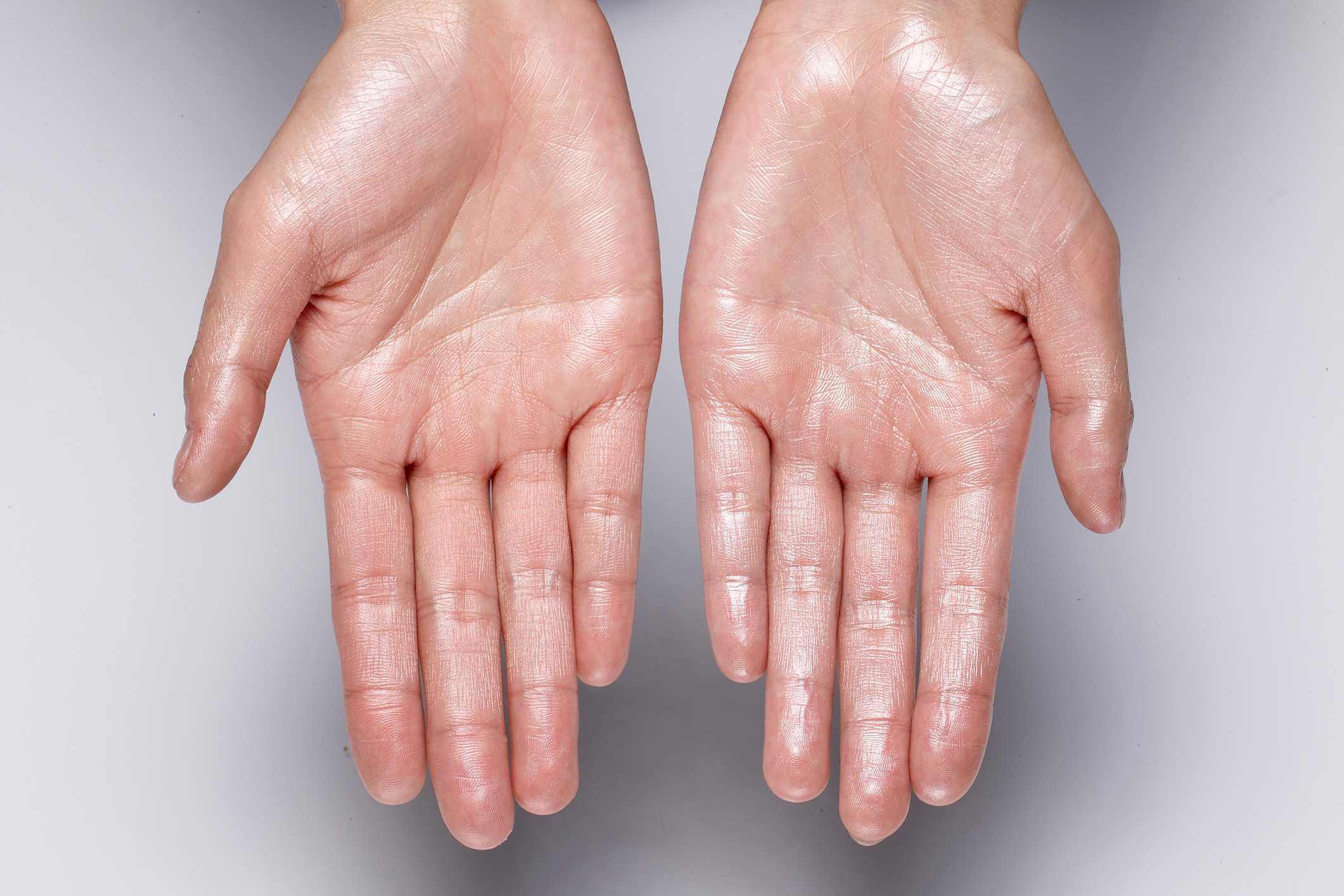
Sweaty Palms

Having your palms sweat as a nervous response to a stressful situation is something that most people have experienced at some point in their lives, but for some, sweaty palms (or palmar hyperhidrosis), is a chronic condition that can cause great embarrassment and interfere with their day to day existence.

Palmar hyperhidrosis affects approximately 1 to 3 percent of Americans, but researchers believe that this number is low because many are unaware that it is a medical condition and never report it to their doctor.

This condition is part of a family of disorders called primary focal hyperhidrosis, which can affect other parts of the body including the armpits, scalp, and feet. These conditions are usually not caused by an underlying medical issue and are unlike secondary hyperhidrosis, which is characterized by excessive sweating that isn’t isolated to one area of the body and is usually the result of another medical problem.

While the exact cause of palmar hyperhidrosis is still unknown, many believe there is a genetic predisposition as many who have it also report a family history of the condition.

There are many treatment options for palmar hyperhidrosis, including:

  • Topical aluminum chloride – One of the most common treatments for palmar hyperhidrosis. This solution is applied to the palms nightly until the condition improves and then used as needed.
  • Botox injections – This has proven to be an effective treatment for many forms of localized sweating, including the palms. The treatment is FDA-approved, but it can result in temporary weakness in the hands.
  • Iontophoresis – A treatment that involves placing your hands in a shallow bath of water that contains a mild electrical current. This medical device can cost over $500 and may not be covered by all insurers.
  • Medications – Oral prescriptions called anticholinergics are sometimes prescribed if other treatment options aren’t successful, but these medications sometimes cause uncomfortable side effects.
  • Surgery – If all other measures fail, there are procedures where a surgeon can go into the chest and clip the nerves that are responsible for producing sweat. This can be a permanent solution but only used in extreme cases.

Speak to your doctor about what type of treatment option is best for you. If you would like to schedule an appointment with a doctor at Jamaica Hospital Medical Center, please call 718-206-7001.

All content of this newsletter is intended for general information purposes only and is not intended or implied to be a substitute for professional medical advice, diagnosis or treatment. Please consult a medical professional before adopting any of the suggestions on this page. You must never disregard professional medical advice or delay seeking medical treatment based upon any content of this newsletter. PROMPTLY CONSULT YOUR PHYSICIAN OR CALL 911 IF YOU BELIEVE YOU HAVE A MEDICAL EMERGENCY.

World Hepatitis Day

In 2010 the World Health Organization ( W.H.O. ) designated July 28th as World Hepatitis Day. This serves to increase awareness about viral hepatitis and to influence change in disease prevention, testing, and treatment.

Hepatitis is a virus that causes inflammation of the liver. The liver is an organ in the body that processes nutrients, filters the blood, and fights infections.

The most common forms of hepatitis are A, B, and C. Hepatitis B and C kill close to 1.4 million people each year and cause almost 80 percent of all liver cancer cases. Many people have the hepatitis virus and are unaware of it.
Symptoms of acute hepatitis B include:
• Fever
• Nausea
• Loss of appetite
• Jaundice
• Abdominal pain
• Fatigue

Hepatitis is spread from person to person through contact with bodily fluids. It is possible that people remain without symptoms for many years but during this time the disease is slowly destroying the liver. It can take many years for the symptoms to appear.

Blood tests are available that can detect the virus at an early stage.
Ways to reduce infection:
• Use only sterile equipment for injections
• Test all donated blood for hepatitis
• Practice safe sex
• Encourage people to get the hepatitis B vaccine

Medication exists that can cure hepatitis C and can control hepatitis B infection. When given properly, people are less likely to die from liver cancer and cirrhosis and also are less likely to transmit the disease to others. The hepatitis B vaccine is given in three doses over a six-month period and it is recommended that it be initiated right after birth if possible.

To make an appointment with a physician at Jamaica Hospital to discuss the vaccine, please call 718-206-7001.

All content of this newsletter is intended for general information purposes only and is not intended or implied to be a substitute for professional medical advice, diagnosis or treatment. Please consult a medical professional before adopting any of the suggestions on this page. You must never disregard professional medical advice or delay seeking medical treatment based upon any content of this newsletter. PROMPTLY CONSULT YOUR PHYSICIAN OR CALL 911 IF YOU BELIEVE YOU HAVE A MEDICAL EMERGENCY.

Jamaica Hospital Launches The VETO Anti-Gun Violence Program

Jamaica Hospital Medical Center is one of the busiest trauma centers in New York City and the five boroughs, and the only trauma center providing care for a large community in South Queens.  We are proud to be designated as a Level 1 Trauma Center by the American College of Surgeons, the highest designation level.  This means that our trauma center is prepared to provide emergent life-saving care to the most seriously injured patients 24 hours a day.

In the spring of 2020, while our community began to recover from the first surge of the COVID-19 pandemic, we noticed a disturbing trend, more and more patients were coming to Jamaica Hospital for firearm-related injuries.

We recognized the importance of expanding our efforts beyond patients’ medical needs to potentially impact other determinants of gun violence in our community.  By taking a true public health approach to gun violence, we can make a meaningful change in not only our patients’ lives but for all of Queens, as we work as a community to end gun violence.

With that, we are proud to announce Jamaica Hospital’s V.E.T.O program, for Violence Elimination and Trauma Outreach.

As our clinical group of trauma physicians and nurses focus on healing injuries, our team of social workers and case managers will focus on addressing non-medical determinants of health for gun violence survivors by providing violence intervention services and guidance to hospital and community resources.  We are fostering relationships with community organizations to provide additional support for gun violence survivors and their families and working to raise awareness on the epidemic of gun violence.

All content of this newsletter is intended for general information purposes only and is not intended or implied to be a substitute for professional medical advice, diagnosis or treatment. Please consult a medical professional before adopting any of the suggestions on this page. You must never disregard professional medical advice or delay seeking medical treatment based upon any content of this newsletter. PROMPTLY CONSULT YOUR PHYSICIAN OR CALL 911 IF YOU BELIEVE YOU HAVE A MEDICAL EMERGENCY.

What You Need To Know About The Delta Variant

It is common for viruses to change through mutation, and new variants of a virus are expected to occur. These variants can affect the strength, symptoms, or transmission rate of the virus. There have been multiple variants of the virus that causes COVID-19 identified in the United States and globally throughout this pandemic. One variant that you may be hearing more and more about is the Delta variant.

The highly transmissible delta variant of the COVID-19 virus was first identified in India and has now been reported in at least 104 countries. According to the Centers for Disease Control and Prevention (CDC), the Delta variant is now the dominant strain of the virus, representing 51.7% of new COVID cases in the United States as of the week of July 3.

The Delta variant is a cause of concern to health authorities because it is thought to be the most transmissible variant yet. According to the World Health Organization (WHO), the Delta variant is estimated to be approximately 55% more transmissible than the Alpha variant, which was first identified in Britain last year. Officials believe it is more contagious because of its ability to partially evade the antibodies made by the immune system after a coronavirus infection or vaccination.

Many health experts fear the variant will cause a surge in new cases this fall, hitting the unvaccinated the hardest. Currently, only 48% of adult Americans are fully vaccinated, well below the 70% most believe is needed to achieve herd immunity. In fact, areas in the U.S. with low vaccination rates are already beginning to see delta-driven outbreaks, and the number of COVID-19 cases has begun to climb again nationally.

The good news is that data suggests that several widely used shots, including those made by Pfizer-BioNTech, Moderna, Johnson & Johnson and AstraZeneca, appear to retain most of their effectiveness against the delta variant.

Jamaica Hospital urges everyone eligible to get vaccinated if they have not already done so.  Vaccination is the best way to stop the spread of all the variants and reduce the odds that new, even more, dangerous variants emerge.

All content of this newsletter is intended for general information purposes only and is not intended or implied to be a substitute for professional medical advice, diagnosis or treatment. Please consult a medical professional before adopting any of the suggestions on this page. You must never disregard professional medical advice or delay seeking medical treatment based upon any content of this newsletter. PROMPTLY CONSULT YOUR PHYSICIAN OR CALL 911 IF YOU BELIEVE YOU HAVE A MEDICAL EMERGENCY.