Can you get a flu vaccine at the same time as a COVID-19 vaccine ?

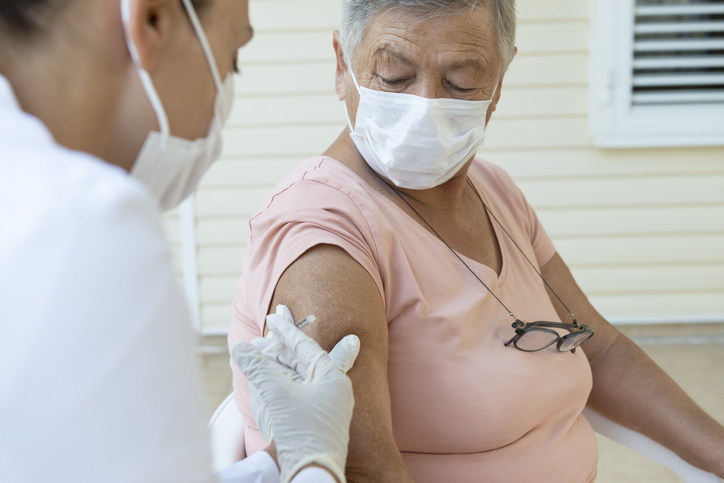
According to information published by the Centers for Disease Control and Prevention (CDC), the answer is yes. The CDC tells us that you can get a COVID-19 vaccine and a flu vaccine at the same time.

Even though both vaccines can be given at the same visit, people should follow the recommended schedule for either vaccine: If you haven’t gotten your currently recommended doses of COVID-19 vaccine, get a COVID-19 vaccine as soon as you can, and ideally get a flu vaccine by the end of October.

While limited data exist on giving COVID-19 vaccines with other vaccines, including flu vaccines, experience with giving other vaccines together has shown the way our bodies develop protection and possible side effects are generally similar whether vaccines are given alone or with other vaccines.

If you have concerns about getting both vaccines at the same time, you should speak with a health care provider.

For further information regarding the Covid vaccine you can visit the CDC website at https://www.cdc.gov/coronavirus/2019-ncov/vaccines/faq.html

All content of this newsletter is intended for general information purposes only and is not intended or implied to be a substitute for professional medical advice, diagnosis or treatment. Please consult a medical professional before adopting any of the suggestions on this page. You must never disregard professional medical advice or delay seeking medical treatment based upon any content of this newsletter. PROMPTLY CONSULT YOUR PHYSICIAN OR CALL 911 IF YOU BELIEVE YOU HAVE A MEDICAL EMERGENCY.

Our Employee Spotlight Shines on Pearlette Edionwe

This month we are proud to shine our Employee Spotlight on Pearlette Edionwe, RN, BSN, MSN, who has been working at Jamaica Hospital Medical Center for 14 years and currently serves as Assistant Head Nurse on 3 North.

Pearlette is a native of Trelawny, Jamaica, West Indies. She attended Bohemia All Age Elementary School and  Christiana Secondary High School before coming to the United States at the age of 25. Her first job was as a babysitter on Long Island. Following that she worked for the Cerebral Palsy Association of New York while studying to become an LPN. She received her Associate’s Degree in Nursing at Eastwick College of New Jersey and then obtained her Bachelor of Science degree in Nursing at Grand Canyon University in Phoenix Arizona. While working at Jamaica Hospital as the Assistant Head Nurse on 3 North, she obtained her Masters Of Science degree in Nursing with an emphasis on Leadership in Healthcare Systems.

Pearlette currently lives in Freeport, Long Island. She has three children of whom she is very proud of. In her free time she enjoys reading, crocheting, gardening, watching track and field events, basketball and listening to gospel music. She also enjoys spending time with her family and friends.  Pearlette always makes time for her Maltipoo named Theodore Cornelius Edionwe. Her favorite places to travel to are Paris, and the Island of Jamaica. Pearlette tells us that her favorite foods are those that are home cooked.

Pearlette’s calling is taking care of patients who she strives to give the best possible care. She enjoys working with the team on her unit to accomplish this goal. She is proud to be a part of the Jamaica Hospital family because they are supportive and kind. We are proud to have her as a member of our team and look forward to her working with us for many more years.

All content of this newsletter is intended for general information purposes only and is not intended or implied to be a substitute for professional medical advice, diagnosis or treatment. Please consult a medical professional before adopting any of the suggestions on this page. You must never disregard professional medical advice or delay seeking medical treatment based upon any content of this newsletter. PROMPTLY CONSULT YOUR PHYSICIAN OR CALL 911 IF YOU BELIEVE YOU HAVE A MEDICAL EMERGENCY.
MediSys Family Medicine Center in Richmond Hill

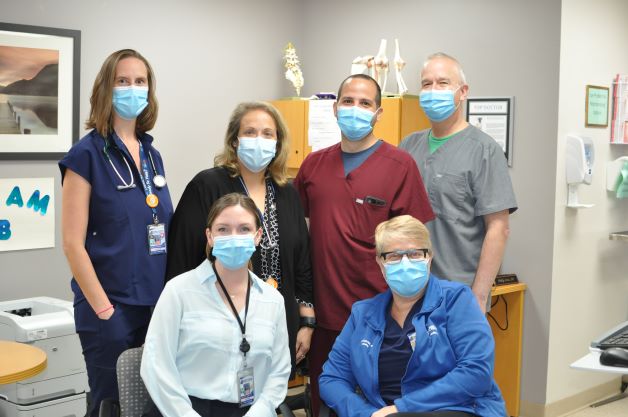
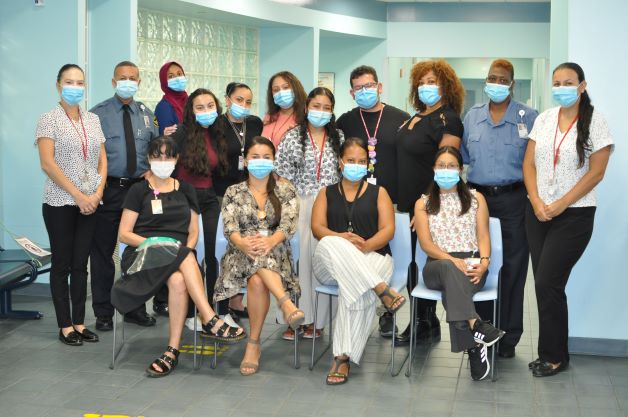
With much fanfare in 1998, Jamaica Hospital Medical Center opened the doors to the  MediSys Family Medicine Center in Richmond Hill, located at 133-03 Jamaica Avenue and home to the Family Medicine program. Present at the ribbon cutting was the staff of the center and members of the  hospital’s  administration. Also joining them at this momentous occasion was  Dr. David Satcher, the former Surgeon General of the United States.

The staff at this modern facility treats over 24,000 patients each year and the site offers 33 exam rooms, four procedure rooms and four family rooms. Some of the services offered at MediSys Richmond Hill are:  primary care, cardiology, gastroenterology, podiatry, dermatology, allergy, nutrition, osteopathic manipulative treatment, sports medicine, palliative care and integrative health.

Dr. Radeeb Akhtar, an Attending Physician at the Family Medicine Center shares why he enjoys being at the center for the past four years  is because “it is an excellent team, providing high quality primary care for a wonderful culturally rich patient population”.  Rovina Rabindranauth has been a Patient Care Representative for six years and she states that “working with people from different cultures and helping them to get excellent medical care” is what she values about this center. Stephanie Kearney who has been an Ambulatory Care Representative at the center for 12 years explains that “the staff at this center works together as a team and always puts patients first”.

The hours of operation are Monday to Friday 8:00 AM – 4:00 PM and Saturday from 8:00 AM to 1:00 PM. The site offers parking for patients in the rear of the building and is also accessible by public transportation (buses Q56, Q24, and the E train). 

If you would like to schedule an appointment with one of our physicians at the MediSys Family Medicine Center Richmond Hill, please call 718-657-7093.

All content of this newsletter is intended for general information purposes only and is not intended or implied to be a substitute for professional medical advice, diagnosis or treatment. Please consult a medical professional before adopting any of the suggestions on this page. You must never disregard professional medical advice or delay seeking medical treatment based upon any content of this newsletter. PROMPTLY CONSULT YOUR PHYSICIAN OR CALL 911 IF YOU BELIEVE YOU HAVE A MEDICAL EMERGENCY.
Dental Screenings for Infants

When is the appropriate time to begin dental screenings for infants? An infant is defined as a baby between birth and one year of age. The American Academy of Pediatric Dentistry (AAPD) recommends that infants see the dentist for their first dental exam within six months of getting their first tooth or by their first birthday.

Dr. Deborah Pasquale, Chairperson of the Department of Dentistry at Jamaica Hospital Medical Center makes the following suggestions on how to prepare for the first dental exam:

  • Make sure the infant is well rested the night prior
  • Schedule a morning appointment when the infant is most likely to be well rested and alert
  • Make the visit to the dental specialist a positive experience
  • Give the dentist the infant’s medical history
  • Bring the infant’s favorite toy or blanket to make them feel comfortable

During the exam, the dentist will evaluate the infant for proper gum and tooth development. If necessary, the dentist will gently clean the gums and any teeth that are present. Flouride treatment may also be recommended. To help protect the infant’s teeth at home the dentist will instruct parents on how to properly clean teeth and gums, as well as make suggestions on proper nutrition.

Jamaica Hospital’s pediatric dental center is ultra modern and provides comprehensive dental services for children in a welcoming environment. If you would like to schedule an appointment with a pediatric dentist, please call 718-206-6980

All content of this newsletter is intended for general information purposes only and is not intended or implied to be a substitute for professional medical advice, diagnosis or treatment. Please consult a medical professional before adopting any of the suggestions on this page. You must never disregard professional medical advice or delay seeking medical treatment based upon any content of this newsletter. PROMPTLY CONSULT YOUR PHYSICIAN OR CALL 911 IF YOU BELIEVE YOU HAVE A MEDICAL EMERGENCY.
September is Healthy Aging Month

Healthy Aging Month is an annual observation created to bring awareness to the fact that there is an increase in the number of people who are 45 and older living in the United States.

There are over 76 million people, once considered to be part of the Baby-Boom generation, in the U.S. today who are over the age of 50. In addition to that, people who belong to the Generation-X started to turn 50 in the year 2015.

This segment of the population needs to be mindful of the importance of their social, mental, physical and financial well-being.

Tips for staying healthy after the age of 50 include:

  • Keeping active
  • If you smoke – quitting now
  • Remaining socially engaged
  • Staying positive
  • Finding things to do that make you smile
  • Getting  regular medical check-ups
  • Eating healthy
  • Exercising  regularly
  • Seeking help for mental health issues

If you would like to schedule an appointment with a physician at Jamaica Hospital Medical Center to discuss your medical concerns, please call 718-206-7001.

All content of this newsletter is intended for general information purposes only and is not intended or implied to be a substitute for professional medical advice, diagnosis or treatment. Please consult a medical professional before adopting any of the suggestions on this page. You must never disregard professional medical advice or delay seeking medical treatment based upon any content of this newsletter. PROMPTLY CONSULT YOUR PHYSICIAN OR CALL 911 IF YOU BELIEVE YOU HAVE A MEDICAL EMERGENCY.

Wisdom Teeth

Wisdom teeth, also referred to as the third set of molars, are the last set of teeth to develop. They form in the back of the mouth on the upper and lower jaw. Most people’s wisdom teeth surface when they are teenagers or young adults.

Wisdom teeth can become a problem when they fail to grow in proper alignment with the rest of our teeth.  When these teeth are not growing in correctly, it is referred to as being impacted. A tooth that is impacted may have only broken through the gum partially, or not at all. This can lead to infection, pain, tooth decay, gum disease and crowding of the teeth that are adjacent.

The signs and symptoms of an impacted wisdom tooth include:

  • Tenderness of the jaw
  • Bad breath
  • Bleeding gums
  • Swollen gums
  • Problems opening the mouth

Wisdom teeth that are impacted can’t be prevented. The best way to monitor for a potential problem is to have regular oral check-ups and an x-ray of the mouth every year. Not all wisdom teeth are going to be impacted, but when they are, and if symptoms develop, your dentist may want to remove them to prevent potential infections, disruption of the other teeth, and also to prevent further discomfort.

If you would like to schedule an appointment with a dentist at Jamaica Hospital Medical Center, you may call 718-206-6980

All content of this newsletter is intended for general information purposes only and is not intended or implied to be a substitute for professional medical advice, diagnosis or treatment. Please consult a medical professional before adopting any of the suggestions on this page. You must never disregard professional medical advice or delay seeking medical treatment based upon any content of this newsletter. PROMPTLY CONSULT YOUR PHYSICIAN OR CALL 911 IF YOU BELIEVE YOU HAVE A MEDICAL EMERGENCY.

The Centers for Disease Control and Prevention Issues Back to School Safety Guidelines

As we near the near the beginning of the school year, many parents are concerned about the necessary precautions that they should be taking to protect their children from the Covid-19 virus. The Centers for Disease Control and Prevention ( CDC ) issued guidelines to protect students, teachers, staff and families. These guidelines are based upon the most recent current scientific evidence and can change as more information becomes available. The CDC guidelines are suggestions and are meant to supplement not override the safety laws established by any federal, state, local, territorial or tribal health entities.

The current CDC Guidelines can be found on their website

https://www.cdc.gov/coronavirus/2019-ncov/community/schools-childcare/k-12-guidance.html

All content of this newsletter is intended for general information purposes only and is not intended or implied to be a substitute for professional medical advice, diagnosis or treatment. Please consult a medical professional before adopting any of the suggestions on this page. You must never disregard professional medical advice or delay seeking medical treatment based upon any content of this newsletter. PROMPTLY CONSULT YOUR PHYSICIAN OR CALL 911 IF YOU BELIEVE YOU HAVE A MEDICAL EMERGENCY.

What Causes Feet to Swell ?

For many people who spend long hours standing every day, experiencing swollen feet is a pretty routine occurrence. The swelling is caused by an accumulation of fluid in the skin and typically will resolve once the feet are elevated.

The symptoms of swelling are dependent on the underlying cause is. Swelling can be mild puffiness with no discomfort to very severe with changes in skin texture, color, and with a lot of pain. In very severe cases, swelling can lead to ulcerations, infections, and ultimately death if not treated in a timely manner.

Some of the medical issues of swollen feet can be due to:

  • Injury
  • Pregnancy
  • Congestive heart  failure
  • Lymphedema
  • Blood Clots
  • Varicose veins
  • Infections
  • Medications such as steroids, antidepressants, and calcium channel blockers
  • Venous insufficiency

Diagnosing swollen feet usually starts with a visual inspection and then by pressing into the skin with a finger to see if it leads to an indentation.

In some cases preventing swollen feet can be done by wearing support stockings, proper exercise, eating a healthy diet low in salt, and avoiding smoking and drinking alcohol.

Treating swollen feet is dependent on the cause and can include:

  • Medication
  • Surgery
  • Wrapping the limb with an elastic bandage
  • Elevating the foot above the level of the heart when possible

If you are experiencing swollen feet, consult your doctor who will find out what is causing the problem. If you would like to schedule an appointment with a doctor at Jamaica Hospital Medical Center, you can call 718-206-7001.

All content of this newsletter is intended for general information purposes only and is not intended or implied to be a substitute for professional medical advice, diagnosis or treatment. Please consult a medical professional before adopting any of the suggestions on this page. You must never disregard professional medical advice or delay seeking medical treatment based upon any content of this newsletter. PROMPTLY CONSULT YOUR PHYSICIAN OR CALL 911 IF YOU BELIEVE YOU HAVE A MEDICAL EMERGENCY.

Are You Prepared for Hurricane Season ?

While we typically associate the summer with delightful temperatures, this time of year can also bring dangerous weather conditions, namely hurricanes.

With a long history of providing relief to places previously devastated by hurricanes, including sending personnel to assist the victims of Hurricanes Katrina and Maria, Jamaica Hospital Medical Center is experienced and knowledgeable about how to properly prepare for such an event. Our hospital would like to share the following safety tips with our community:

  • In case of a need to evacuate, know where the nearest evacuation route is located
  • Keep a supply of non-perishable food that doesn’t require refrigeration or cooking
  • In an easy to locate area of your home keep flashlights, extra batteries, extra cash, a first aid kit, basic tools, charged cell phones and chargers, and a battery operated radio
  • Make sure you have a seven day supply of prescription medications
  • Have a three day supply of drinking water, one gallon per day per person.
  • Fill a bathtub with water to use to flush toilets
  • Make sure that all of your important documents are kept in a place that is high above ground level. Always keep a copy of these documents with you if there is a need to evacuate
  • Give everyone in your household a list of people they should contact in case of an emergency
  • Have a plan to protect your pets and have extra food for them
  • Prepare to put outdoor furniture away or at least firmly secured

By being prepared and following these tips, you can help keep your home and your loved ones safe from disaster.

For more information, please visit https://www.ready.gov/hurricanes and www.fema.gov

All content of this newsletter is intended for general information purposes only and is not intended or implied to be a substitute for professional medical advice, diagnosis or treatment. Please consult a medical professional before adopting any of the suggestions on this page. You must never disregard professional medical advice or delay seeking medical treatment based upon any content of this newsletter. PROMPTLY CONSULT YOUR PHYSICIAN OR CALL 911 IF YOU BELIEVE YOU HAVE A MEDICAL EMERGENCY.

The Health Benefits of Cherries

Cherries are a small fruit that come in a variety of colors (yellow to dark red) and flavors (sweet or tart).

A cup of raw cherries contains 97 calories and 2 grams of protein. They are an excellent source of nutrients that the body needs to function properly such as vitamin C, potassium, manganese, and fiber.

Health benefits of cherries include:

  • They are high in antioxidants which slow the aging process
  • They contain high levels of polyphenols which are excellent for combatting inflammation, helping to reduce cell damage, and good for reducing symptoms of gout and arthritis
  • They contain beta-carotene and vitamin C both of which are anti-inflammatories and antioxidants. These are useful for relieving muscle pain due to exercise
  • They contain potassium which helps to keep the heart healthy by maintaining a proper heart rate and regulating blood pressure
  • They contain melatonin which is helpful in regulating the sleep – wake cycle

Cherries can be enjoyed as a raw snack, added to a fruit salad, made into a pie or a fruit juice. They can be found year round in the fruit section of most supermarkets but summertime is when they are most commonly seen. If you are looking for a fruit that is both refreshing and nutritious, cherries are definitely a good choice.

All content of this newsletter is intended for general information purposes only and is not intended or implied to be a substitute for professional medical advice, diagnosis or treatment. Please consult a medical professional before adopting any of the suggestions on this page. You must never disregard professional medical advice or delay seeking medical treatment based upon any content of this newsletter. PROMPTLY CONSULT YOUR PHYSICIAN OR CALL 911 IF YOU BELIEVE YOU HAVE A MEDICAL EMERGENCY.