
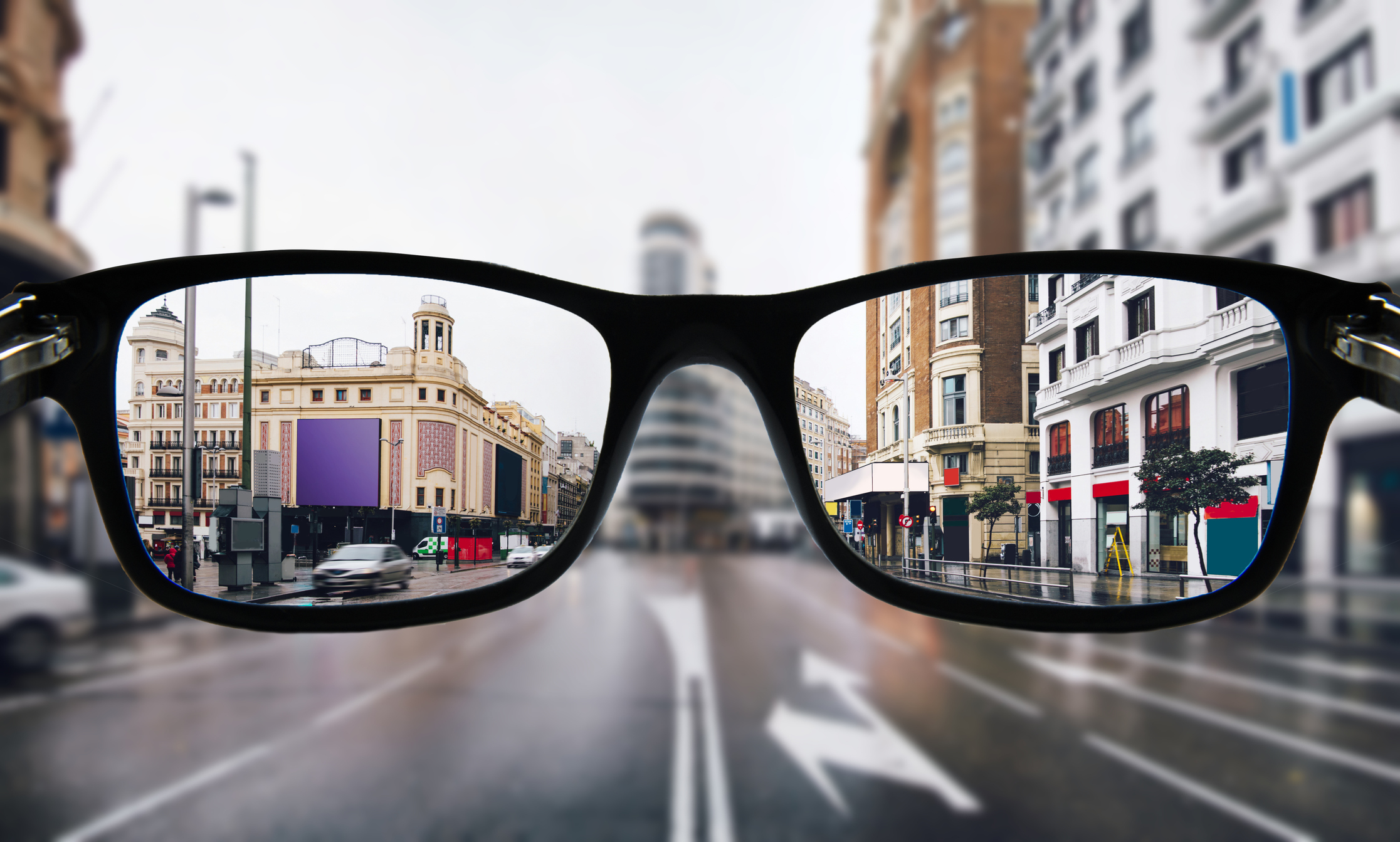
 Myopia, or nearsightedness, occurs when the eyeball grows too long or oval-shaped rather than round. People living with myopia can see objects that are near but have trouble seeing objects that are farther away. It is estimated that more than 40% of adults living in the United States have myopia. According to the American Academy of Ophthalmology, nearsightedness has been on the rise for several decades.
Nearsightedness typically begins in childhood or adolescence. It progresses during childhood and the teen years, then stabilizes in adulthood. The primary cause of nearsightedness is axial myopia, which is caused by the eye being too long from front to back. Because of this extra length, light entering the eye focuses in front of the retina rather than directly on it, causing distant objects to appear blurry. This eye elongation can be driven by the following risk factors:
- Genetics passed down from parents. If one or both parents have myopia, a person has an increased chance of developing the condition
- Ethnicity – some ethnic groups are more at risk than others
- Limited outdoor time – not spending enough time outdoors
- Doing close-up activities, or near-vision work, such as reading or viewing screens for extended periods
People who are nearsighted may experience symptoms such as:
- Difficulty seeing objects far away
- Eye strain
- Squinting
- Headaches
- Tiredness when doing certain activities, such as driving
If you are experiencing these symptoms, it is recommended that you see an eye specialist. Your eye doctor can diagnose myopia by conducting a comprehensive eye examination.
Myopia is permanent; however, in most cases, vision can be corrected with eyeglasses, contact lenses, laser procedures such as LASIK or LASEK, lens implants, or vision therapy. People living with pathological myopia, which is a severe and progressive form of the condition, may not be able to have their vision corrected with eyeglasses or contact lenses.
At Jamaica Hospital Department of Ophthalmology, we are passionate about providing patient-centered adult and pediatric care. To schedule an appointment, please call 718-206-5900.
 Follow
All content of this newsletter is intended for general information purposes only and is not intended or implied to be a substitute for professional medical advice, diagnosis or treatment. Please consult a medical professional before adopting any of the suggestions on this page. You must never disregard professional medical advice or delay seeking medical treatment based upon any content of this newsletter. PROMPTLY CONSULT YOUR PHYSICIAN OR CALL 911 IF YOU BELIEVE YOU HAVE A MEDICAL EMERGENCY.