
Robot-assisted Hysterectomy

A hysterectomy is a surgical procedure that removes the uterus.

Depending on the reason for the surgery, a hysterectomy can involve removing surrounding organs and tissues, such as the fallopian tubes and ovaries.

Your healthcare provider will discuss the type of hysterectomy you need depending on your condition. This will determine if your fallopian tubes and/or ovaries will be removed.

The different types of hysterectomy surgeries include:

  • A total hysterectomy removes the uterus and cervix but leaves the ovaries. Since you still have ovaries, you won’t enter menopause immediately after surgery.
  • A supracervical hysterectomy removes just the upper part of the uterus while leaving the cervix. You can also have your fallopian tubes and ovaries removed at the same time. Since you still have a cervix, you will still need pap smears.
  • A total hysterectomy with bilateral salpingo-oophorectomy removes the uterus, cervix, fallopian tubes, and ovaries. Since your ovaries are removed, menopause will start immediately if you haven’t already completed it.
  • A radical hysterectomy with bilateral salpingo-oophorectomy removes the uterus, cervix, fallopian tubes, ovaries, the upper portion of the vagina, and some surrounding tissue, and lymph nodes. Healthcare providers use this procedure when cancer is involved. Since your ovaries are removed, you will enter menopause.

A healthcare provider may suggest alternative treatments before recommending a hysterectomy, depending on the reason for needing one. Sometimes, those treatments don’t help, or surgery is the only option to treat the condition.

Surgeons perform hysterectomies to treat the following:

  • Abnormal or heavy vaginal bleeding
  • Severe pelvic pain
  • Uterine fibroids and other noncancerous tumors
  • Severe endometriosis
  • Uterine prolapse that can lead to urinary incontinence or fecal incontinence
  • Cervical, ovarian, or uterine cancer
  • Conditions with the lining of your uterus, such as hyperplasia or adenomyosis
  • Serious complications of childbirth such as uterine rupture

Many people have a hysterectomy to prevent cancer. For people at high risk for certain types of cancer, removing the uterus and/or surrounding reproductive organs can reduce the chances of developing cancer.

Healthcare providers can use several different surgical approaches to perform a hysterectomy. A surgical procedure that is performed is a robot-assisted laparoscopic hysterectomy.

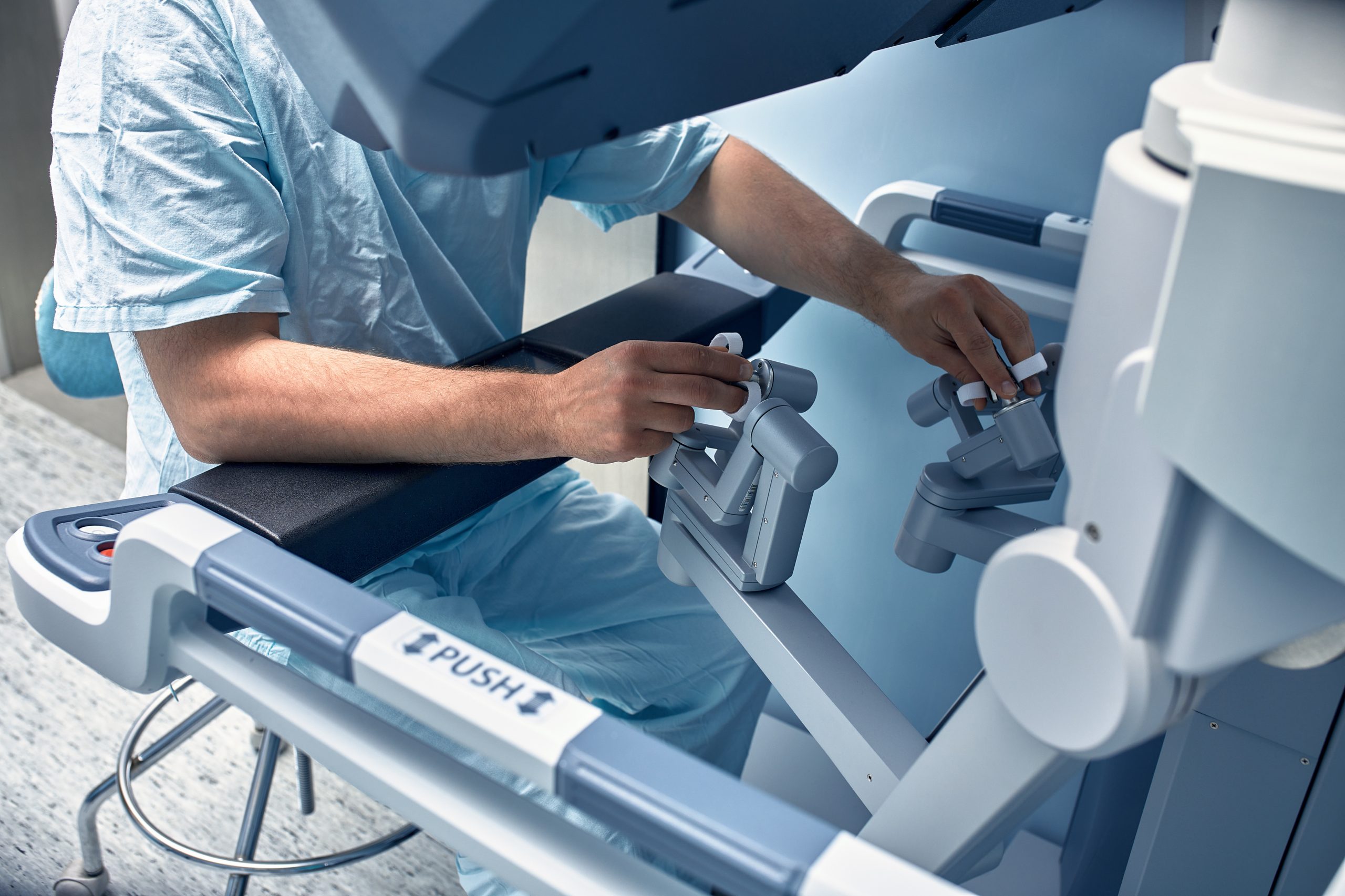
A robot-assisted laparoscopic hysterectomy is similar to an abdominal laparoscopy, however, a surgeon performs the procedure with the help of a robotic machine.

A surgeon inserts a laparoscope through the abdomen incisions. They insert small, thin surgical tools through three to five other small incisions around your belly button. The surgeon controls robotic arms and instruments.

The recovery is similar to a laparoscopic hysterectomy.

There are many potential advantages of robotic-assisted laparoscopic hysterectomy including:

  • Robot-assisted surgery provides the surgeon with 3D images of inside your abdomen and pelvis that create a clearer picture for them to reference as they operate.
  • Under the surgeon’s direction, the robot can move more freely and with more versatility than a human hand
  • Minimal scarring
  • Less pain
  • Faster recovery times
  • Less risk of wound infection,
  • Shorter hospital stays
  • Less blood loss

For more information about robotic surgery at Jamaica Hospital Medical Center or to learn more about other surgical options, please call (718) 206-7001 to make an appointment.


All content of this newsletter is intended for general information purposes only and is not intended or implied to be a substitute for professional medical advice, diagnosis or treatment. Please consult a medical professional before adopting any of the suggestions on this page. You must never disregard professional medical advice or delay seeking medical treatment based upon any content of this newsletter. PROMPTLY CONSULT YOUR PHYSICIAN OR CALL 911 IF YOU BELIEVE YOU HAVE A MEDICAL EMERGENCY.
Robotics: Appendectomy

An appendectomy is a surgical procedure to remove an inflamed or infected appendix. An inflamed or infected appendix is the result of appendicitis.

Appendicitis occurs when your appendix, the finger-shaped pouch that sticks out from the colon on the lower right side of the abdomen gets clogged, infected, and inflamed. It can cause acute pain in your lower abdomen, however, for most people, pain begins around the belly button and then moves. As inflammation worsens, appendicitis pain typically increases and eventually becomes serious.

Symptoms of appendicitis include:

  • Sudden pain that begins on the right side of the lower belly
  • Sudden pain that begins around the belly button and often shifts to the lower right belly
  • Pain that worsens with coughing, walking, or making other jarring movements
  • Nausea and vomiting
  • Loss of appetite
  • Low-grade fever that may rise as the illness worsens
  • Constipation or diarrhea
  • Belly bloating
  • Gas

Additional symptoms that may develop later in some people can include:

  • Malaise
  • Urinary symptoms- needing to go more frequently or more urgently
  • Bowel paralysis

The size and location of the appendix make it easy for it to become clogged and infected. Your large intestine is home to many bacteria. If they become trapped in your appendix, they overgrow and cause an infection. The bacteria then multiplies quickly causing the appendix to become inflamed and filled with pus. If it is not treated right away, the appendix may burst or break open.

Some common causes of inflammation, swelling, obstruction, and infection in your appendix include:

  • Hardened poop (appendix stones)
  • Lymphoid hyperplasia
  • Colitis

Other factors that could block the opening of your appendix can include:

  • Tumors
  • Parasites
  • Cystic fibrosis

Risk factors for appendicitis include:

  • Age – anyone can develop appendicitis, but it most often happens in people between the ages of 10 and 30
  • Your sex – men have a slightly higher risk of appendicitis than women

To help diagnose appendicitis, a healthcare provider will likely take a history of symptoms and examine the abdomen. Tests used to diagnose appendicitis can include:

  • A physical exam
  • Blood tests
  • Urine tests
  • Imaging tests

Appendicitis may spontaneously resolve if the cause suddenly goes away on its own. This might happen if an obstruction in your appendix gets unblocked and passes through the intestines, or if an infection causing lymphoid hyperplasia in your appendix suddenly improves. However, you shouldn’t assume this will happen or that it has happened, even if your pain has reduced.

The standard treatment includes medicine such as antibiotics and surgery to remove the appendix. Appendicitis is considered an emergency, so it is treated in the emergency room.

An appendectomy can be performed open, laparoscopically, or robot-assisted.

Through the acquisition of the Da Vinci robot surgical platform, Jamaica Hospital Medical Center can now perform minimally invasive robotic surgical procedures.

There are many potential advantages of robotic-assisted surgery over other types of surgery, including:

  • Robot-assisted surgery provides the surgeon with 3D images inside the abdomen and pelvis that create a clearer picture to reference as they operate.
  • Under the surgeon’s direction, the robot can move more freely and with more versatility than a human hand
  • You’ll have a few tiny scars.
  • You’re more likely to experience less pain and less bleeding after surgery compared to open surgery.
  • A shorter hospital stay.

For more information about robotic surgery or to learn more about other surgical options at Jamaica Hospital Medical Center’s Department of Surgery, please call (718) 206-7001 to make an appointment.


All content of this newsletter is intended for general information purposes only and is not intended or implied to be a substitute for professional medical advice, diagnosis or treatment. Please consult a medical professional before adopting any of the suggestions on this page. You must never disregard professional medical advice or delay seeking medical treatment based upon any content of this newsletter. PROMPTLY CONSULT YOUR PHYSICIAN OR CALL 911 IF YOU BELIEVE YOU HAVE A MEDICAL EMERGENCY.