
What Parents Should Expect When Their Child Is Getting an Appendectomy

When a child experiences abdominal pain, it can be a cause of concern for parents. One of the most common causes of severe stomach pain in children is appendicitis. Appendicitis occurs when the appendix becomes inflamed or infected. If it is left untreated, it can rupture, leading to serious complications.

Signs and symptoms of appendicitis in children include:

  • Sudden pain in the lower right side of the abdomen
  • Nausea or vomiting
  • Fever
  • Loss of appetite
  • Swelling or bloating in the abdomen

Symptoms of appendicitis may vary, and younger children may have difficulty articulating their pain.

The best treatment for appendicitis is a surgical procedure called an appendectomy. An appendectomy is often an emergency surgery.

Your child may not have a lot of time to get ready for the appendectomy. The healthcare team will want to know when your child last ate because having food in the stomach can cause problems when your child is under anesthesia. If the surgery is planned ahead of time, ask the healthcare provider when your child should stop eating and drinking beforehand.

After the appendectomy, your child will need to rest as it may take a few weeks for them to feel back to normal.

Some tips to help your child have a smooth recovery after the appendectomy include:

  • Follow the surgeon’s post-operative care instructions closely
  • Limit strenuous activities to avoid putting strain on the surgical area
  • Keep your child hydrated and encourage them to eat a light, nutritious diet to aid in their recovery

It is important to call your healthcare provider if your child:

  • Has fever higher than 101.5°F (38.6°C) or higher
  • Has abdominal swelling
  • Has green or yellow drainage from any incision
  • Has pain that gets worse as hours or days pass
  • Has redness or swelling around the incision
  • Shows signs of sluggishness
  • Is vomiting
  • Will not drink
  • Doesn’t start to eat one or two days after surgery
  • Hasn’t had a bowel movement for two days after the surgery
  • Has diarrhea

The pediatric surgeons at Jamaica Hospital Medical Center provide many different surgical services to younger patients. For more information about our Queens, NYC pediatric surgical services or to make an appointment, please call (718) 206-7001.


All content of this newsletter is intended for general information purposes only and is not intended or implied to be a substitute for professional medical advice, diagnosis or treatment. Please consult a medical professional before adopting any of the suggestions on this page. You must never disregard professional medical advice or delay seeking medical treatment based upon any content of this newsletter. PROMPTLY CONSULT YOUR PHYSICIAN OR CALL 911 IF YOU BELIEVE YOU HAVE A MEDICAL EMERGENCY.
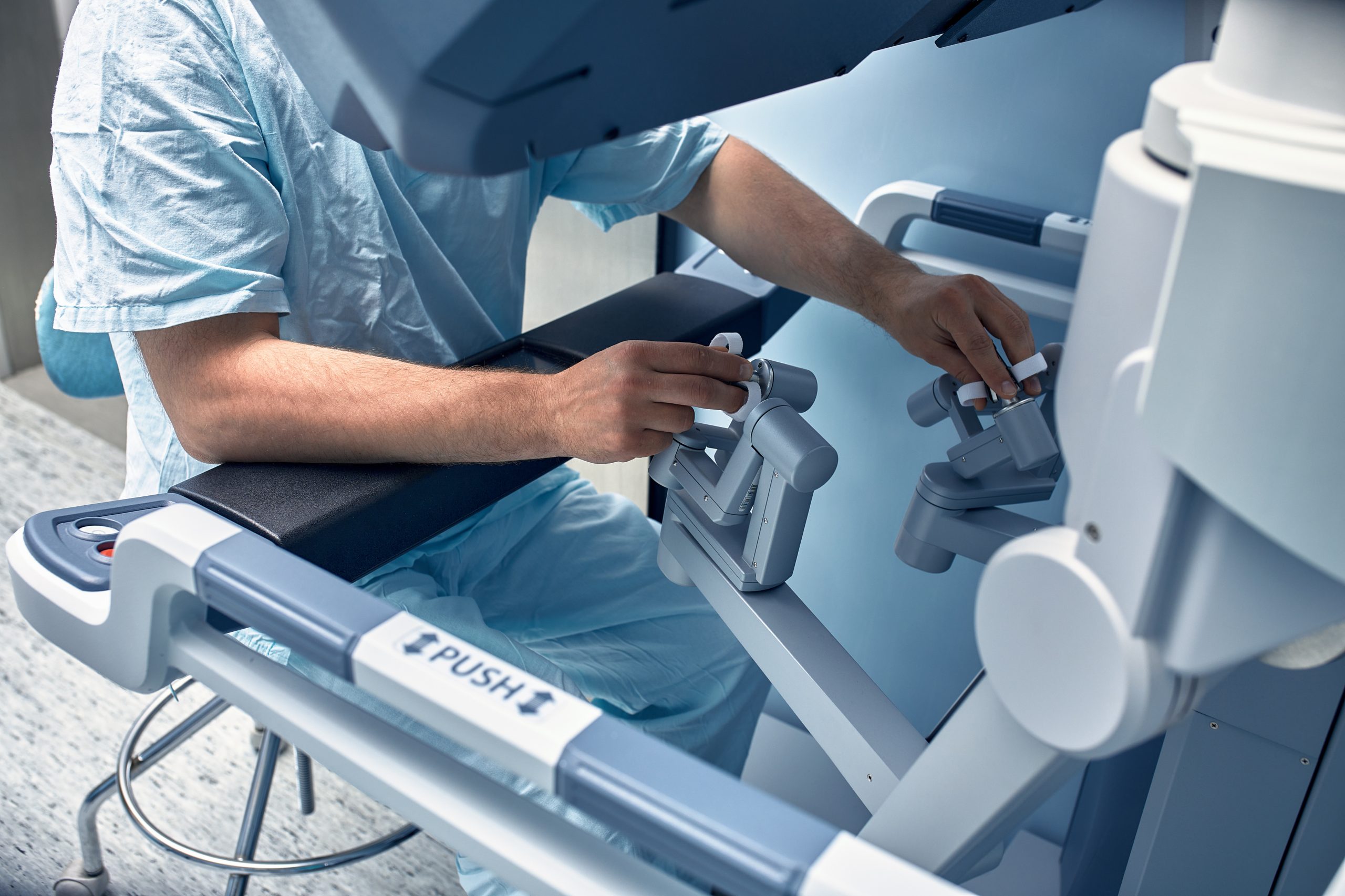
Robotics: Appendectomy

An appendectomy is a surgical procedure to remove an inflamed or infected appendix. An inflamed or infected appendix is the result of appendicitis.

Appendicitis occurs when your appendix, the finger-shaped pouch that sticks out from the colon on the lower right side of the abdomen gets clogged, infected, and inflamed. It can cause acute pain in your lower abdomen, however, for most people, pain begins around the belly button and then moves. As inflammation worsens, appendicitis pain typically increases and eventually becomes serious.

Symptoms of appendicitis include:

  • Sudden pain that begins on the right side of the lower belly
  • Sudden pain that begins around the belly button and often shifts to the lower right belly
  • Pain that worsens with coughing, walking, or making other jarring movements
  • Nausea and vomiting
  • Loss of appetite
  • Low-grade fever that may rise as the illness worsens
  • Constipation or diarrhea
  • Belly bloating
  • Gas

Additional symptoms that may develop later in some people can include:

  • Malaise
  • Urinary symptoms- needing to go more frequently or more urgently
  • Bowel paralysis

The size and location of the appendix make it easy for it to become clogged and infected. Your large intestine is home to many bacteria. If they become trapped in your appendix, they overgrow and cause an infection. The bacteria then multiplies quickly causing the appendix to become inflamed and filled with pus. If it is not treated right away, the appendix may burst or break open.

Some common causes of inflammation, swelling, obstruction, and infection in your appendix include:

  • Hardened poop (appendix stones)
  • Lymphoid hyperplasia
  • Colitis

Other factors that could block the opening of your appendix can include:

  • Tumors
  • Parasites
  • Cystic fibrosis

Risk factors for appendicitis include:

  • Age – anyone can develop appendicitis, but it most often happens in people between the ages of 10 and 30
  • Your sex – men have a slightly higher risk of appendicitis than women

To help diagnose appendicitis, a healthcare provider will likely take a history of symptoms and examine the abdomen. Tests used to diagnose appendicitis can include:

  • A physical exam
  • Blood tests
  • Urine tests
  • Imaging tests

Appendicitis may spontaneously resolve if the cause suddenly goes away on its own. This might happen if an obstruction in your appendix gets unblocked and passes through the intestines, or if an infection causing lymphoid hyperplasia in your appendix suddenly improves. However, you shouldn’t assume this will happen or that it has happened, even if your pain has reduced.

The standard treatment includes medicine such as antibiotics and surgery to remove the appendix. Appendicitis is considered an emergency, so it is treated in the emergency room.

An appendectomy can be performed open, laparoscopically, or robot-assisted.

Through the acquisition of the Da Vinci robot surgical platform, Jamaica Hospital Medical Center can now perform minimally invasive robotic surgical procedures.

There are many potential advantages of robotic-assisted surgery over other types of surgery, including:

  • Robot-assisted surgery provides the surgeon with 3D images inside the abdomen and pelvis that create a clearer picture to reference as they operate.
  • Under the surgeon’s direction, the robot can move more freely and with more versatility than a human hand
  • You’ll have a few tiny scars.
  • You’re more likely to experience less pain and less bleeding after surgery compared to open surgery.
  • A shorter hospital stay.

For more information about robotic surgery or to learn more about other surgical options at Jamaica Hospital Medical Center’s Department of Surgery, please call (718) 206-7001 to make an appointment.


All content of this newsletter is intended for general information purposes only and is not intended or implied to be a substitute for professional medical advice, diagnosis or treatment. Please consult a medical professional before adopting any of the suggestions on this page. You must never disregard professional medical advice or delay seeking medical treatment based upon any content of this newsletter. PROMPTLY CONSULT YOUR PHYSICIAN OR CALL 911 IF YOU BELIEVE YOU HAVE A MEDICAL EMERGENCY.