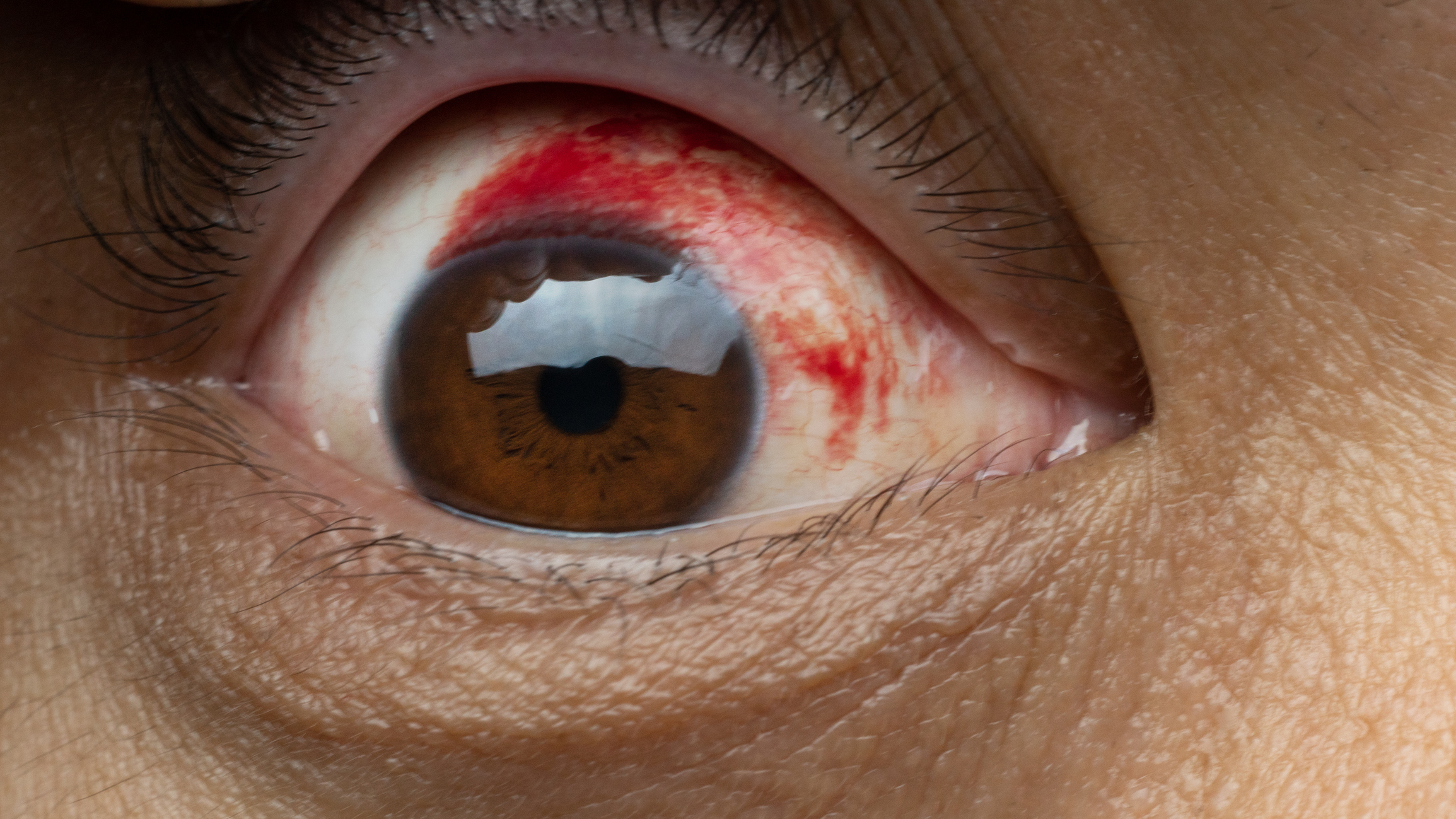
Contact Lenses and Children – When Are They Ready?

This week is Contact Lens Health Week and Jamaica Hospital wants to answer a common question that many parents who have children that wear glasses ask –  When is my child old enough to start wearing contact lenses?

The answer to that question is less about their age and more about their level of maturity. Physically, a child’s eyes can tolerate contacts at a very young age. Before considering contact lenses for your son or daughter, you should consider how they handle other responsibilities. The fact is, there are some eight year old children who are ready and there are some teenagers who are not. Wearing contacts is a major responsibility and children not only need to display that they can apply them, but they also need to exercise proper hygiene and grooming habits to handle wearing and caring for them.

While a child’s ability and maturity to handle contacts might vary from age to age, research has shown that the majority of children (51 %) receive them between ten and 12 years of age, while over 22% receive them when they are either 13 or 14 years old. Only 12.4 % of kids are prescribed contacts between the ages of eight and nine.

If they can handle the responsibility, most doctors believe that wearing contacts is a good thing for children and teens as they are generally more motivated to get fitted for and adapt better to wearing them than other age groups. They are also less likely to develop dry eyes or other issues that are common in adults who wear contact lenses.  Another reason to have your child consider wearing contact lenses is that in some cases they can actually slow down the progression of nearsightedness. In fact, a number of studies have proven that certain types of contacts offer significant control for many nearsighted children.

Professionals have also noted that there has been great advancement in the production of contact lenses over the years, which has contributed to more and more children now opting for them over glasses.  The progress in the development of disposable contacts makes maintenance easier and improved materials provide more durability and safety.

One of the biggest reasons more and more kids and parents are switching to contact lenses over glasses is the benefits to children who play sports. Even the safest eyeglass frames and lenses can cause injuries if they break. As opposed to sports goggles, contact lenses also offer better peripheral vision and an unobstructed view of the playing field. Contacts also remain stable on an athletes face while they are running, and unlike many sports goggles, they don’t not fog-up during competition.

A less common yet potentially important consideration for switching to contact lenses is how it affects a child’s self-esteem. In a recent poll, 71% of children asked cited self-esteem as a ‘very important” factor when determining whether or not to be fitted for contacts.  Additional research found that wearing contacts “significantly improves” how children and teens feel about themselves.

The best thing about making a decision to switch to contacts is that it isn’t permanent. If you think your child is ready and willing, speak to your eye doctor about getting fitted. If he or she tries it, but isn’t ready, they can always go back to wearing glasses. Together, you, your child and their doctor can decide if the time is right.

To make an appointment at Jamaica Hospital’s Ophthalmology Center, please call 718-206-5900.

All content of this newsletter is intended for general information purposes only and is not intended or implied to be a substitute for professional medical advice, diagnosis or treatment. Please consult a medical professional before adopting any of the suggestions on this page. You must never disregard professional medical advice or delay seeking medical treatment based upon any content of this newsletter. PROMPTLY CONSULT YOUR PHYSICIAN OR CALL 911 IF YOU BELIEVE YOU HAVE A MEDICAL EMERGENCY.

Facts About Macular Degeneration

Age related Macular Degeneration (AMD) is the leading cause of severe vision loss in older adults. It affects approximately 10 million Americans – more than cataracts and glaucoma combined. With an aging U.S. population, that number is only expected to increase.

AMD occurs when the central portion of the retina, known as the macula, which is responsible for focusing central vision, deteriorates.

senior elderly man holding book, glasses having eyesight problems unable to read

In its early stages, Macular Degeneration does not affect vision, but as the disease progresses, people may experience wavy or blurred vision or blurred spot in the center of their vision. If the condition continues to worsen, central vision may be completely lost.

Advanced stages of AMD can affect one’s ability to read, drive a car, watch television, or perform many visual tasks. In fact, those living with AMD are considered legally blind.

There are two types of macular degeneration; dry and wet.

  • Dry AMD is an early stage of the disease. Approximately 85% to 90% of AMD cases are the dry type. Dry Macular Degeneration is diagnosed when yellowish spots known as drusen begin to accumulate in and around the macula. It is believed that these spots are deposits or debris from deteriorating tissue. A few small drusen may not cause changes in vision; however, as they grow in size and increase in number, they may lead to a dimming or distortion of vision that people find most noticeable when they read.
  • Approximately 10 percent of the cases of dry AMD progresses to the more advanced and damaging form of the disease known as wet AMD. During this phase, new blood vessels grow beneath the retina and leak blood and fluid. This leakage causes permanent damage to light-sensitive retinal cells, resulting in distorted vision including the appearance of wavy lines, as well as blind spots and loss of central vision. These abnormal blood vessels and their bleeding eventually form a scar, leading to permanent loss of central vision.

As the name implies, the biggest risk factor for AMD is age as the disease is most prevalent in those 55 and older. Another known link to AMD is smoking as it is believed to double the risk of developing the disease. AMD is most common in Caucasians and in females. People with a family history of AMD are also believed to be at a higher risk. Hypertension and obesity are also considered risk factors for Macular Degeneration by some, although there is no conclusive research linking these factors.

There is no cure for AMD, but if detected early, there are medical treatment and lifestyle changes that can delay the progression of the disease. Macular degeneration may not present any symptoms in the early stages and it may be unrecognized until it progresses. For this reason, it is important for older adults to monitor their eye site and visit their eye doctor regularly. Eye care doctors can often detect early signs of Macular Degeneration before symptoms occur. Usually this is accomplished through a retinal exam.

Jamaica Hospital’s Ophthalmology Center can diagnose and treat a wide variety of eye disorders. To make an appointment, please call 718-206-5900.

All content of this newsletter is intended for general information purposes only and is not intended or implied to be a substitute for professional medical advice, diagnosis or treatment. Please consult a medical professional before adopting any of the suggestions on this page. You must never disregard professional medical advice or delay seeking medical treatment based upon any content of this newsletter. PROMPTLY CONSULT YOUR PHYSICIAN OR CALL 911 IF YOU BELIEVE YOU HAVE A MEDICAL EMERGENCY.

Do You Have Trouble Identifying Colors? You Might Be Color Blind!

Red, orange, yellow, green, blue, indigo, violet – the colors of the rainbow; most of us can identify and distinguish each of these colors from the rest, but for those who are color blind, telling these colors apart is not so easy.

ThinkstockPhotos-482328524As much as 8% of men are color blind, (compared to only 0.5 % of women). Why are men so much more prone to colorblindness? Well, the reason for colorblindness is a dysfunction in the x chromosome. Men only have one X chromosome, but women have two – and all someone needs is one working x chromosome to compensate for the loss of function of the other.

Being color blind doesn’t really mean that a person can’t see color though. Complete color blindness is actually very rare. What is much more common is a visionary deficiency, which means a person isn’t aware of the differences among colors. Some deficiencies are profound while others are mild. In fact, some people who don’t have a severe form of color blindness are not even aware they have the condition.

The most common type of color blindness is an inability to distinguish between red and green. While there is no cure for color blindness, those who are red-green color blind can actually use a special set of lenses to help them perceive colors more accurately. There are even apps now available on smartphones to help people differentiate colors.

While some people go their entire life unaware they are color blind, most are diagnosed as children. This is because educational material is often color coded, so when a child has trouble processing information, color blindness can be identified as the reason.

Eye care professionals can use a variety of tests to diagnose color blindness. The most common tests use a series of colored circles with overlapping color shapes inside of them. These shapes are easily identifiable to people who have normal color vision, but are difficult to see for people who are color blind.

To have yourself, or your child tested for color blindness, please consult with your primary care doctor or ophthalmologist. The TJH Ophthalmology Center at Jamaica Hospital is staffed with board certified doctors who can test and diagnose this condition. For more information or to schedule an appointment, please call 718-206-5900.

All content of this newsletter is intended for general information purposes only and is not intended or implied to be a substitute for professional medical advice, diagnosis or treatment. Please consult a medical professional before adopting any of the suggestions on this page. You must never disregard professional medical advice or delay seeking medical treatment based upon any content of this newsletter. PROMPTLY CONSULT YOUR PHYSICIAN OR CALL 911 IF YOU BELIEVE YOU HAVE A MEDICAL EMERGENCY.