Red Ribbon Week

The last week in October is Red Ribbon Week.  During this week, health care professionals and the National Family Partnership (NFP) raise awareness about drug addiction through the Red Ribbon Campaign.

Did you know that children whose parents talk to them about the dangers of drug abuse are 42% less likely to use drugs?  Seems reasonable, then you read the statistics which show less than a quarter of teens in America report having this conversation with their parents or guardians.

To learn more about the Red Ribbon Campaign or if you’d like to take the Drug Free Pledge, visit http://redribbon.org/downloads/.

If you or your loved one is battling addiction, ’s (JHMC) Addiction Services Department, located at (FHMC) can help you navigate this difficult time.  If you would like to learn more about what JHMC offers, visit .

All content of this newsletter is intended for general information purposes only and is not intended or implied to be a substitute for professional medical advice, diagnosis or treatment. Please consult a medical professional before adopting any of the suggestions on this page. You must never disregard professional medical advice or delay seeking medical treatment based upon any content of this newsletter. PROMPTLY CONSULT YOUR PHYSICIAN OR CALL 911 IF YOU BELIEVE YOU HAVE A MEDICAL EMERGENCY.

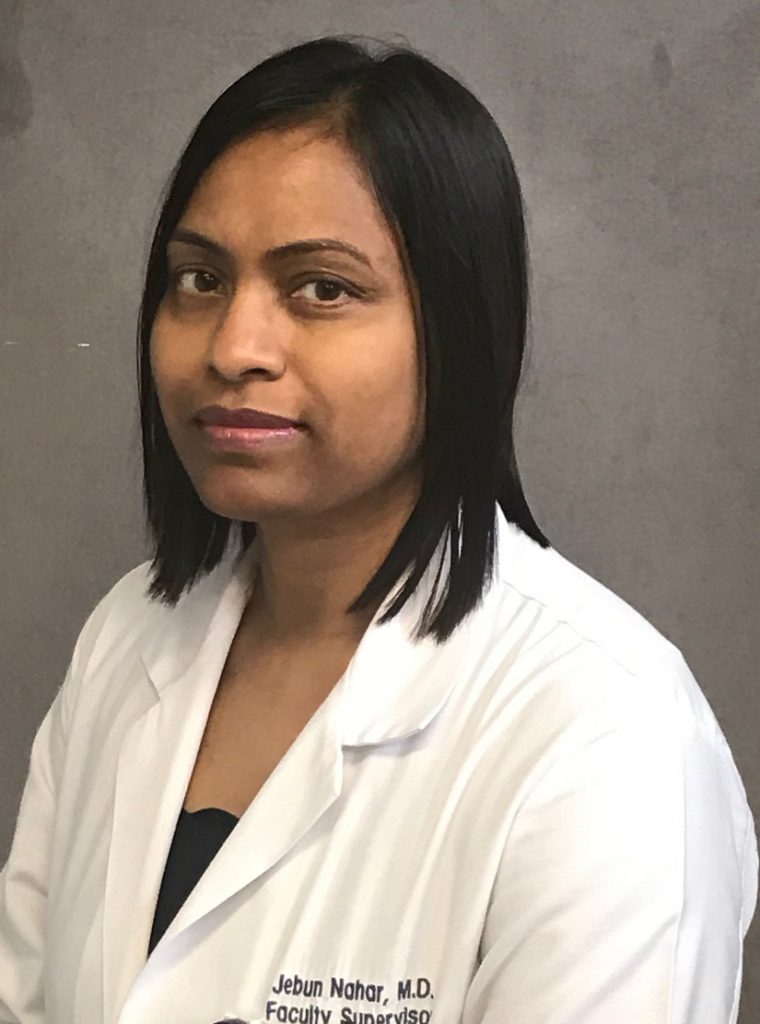
Meet Dr. Jebun Nahar

Jamaica Hospital would like to introduce you to Dr. Jebun Nahar, MD, FACP; internist in the hospital’s Department of Medicine for 11 years.

Dr. Nahar provides a comprehensive range of primary care services for her patients, but one condition that she is extremely passionate about treating is hypertension. According to Dr. Nahar, “I feel that hypertension is largely preventable and can be managed through lifestyle modifications. If not addressed, it can lead to a variety of other health issues including diabetes and heart disease.”

Dr. Nahar believes in developing a close connection with her patients that is based on trust. She also feels that her years of experience and her understanding of the community’s needs help her as a physician. One aspect of working at Jamaica Hospital that particularly appeals to Dr. Nahar is the diverse population that it serves.

One group that has especially benefitted from Dr. Nahar’s expertise is the Bengali population. “As someone who is from Bangladesh, I can relate to and help them with not only their health, but other issues they might be encountering.” She is even a member of multiple physician groups that represent that region including the South Asian IPA and the Bangladesh Medical Association of North America.

In addition to providing high-quality care to her patients, Dr. Nahar also has a love for mentoring the next generation of doctors at Jamaica Hospital and is an active part of the hospital’s teaching faculty.

Dr. Nahar sees patients at the following locations:

TJH Medical Services
134-20 Jamaica Avenue
Jamaica, NY 11418
718-206-6742

All content of this newsletter is intended for general information purposes only and is not intended or implied to be a substitute for professional medical advice, diagnosis or treatment. Please consult a medical professional before adopting any of the suggestions on this page. You must never disregard professional medical advice or delay seeking medical treatment based upon any content of this newsletter. PROMPTLY CONSULT YOUR PHYSICIAN OR CALL 911 IF YOU BELIEVE YOU HAVE A MEDICAL EMERGENCY.

Heart Valve Disease

Heart Valve Disease

Our hearts have four valves:  the aortic, mitral, pulmonary and tricuspid valves.  They work together to keep blood flowing in the correct direction; through the heart’s chambers and to the rest of the body. 

Heart valve disease occurs when one or more of our heart valves do not work properly, disrupting the flow of blood throughout our bodies.  This disease can be congenital (developing before birth) or acquired (developing after birth). Heart valve disease can lead to serious complications such as stroke, heart failure, blood clots, heart rhythms abnormalities or death.

The three main problems encountered in heart valve disease are:

  • Stenosis- which occurs when the flaps of a heart valve do not fully open due to the thickening of valve tissue. This makes the heart work harder to pump blood which can lead to heart failure. Stenosis can develop as a result of a buildup of calcium or other deposits on the valves. 
  • Regurgitation – this happens when the valve doesn’t close all the way. If our valves do not close correctly this will cause blood to leak backward into the heart and less blood to flow to our bodies.
  • Atresia- this is present at birth and occurs as a result of the valve not being developed. Instead of a valve, a piece of tissue forms that restricts the flow of blood.

Stenosis and regurgitation can be caused by pre-existing heart conditions, age-related changes, rheumatic fever or infections. There are no known causes for atresia.

Some people with heart valve disease may not experience symptoms during the early stages of the disease. When symptoms present they can include:

  • A heart murmur or an unusual heartbeat
  • Heart palpitations
  • Fatigue
  • Dizziness
  • Shortness of breath
  • Fainting
  • Swollen ankles, feet or belly

Several factors can increase the risk of heart valve disease. Risk factors include:

  • Older age ( As you age your heart valves become stiffer and thicker)
  • A history  of infective endocarditis
  • Rheumatic fever resulting from an untreated strep infection
  • Heart conditions present at birth
  • Atherosclerosis (buildup of plaque inside the arteries),  heart attack, advanced heart failure or other conditions that can cause harm to the heart valves

If you are experiencing symptoms of heart valve disease, you should inform your doctor.   A physical examination will be conducted during which your doctor will listen for a heart murmur.  Your doctor may order a series of diagnostic tests such as an echocardiography, chest X-ray, cardiac MRI or electrocardiogram to evaluate your heart’s health. 

Treatment for heart valve disease may include surgery or medications. Your doctor will most likely recommend that you make heart-healthy lifestyle changes.

To schedule an appointment with a  cardiologist at Jamaica Hospital Medical Center, please call 718-206-7100.

All content of this newsletter is intended for general information purposes only and is not intended or implied to be a substitute for professional medical advice, diagnosis or treatment. Please consult a medical professional before adopting any of the suggestions on this page. You must never disregard professional medical advice or delay seeking medical treatment based upon any content of this newsletter. PROMPTLY CONSULT YOUR PHYSICIAN OR CALL 911 IF YOU BELIEVE YOU HAVE A MEDICAL EMERGENCY.

Dr. Urielle Marseille Shares Facts About Hand Foot and Mouth Disease

Hand Foot and Mouth Disease

Now that we are approaching the colder seasons, one of the most common rashes to occur in younger children around this time of year is hand-foot-and-mouth disease.

Hand-foot-and-mouth disease is a viral infection often caused by coxsackieviruses or other enteroviruses. As the name suggests, this rash tends to appear on children’s hands, feet, and mouths; however, it can also appear on other parts of their bodies. Hand-foot-and-mouth disease typically occurs in children younger than 10 years old during the fall and winter seasons. 

Symptoms of hand-foot-and-mouth disease include:

  • Low-grade fever -typically a temperature around 100.4 F
  • Rash- usually multiple pimples with some redness.  A rash may present on the palms of children’s hands and the soles of their feet. A rash can also appear on their torsos and legs.
  • Ulcers in the back of the mouth, resulting in a sore throat which may keep your child from drinking and eating.

Hand-foot-and-mouth disease does not pose any immediate danger to your child. It is self-limiting, meaning it usually resolves on its own.  However, parents need to know that the infection is contagious. It can spread to other children and adults. The most contagious period is in the first week.  The virus spreads by contact with contaminated feces, saliva or respiratory droplets. 

Here are a few things you can do to prevent transmission:

  • Keep your child home from school for at least a week
  • Isolate children who are infected
  • Have everyone at home wash their hands before eating or drinking
  • Do not share cups and utensils
  • Parents must wash their hands after every diaper change. Also, be sure to wipe changing table surfaces

As soon as you notice a rash, take your child to see a doctor.  Treatment will be focused on making your child feel comfortable.  Your doctor may prescribe medication to reduce fevers and alleviate other symptoms.  Make sure that your child is eating and drinking,

There are rarely severe complications associated with hand-foot-and-mouth disease; however, if your child experiences vomiting, trouble breathing, a fever is higher than 101 F or difficulty standing; you should take them to the emergency room right away.

If you have questions about hand-foot-and-mouth disease and would like to schedule an appointment with a Family Medicine doctor, please call 718- 206-6942.

Urielle Marseille M.D.

All content of this newsletter is intended for general information purposes only and is not intended or implied to be a substitute for professional medical advice, diagnosis or treatment. Please consult a medical professional before adopting any of the suggestions on this page. You must never disregard professional medical advice or delay seeking medical treatment based upon any content of this newsletter. PROMPTLY CONSULT YOUR PHYSICIAN OR CALL 911 IF YOU BELIEVE YOU HAVE A MEDICAL EMERGENCY.

Jamaica Hospital Offers Facts About Cold Sores

Cold sores are small fluid filled blisters, also known as fever blisters, that are develop on or near the mouth and the lips. They are caused by the herpes simplex virus (HSV-1). Cold sores are highly contagious and are spread by coming in close contact with secretions from the blisters or sharing utensils or other personal hygiene items with an infected person. It is important to keep in mind that the virus can spread even when an infected person does not have a cold sore.

A cold sore usually develops in several stages during an outbreak. The stages of a cold sore are:

1 Tingling and itching near the mouth
2 Formation of a fluid filled blister
3 The blister breaks
4 Scab forms
5 Scab falls off and sore heals

Additional symptoms a person may experience during an outbreak include:

  • Headache
  • Sore throat
  • Muscle aches
  • Swollen lymph nodes

There are several factors that can cause a cold sore to develop or reoccur if a person has already had an outbreak in the past: These include:

  • Stress
  • Fatigue
  • Eating certain foods
  • Having a cold
  • Allergic reaction

The diagnosis of a cold sore can usually be made by visual inspection. It is also possible to do a blood test to see if the virus is present.

There are no cures for a cold sore but there are ways to treat the symptoms.  Antiviral medications are often prescribed and there re over the counter medications treatment available to purchase.

Speak to your physician if you think you have a cold sore and it doesn’t start to heal in two weeks. You can also schedule an appointmrnt with a physician at Jamaica Hospital Medical Center’s Ambulatory Care Center by calling 718-206-7001.

All content of this newsletter is intended for general information purposes only and is not intended or implied to be a substitute for professional medical advice, diagnosis or treatment. Please consult a medical professional before adopting any of the suggestions on this page. You must never disregard professional medical advice or delay seeking medical treatment based upon any content of this newsletter. PROMPTLY CONSULT YOUR PHYSICIAN OR CALL 911 IF YOU BELIEVE YOU HAVE A MEDICAL EMERGENCY.

Laser Eye Surgery

Laser eye surgery Laser eye surgery is one of the most popular, elective vision correction surgery procedures performed in the United States.   It is estimated that over 10 million people have received laser eye surgery since it was first approved by the U.S. Food and Drug Administration (FDA) in 1999.

While there are different types of laser eye surgery procedures, laser-assisted in-situ keratomileusis (LASIK) is the most commonly utilized to correct the vision of people who are nearsighted, farsighted or diagnosed with astigmatism. LASIK surgery involves the use of a laser to reshape the tissue underneath the cornea, allowing it to focus light properly and improve vision.

Other types of laser eye procedures include photorefractive keratectomy (PRK) eye surgery- best for those with mild or moderate vision problems and laser-assisted subepithelial keratectomy (LASEK)-a good option for those with thin corneas or at an increased risk for eye injuries.

LASIK remains the most commonly performed procedure due to its efficiency and the potential benefits patients could receive. These benefits may include:

  • Shorter recovery times
  • Improved vision
  • Long-lasting results
  • Eliminating or minimizing the need for contacts or glasses.

Along with the benefits, there are certain complications patients should consider before opting for surgery.   Although rare, complications can include:

  • Dry eyes
  • Glares, halos or double vision
  • Discomfort
  • Dry eyes
  • Flap problems
  • Infection
  • Overcorrection, undercorrection or regression of vision

Choosing an experienced doctor can minimize the risk of complications. According to the FDA, if you are considering surgery; you should compare doctors (choose surgeons who have performed several procedures and meet industry standards). Do not base your decision simply on cost, and be wary of eye centers that guarantee 20/20 vision.

To speak with an eye doctor at Jamaica Hospital about laser surgery, please call 718 206-5900.


All content of this newsletter is intended for general information purposes only and is not intended or implied to be a substitute for professional medical advice, diagnosis or treatment. Please consult a medical professional before adopting any of the suggestions on this page. You must never disregard professional medical advice or delay seeking medical treatment based upon any content of this newsletter. PROMPTLY CONSULT YOUR PHYSICIAN OR CALL 911 IF YOU BELIEVE YOU HAVE A MEDICAL EMERGENCY.

Grilled Chicken Taco Salad Recipe


It’s TacoTuesday and today we’re making a healthy Grilled Chicken Taco Salad with Cilantro Lime Vinaigrette.

This is a quick dinner recipe shared by Chef Peter Ieraci from our Nutritional Services Department.  It’s delicious and easy to make. Enjoy!

Salad Ingredients:

Cilantro

Grilled chicken

Corn tortilla chips

Shredded cheddar

Diced tomatoes

Cucumbers

Corn

Limes

Red Onions

Black beans

Lettuce

Sour cream -optional on  top


To make the salad dressing  you will need :

2 cups fresh cilantro

1 garlic clove

¼ cup lime juice

2 teaspoons maple syrup or honey

½ teaspoon ground coriander

½ teaspoon sea salt

½ cup extra-virgin olive oil

All content of this newsletter is intended for general information purposes only and is not intended or implied to be a substitute for professional medical advice, diagnosis or treatment. Please consult a medical professional before adopting any of the suggestions on this page. You must never disregard professional medical advice or delay seeking medical treatment based upon any content of this newsletter. PROMPTLY CONSULT YOUR PHYSICIAN OR CALL 911 IF YOU BELIEVE YOU HAVE A MEDICAL EMERGENCY.

Honoring A Son’s Legacy

Jamaica hospital hospice One day in 2016, Jacqueline Messina received a phone call no mother wants to receive.  Her son Anthony was in the ICU and she needed to come to Jamaica Hospital.

When she arrived she couldn’t believe her eyes. Anthony was sedated and on a ventilator. He was not the 24-year-old boisterous young man she knew; he was unresponsive. While they hoped and prayed daily with Father Andre that he would wake up and return to his family after rehabilitation, the prognosis grew worse as the days past.  His brain injuries were escalating versus improving.  The hospital’s Palliative Care team came to visit her in the ICU and she completely went silent.  Jacqueline had no idea what the words “palliative care” even meant.

“It was an extremely difficult moment for our family. Who anticipates palliative and hospice care? We sat his brothers down and explained the next steps, but in our hearts, we were still confused about how his life was ending, a parent never imagines this.” One additional factor was Anthony’s grandmother.  “They were so close and she was diagnosed with breast cancer the day of his accident,” shared Jacqueline.  “I remember us trying to be strong for her despite my heart breaking because I was worried about how losing Anthony would affect her health and upcoming treatment.”

“I am not sure we could have endured this experience on our own. Thankfully we had the support of everyone on Jamaica Hospital’s hospice unit. They did so much to help my husband and boys as well as Anthony’s grandmother. They made sure the rest of our family and friends were well cared for,” she said.

Hours before his passing, Anthony was admitted to Jamaica Hospital’s Ferrara Family Center for Hospice Care after being transferred from the ICU.  Jacqueline did not know what to expect,   “I was anxious at first.  I must have asked a million questions.”

Jacqueline’s anxieties subsided when she was greeted by a warm staff that addressed her concerns and treated her with compassion. They ensured her that Anthony was in good hands and they would do everything they could to make him comfortable. “The level of service we received was outstanding. The staff did more than what was needed during his time with us and after. They were amazing,” said Jacqueline.

Jamaica Hospital Hospice

Jacqueline Messina

The staff’s devotion to Anthony and his family inspired Jacqueline to give back. She donates to the hospice every year in honor of her son’s legacy.  “When Anthony died, I wanted to make sure others had the same comfort that he did.  This is why I work hard every year to accumulate volunteer hours of which my company Bloomberg L.P.  converts into funds for charity.  The program is called “Dollars for Your Hours” and I proudly support the Ferrara Family Center for Hospice Care with this gift,” shared Jacqueline.

The Ferrara Family for Hospice Care provides comfort care for those with life-limiting illnesses. Great pride is taken by their staff in providing patients and families with quality medical services as well as the emotional and spiritual support needed to help them through a challenging time.

To donate to the Ferrara Family Center for Hospice Care, please visit https://jamaicahospital.org/ways-to-give/

All content of this newsletter is intended for general information purposes only and is not intended or implied to be a substitute for professional medical advice, diagnosis or treatment. Please consult a medical professional before adopting any of the suggestions on this page. You must never disregard professional medical advice or delay seeking medical treatment based upon any content of this newsletter. PROMPTLY CONSULT YOUR PHYSICIAN OR CALL 911 IF YOU BELIEVE YOU HAVE A MEDICAL EMERGENCY.

This October Jamaica Hospital Observes Health Literacy Month

You have just been diagnosed with a medical condition and your doctor provides you with detailed information about your condition, the cause and symptoms, as well as how to treat it. After leaving you realize that you didn’t quite understand everything that your doctor shared and you are confused about what to do next. This is a common occurrence that takes place between patients and healthcare professionals.

It has been well documented that many people face challenges when trying to comprehend the important health information being shared with them by their doctors, nurses and other healthcare professionals. Failure to understand complex medical information could affect a patient’s health.

To address this issue, the month of October has been designated Health Literacy Month.  This global observation is intended to raise awareness about this issue and encourage individuals as well as organizations in the healthcare industry to promote the importance of creating ways to share health information in a way that is understandable to our patients.

This year Jamaica Hospital is participating by helping our patients and community improve their healthcare literacy by offering the following tips:

  • Ask questions – Then, make sure you get and understand the answers. If you don’t understand, ask the doctor or nurse for more information.
  • Repeat information back to your doctor or nurse – After your doctor or nurse gives you instructions, repeat them back in your own words.
  • Bring a pen and paper – Take the time to write instructions down so you can refer to them later.
  • Have another adult with you – This might be especially true when you expect to receive important information.
  • Ask for an interpreter – You have a right to an interpreter, at no cost to you. Tell your provider what language you prefer to communicate.

By following these tips, you can improve your healthcare literacy and improve your overall health.

All content of this newsletter is intended for general information purposes only and is not intended or implied to be a substitute for professional medical advice, diagnosis or treatment. Please consult a medical professional before adopting any of the suggestions on this page. You must never disregard professional medical advice or delay seeking medical treatment based upon any content of this newsletter. PROMPTLY CONSULT YOUR PHYSICIAN OR CALL 911 IF YOU BELIEVE YOU HAVE A MEDICAL EMERGENCY.

The Importance of Knowing Your Family Medical History

family medical historyDiseases such as diabetes, asthma, cystic fibrosis, Alzheimer’s and cancer are known to run in families.   Members of your family share certain genetic traits that can serve as clues in assessing your risk of developing hereditary diseases. That is why it is important to know your family’s medical history.

The more you know about your family’s medical history, the better. Try to gather as much information as you can from blood relatives. You can do so by reaching out and letting family members know why you are collecting this information.

When gathering your family’s medical history, there are a few key components you should include. They are:

  • Major medical issues and conditions  that run in the family
  • Age of onset ( When each member of your family was diagnosed with a medical condition)
  • Causes of death
  • Ethnic backgrounds ( Some ethnicities are more at risk for developing certain diseases than others)
  • Environment ( Families  may  share common environments that can have an impact on their health)

If you are unable to obtain this information from family members, documents such as death certificates may provide some answers.

Be sure to record information in a safe place and share it with other members of your family. You should also share the information collected with your doctor who may recommend screening tests for conditions you may be at risk for developing.

Although you cannot change your genetic makeup, knowing your family’s history can help you take the steps needed to reduce your risk of inherited diseases. If applicable, you can stop smoking, lose weight change your diet, exercise more frequently or reduce the amount of alcohol you consume to lower your risk.


All content of this newsletter is intended for general information purposes only and is not intended or implied to be a substitute for professional medical advice, diagnosis or treatment. Please consult a medical professional before adopting any of the suggestions on this page. You must never disregard professional medical advice or delay seeking medical treatment based upon any content of this newsletter. PROMPTLY CONSULT YOUR PHYSICIAN OR CALL 911 IF YOU BELIEVE YOU HAVE A MEDICAL EMERGENCY.