
Foods Rich In Magnesium

Magnesium is a mineral that can be found in various foods. It helps support more than 300 different chemical processes throughout the human body, such as: 

  • Muscle function 
  • Regulating blood pressure and blood sugar levels 
  • Promoting energy production 
  • Nerve function and bone health 
  • Mental health 

When eating foods containing magnesium, experts recommend consuming between 310 and 420 milligrams (mg) of magnesium per day, depending on age and sex: 

  • Babies 6 months and younger: 30 mg 
  • 7 to 12 months: 75 mg 
  • 1 to 3 years old: 80 mg 
  • 4 to 8 years: 130 mg 
  • 9 to 13 years 240 mg 
  • 14 to 18 years (male): 410 mg 
  • 14 to 18 years (female): 360 mg 
  • 19 to 30 years (male): 400 mg 
  • 19 to 30 years (female): 310 mg 
  • 31 and older male: 420 mg 
  • 31 and older female: 320 mg 

Pregnant women should get an additional 40 mg of magnesium per day. Some, but not all, prenatal vitamins include magnesium.  

Many foods contain magnesium, including: 

  • Nuts and seeds: 
    • Roasted almonds- 1oz = 80 mg of magnesium 
    • Roasted cashews- 1oz = 72 mg of magnesium 
    • Whole flaxseeds- 1 Tbsp = 40 mg of magnesium 
    • Dry roasted peanuts- 1 oz = 49 mg of magnesium 
    • Hulled and roasted pumpkin seeds- 1 oz = 15 mg of magnesium 
    • Chia seeds- 1oz = 111 mg magnesium 
  • Legumes: 
    • Boiled black beans- ½ cup = 60 mg of magnesium 
    • Cooked and prepared edamame- ½ cup = 50 mg of magnesium 
    • Cooked lima beans- ½ cup = 40 mg of magnesium 
  • Fiber-rich whole grains: 
    • Cooked quinoa- ½ cup = 60 mg of magnesium 
    • Plain, unfrosted shredded wheat- 1 cup = 56 mg of magnesium 
  • Low-fat dairy products: 
    • Nonfat milk- 1 cup = 24 to 27 mg of magnesium 
    • Plain low-fat yogurt- 8oz = 42 mg of magnesium 
  • Greens: 
    • Cooked spinach- ½ cup = 78 mg of magnesium 
    • Cooked Swiss chard- ½ cup = 75 mg of magnesium 
    • Collard greens- ½ cup = 25 mg of magnesium 
  • Fruit: 
    • One whole avocado = 58 mg of magnesium  
    • One medium banana = 32 mg of magnesium 
    • One small papaya = 33 mg of magnesium 
    • Blackberries- 1 cup = 29 mg of magnesium 
  • Vegetables: 
    • Green peas- ½ cup = 31 mg of magnesium 
    • Sweet corn- ½ cup = 27 mg of magnesium 
    • One medium potato with skin on = 48 mg of magnesium 
  • Dark chocolate that is 70%-85% cocoa- 1oz = 64 mg of magnesium 
  • 2 liters of water- up to 240 mg of magnesium 

If you have a magnesium deficiency, a healthcare provider may suggest magnesium supplements. When magnesium is combined with other substances, it can help bring out specific benefits, including: 

  • Magnesium glycinate: helps promote sleep 
  • Magnesium citrate: helps digestion 
  • Magnesium oxide: an antacid and aid to relieve migraines 
  • Magnesium sulfate (Epsom salt): used as a muscle relaxant 

Eating a meal that contains magnesium-rich foods is the foundation of a healthy diet and is beneficial for your overall health.  

It is important to note that you should first speak with your doctor about making any changes to your diet and before taking any new supplements. To consult a physician about the best ways to get your daily amount of magnesium, you can schedule an appointment at Jamaica Hospital Medical Center’s Ambulatory Care Center. Please call (718) 206-7001. 


All content of this newsletter is intended for general information purposes only and is not intended or implied to be a substitute for professional medical advice, diagnosis or treatment. Please consult a medical professional before adopting any of the suggestions on this page. You must never disregard professional medical advice or delay seeking medical treatment based upon any content of this newsletter. PROMPTLY CONSULT YOUR PHYSICIAN OR CALL 911 IF YOU BELIEVE YOU HAVE A MEDICAL EMERGENCY.

Best Sleep Postures

Everyone has a particular position they use while sleeping. However, people frequently overlook the importance of their sleeping position.  

Your sleep posture can influence how your body feels, the quality of your sleep, and even certain health conditions. Finding the right sleep position can relieve stress on the spine and joints, and may also impact factors such as a person’s breathing and risk of heartburn.  

The best sleep position is one that promotes healthy spine alignment from the hips to the head. What works best for a person depends on their health situation and what they find comfortable. 

Some sleep positions are healthier than others. For example, sleeping on the side or back is considered more beneficial than sleeping on the stomach. In either of these positions, it is easier to keep your spine supported and balanced because it relieves pressure, allowing the muscles to relax and recover.  

Spinal support is only one part of the equation. Sleeping positions can also have effects on a range of health issues, including sleep apnea, acid reflux, and pain.  

If a person is suffering from sleep apnea, the best sleep position to help reduce symptoms is to sleep on their side or stomach because it keeps their airways open while they sleep. 

For a person with heartburn and gastroesophageal reflux disease (GERD), the best sleeping position is on their left side, which helps make it harder for stomach acid to reach the junction between the stomach and esophagus. 

Sleeping on your side with your knees slightly bent with a small pillow between them is the best sleeping position for someone who has lower back pain, which allows the entire spine to stay in a neutral position, and that spinal alignment helps reduce neck and back pain.  

To help someone relieve their neck pain, the best sleeping position is on their back with their arms in a similar position. This reduces the overactivity of the muscles around the neck and doesn’t put more pressure on one side of their body.  

If someone is experiencing both hip and knee pain, they can reduce the pain by sleeping on their side with a pillow between their knees, which can keep the hips, pelvis, and spine aligned, easing pressure on joints and muscles.  

For women who are pregnant, the best sleeping position is on their left side with their knees bent, which improves circulation, making it easier for nutrient-rich blood to reach the placenta, and can help reduce pressure on the liver and lower back. It may also help ease swelling in the legs, feet, and hands.  

When a person has allergies or a stuffy nose, sleeping upright is the best sleeping position to help their airways stay open, allowing the stuffy nose to drain. 

Getting a good night’s sleep is important to your health and well-being. However, sometimes the position you choose to sleep in can cause or worsen breathing problems, such as sleep apnea, or aggravate back and neck pain. If any of these conditions arise, you may want to try to sleep in a different position. 

If you are having difficulty sleeping and would like help, Jamaica Hospital’s state-of-the-art sleep center can help diagnose and treat various sleep disorders. For more information or to make an appointment, please call 718-206-5916. 

All content of this newsletter is intended for general information purposes only and is not intended or implied to be a substitute for professional medical advice, diagnosis or treatment. Please consult a medical professional before adopting any of the suggestions on this page. You must never disregard professional medical advice or delay seeking medical treatment based upon any content of this newsletter. PROMPTLY CONSULT YOUR PHYSICIAN OR CALL 911 IF YOU BELIEVE YOU HAVE A MEDICAL EMERGENCY.

ALS

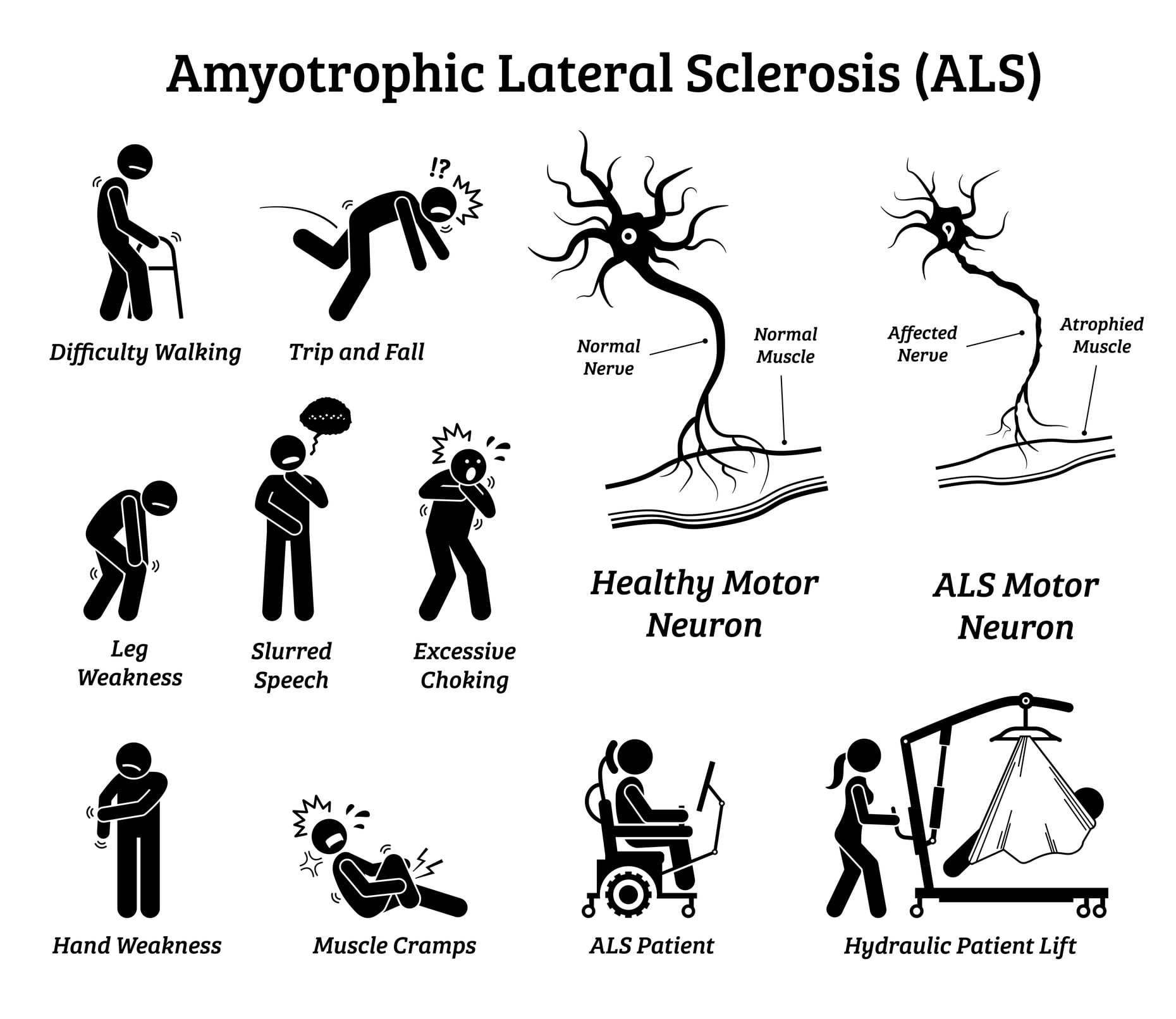
Amyotrophic lateral sclerosis, commonly referred to as ALS, is a neurological disorder that affects nerve cells in the brain and spinal cord. ALS causes loss of muscle control.

ALS is often called Lou Gehrig’s disease after the baseball player who was diagnosed with it. There is no exact known cause of the disease. However, a small number of cases, about 10%, are inherited. For the other cases, there isn’t a known cause.

The symptoms of ALS can vary from person to person. Symptoms depend on which nerve cells are affected. ALS typically begins with muscle weakness that gradually worsens over time. Symptoms might include:

  • Trouble walking or doing usual daily activities
  • Tripping and falling
  • Weakness in the legs, feet, or ankles
  • Hand weakness or clumsiness
  • Weakness associated with muscle cramps and twitching in the arms, shoulders, and tongue
  • Untimely crying, laughing, or yawning
  • Thinking or behavioral changes

ALS often starts in the hands, feet, arms, or legs, with muscle twitching and weakness in an arm or leg. It then spreads to other parts of the body, causing muscles to get weaker as more nerve cells die. The disease eventually affects control of the muscles needed to move, speak, chew, eat, swallow, and breathe. Unfortunately, there is no cure for this fatal disease.

There is generally no pain in the early stages of ALS. Pain is also not common in the later stages. ALS usually doesn’t affect bladder control. And it also doesn’t affect the senses, including the ability to taste, smell, touch, and hear.

There are several risk factors for ALS, including:

  • Genetics
  • Age
  • Sex

Several environmental factors have been associated with an increased risk of ALS. They include:

  • Smoking
  • Environmental toxin exposure
  • Military service

ALS can cause several complications as the disease progresses, including:

  • Breathing problems
  • Speaking problems
  • Eating problems
  • Dementia

ALS can be hard to diagnose early because it can have similar symptoms to other diseases. Tests that can rule out other conditions or help diagnose the disease can include:

  • Electromyogram (EMG)
  • Nerve conduction study
  • MRI
  • Blood and urine tests
  • Spinal tap
  • Muscle biopsy
  • Nerve biopsy

Treatments for ALS can’t reverse the damage, but they can slow the progression of symptoms. They can also prevent complications and make you more comfortable and independent.

You may need a team of healthcare providers and doctors trained in many areas to provide your care. This team will work together to prolong your survival and improve your quality of life. They will work to select the right treatment options for you.

The Food and Drug Administration (FDA) has approved two medicines for treating ALS:

  • Riluzole
  • Edaravone

There are many forms of therapy and forms of support when ALS affects your ability to breathe, speak, and move. They include:

  • Breathing care
  • Physical therapy
  • Occupational therapy
  • Speech therapy
  • Nutritional support
  • Psychological and social support

If you are experiencing any symptoms of ALS, you can consult with a neurologist at Jamaica Hospital Medical Center. To schedule an appointment, please call (718) 206-7246.

All content of this newsletter is intended for general information purposes only and is not intended or implied to be a substitute for professional medical advice, diagnosis or treatment. Please consult a medical professional before adopting any of the suggestions on this page. You must never disregard professional medical advice or delay seeking medical treatment based upon any content of this newsletter. PROMPTLY CONSULT YOUR PHYSICIAN OR CALL 911 IF YOU BELIEVE YOU HAVE A MEDICAL EMERGENCY.

Peripheral Neuropathy

Peripheral neuropathy is any condition that involves damage to peripheral nerves outside your brain or spinal cord. These conditions often cause weakness, numbness, and pain, usually in the hands and feet, but can also affect other areas and body functions like digestion and urination.

The peripheral nervous system sends information from the brain and spinal cord to the rest of the body through motor nerves. The peripheral nerves also send sensory information to the central nervous system through sensory nerves.

The nerves in the peripheral nervous system are divided into three categories and have a specific job.

  • Sensory nerves that receive sensation, such as temperature, pain, vibration, or touch, from the skin
  • Motor nerves that control muscle movement
  • Autonomic nerves that control functions such as blood pressure, sweating, heart rate, digestion, and bladder function

Symptoms of peripheral neuropathy depend on the nerve affected and can include:

  • Gradual onset of numbness, prickling, or tingling in your hands and feet. These sensations can spread upward into your arms and legs
  • Sharp, jabbing, throbbing, or burning pain
  • Extreme sensitivity to touch
  • Pain during activities that shouldn’t cause pain, such as pain in your feet when putting weight on them, or when they’re under a blanket
  • Lack of coordination and falling
  • Muscle weakness
  • Feeling as if you’re wearing gloves or socks when you’re not
  • Inability to move if motor nerves are affected
  • Heat intolerance
  • Excessive sweating or not being able to sweat
  • Bowel, bladder, or digestive problems
  • Drops in blood pressure, causing dizziness or lightheadedness

Peripheral neuropathy can happen for many reasons. Some include:

  • Type 2 diabetes
  • Alcohol use disorder
  • Vitamin and nutrient deficiencies
  • Autoimmune and inflammatory conditions
  • Medications and toxins
  • Tumors
  • Genetic conditions
  • Infections
  • Hansen disease (leprosy)
  • Trauma and surgery
  • Vascular disorders
  • Idiopathic neuropathy

A combination of methods are used to diagnose peripheral neuropathy including:

  • Symptoms and medical history
  • Physical and neurological exams
  • Lab, diagnostic, and imaging tests

Treatment of peripheral neuropathy varies depending on its cause. Treatments can include:

  • Medications
  • Surgery
  • Physical therapy
  • Devices and wearable equipment
  • Podiatry and foot care
  • Other pain treatments such as acupuncture, transcutaneous electrical stimulation, injections, or surgery to implant a spinal cord stimulator

Some causes of peripheral neuropathy are preventable. Some preventative or precautionary steps you can take include:

  • Eating a balanced diet
  • Staying physically active and maintaining a healthy weight
  • Wearing safety equipment as needed
  • Managing chronic conditions
  • Avoiding alcohol in excess
  • Avoiding exposure to toxins, poisons, and heavy metals

If you are experiencing symptoms of peripheral neuropathy, you can schedule an appointment with a doctor at Jamaica Hospital Medical Center’s Ambulatory Care Center, please call (718) 206-7001.

All content of this newsletter is intended for general information purposes only and is not intended or implied to be a substitute for professional medical advice, diagnosis or treatment. Please consult a medical professional before adopting any of the suggestions on this page. You must never disregard professional medical advice or delay seeking medical treatment based upon any content of this newsletter. PROMPTLY CONSULT YOUR PHYSICIAN OR CALL 911 IF YOU BELIEVE YOU HAVE A MEDICAL EMERGENCY.

National Bike Month – Stay Safe and Fit

National Bike Month begins on May 14th and culminates with Ride to Work Day on May 18, 2018.

Communities nationwide will participate in this week-long recognition good health and bring attention to the need of lessening toxic emissions that motor vehicles are having on our environment.

According to , more than half of all Americans live less than 5 – 10 miles from work. By utilizing the extensive miles of bike lanes to and from your work destination, you could probable arrive at your destination in less than an hour.

Riding a bicycle to work can be a fun and effective way to get fit.  Cycling is beneficial for the cardiovascular system because it increases oxygen intake and stimulates the heart. Studies show that riding can increase energy levels by 20 percent and in one hour burn up to 488 calories when pedaling at 12 to 14 miles per hour.

Although a bicycle is an excellent fitness tool, it is also considered a vehicle.  Therefore, the rules of the road must be obeyed and a bicycle should be operated safely to prevent injuries and accidents. Statistics show that bicyclists face higher risks in crash-related injuries and deaths than drivers in a motor vehicle.

Follow these basic riding tips to ensure your safety and reduce the risks:

  • Always ride in the same direction as traffic and do not weave in between other vehicles.
  • Obey traffic laws and signals.
  • Do not listen to music or speak on cell phones while riding.
  • Wear a proper fitting helmet.
  • Never pass another vehicle on the right.
  • Always keep your hands on the brakes.
  • Stay aware of dangerous road hazards such as potholes and broken glass.
  • Use hand signals to show motorist where you are going.

So suit up, remember to wear your helmet and cycle your way to health and a cleaner environment!

All content of this newsletter is intended for general information purposes only and is not intended or implied to be a substitute for professional medical advice, diagnosis or treatment. Please consult a medical professional before adopting any of the suggestions on this page. You must never disregard professional medical advice or delay seeking medical treatment based upon any content of this newsletter. PROMPTLY CONSULT YOUR PHYSICIAN OR CALL 911 IF YOU BELIEVE YOU HAVE A MEDICAL EMERGENCY.

Visiting the Mall Can Improve Your Health!

We all know that regular physical activity is important to our overall health, especially for seniors.

Did you know walking is a great way for older adults to remain active?

Seniors who commit to taking a brisk walk each day may be at a lower risk of:

  • Heart Disease
  • Stroke
  • Type 2 diabetes
  • Breast and colon cancers
  • Depression
  • Anxiety
  • Insomnia

With the onset of colder months upon us, how can older adults continue their walking routine and remain active?

The Centers for Disease Control and Prevention (CDC) suggests that in the colder months, you can utilize indoor malls for your brisk walk.  Malls can be pedestrian friendly, they are climate-controlled, are well lit, have benches for resting, fountains for hydrating, restrooms, as well as security guards and cameras for safety.

For more information on mall walking programs and for other walking resources visit the CDC’s Mall Walking: A program Resource Guide at –

So get yourself a comfortable pair of walking shoes, hit the mall and improve your health!

All content of this newsletter is intended for general information purposes only and is not intended or implied to be a substitute for professional medical advice, diagnosis or treatment. Please consult a medical professional before adopting any of the suggestions on this page. You must never disregard professional medical advice or delay seeking medical treatment based upon any content of this newsletter. PROMPTLY CONSULT YOUR PHYSICIAN OR CALL 911 IF YOU BELIEVE YOU HAVE A MEDICAL EMERGENCY.

National School Backpack Awareness Day

Backpacks are essential back-to- school items for kids.  They come in different colors, sizes and shapes and most importantly they help children to carry their belongings.  Backpacks are preferred by many in comparison to shoulder bags because when worn correctly, they evenly distribute weight across the body.  However, if worn incorrectly they can cause back pain or injuries and eventually lead to poor posture.

To prevent problems associated with improper backpack use, parents should first purchase a backpack that has the following features:

  • Lightweight
  • Wide and padded straps
  • Multiple compartments
  • Padded back
  • Waist belt
  • Correct size (A backpack should never be wider or longer than your child’s torso).


Practicing these safety tips will further reduce the chance of back pain or injuries caused by backpacks:

  • When packing, heavier items should be placed to the back and center of the backpack. Lighter items should be in front. Sharp objects such as scissors or pencils should be kept away from your child’s back.  Utilizing different compartments can help in distributing weight.
  • Do not over pack. Doctors recommend that children should not carry backpacks that weigh more than 10-15% of their body weight.
  • Ensure that children use both straps. Using a single strap can cause muscle strain.
  • Adjust the straps so that the backpack fits closely to your child’s back and sits two inches above the waist. This ensures comfort and proper weight distribution.
  • Encourage children to use their lockers or desks throughout the day to drop off heavy books.

The Pediatric Orthopedic Society of North America recommends that parents should always look for warning signs that indicate backpacks may be too heavy. If your child struggles to put on and take off the backpack, they are complaining of numbness or tingling or if there are red strap marks on their shoulders -It may be time for you to lighten their load.

All content of this newsletter is intended for general information purposes only and is not intended or implied to be a substitute for professional medical advice, diagnosis or treatment. Please consult a medical professional before adopting any of the suggestions on this page. You must never disregard professional medical advice or delay seeking medical treatment based upon any content of this newsletter. PROMPTLY CONSULT YOUR PHYSICIAN OR CALL 911 IF YOU BELIEVE YOU HAVE A MEDICAL EMERGENCY.