What Is OAS?

Peaches, melons, corn, cherries and cucumbers are hands down some of the seasonal fruits and vegetables that we look forward to eating during summer. While these summertime favorites are enjoyable for most, others may experience itchiness of the mouth or other discomforts after consuming them. This reaction may be due to a condition known as oral allergy syndrome (OAS).

According to the American Academy of Allergy Asthma and Immunology, OAS is defined as “a form of contact allergy reaction that occurs upon contact of the mouth and throat with raw fruits or vegetables.”   This happens because your body is unable to tell the difference between proteins in these foods and pollen. “The immune system recognizes the pollen and similar proteins in the food and directs an allergic response to it,” states the American College of Allergy, Asthma and Immunology.  Therefore if a person is allergic to pollen there is a chance they can develop OAS.

Most cases of OAS are attributed to an allergy to birch pollen. Those who are allergic to birch pollen may experience symptoms when eating fruits or vegetables such as cherries, zucchini, peaches and plums.  Allergies to other types of pollen from grass or ragweed may trigger a reaction when consuming produce such as melons, cucumbers or bananas.

Symptoms of OAS are typically mild and last for only a few minutes; they may include:

  • Itching
  • Tingling
  • Redness
  • Mild swelling of the lips or tongue
  • Irritation of the throat and gums

In most cases these symptoms do not need treatment as they resolve in minutes.  Avoidance of trigger foods is highly recommended; however, if you must have a fruit or vegetable, consider peeling or cooking it to potentially lessen the reaction.  These recommendations may not work for everyone because each person’s tolerance is different.

OAS is diagnosed by an allergy specialist who will conduct an evaluation.  The specialist may recommend skin testing to pollens or other allergens that may be causing your symptoms.  It is also possible that your allergy specialist will ask you to eat certain foods while observing your reaction; this is called a food challenge.

It is important to keep in mind that OAS is a cross reaction to pollen rather than an allergic reaction to the actual fruit itself. The symptoms of a true food allergy can be more severe and can lead to anaphylaxis. The following symptoms should not be ignored and receive medical attention immediately:

  • Vomiting or stomach cramps
  • Shortness of breath
  • Hives
  • Shock
  • Tightness of the throat or trouble swallowing
  • Dizziness

The Division of Allergy and Immunology at Jamaica Hospital Medical Center focuses on the diagnosis and long-term treatment of allergic and immunologic conditions. To speak with an Allergy Specialist at Jamaica Hospital about OAS or food allergies, please call 718-206-6742

All content of this newsletter is intended for general information purposes only and is not intended or implied to be a substitute for professional medical advice, diagnosis or treatment. Please consult a medical professional before adopting any of the suggestions on this page. You must never disregard professional medical advice or delay seeking medical treatment based upon any content of this newsletter. PROMPTLY CONSULT YOUR PHYSICIAN OR CALL 911 IF YOU BELIEVE YOU HAVE A MEDICAL EMERGENCY.

Tourette’s Syndrome and Other Tic Disorders

imsis560-015At some point in our lives, we have all experienced some form of an uncontrollable muscle spasm or twitch. These “tics” as they are commonly referred to are normally harmless and don’t last long. In some cases however, they are the result of a child onset, neurodevelopmental condition known as a tic disorder.

Tics are involuntary, repetitive movements or vocalizations and are distinguished as either motor or vocal/phonic in nature

  • Motor tics are short-lasting, sudden movements that most often take place in the head and neck region. Simple motor tics include, but are not limited to, eye blinking, head bobbing, jaw movements, shoulder shrugging, and neck stretching.
  • Vocal or phonic tics produce a sound. Examples include, but are not limited to sniffing, throat clearing, grunting, hooting, and shouting. Complex vocal tics involve the usage of words or phrases and in rare cases, inappropriate language is used.

Those with tic disorders explain experiencing a tingling sensation that can only be relieved by performing the tic. They might be able to momentarily suppress a tic, but doing so only creates a level of discomfort that can only be relieved by performing the tic.

Approximately 25% of all children experience some type of tic disorder, with boys being far more likely to develop a disorder than girls. Tic disorders usually emerge develop in children between the ages of five and seven. They tend to increase in frequency between the ages of eight to twelve. Most children with tic disorders see their symptoms dissipate or totally resolve themselves during late adolescence.

Tic disorders are distinguished by the types of tics present and by the length of time that the tics have been present.

  • Transient tic disorder – This disorder most commonly appears in youth. It affects between 5% and 25% of school-age children. Transient tic disorder is characterized by the presence of one or more tics for at least one month but less than one year. The majority of tics seen in this disorder are motor tics, though vocal tics may also be present.
  • Chronic motor or vocal tic disorder – While transient tics disappear within a year, chronic tics can last for a year or more. Chronic tic disorder is characterized by the presence of one or more long-lasting tics. They may be either motor or vocal, but not both. Chronic tics occur in less than one in 100 children.
  • Tourette’s syndrome – This syndrome is the most severe tic disorder. It is characterized by the presence of both motor tics and vocal tics. The severity of Tourette’s syndrome often changes over time. There may be periods of reduced tic frequency followed by heightened tic activity. Fortunately, many people with Tourette’s syndrome find that their condition improves as they get older.

Doctors do not know what causes tics to occur, but stress and lack of sleep seem to play a role in the occurrence and severity of tics. Some medications are also thought to contribute to tics, but there is no evidence to confirm this theory.

Treatment for tic disorders depends on the severity of the condition. In many instances, no treatment is needed and the tics will resolve over time. In some instances, a doctor may suggest behavioral therapy, medication, or a combination of the two. Behavioral therapy can help those with tic disorders learn how to manage their tic symptoms and reduce tic frequency. Medications are typically prescribed to reduce tic frequency and enhance a person’s daily life.

If you think your child has a tic disorder, discuss the condition with their pediatrician. If you do not have a pediatrician, Jamaica Hospital’s Ambulatory Care Center has many excellent doctors who can provide care. To make an appointment, please call 718-206-7001.

All content of this newsletter is intended for general information purposes only and is not intended or implied to be a substitute for professional medical advice, diagnosis or treatment. Please consult a medical professional before adopting any of the suggestions on this page. You must never disregard professional medical advice or delay seeking medical treatment based upon any content of this newsletter. PROMPTLY CONSULT YOUR PHYSICIAN OR CALL 911 IF YOU BELIEVE YOU HAVE A MEDICAL EMERGENCY.

Nat’l Stroke Awareness Month – Think F.A.S.T!

lightbulb brainstorming creative idea abstract icon on business hand.

May is National Stroke Awareness Month and in honor of that, Jamaica Hospital Medical Center (JHMC) would like to discuss how you can recognize the warning signs of having a stroke.

The easiest way to recognize the warning signs of a stroke is to think F.A.S.T. :

F- Face Drooping: If one side of the person’s face is drooping, ask them if their face feels numb and ask them to smile.   You should be concerned if they are unable to smile or their smile is uneven.

A- Arm weakness:  Does the individual’s arm feel numb or weak? Ask them to raise both arms and watch to see if one arm drifts downward.

S- Speech difficulty: If the person is trying to speak and they are difficult to understand or their speech is slurred, ask them to say a simple sentence, such as “my name is Jane,” repeatedly.

T- Time to call 9-1-1:  You should never wait more than five minutes to call 9-1-1 if someone is displaying these warning signs.

Additional symptoms of a stroke are:

  • Sudden confusion
  • Severe headaches
  • Blurred vision
  • Dizziness
  • Sudden loss of coordination

Stroke is one of the leading causes of death and long-term disability in the United States.  Eighty percent of strokes are preventable and by spotting these warning signs and acting quickly, the severity of a stroke can be reduced drastically.

If someone you know is exhibiting the warning signs of a stroke, call 9-1-1 for help immediately. If you are interested in finding out if you are at risk for a stroke, you can make an appointment with the Jamaica Hospital Medical Center’s Ambulatory Care Center.  Call 718-206-7001 for an appointment.

All content of this newsletter is intended for general information purposes only and is not intended or implied to be a substitute for professional medical advice, diagnosis or treatment. Please consult a medical professional before adopting any of the suggestions on this page. You must never disregard professional medical advice or delay seeking medical treatment based upon any content of this newsletter. PROMPTLY CONSULT YOUR PHYSICIAN OR CALL 911 IF YOU BELIEVE YOU HAVE A MEDICAL EMERGENCY.

Hearing Loss in Young Adults

200299337-001Hearing loss is the third most common health problem in the United States.

Studies show that the number of people  worldwide who are at risk for hearing loss is growing and this includes a substantial number of young adults.  According to the World Health Organization (WHO),” around 1.1 billion teenagers and young adults face this risk due to exposure to unsafe levels of sound. ”

WHO explains, that “the amount of damage that is done depends on multiple factors – the duration of exposure to the sound, how intense or loud the sound is and how frequently exposure to unsafe levels of sound occurs.”

Doctors classify hearing loss by degree:

  • Mild hearing loss: One-on-one conversations are fine, but it’s hard to catch every word when there’s background noise.
  • Moderate hearing loss: You often need to ask people to repeat themselves during conversations in person and on the phone.
  • Severe hearing loss: Following a conversation is almost impossible unless you have a hearing aid.
  • Profound hearing loss: You can’t hear when other people speaking unless they are extremely loud. You can’t understand what they’re saying without a hearing aid or cochlear implant.(http://www.webmd.com/a-to-z-guides/hearing-loss-causes-symptoms-treatment#1)

Teenagers and young adults can do many things to help prevent hearing loss. “Measures as simple as keeping the volume of personal audio devices down to safe levels. Wearing ear plugs when visiting an environment with loud sound levels is important, as is limiting the amount of time spent engaging in activities with potentially unsafe sound levels.(http://www.medicalnewstoday.com/articles/290185.php)

It is important for young adults and teens to keep in mind damage done to their hearing is irreversible. “They should be aware that once you lose your hearing, it won’t come back.” Dr. Etienne Krug  WHO director for the Department for Management of Noncommunicable Diseases, Disability, Violence and Injury Prevention.


All content of this newsletter is intended for general information purposes only and is not intended or implied to be a substitute for professional medical advice, diagnosis or treatment. Please consult a medical professional before adopting any of the suggestions on this page. You must never disregard professional medical advice or delay seeking medical treatment based upon any content of this newsletter. PROMPTLY CONSULT YOUR PHYSICIAN OR CALL 911 IF YOU BELIEVE YOU HAVE A MEDICAL EMERGENCY.

Adult Acne

According to the American Academy of Dermatology, some adults continue to get acne well into their 30’s, 40’s, and 50’s.  There is even a possibility that you can get acne for the first time as an adult.

As an adult, acne can be frustrating because the remedies you used as a teen are rendered useless or can even make your acne worse.  But, how do we determine whether the marks on our skin are acne or merely a blemish?

Blemishes, or pimples, can show up on your face, neck, chest, back and shoulders because these areas have the greatest number of oil glands.  The marks come and go with little or no treatment.  Acne, on the other hand, has a long term affect, requires treatment and if left untreated, may leave dark spots and permanent scars on the skin.

Women who are menopausal are more likely, than men of a similar age, to get what dermatologists call “adult-onset acne.”

Some other reasons for developing adult acne are:

  • Stress
  • Family history
  • Excessive use of hair and skin care products
  • Medication side effects
  • Undiagnosed medical conditions
  • Excessive consumption of carbohydrates
  • Excessive consumption of  dairy

There are many do it yourself remedies, but if nothing clears your adult acne, you should see a dermatologist.  With proper treatment and a great deal of patience, it can be controlled.

All content of this newsletter is intended for general information purposes only and is not intended or implied to be a substitute for professional medical advice, diagnosis or treatment. Please consult a medical professional before adopting any of the suggestions on this page. You must never disregard professional medical advice or delay seeking medical treatment based upon any content of this newsletter. PROMPTLY CONSULT YOUR PHYSICIAN OR CALL 911 IF YOU BELIEVE YOU HAVE A MEDICAL EMERGENCY.

Jamaica Hospital Supports American Heart Month

heart disease -637632692This month, many candy hearts will be exchanged in honor of Valentine’s Day, but Jamaica Hospital Medical Center wants the community to give some thoughts to hearts that are not made of chocolate. That’s because February is also American Heart Month, a special designation intended to remind everyone the importance of heart health.

According to the Centers for Disease Control and Prevention (CDC), heart disease is the leading cause of death in both men and women in the United States and the numbers are increasing. The good news is, by working with your doctor to monitor your condition and by making changes to your lifestyle, heart disease is preventable for most.

Here are some tips to improve your heart health

  • Schedule an appointment with your doctor, who can conduct a physical evaluation and test your blood pressure and cholesterol levels. If necessary, your doctor can prescribe certain medications to control both.
  • Maintain a healthy diet and control your weight. Obesity is one of the leading contributors to heart disease.
  • Increase your physical activity. By joining a gym or taking up walking, make exercise part of your daily routine
  • Monitor your alcohol intake and if you smoke, quit immediately. Cigarette smoke and alcohol are two factors that put individuals at an increased risk of heart disease.

Please make an appointment to see your doctor to have your heart checked immediately. If you do not have a doctor, you can make an appointment at Jamaica Hospital’s Ambulatory Care Center at 718-206-7001. If a heart condition is suspected, a referral can be to our Cardiology Department, where we can perform a variety of tests to determine the best treatment plan for you.

Join Jamaica Hospital as we recognize American Heart Month. By maintaining a healthy lifestyle and your regularly scheduled appointments, you can enjoy this Valentine’s Day with a clean bill of heart health.

All content of this newsletter is intended for general information purposes only and is not intended or implied to be a substitute for professional medical advice, diagnosis or treatment. Please consult a medical professional before adopting any of the suggestions on this page. You must never disregard professional medical advice or delay seeking medical treatment based upon any content of this newsletter. PROMPTLY CONSULT YOUR PHYSICIAN OR CALL 911 IF YOU BELIEVE YOU HAVE A MEDICAL EMERGENCY.

Resolve to Eat Right

2017 food -621275084With the holidays drawing to a close, it will soon be the time for resolutions.  Why not make eating right a part of your resolution?

Eating right doesn’t have to be complicated.  You can begin with a simple shift to lean meats, fruits, vegetables, and complex carbohydrates into your nutritional regimen while lessening your intake of processed foods, white flour and sugar.

For more information on eating healthy, contact the Jamaica Hospital Medical Center’s Nutritional Services Department at 718-206-7056 to speak with a nutritionist.

All content of this newsletter is intended for general information purposes only and is not intended or implied to be a substitute for professional medical advice, diagnosis or treatment. Please consult a medical professional before adopting any of the suggestions on this page. You must never disregard professional medical advice or delay seeking medical treatment based upon any content of this newsletter. PROMPTLY CONSULT YOUR PHYSICIAN OR CALL 911 IF YOU BELIEVE YOU HAVE A MEDICAL EMERGENCY.

How Does Cupping Therapy Benefit Your Health?

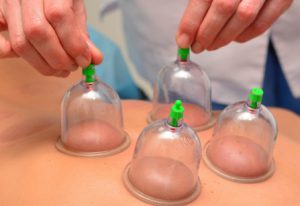
cupping 484372683Anyone who watched the Olympics this summer couldn’t help but notice the large, circular marks on the bodies of many of the competitors. These are the result of cupping therapy, a growing trend among athletes and celebrities.

While gaining a great deal of attention recently, the practice of cupping actually dates back to ancient Egyptian, Chinese and Middle Eastern cultures where it is believed to help with pain, blood flow, and relaxation.

How does cupping work? First, it’s important to know that there are two different types of cupping.

Dry cupping is one type of therapy that involves a therapist placing special cups on the patient for a few minutes to create a suction sensation. The suction is created by placing a flammable substance inside the cups to start a fire. Once the fire inside the cup is extinguished, they are placed upside down on the patient’s skin. As the air inside the cups cools, it creates a vacuum which causes the skin under the cup to rise and redden as the blood vessels expand. The suction process takes approximately three minutes.

While dry cupping ends after this process is completed; a second form of cupping, known as wet cupping can take place if desired. During the wet cupping process, the therapist will make light cuts in the skin with a scalpel after the cups are removed, then reapply the cups to draw a small quantity of blood (and presumed toxins) out of the body. After the cups are removed the second time, ointments and bandages are applied to prevent infection.

Those who practice cupping as a form of therapy usually get anywhere from three to seven cups applied per session.

While there is very little research to prove the effectiveness of cupping, some studies have stated that it could be used to help with the management of pain and assist with conditions such as acne, herpes zoster and cervical spondylosis.

Cupping is considered safe is performed by a qualified therapist, but it can lead to mild discomfort and in some cases, it can cause burns, bruises, or skin infections. It is recommended that you speak to your doctor before you start cupping.

All content of this newsletter is intended for general information purposes only and is not intended or implied to be a substitute for professional medical advice, diagnosis or treatment. Please consult a medical professional before adopting any of the suggestions on this page. You must never disregard professional medical advice or delay seeking medical treatment based upon any content of this newsletter. PROMPTLY CONSULT YOUR PHYSICIAN OR CALL 911 IF YOU BELIEVE YOU HAVE A MEDICAL EMERGENCY.

Importance of a Back to School Dental Check Up

child at dentist -469174173When planning your child’s return to school in the fall, as parents you have a list of supplies and purchases that need to me be made to make sure they have everything they need to have a great school year. While planning your child’s entrance back to school, make sure you schedule an appointment for your child’s dental check-up.

Healthy teeth are important to your child’s overall health. Did you know that a correlation between oral infections and diabetes, asthma, heart disease and obesity has been identified?  According to the National Institutes of Health, 20% to 30% of children and adolescents in the United States have chronic health conditions due to a lack of good oral hygiene.

Chronic illness may interfere with a child’s ability to succeed in school.  There has been statistical evidence that shows a direct link between chronic illness and missed school time that can lead to a decline in your child’s school performance.

Some ways to promote healthy teeth in your child are:

  • Brush teeth regularly – At the age of 3, you can begin to teach your child proper brushing techniques by using a drop of fluoride toothpaste on a soft-bristled toothbrush.
  • Avoid Sugar – Ingesting sweets brings about an acidity that causes decay-producing bacteria. A sugary snack can lead to a mouth full of cavities.
  • Regular dental treatments – Your child should see a dentist around the time of his/her first birthday and then regularly thereafter. It is important to establish relationship of trust between your child and their dentist.

If you feel anxious about a visit to the dentist, try not to convey those feelings to your child.  Encourage your child to discuss any fears about visiting a dentist and be reassuring that the dental professional is there to help them.

If you are interested in making an appointment for your child to see a dentist, the Department of Dentistry at Jamaica Hospital Medical Center provides valuable services to the community. For an appointment call, 718-206-6980.


When planning your child’s return to school after the summer break, make certain that scheduling an appointment for a dental checkup is on your list of priorities.

Healthy teeth are important to your child’s overall health. Did you know that there is a correlation between oral infections and diabetes, asthma, heart disease and obesity?  According to the National Institutes of Health, 20% to 30% of children and adolescents in the United States have chronic health conditions due to a lack of good oral hygiene.

Chronic illness may interfere with a child’s ability to succeed in school.  There has been statistical evidence that shows a direct link between chronic illness and missed school time that can lead to a decline in your child’s school performance.

Some ways to promote healthy teeth in your child are:

  • Brushing teeth regularly – At the age of 3, you can begin to teach your child proper brushing techniques by using a drop of fluoride toothpaste on a soft-bristled toothbrush.
  • Avoiding sugar – Ingesting sweets can produce acids that cause decay-producing bacteria to develop.
  • Scheduling regular dental treatments – Your child should see a dentist around the time of his/her first birthday and then regularly thereafter. It is important to establish relationship of trust between your child and their dentist.

If you feel anxious about a visit to the dentist, try not to convey those feelings to your child.  Encourage them to discuss any fears about visiting a dentist and be reassuring that the dental professional is there to help.

If you are interested in making an appointment for your child to see a dentist, the Department of Dentistry at Jamaica Hospital Medical Center provides valuable services to the community. For an appointment, please call 718-206-6980.


All content of this newsletter is intended for general information purposes only and is not intended or implied to be a substitute for professional medical advice, diagnosis or treatment. Please consult a medical professional before adopting any of the suggestions on this page. You must never disregard professional medical advice or delay seeking medical treatment based upon any content of this newsletter. PROMPTLY CONSULT YOUR PHYSICIAN OR CALL 911 IF YOU BELIEVE YOU HAVE A MEDICAL EMERGENCY.

Home Remedies for Dandruff

dandruff-124694187Dandruff, the tiny white or yellow flakes of skin that are shed by the scalp is a major source of concern for many people.  It can be caused by having dry scalp, psoriasis, eczema or an inflammatory skin condition called seborrheic dermatitis.

Dandruff can be treated with several over the counter and prescription products.  However if you choose to try a natural approach, there are a few items that can be found in your home that may help in providing relief. Here are a few:

  • Aspirin – take two crushed aspirins and mix it with your shampoo. Leave the mixture on the hair for two minutes then rinse.
  • Baking soda – apply a handful to your wet hair and after a few minutes rinse with water.
  • Apple cider vinegar – mix a quarter cup of it with a quarter cup of water and apply to your hair. Leave it on for 15 minutes to an hour then rinse thoroughly. Apply twice a week.
  • Coconut oil – apply three to five teaspoons of coconut oil to your scalp and let it sit for an hour. Shampoo normally after each treatment.
  • Lemon juice – massage two teaspoons of lemon juice into your scalp and rinse thoroughly. Then apply one teaspoon of lemon juice mixed with one cup of water. Repeat daily.
  • Aloe vera – massage this into your scalp prior to washing your hair. It helps to prevent the itchiness of dry skin.
  • Olive oil – massages about ten drops into your scalp and cover your head with a shower cap overnight. In the morning you can shampoo your hair normally.

It is believed that most of these remedies work because of their moisturizing, antibacterial and antifungal properties.

It is advised that you consult your doctor before applying these products and if your dandruff still persists after application.

All content of this newsletter is intended for general information purposes only and is not intended or implied to be a substitute for professional medical advice, diagnosis or treatment. Please consult a medical professional before adopting any of the suggestions on this page. You must never disregard professional medical advice or delay seeking medical treatment based upon any content of this newsletter. PROMPTLY CONSULT YOUR PHYSICIAN OR CALL 911 IF YOU BELIEVE YOU HAVE A MEDICAL EMERGENCY.