STI (STD) Awareness Month

Sexually transmitted infections (STIs), also known as sexually transmitted diseases (STDs) are infections that are spread by sexual contact. April marks National STI Awareness Month, a campaign sparked by the Centers for Disease Control and Prevention as an effort to counter the nation’s high rates of sexually transmitted infections. The United States currently has one of the highest rates of sexually transmitted diseases among all countries in the developed world.

There is a lot of misinformation out there about sex, sexual health, and sexually transmitted infections. The best way to prevent STI’s is to not have sexual intercourse but that isn’t realistic for most. However, knowledge of prevention is the second best option. To prevent the transmission of STIs, people need to be taught how to effectively use condoms.  The Centers for Disease Control and Prevention (CDC), outlines the steps on their website https://www.cdc.gov/condomeffectiveness/male-condom-use.html

All content of this newsletter is intended for general information purposes only and is not intended or implied to be a substitute for professional medical advice, diagnosis or treatment. Please consult a medical professional before adopting any of the suggestions on this page. You must never disregard professional medical advice or delay seeking medical treatment based upon any content of this newsletter. PROMPTLY CONSULT YOUR PHYSICIAN OR CALL 911 IF YOU BELIEVE YOU HAVE A MEDICAL EMERGENCY.

Jamaica Hospital Makes America’s 250 Best Hospitals List

There are over 5,000 hospitals in the United States, so to be listed as one of the top 250 in the country is quite an accomplishment.

Healthgrades, a leading resource that connects consumers, physicians and health systems, announced its list of America’s 250 Best Hospitals for 2020 and Jamaica Hospital Medical Center was one of only a select few in New York City to be recognized.

This accomplishment places Jamaica Hospital in the top 5% of hospitals in the nation, demonstrating the hospital’s commitment to delivering superior patient care outcomes year after year.

To determine America’s Best Hospital recipients, Healthgrades analyzed the performance of all participating hospitals nationwide. Clinical quality outcomes for 32 conditions and procedures, including heart attack, heart failure, pneumonia, respiratory failure, sepsis and stroke were evaluated over a three year period. Healthgrades recognized only those hospitals that “consistently exhibit exceptional, comprehensive quality care.”

Healthgrades has concluded that hospitals receiving this award provide significantly better care and, the most important measurement of any hospital, superior outcomes to its patients.

In addition to the recognition as one of America’s Best Hospitals, Healthgrades also awarded Jamaica Hospital with the following:

  • America’s 100 Best Hospitals For Coronary Intervention Award – 2020
  • America’s 100 Best Hospital for Stroke Care Award – 2020
  • Neurosciences Excellence Award – 2020, 2019
  • Patient Safety Excellence Award – 2018, 2017

“We are honored to be recognized by Healthgrades as one of America’s Best Hospitals. This achievement signifies Jamaica Hospital’s commitment to delivering the highest quality care to our patients,” stated Bruce J. Flanz, President and CEO of Jamaica Hospital Medical Center. “Over the years we have initiated many programs and services that focus on providing patient-centered care to our community, knowing that it would ultimately lead to better patient outcomes.  This acknowledgment by Healthgrades reaffirms that we are on the right path to becoming a high-reliability organization.”

All content of this newsletter is intended for general information purposes only and is not intended or implied to be a substitute for professional medical advice, diagnosis or treatment. Please consult a medical professional before adopting any of the suggestions on this page. You must never disregard professional medical advice or delay seeking medical treatment based upon any content of this newsletter. PROMPTLY CONSULT YOUR PHYSICIAN OR CALL 911 IF YOU BELIEVE YOU HAVE A MEDICAL EMERGENCY.
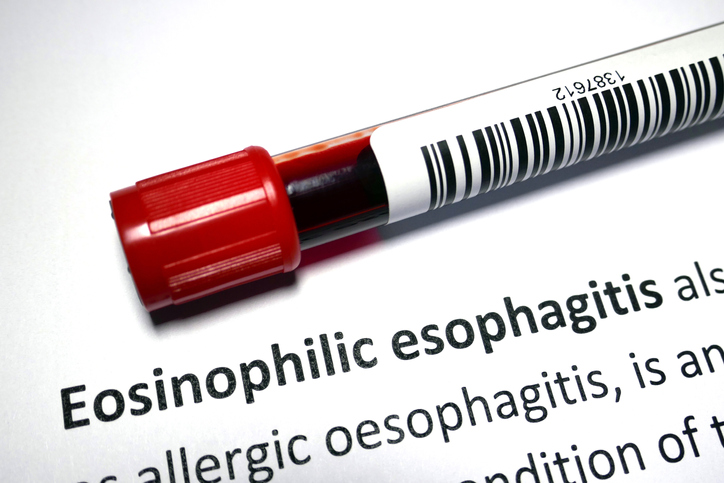
Eosinophilic Esophagitis

Eosinophilic esophagitis is a condition where a large number of white blood cells accumulate on the lining of the esophagus as the result of a reaction to certain foods, acid reflux or allergens.

The accumulation of white blood cells can cause irritation and scarring in the esophagus. This eventually can lead to severe narrowing, and the potential obstruction of the esophagus.

What are the symptoms of eosinophilic esophagitis?

In adults this can include:

  • Difficulty swallowing
  • Chest pain
  • Heartburn
  • Upper abdominal pain
  • Food getting stuck in esophagus

In children the symptoms can include:

  • Frequent regurgitation
  • Abdominal pain
  • Vomiting
  • Food getting stuck in the esophagus
  • Weight loss
  • Poor growth

There are several environmental and genetic factors that may put some at risk of eosinophilic esophagitis more than others.  The condition tends to run in families and is more common in males than females. It is seen more frequently in colder climates. There are more diagnoses in the spring and fall due to higher levels of pollen in the air.

How is this condition diagnosed?  A physician will take a complete medical history, and order a test to check the levels of eosinophils in the blood. Doctors may also order an endoscopy to visually inspect the lining of the esophagus or a biopsy of the lining of the esophagus.

Treatment for this condition will require eliminating exposure to whatever is determined as the cause of an allergic reaction.  Doctors may also recommend keeping the head of the bed elevated at night to prevent acid reflux and maintaining a healthy weight.  They may also eliminate certain foods from a patient’s diet. Medications can also be prescribed to help keep symptoms under control.

If you would like to schedule an appointment with a physician at Jamaica Hospital Medical Center, please call 718-206-6742.

All content of this newsletter is intended for general information purposes only and is not intended or implied to be a substitute for professional medical advice, diagnosis or treatment. Please consult a medical professional before adopting any of the suggestions on this page. You must never disregard professional medical advice or delay seeking medical treatment based upon any content of this newsletter. PROMPTLY CONSULT YOUR PHYSICIAN OR CALL 911 IF YOU BELIEVE YOU HAVE A MEDICAL EMERGENCY.
Jamaica Hospital Makes America’s 250 Best Hospitals List

There are over 5,000 hospitals in the United States, so to be listed as one of the top 250 in the country is quite an accomplishment.

Healthgrades, a leading resource that connects consumers, physicians and health systems, announced its list of America’s 250 Best Hospitals for 2020 and Jamaica Hospital Medical Center was one of only a select few in New York City to be recognized.

This accomplishment places Jamaica Hospital in the top 5% of hospitals in the nation, demonstrating the hospital’s commitment to delivering superior patient care outcomes year after year.

To determine America’s Best Hospital recipients, Healthgrades analyzed the performance of all participating hospitals nationwide. Clinical quality outcomes for 32 conditions and procedures, including heart attack, heart failure, pneumonia, respiratory failure, sepsis and stroke were evaluated over a three year period. Healthgrades recognized only those hospitals that “consistently exhibit exceptional, comprehensive quality care.”

Healthgrades has concluded that hospitals receiving this award provide significantly better care and, the most important measurement of any hospital, superior outcomes to its patients.

In addition to the recognition as one of America’s Best Hospitals, Healthgrades also awarded Jamaica Hospital with the following:

  • America’s 100 Best Hospitals For Coronary Intervention Award – 2020
  • America’s 100 Best Hospital for Stroke Care Award – 2020
  • Neurosciences Excellence Award – 2020, 2019
  • Patient Safety Excellence Award – 2018, 2017

“We are honored to be recognized by Healthgrades as one of America’s Best Hospitals. This achievement signifies Jamaica Hospital’s commitment to delivering the highest quality care to our patients,” stated Bruce J. Flanz, President and CEO of Jamaica Hospital Medical Center. “Over the years we have initiated many programs and services that focus on providing patient-centered care to our community, knowing that it would ultimately lead to better patient outcomes.  This acknowledgment by Healthgrades reaffirms that we are on the right path to becoming a high-reliability organization.”

All content of this newsletter is intended for general information purposes only and is not intended or implied to be a substitute for professional medical advice, diagnosis or treatment. Please consult a medical professional before adopting any of the suggestions on this page. You must never disregard professional medical advice or delay seeking medical treatment based upon any content of this newsletter. PROMPTLY CONSULT YOUR PHYSICIAN OR CALL 911 IF YOU BELIEVE YOU HAVE A MEDICAL EMERGENCY.
NYPD Recognizes Jamaica Hospital Medical Center Trauma Service

Last month, the NYPD Patrol Borough South recognized the Jamaica Hospital Medical Center Trauma Department for its many years of service to the community and to the NYPD.  A plaque of appreciation was presented to the hospital by Assistant Chief Ruben Beltran the new Commanding Officer of  Patrol  Borough Queens South and his predecessor Chief David Barrere. Both Chiefs lauded the hospital’s personnel for their unyielding commitment to serving the public and the men and women of the NYPD. Chief Barrere stated “I’ve been at this hospital for officers with ankle injuries and wrist injuries and I’ve also been here for officers with gunshot wounds to the head. There are officers who are walking around today and who are still serving as police officers because of the work you do here.”

Accepting the award on behalf of Jamaica Hospital were Bruce J. Flanz, President and CEO and Dr. Katherine McKenzie, Medical Director of the Trauma Department. Mr. Flanz stated “ I’ve been working at the hospital for 44 years and throughout that entire time the collaboration we’ve been doing with the police department is just second to none. Everybody, our entire team is privileged to serve you and what you do every day to keep us all safe is just amazing and words cannot adequately thank you and your team.” Dr. McKenzie commented that “It is not only our great privilege to care of police officers who become our patients but to also care for patients that are victims of crime and we frequently interact with the police department here in providing care for those patients.”

All content of this newsletter is intended for general information purposes only and is not intended or implied to be a substitute for professional medical advice, diagnosis or treatment. Please consult a medical professional before adopting any of the suggestions on this page. You must never disregard professional medical advice or delay seeking medical treatment based upon any content of this newsletter. PROMPTLY CONSULT YOUR PHYSICIAN OR CALL 911 IF YOU BELIEVE YOU HAVE A MEDICAL EMERGENCY.
How Cold Weather Affects Asthma

When very cold and dry air enters the body, and subsequently the lungs it can cause a tightening of the airways. Cold air can cause wheezing, tightness of the chest muscles, shortness of breath, coughing, a sense of dizziness and sometimes difficulty speaking.

Taking some precautions before going outside in very cold weather can help ease the symptoms. It is important to keep asthma under control at all times. It can be helpful to take a dose of an asthma inhalant ten minutes before going outdoors. This will aid in keeping the airways open. People with asthma should carry their medication with them if they know they are going to be outdoors for any period of time. Another good idea is to keep your mouth and nose covered with a scarf when you are outside in cold weather. This will help to warm the air you are breathing. Anyone who has asthma should avoid strenuous outdoor activities. Sometimes the act of just walking on a windy day can bring on symptoms of an asthma attack. Try breathing through your nose more and through your mouth less. This will help to warm the air that enters your lungs.

People with asthma know the effects it can have during the cold days of winter. Taking a few precautions can help minimize the effects of the cold air on the body.

If you are experiencing symptoms of asthma and would like to seek the advice of a physician at Jamaica Hospital Medical Center’s Ambulatory Care Center, call 718-206-7001 to schedule an appointment.

All content of this newsletter is intended for general information purposes only and is not intended or implied to be a substitute for professional medical advice, diagnosis or treatment. Please consult a medical professional before adopting any of the suggestions on this page. You must never disregard professional medical advice or delay seeking medical treatment based upon any content of this newsletter. PROMPTLY CONSULT YOUR PHYSICIAN OR CALL 911 IF YOU BELIEVE YOU HAVE A MEDICAL EMERGENCY.

How To Tell The Difference Between a Bad Cold, Bronchitis and Pneumonia

That dreaded time of year is here, it is cold season.  In the United States, this season starts around September and typically lasts until March or April.

Chances are like many, you may catch a cold. If you do, you may display symptoms that include sneezing, scratchy or sore throat, runny or stuffy nose, coughing, congestion or a low-grade fever. These symptoms are normal but can worsen when left untreated and may cause serious illnesses such as bronchitis or pneumonia to develop.

It is important to know when your condition is worsening. There are several signs that can help you to recognize when your common cold has become something more.

Here are some symptoms of bronchitis to look out for:

  • A cold that persists for two weeks or more
  • Shortness of breath or wheezing
  • Coughs that produce thick clear, white, green or yellow mucous or blood
  • Rapid breathing
  • Soreness of the chest

Pneumonia can develop after having a serious cold or flu. Symptoms can be mild or severe depending on factors such as age and your state of health. The symptoms of pneumonia can include:

  • Violent coughing spasms that produce very little mucous
  • Coughs with bloody or yellow or greenish mucous
  • Fever
  • Sharp or stabbing chest pain when you breathe deeply or cough
  • Loss of appetite
  • Fatigue
  • Clammy skin or excessive sweating
  • Chills
  • Muscle aches

If your cold persists longer than two weeks and you are experiencing these symptoms, it is important that you contact your doctor as soon as possible. In severe cases, pneumonia can be life threatening.

To schedule an appointment with a physician at Jamaica Hospital Medical Center, please call 718-206-7001.

All content of this newsletter is intended for general information purposes only and is not intended or implied to be a substitute for professional medical advice, diagnosis or treatment. Please consult a medical professional before adopting any of the suggestions on this page. You must never disregard professional medical advice or delay seeking medical treatment based upon any content of this newsletter. PROMPTLY CONSULT YOUR PHYSICIAN OR CALL 911 IF YOU BELIEVE YOU HAVE A MEDICAL EMERGENCY.
Jamaica Hospital Medical Center Earns Age-Friendly Health System Status

Jamaica Hospital Medical Center is proud to announce that we have earned an “Age-Friendly Health System” status; a designation that less than 20 percent of the health care facilities across the country have yet to receive.

Receiving an Age-Friendly status demonstrates that Jamaica Hospital and the Jamaica Hospital Nursing Home are committed to this rapidly growing movement to improve the health care for older adults.

This initiative was a collaborative effort founded in 2017 by the John A. Hartford Foundation, the Institute for Healthcare Improvement (IHI), the American Hospital Association (AHA), and the Catholic Health Association of the United States (CHA) with the intention of helping hospitals and other care settings implement a set of evidence-based interventions specifically designed to improve care for older adults.

The initiative is guided by a framework of essential elements known as the “4Ms”, which include:

  • What Matters – Communicating with our patients to better understand their personal and healthcare goals. This is achieved by asking a series of questions to the patient as well as family members or caregivers. Factors in what matters most to our patients could include end-of-life care, placement issues, or financial concerns.
  • Medication – Prescribing age-friendly medications that do not interfere with the goals of our older patients. This includes not prescribing certain medications that can affect a patient’s mobility and using our electronic medical record system to identify potentially inappropriate medications.
  • Mentation – Preventing, identifying, treating and managing mental health issues such as depression and dementia in our older patients. This involves conducting a mental health status examination.
  • Mobility – Ensuring that our older adult patients move safely and maintain function. This is done by getting our patients to ambulate more while in our care and by conducting a Fall Risk Assessment and providing mobility devices if necessary.

Receiving this designation was a collaborative effort led by Dr. Angelo Canedo and Dr. Alan Roth and included a leadership committee comprised of physicians, nurses, and hospital administrators. After a rigorous nine-month process that included educating all of our providers and submitting data that demonstrated the 4Ms have been incorporated into our practices.

The 4M initiative for treating older adults is currently being practiced throughout our network, by providers in our Emergency Departments, Ambulatory Care Centers, Inpatient Units, and in our long-term care facility

“Older adults deserve safe, high-quality healthcare. The Age-Friendly Health System initiative is an important part of our vision to provide it to them,” stated Dr. Alan Roth. “We worked very hard to achieve this goal and are extremely appreciative of those who contributed to helping us attain it.”

All content of this newsletter is intended for general information purposes only and is not intended or implied to be a substitute for professional medical advice, diagnosis or treatment. Please consult a medical professional before adopting any of the suggestions on this page. You must never disregard professional medical advice or delay seeking medical treatment based upon any content of this newsletter. PROMPTLY CONSULT YOUR PHYSICIAN OR CALL 911 IF YOU BELIEVE YOU HAVE A MEDICAL EMERGENCY.

Fever Facts

Fever symptoms

Winter is the most common time of year for someone to develop a fever. With that in mind, Jamaica Hospital Medical Center wants to provide you with the following fever facts.

A fever is a temporary increase in your body’s normal temperature range, (36–37° Centigrade or 98–100° Fahrenheit).

Symptoms associated with a fever may include:

  • Sweating
  • Chills and shivering
  • Headaches
  • Muscle aches
  • Loss of appetite
  • Dehydration
  • General weakness and lethargy
  • Increased sensitivity to pain

While the reason most often associated with developing a fever is an infection
(viral or bacterial), there are other potential causes, including:

  • Heat exhaustion
  • Dehydration
  • Certain inflammatory conditions such as rheumatoid arthritis
  • Side effect resulting from certain medications
  • Reaction to certain immunizations
  • Alcohol or drug withdrawal
  • A malignant tumor
  • Sunburn

There are many different types of thermometers that can be used to determine if a fever is present, including an oral (mouth), tympanic (ear) or temporal artery (forehead) type of thermometer. However, when taking an infant’s temperature, it is best to use a rectal thermometer.

It is important to take your temperature when you are at rest as physical activity can raise your temperature.

Taking fever-reducing over-the-counter medications, such as acetaminophen or ibuprofen is one of the simplest and most effective ways to bring down a fever. Other things you can do to reduce fever include drinking more fluids and taking a bath in comfortable-temperature water.  Applying cool compresses can also relieve fever symptoms.

Fevers by themselves may not be a cause for alar or a reason to call a doctor. Yet there are some circumstances when you should seek medical advice.

  • Infants – Contact your doctor if your baby is under three months and has a temperature of 100.4 F (38 C) or higher if your baby is between three-six months old and has a temperature of over 102 F (38.9 C) and seems unusually irritable or lethargic.
  • Children – Call your doctor if your child is listless, unresponsive or irritable, vomits repeatedly, has a severe headache or stomachache, or has any other symptoms causing significant discomfort or has a fever lasting longer than three days
  • Adults – contact your doctor if your temperature is 103 F (39.4 C) or higher or if your fever is accompanied by a severe headache, stiff neck, skin rash, sensitivity to light, mental confusion, excessive vomiting, convulsions or seizures, or difficulty breathing.

If you are experiencing symptoms of fever and would like to see a doctor at Jamaica Hospital Medical Center, please call 718-206-7001.

All content of this newsletter is intended for general information purposes only and is not intended or implied to be a substitute for professional medical advice, diagnosis or treatment. Please consult a medical professional before adopting any of the suggestions on this page. You must never disregard professional medical advice or delay seeking medical treatment based upon any content of this newsletter. PROMPTLY CONSULT YOUR PHYSICIAN OR CALL 911 IF YOU BELIEVE YOU HAVE A MEDICAL EMERGENCY.

Jamaica Hospital’s ER Earns Clinical Ultrasound Accreditation

Jamaica Hospital Medical Center is proud to announce that its Emergency Department recently received Clinical Ultrasound Accreditation by the American College of Emergency Physicians (ACEP).

Clinical ultrasound is the real-time performance and interpretation of ultrasound by a physician at the bedside to diagnose, monitor, and treat medical conditions.

Jamaica Hospital’s emergency department physicians are now trained to utilize ultrasound to guide them during complex procedures and help them expedite the correct diagnosis for many life-threatening conditions such as abdominal aneurysms, ectopic pregnancies, and internal bleeding. This diagnosis can be made within minutes, ultimately resulting in faster treatment and better patient outcomes.

Accreditation by the American College of Physicians indicates that Jamaica Hospital’s Emergency Ultrasound Program meets the high standards set forth by ACEP in the Ultrasound Guidelines: Emergency, Point-of-Care and Clinical Ultrasound Guidelines in Medicine.  The hospital’s program has met ACEP standards in all areas including administration, performing and interpreting ultrasound examinations, and patient confidentiality and privacy.

In addition, accreditation required the hospital’s emergency physicians to be credentialed in emergency ultrasound – a process that requires extensive training and continuing education.

Jamaica Hospital was one of only a handful of hospitals in New York State, and the only one in Queens to obtain ACEP’s Clinical Ultrasound Accreditation.  This designation is a testament to the continued high quality of care provided by Jamaica Hospital’s Emergency Department.  According to Celine Thum, MD, FAAEM, Director of Emergency Ultrasound, “Point-of-care ultrasound is an integral part of how emergency care is delivered at Jamaica Hospital and has already had a positive impact on our patients. Our doctors have used this technology to identify emergent pathologies in patients, which has resulted in positive outcomes and lives saved.”

Geoffrey Doughlin, MD, Chairman of Emergency Medicine added, “We are proud to have achieved this accreditation by the American College of Emergency Physicians as it demonstrates that Jamaica Hospital is among the best in the world at delivering point-of-care emergency ultrasound.”

All content of this newsletter is intended for general information purposes only and is not intended or implied to be a substitute for professional medical advice, diagnosis or treatment. Please consult a medical professional before adopting any of the suggestions on this page. You must never disregard professional medical advice or delay seeking medical treatment based upon any content of this newsletter. PROMPTLY CONSULT YOUR PHYSICIAN OR CALL 911 IF YOU BELIEVE YOU HAVE A MEDICAL EMERGENCY.