Why You Should Get An Annual Exam

An annual exam is a good way of tracking your health progress.  Some of the benefits are:

  • Primary prevention
  • To identify risk factors for common chronic diseases
  • To detect disease that has no apparent symptoms (secondary prevention)
  • A way for the doctor to counsel people to promote healthy behavior
  • To update clinical data since your last check-up
  • To enhance the relationship between you and your doctor

If you are interested in scheduling an exam, Jamaica Hospital Medical Center’s Ambulatory Care Center is centrally located and has convenient hours.  Call 718-206-7001 for an appointment.

All content of this newsletter is intended for general information purposes only and is not intended or implied to be a substitute for professional medical advice, diagnosis or treatment. Please consult a medical professional before adopting any of the suggestions on this page. You must never disregard professional medical advice or delay seeking medical treatment based upon any content of this newsletter. PROMPTLY CONSULT YOUR PHYSICIAN OR CALL 911 IF YOU BELIEVE YOU HAVE A MEDICAL EMERGENCY.

New Year’s Eve Safety Tips 2020

The Centers for Disease Control and Prevention (CDC) recently issued guidelines for Americans to safely celebrate New Year’s Eve.

The CDC recommends postponing travel and celebrating at home with people you live with. You can always ring in the New Year virtually with friends and family. These are the best and safest ways to protect those living in your household and others.

If you are intending to travel or go out for New Year’s Eve events, the CDC cautions you to:

  • If traveling – Research your chosen destination for cases of COVID- 19. You can utilize the CDC’s COVID Data Tracker to identify the latest number of cases in each area.
  • Always wear a mask in public settings (restaurants, public transportation, when around people who don’t live with you)
  • Wear your mask correctly – Over your nose and mouth, secured under your chin while snugly hugging your cheeks.
  • Get your flu shot
  • Stay at least 6 feet from people who do not live with you.
  • Avoid crowds and poorly ventilated indoor spaces.
  • Wash your hands often with soap and water for at least 20 seconds especially after you have been in a public place, after blowing your nose, coughing or sneezing and before eating
  • Stay home if you are sick
  • Isolate yourself from other members of your family and wear a mask if you are sick.

If you are hosting a celebration, the CDC recommends:

  • Talk with guests ahead of time to set expectations for celebrating together.
  • Limit the number of guests.
  • Keep celebrations outdoors, if possible.
  • If indoors, open windows and doors.  Use a window fan to blow air out, which will pull fresh are in through the open windows.
  • Clean and disinfect frequently touched surfaces and items between use
  • Have guests bring their own food, drinks, plates, cups and utensils
  • Have extra unused masks available for your guests and encourage everyone to wear them inside and outside.
  • Keep background music volume low so guests don’t need to shout.

You also need to be mindful that, along with the new CDC guidelines, New Year’s Eve revelers are also urged to keep the traditional safety tips such as not drinking excessively or driving while intoxicated.

There is no doubt that 2020 has been an unusual year because of the COVID-19 pandemic.  The virus has all but re-imagined how we celebrate our holidays. With the New Year approaching, we are all awaiting better days to come. Let’s celebrate, but let’s do it safely. 

For more tips and guidelines visit – https://www.cdc.gov/coronavirus/2019-ncov/daily-life-coping/holidays/new-years-eve.html#:~:text=Stay%20at%20least%206%20feet,as%20masks%20and%20hand%20sanitizer.

All content of this newsletter is intended for general information purposes only and is not intended or implied to be a substitute for professional medical advice, diagnosis or treatment. Please consult a medical professional before adopting any of the suggestions on this page. You must never disregard professional medical advice or delay seeking medical treatment based upon any content of this newsletter. PROMPTLY CONSULT YOUR PHYSICIAN OR CALL 911 IF YOU BELIEVE YOU HAVE A MEDICAL EMERGENCY.

Holiday Tips For People With Diabetes

The holiday season is here and it seems like everywhere we go a variety of treats are being served.  It becomes hard to resist temptation and we may eat more than we normally do.

While overeating is not a good idea for anyone, people who have diabetes have to be very mindful of the things they eat and practice healthy habits.

Following these tips can help diabetics to manage their health and still enjoy the holidays:
• Try to keep to a regular schedule of when you eat.
• If you are going to a party, offer to bring a healthy dish with you.
• Cut back on food high in carbohydrates and fat if you are going to be eating sweets
• Don’t skip meals in anticipation of eating one big one, that could lead to overeating.
• Make sure you find time for some exercise to burn up the extra calories
• Eat the things you enjoy, but try to watch the portion sizes
• Get plenty of rest.
• Check your blood sugar regularly.
• Try not to consume a lot of soda or alcoholic beverages.

Jamaica Hospital Medical Center offers a free program to treat patients at risk of developing diabetes.  The Diabetes Prevention Program (DPP) was created by the Centers for Disease Control and Prevention (CDC) and was adopted by the hospital to help people with prediabetes to manage their health. Learn more about our program here: https://jamaicahospital.org/pre-diabetes/

All content of this newsletter is intended for general information purposes only and is not intended or implied to be a substitute for professional medical advice, diagnosis or treatment. Please consult a medical professional before adopting any of the suggestions on this page. You must never disregard professional medical advice or delay seeking medical treatment based upon any content of this newsletter. PROMPTLY CONSULT YOUR PHYSICIAN OR CALL 911 IF YOU BELIEVE YOU HAVE A MEDICAL EMERGENCY.

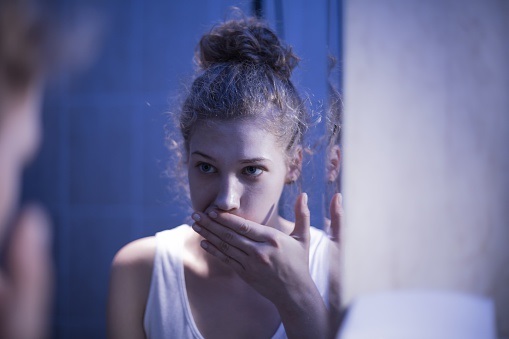
Bulimia

Bulimia, also known as bulimia nervosa, is classified as an eating and mental health disorder. 

The disease causes a person to binge eat large amounts of food in a relatively short period of time.  This action causes feelings of guilt and remorse and leads to forced purging.

The purging of consumed food can include:

  • Induced vomiting
  • Use of laxatives
  • Periods of starvation
  • Excessive exercise

Although the exact cause of bulimia is unknown, it can be related to many factors including, stress, genetics, peer pressure, dieting, depression or substance abuse.

The onset of Bulimia usually begins in people between the ages of 14 and 22, tell-tale signs are:

  • A preoccupation with body shape and weight
  • Living in fear of gaining weight
  • Recurrent episodes of eating abnormally large amounts of food
  • Body Dysmorphia (a mental health disorder in which you can’t stop thinking about one or more perceived defects or flaws in your appearance)
  • Purging of food after overeating

The disease can be treated with therapy which aims to help the individual adjust the unrealistic way they view their appearance, negative thoughts and strengthens the ability to face and overcome their issues. The support of family and loved ones also play a key role in the treatment of bulimia.

Bulimia is a serious condition and can be life-threatening. If you, or someone you know, is showing the signs of bulimia and would like to speak with a health care professional, please call Jamaica Hospital Medical Center’s Ambulatory Care Center at 718-206-7001, to schedule an appointment.

All content of this newsletter is intended for general information purposes only and is not intended or implied to be a substitute for professional medical advice, diagnosis or treatment. Please consult a medical professional before adopting any of the suggestions on this page. You must never disregard professional medical advice or delay seeking medical treatment based upon any content of this newsletter. PROMPTLY CONSULT YOUR PHYSICIAN OR CALL 911 IF YOU BELIEVE YOU HAVE A MEDICAL EMERGENCY.

Fun Ways To Get Your Children to Wash Their Hands

In a world where proper hand washing techniques have never been more important, it is vital that we teach our children how to properly wash their hands.

As you know, the basics of effective hand washing are:

  • Using warm water to wet your hands.
  • Using soap to lather up your hands.
  • Rubbing your soaped up hands together, for no less than 20 seconds, scrubbing the entire hand and between the fingers all the way up to the wrist.
  • Rinsing your hands and wrist with running water.
  • Drying your hands using a clean towel, preferably disposable towel.

However, this seemingly easy process may become tedious when applied to young children.

Here are some fun ways to implement proper handwashing techniques to make your child more enthusiastic about hand hygiene:

  • Use soaps that have an inviting scent like, fruit or bubble gum.
  • Utilize a reward system. Keep a chart for your child with colorful stickers that indicate how many times they properly washed their hands on a particular day. If they are successful, a small reward at the end of the week can be a great motivator.
  • Choose songs to sing while washing or recite a children’s rhyme that lasts approximately 20 seconds.
  • Bubbles, lots of bubbles.  Choose a soap that foams up so that your child can equate washing their hands with a fun activity and not a chore.
  • Create a routine for your child to wash their hands, especially before and after mealtime.

Studies have shown that proper hand washing is one of the best ways to keep healthy and ward off harmful viruses and bacteria.

Remember, the best way to teach our children is by example. Be sure your child knows and observes how you are washing your hands. 

All content of this newsletter is intended for general information purposes only and is not intended or implied to be a substitute for professional medical advice, diagnosis or treatment. Please consult a medical professional before adopting any of the suggestions on this page. You must never disregard professional medical advice or delay seeking medical treatment based upon any content of this newsletter. PROMPTLY CONSULT YOUR PHYSICIAN OR CALL 911 IF YOU BELIEVE YOU HAVE A MEDICAL EMERGENCY.

A “Honey” of a Cold Remedy

Honey and cinnamon have become indispensable ingredients in so many ways, not only because of their delicious flavor, but also because of their numerous benefits.

The tasty combo has been used for thousands of years  to add extra flavor to food, but if you have caught a summer cold and are coughing intensely,  honey and cinnamon is a  delicious, nutritious and effective all-natural cough syrup.

Ingredients:

One cup of honey

Three tablespoons of freshly squeezed lemon juice

One teaspoon of cinnamon

1/4 cup of lukewarm water.

Slowly mix the lemon juice with the honey and then gradually add the warm water and then take one or two teaspoons of this homemade cough syrup before going to bed, to relieve the symptoms of cough without experiencing any side effects.

If you cold lasts more than a week, you may want to seek the opinion of a health care professional. If you’d like to schedule an appointment at the Jamaica Hospital Medical Center’s Ambulatory Care Center, please call 718-206-7002.

All content of this newsletter is intended for general information purposes only and is not intended or implied to be a substitute for professional medical advice, diagnosis or treatment. Please consult a medical professional before adopting any of the suggestions on this page. You must never disregard professional medical advice or delay seeking medical treatment based upon any content of this newsletter. PROMPTLY CONSULT YOUR PHYSICIAN OR CALL 911 IF YOU BELIEVE YOU HAVE A MEDICAL EMERGENCY.

October Is Dental Hygiene Awareness Month

October is National Dental Hygiene Awareness Month. In celebration of this observance, Jamaica Hospital Medical Center’s Dental Clinic would like to share a few tips about good oral hygiene.

Here are a few tips to help make sure you maintain good oral health:

  • Maintenance – Don’t forget your dental routine and always remember to brush and floss your your teeth at least twice a day
  • Eat healthy – Cookies and sweets are nice treats, but instead of reaching for candy, fill your plate with crunchy vegetables such as celery.
  • Drink healthy – Avoid drinking sodas, sports drinks and juices with lots of sugar. Instead, drink water with fluoride in it to keep your teeth strong and healthy. If you want something bubbly, try carbonated water. If you must drink soda, use a straw to keep most of the acid off your teeth.
  • Consuming alcohol – Aside from all the obvious reasons to be responsible when consuming alcohol, also know that it can affect your teeth. Red wine can stain your teeth and the acid in most alcoholic beverages can also be damaging.
  • Dental check up – Whether it is a regular check-up or a visit to deal with an existing issue, it is important to make the time to schedule your regular dental check-ups.
  • Using your teeth as a tool – Avoid using your teeth to tear open packages, tear tape or ribbons, or cracking nuts. These types of cations can lead to chips or breaks.

If you are experiencing a dental issue or would like to schedule an appointment for a routine check up, please call the Jamaica Hospital Medical Center’s Dental Clinic at 718-206-6980.

All content of this newsletter is intended for general information purposes only and is not intended or implied to be a substitute for professional medical advice, diagnosis or treatment. Please consult a medical professional before adopting any of the suggestions on this page. You must never disregard professional medical advice or delay seeking medical treatment based upon any content of this newsletter. PROMPTLY CONSULT YOUR PHYSICIAN OR CALL 911 IF YOU BELIEVE YOU HAVE A MEDICAL EMERGENCY.

Breast Cancer Awareness Month

October is Breast Cancer Awareness month.   Did you know that breast cancer is one of the most common cancers found in women in the United States? It estimated that each year, one in eight women will develop invasive breast cancer in their lifetime.

Over 40,000 women are expected to lose their fight to disease. However, more women are surviving breast cancer due to improvements in treatment and early detection.

Cancer deaths can be decreased by as much as one-third with early detection and treatment.

Early detection can start from home.  Doctors suggest that women perform monthly breast self-exams.  In addition to yearly screenings and mammograms, self-exams can help women to monitor changes or abnormalities that may occur in her breasts.  It is important to remember that breast self-exams are never a substitute for clinical breast exams or mammograms.

The American Cancer Society recommends that women should begin receiving clinical breast exams in their twenties. Women below the age of forty are advised to receive them every three years. Those over 40 should schedule yearly mammograms and clinical breast exams.

Mammograms are one of the most effective breast screening and diagnostic tools; however, other tools such as MRI’s or ultrasounds may also be used to further evaluate abnormalities or help diagnose breast cancer.

Early and immediate treatment is one of the benefits women will gain from early detection of cancer. If you are age forty and older schedule an appointment for a mammogram as soon as possible.  The American College of Radiology is a great resource to find accredited facilities and breast imaging centers.

All content of this newsletter is intended for general information purposes only and is not intended or implied to be a substitute for professional medical advice, diagnosis or treatment. Please consult a medical professional before adopting any of the suggestions on this page. You must never disregard professional medical advice or delay seeking medical treatment based upon any content of this newsletter. PROMPTLY CONSULT YOUR PHYSICIAN OR CALL 911 IF YOU BELIEVE YOU HAVE A MEDICAL EMERGENCY.

The History of Eye Glasses

Over 60 percent of the adult population in the United States today wears eyeglasses. Modern day eyeglasses have their roots that date back more than 1000 years. In the middle ages Monks were known to use reading stones that were glass spheres, sometimes filled with water,  that were placed on top of objects in order to magnify them. The first documented use of eyeglasses was attributed to being developed in Italy.  In the 13th century Venetian glass blowers made the first solid glass lenses that were held by frames and that were a primitive version of modern day wearable eyeglasses.
In the 17th century eyeglasses started to be made that could correct vision. Glasses could be made with either concave lenses, for nearsightedness, or convex lenses for farsightedness. Benjamin Franklin invented bifocal lenses in 1784. Glass was the material used in the production of eyeglasses for centuries until the latter part of the 20th century when plastic became widely used in eyeglasses as it was lighter and safer than glass. Now many eyeglasses are being made from polycarbonate which is lighter still and more resilient to scratches.

All content of this newsletter is intended for general information purposes only and is not intended or implied to be a substitute for professional medical advice, diagnosis or treatment. Please consult a medical professional before adopting any of the suggestions on this page. You must never disregard professional medical advice or delay seeking medical treatment based upon any content of this newsletter. PROMPTLY CONSULT YOUR PHYSICIAN OR CALL 911 IF YOU BELIEVE YOU HAVE A MEDICAL EMERGENCY.

Bed Wetting

Most children are completely potty trained by the age of 5 , but since we cannot determine a date when the bladder will completely develop, the statistical normal age range should be between 5 and 7 years old. However, if your child is between the ages of 5 and 7 years old and continues to have bed wetting “accidents” it may be typical or it may be an indication of other issues.

Some common medical issues that may cause bed-wetting may be that your child’s bladder is under developed or small, a hormone imbalance, a urinary tract infection, diabetes, sleep apnea or chronic constipation.

According to the Mayo Clinic, a parent or guardian should become concerned about their childs bed wetting when:

  1. Your child still wets the bed after age 7
  2. Your child starts to wet the bed after a few months of being dry at night
  3. The bed-wetting is accompanied by painful urination, unusual thirst, pink or red urine, hard stools, or snoring

Although your childs bed-wetting can be frustrating, there could be a great deal of embarassment and low self esteem associated with the condition. If the condition persists, visit to you doctor would be indicated.

If you’d like to make an appointment for your child to be examined at the Jamaica Hospital Medical Center’s Ambulatory Care Center, please call 718-206-7001.

All content of this newsletter is intended for general information purposes only and is not intended or implied to be a substitute for professional medical advice, diagnosis or treatment. Please consult a medical professional before adopting any of the suggestions on this page. You must never disregard professional medical advice or delay seeking medical treatment based upon any content of this newsletter. PROMPTLY CONSULT YOUR PHYSICIAN OR CALL 911 IF YOU BELIEVE YOU HAVE A MEDICAL EMERGENCY.