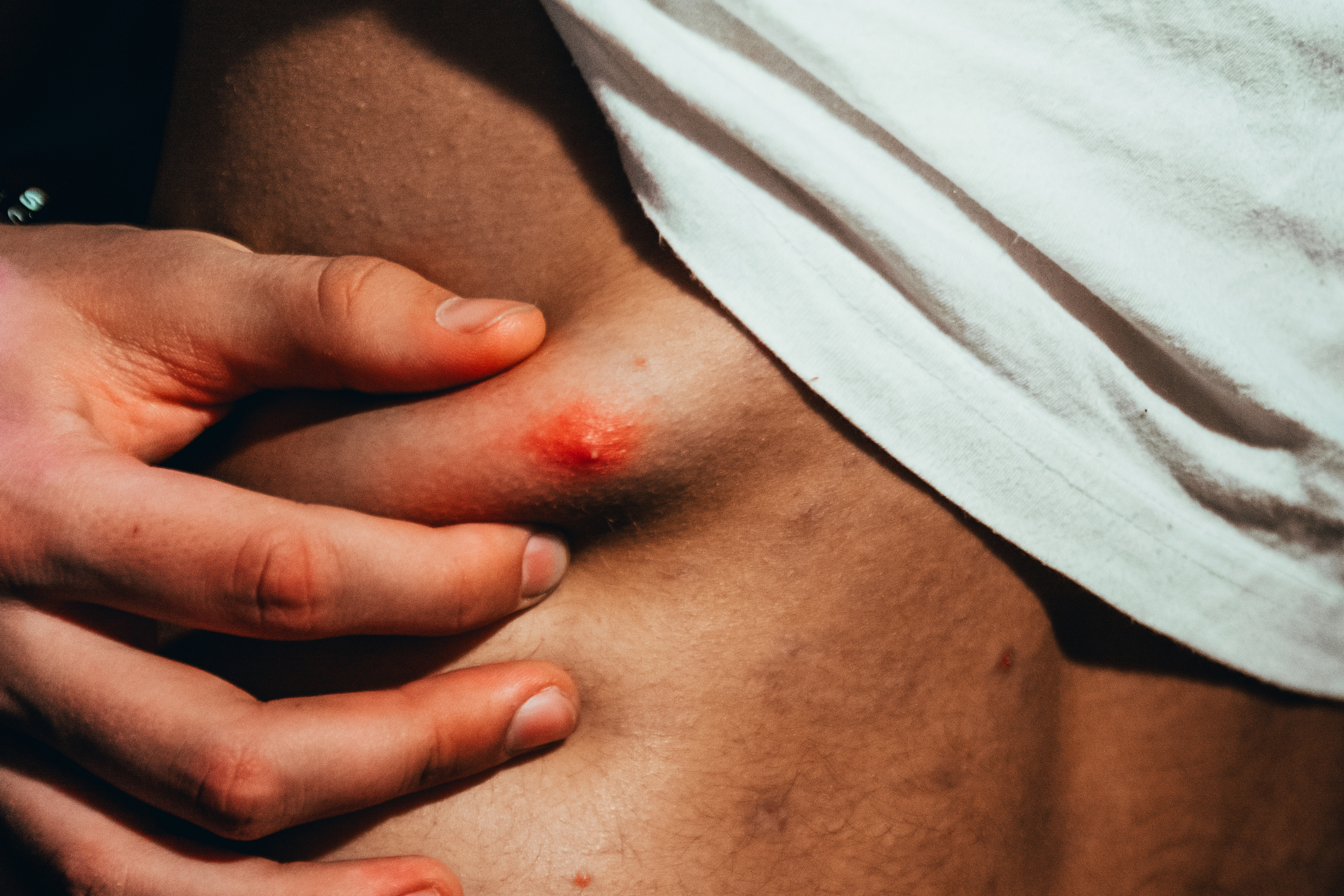
Hidradenitis Suppurativa

Hidradenitis suppurativa, also known as acne inversa, is a condition that causes small, painful lumps to form underneath the skin. These lumps usually develop in areas such as the armpits, the groin, buttocks, and breasts where the skin rubs together.  

Hidradenitis suppurativa starts after puberty and usually before the age of 40. It can last for many years, worsening over time.  

Hidradenitis suppurativa can affect one or more areas of the body, with several signs and symptoms, including: 

  • Blackheads- small, pitted areas of the skin that often appear in pairs 
  • Painful pea-sized lumps that form under the skin in areas where more sweat and oil glands are present, or where the skin rubs together, that can last for weeks or months 
  • Leaking bumps or sores that can get bigger, break open, and drain pus with an odor 
  • Tunnels that form under the skin. These tunnels connect lumps and heal slowly, and drain blood and pus 

Some people who have hidradenitis suppurative experience only mild symptoms; however, the course of the disease varies extremely. Excess weight and smoking are associated with worse symptoms, but people who are thin and smoke can also experience severe symptoms of the disease. 

Hidradenitis suppurativa occurs when hair follicles become blocked. The cause of the blockage isn’t known; however, experts think it may be connected to hormones, genetic predisposition, cigarette smoking, or excess weight.  

Several risk factors can increase the chance of developing hidradenitis suppurativa. They include: 

  • Age 
  • Sex 
  • Race 
  • Family history 
  • Certain conditions 
  • Smoking 

Severe and persistent hidradenitis can cause complications, including: 

  • Infection in the affected area 
  • Restricted movement due to sores and scar tissue  
  • Skin cancer, such as squamous cell carcinoma, has been reported with long-term hidradenitis suppurativa 
  • Scars and skin changes after wounds have healed, leaving pitted skin and rope-like scars 
  • Swelling in the arms, legs, or genital area, due to scar tissue caused by hidradenitis that blocks the lymph nodes in those areas from draining 
  • Psychological effects and social isolation, such as depression, anxiety, or not wanting to go out in public due to the location, drainage, and odor of the sores 
  • Lifelong pain 

Hidradenitis suppurativa can often be mistaken for acne or pimples. A healthcare provider can make a diagnosis based on signs and symptoms, skin appearance, and medical history. Hidradenitis suppurativa can be difficult to diagnose and requires specialized care, so a healthcare provider may refer a patient to a dermatologist.  

There aren’t any laboratory tests available to diagnose hidradenitis suppurativa; however, if there is pus or drainage present in the wounds, samples may be taken for testing. 

Treatment for hidradenitis suppurativa can include medications, surgeries, or both to help control symptoms and prevent complications of the condition.  

Medications used to treat hidradenitis suppurativa can include: 

  • Antibiotics 
  • Steroid injections 
  • Hormonal therapy 
  • Biologics 
  • Retinoids 
  • Pain medicine 

Surgical procedures used to treat hidradenitis suppurativa include: 

  • Uncovering the tunnels under the skin by removing tissue to expose them 
  • Punch debridement, which removes a single inflamed bump 
  • Laser therapy 
  • Surgical removal of all the infected skin 

If you or a loved one is suffering from hidradenitis suppurativa, you can visit Jamaica Hospital Medical Center’s Division of Dermatology. To make an appointment, please call (718) 206- 6742. 

All content of this newsletter is intended for general information purposes only and is not intended or implied to be a substitute for professional medical advice, diagnosis or treatment. Please consult a medical professional before adopting any of the suggestions on this page. You must never disregard professional medical advice or delay seeking medical treatment based upon any content of this newsletter. PROMPTLY CONSULT YOUR PHYSICIAN OR CALL 911 IF YOU BELIEVE YOU HAVE A MEDICAL EMERGENCY.


What is Induration?

Induration is a deep, thickening of the skin from edema, inflammation, or infiltration, including cancer.

Signs of indurated skin include:

  • Skin that feels firmer to the touch than the surrounding skin
  • Skin that appears thick
  • Skin that looks smooth and shiny

The indurated areas commonly appear on the hands and face, but can also be found on the chest, back, abdomen, breast, or buttocks.

The primary underlying causes of skin induration include:

  • Specific types of skin infection
  • Cutaneous metastatic cancers
  • Panniculitis
  • Hives

The precise physiological process that results in many conditions that cause skin induration includes inflammation and infiltration of the skin by certain types of cancer cells.

Several types of skin infections with symptoms of skin induration include:

  • An abscess
  • An inflamed cyst
  • Insect bites that become infected

The diagnosis of skin induration is made by palpation or the feeling of the area, assessing whether the raised area feels hard and resistant.

Treatment of skin induration varies depending on the underlying cause. Treatment options include:

  • For an abscess, the treatment option may be antibiotics, incision, or drainage
  • For inflammatory disorders, such as scleroderma or lichen sclerosus, immunosuppressants or steroid creams can be used.

Supportive care for skin induration conditions can vary greatly, depending on the underlying cause. Examples of supportive care for skin conditions can include:

  • Warm compresses
  • Analgesia
  • Elevation of the affected extremity to help reduce swelling

If you are experiencing any signs of skin induration, you can schedule an appointment with a doctor at Jamaica Hospital Medical Center’s Ambulatory Care Center, please call (718) 206-7001.

All content of this newsletter is intended for general information purposes only and is not intended or implied to be a substitute for professional medical advice, diagnosis or treatment. Please consult a medical professional before adopting any of the suggestions on this page. You must never disregard professional medical advice or delay seeking medical treatment based upon any content of this newsletter. PROMPTLY CONSULT YOUR PHYSICIAN OR CALL 911 IF YOU BELIEVE YOU HAVE A MEDICAL EMERGENCY.

Learning More About Keratosis Pilaris, A Skin Condition That Can Worsen In Cold Weather

Weather associated with the Fall and Winter months can negatively impact your body in many ways, including how it affects your skin.  Jamaica Hospital Medical Center would like to share information about one such skin condition, keratosis pilaris, that is normally associated with cold, dry weather.

Keratosis pilaris is a common, chronic skin condition that causes small, scaly bumps on the skin where there are hair follicles. These bumps are the result extra keratin, which is a type of protein that’s part of skin, hair, and nails. Keratin forms under the skin, blocking the opening of the hair follicle. When the hair follicle becomes plugged it leads to tiny rough, red patches on the skin that often resemble goose bumps. These bumps can appear on the upper arms, thighs, and buttocks. They can also appear on the cheeks and on the sides of the torso.

It is unknown as to why keratin builds up, but you are considered more at risk of developing it if you have a parent or sibling who has it. Also, those who already have eczema or atopic dermatitis are believed to have an increased chance of having the condition.

While understanding what causes keratosis pilaris is still somewhat of a mystery, we do know one factor that can exacerbate the condition – the weather. Even though keratosis pilaris is not officially considered a seasonal condition, it usually becomes worse in dry or cold conditions, typically associated in the Fall and Winter months. This is because cold weather breeds dry skin, which in turn seems to irritate keratosis pilaris. For some, thankfully, the rash will disappear once warmer temperatures return.

Although there is no cure for keratosis pilaris, for some the condition can improve with age and without treatment.  For others, symptoms can be managed through a few different treatment options, including the use of topical exfoliants or retinoids or, in severe cases, laser therapy. There are also many things you can do at home to reduce the symptoms of keratosis pilaris, including:

  • Using a moisturizer or a lubricating lotion
  • Not vigorously scrubbing the skin
  • Drying off gently after showering
  • Using a humidifier to eliminate dry air
  • Avoiding the use of harsh cleansers and soaps

It is important to note that treatment may improve the appearance of the bumps, but the condition often comes back if treatment is stopped.  You should speak with your doctor or dermatologist to determine the correct course of treatment for your skin condition.

To make an appointment with a dermatologist at Jamaica Hospital’s Ambulatory Care Center, please call 718-206-7001.

All content of this newsletter is intended for general information purposes only and is not intended or implied to be a substitute for professional medical advice, diagnosis or treatment. Please consult a medical professional before adopting any of the suggestions on this page. You must never disregard professional medical advice or delay seeking medical treatment based upon any content of this newsletter. PROMPTLY CONSULT YOUR PHYSICIAN OR CALL 911 IF YOU BELIEVE YOU HAVE A MEDICAL EMERGENCY.