
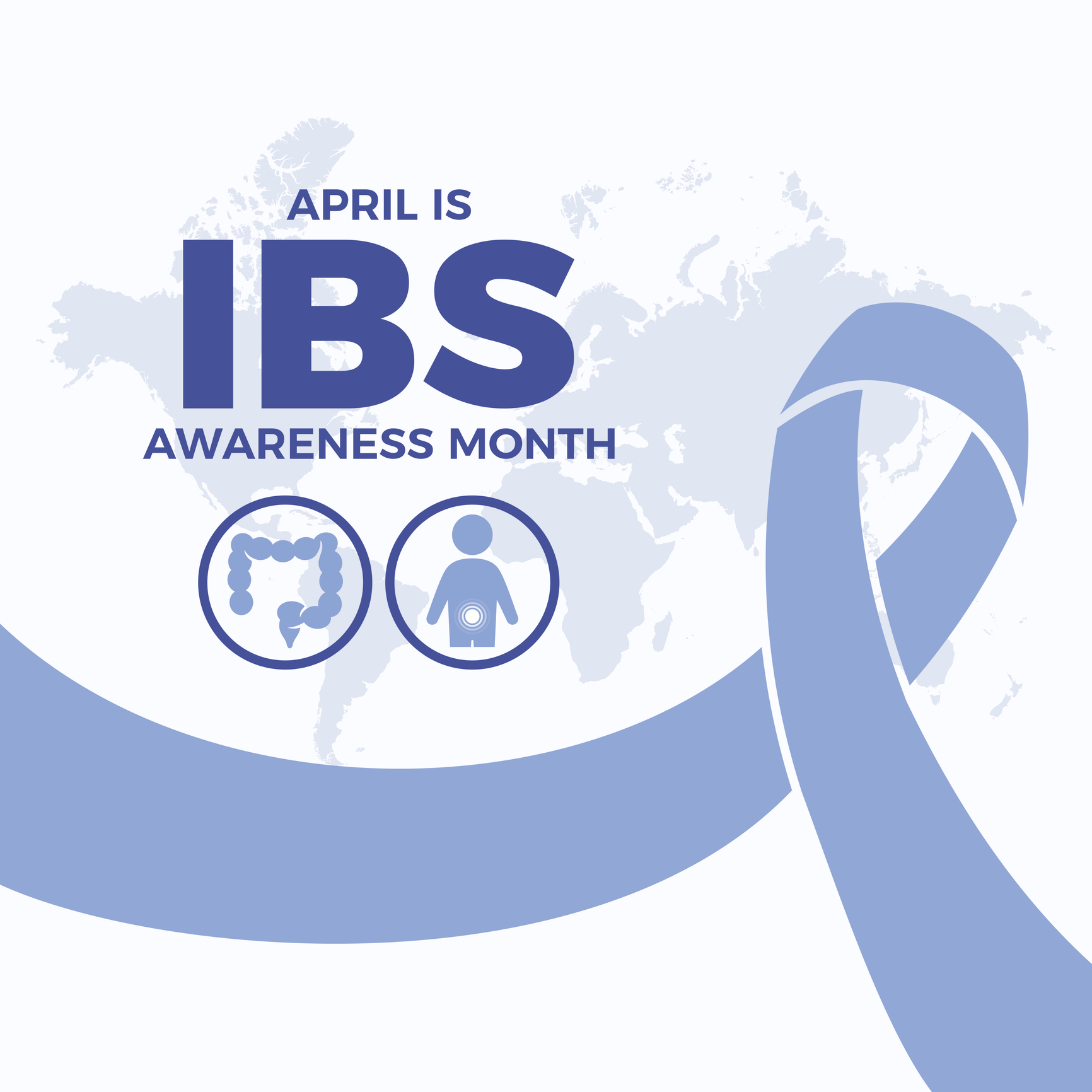
 April is observed as IBS Awareness Month, a month dedicated to raising awareness about irritable bowel syndrome (IBS), a common disorder that affects the large intestine.
Researchers are unclear of what exactly causes IBS, but they categorize it as a neurogastrointestinal (GI) disorder. Neurogastrointestinal disorders, also known as gut-brain interaction, involve problems with how the gut and brain coordinate to help the digestive system work. This communication challenge between the brain and gut can cause:
- Dysmotility
- Visceral hypersensitivity
Other potential causes of IBS may include:
- Gut bacteria
- Severe infections
- Food intolerance
- Childhood stress
IBS affects approximately 15% of the U.S. population, causing abdominal pain and changes to the frequency of your bowel movements. Other symptoms of IBS include:
- Diarrhea, constipation, or alternating between the two
- Feeling like you are unable to empty your bowels after pooping
- Cramps
- Excess gas and bloating
- Mucus in stool that makes it look whitish
If a person has IBS, they may notice when certain things trigger symptoms. A trigger doesn’t cause IBS itself, but it can cause or worsen symptoms to flare up. Common IBS triggers include:
- Periods
- Certain foods
- Stress
Researchers categorize IBS based on how a person’s stool looks on the days when they’re having flare ups. Most people with IBS may experience days when they have normal bowel movements and days when they experience abnormal ones. The bowel movements on abnormal days define the type of IBS they have. The types of IBS include:
- IBS with constipation (IBS-C)- most of the stool is hard and lumpy
- IBS with diarrhea (IBS-D)- most of the stool is loose and watery
- IBS with mixed bowel habits (IBS-M)- stool is both hard and lumpy and loose and watery
- Post-infectious IBS- generally occurs after an infection in the intestines, and stool is either similar to IBS-D or IBS-M, with a smaller number of cases presenting stool as IBS-C
To diagnose IBS, a healthcare provider will get a full medical history by asking about your symptoms. Depending on your symptoms, they may need other tests to confirm a diagnosis. These tests include:
- Lab tests
- Imaging tests
No specific therapy works for everyone who has IBS. However, most people with IBS can find a treatment plan that works best for them. Typical treatment options for IBS include:
- Modifying your diet
- Exercising regularly and trying relaxation techniques
- Therapy
- Medications
No matter what form of IBS you are experiencing, working with a gastroenterologist can help you manage your symptoms effectively. You can schedule an appointment with a gastroenterologist at Jamaica Hospital Medical Center’s Ambulatory Care Center by calling (718) 206-7001.
 Follow
All content of this newsletter is intended for general information purposes only and is not intended or implied to be a substitute for professional medical advice, diagnosis or treatment. Please consult a medical professional before adopting any of the suggestions on this page. You must never disregard professional medical advice or delay seeking medical treatment based upon any content of this newsletter. PROMPTLY CONSULT YOUR PHYSICIAN OR CALL 911 IF YOU BELIEVE YOU HAVE A MEDICAL EMERGENCY.
