Jamaica Hospital Named City & State New York’s Top Mental Health Care Provider

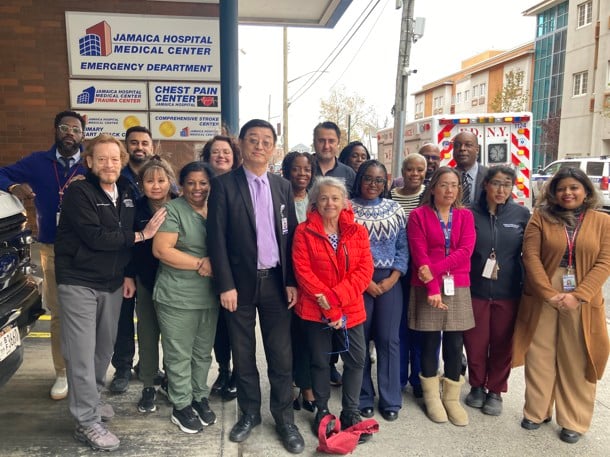
Jamaica Hospital Medical Center has been named as one of New York State’s 2025 Top Mental Health Care Providers by City & State New York magazine.

According to City & State New York, its list of Top Mental Health Care Providers features dozens of elite healthcare organizations that offer innovative programs and standout services to help New Yorkers thrive and successfully face challenges to their mental health.

Being named as one of New York State’s top mental health care providers highlights Jamaica Hospital’s Department of Psychiatry’s commitment to meeting the mental health needs of the community it serves.

Jamaica Hospital’s Department of Psychiatry provides comprehensive mental health care for the most culturally and ethnically diverse community in the United States, including a Comprehensive Psychiatry Emergency Program with about 6,000 annual visits, two inpatient units with over 1,800 admissions annually, and New York City’s only 24/7 mobile crisis team responding within two hours. At our sister institution, Flushing Hospital Medical Center, we complement these services with our complete substance use disorder and chemical dependency program.

Additionally, the department offers integrated outpatient care through about 42,000 annual visits and specialized programs in psycho-oncology, obesity care, and perinatal health.

Jamaica Hospital is proud to be recognized for its high-quality mental healthcare and as a Top Mental Health Care Provider among New York’s distinguished healthcare organizations. “This recognition honors our commitment to a simple but powerful idea: exceptional mental health care must be accessible, culturally attuned, and integrated with overall health. We are proud to serve as a beacon of hope and healing for the resilient and diverse community we call home,” stated Dr. Daniel Chen, Chairman of the Department of Psychiatry and Addiction Services at Jamaica Hospital.

All content of this newsletter is intended for general information purposes only and is not intended or implied to be a substitute for professional medical advice, diagnosis or treatment. Please consult a medical professional before adopting any of the suggestions on this page. You must never disregard professional medical advice or delay seeking medical treatment based upon any content of this newsletter. PROMPTLY CONSULT YOUR PHYSICIAN OR CALL 911 IF YOU BELIEVE YOU HAVE A MEDICAL EMERGENCY.

New Year’s Eve Safety Tips

New Year’s Eve is a time when we come together to reflect on the previous year, as we prepare to celebrate the start of a new one. However, these celebrations can come with dangers and responsibilities.  

Here are a few tips to keep you and your loved ones safe this New Year’s Eve: 

  • Plan your rides in advance. On average, driving accidents rise during the holidays, so it is extremely important to have a safe ride when so many people will be out that night celebrating. Do not assume that you will be able to get a cab. Knowing your options in advance can help you decide whether you will be taking public transportation, using a rideshare app, or carpooling with friends. 
  • Plan for the safety of your guests. If you are going to host a party, be sure your guests get home safely. Hire a driver for the evening who can provide people with a way to get home. Stop serving alcohol at least one hour before the end of the party, provide additional food or snacks, and ensure that your guests don’t drive after drinking. 
  • Make a plan with your kids. Set a reasonable curfew for your kids for their New Year’s Eve activities. If they are old enough to drive, be sure they understand the dangers of driving on that holiday. Encourage them to stay in one location instead of going from party to party. Discuss the dangers of driving distractions and how to avoid them. A teen passenger and teens driving with friends face a higher risk than teens who are driving alone. 
  • Take care of your pets. New Year’s Eve can cause high anxiety in pets. You can keep them safe in the house and comfortable by drowning out any sounds outside that are loud. If your pet has a history of high anxiety, consider consulting your vet for anxiety medication.  
  • Avoid leaving your car somewhere overnight, as New Year’s Day is the most active holiday for cars to get stolen. If you do have to leave your car overnight, make sure it is locked and try to pick it up as early as possible the next day. If you do decide to drive home, be sure to let someone know when you leave and when you get home safely. 

If you or a loved one is experiencing any medical problems, you can receive treatment by a physician at Jamaica Hospital Medical Center’s Ambulatory Care Center. To schedule an appointment, please call (718) 206-7001. If you are experiencing an emergency, call 911. 

All content of this newsletter is intended for general information purposes only and is not intended or implied to be a substitute for professional medical advice, diagnosis or treatment. Please consult a medical professional before adopting any of the suggestions on this page. You must never disregard professional medical advice or delay seeking medical treatment based upon any content of this newsletter. PROMPTLY CONSULT YOUR PHYSICIAN OR CALL 911 IF YOU BELIEVE YOU HAVE A MEDICAL EMERGENCY.
Holiday Driving Safety Tips

The holiday season is a time for celebrating with family and friends. Depending on where you are or where you are going, many challenges, such as weather conditions, limited daylight, and driving in unfamiliar areas, can make driving difficult. Here are some tips to help keep you safe while driving this holiday season:

  • Prepare your vehicle for the winter and keep an emergency kit with you
  • Get a good night’s sleep before leaving to avoid drowsy driving
  • Leave early to avoid heavy traffic
  • Make sure that every person in the vehicle is buckled up properly
  • Practice defensive driving
  • Don’t drive impaired
  • Avoid distractions
  • Check the weather conditions before driving
  • Stick to the speed limit

Taking the proper precautions before and during your drive is for your safety, the safety of your passengers, and other drivers on the road.

If you or any of your passengers are injured due to a car accident, make sure to call 911 right away.

All content of this newsletter is intended for general information purposes only and is not intended or implied to be a substitute for professional medical advice, diagnosis or treatment. Please consult a medical professional before adopting any of the suggestions on this page. You must never disregard professional medical advice or delay seeking medical treatment based upon any content of this newsletter. PROMPTLY CONSULT YOUR PHYSICIAN OR CALL 911 IF YOU BELIEVE YOU HAVE A MEDICAL EMERGENCY.

Christmas Recipe

Tomorrow is Christmas Day, and as we finish decorating and putting presents under the tree, the last thing left to do is prepare the menu for the holiday meal. 

A dish that will be a definite crowd pleaser is a plate of pomegranate-glazed Christmas ribs. With a sticky-sweet and slightly spicy barbecue sauce and garnished with fresh pomegranate seeds that create ruby-like flecks of color and add a tangy crunch in every bite, these ribs will be the crown jewel of the dinner table. 

Pomegranate-Glazed Christmas Ribs Recipe | Food Network Kitchen | Food Network 

All content of this newsletter is intended for general information purposes only and is not intended or implied to be a substitute for professional medical advice, diagnosis or treatment. Please consult a medical professional before adopting any of the suggestions on this page. You must never disregard professional medical advice or delay seeking medical treatment based upon any content of this newsletter. PROMPTLY CONSULT YOUR PHYSICIAN OR CALL 911 IF YOU BELIEVE YOU HAVE A MEDICAL EMERGENCY.

13 Poses to Do Every Day for Increased Flexibility

When we exercise, we can sometimes focus more on gaining strength, endurance, lung capacity, and body composition. However, we can sometimes overlook gaining more flexibility.  

Flexibility training improves the range of motion at the joints, which can facilitate freer movement, help reduce pain and risk of injury, and generally make us more capable in our everyday lives. Yoga is an exercise that can help boost flexibility. 

Yoga is a holistic mind-body activity that involves moving through a series of body poses and breathing exercises that can improve strength, flexibility, balance, and relaxation.  

Here are 13 yoga poses you can do every day for increased flexibility: 

  1. Cat-cow pose 
  1. Low cobra pose 
  1. Reclined spinal twist 
  1. Standing crescent moon 
  1. Half lord of the fishes 
  1. Bound angle pose 
  1. Reclined pigeon pose 
  1. Wide-legged forward fold with chest expansion  
  1. Reclined hamstring stretch  
  1. Assisted low lunge 
  1. Downward-facing dog 
  1. Thread the needle 
  1. Reverse tabletop 

Maintaining our flexibility as we age is essential to our health. People who remain flexible have fewer difficulties with daily activities and experience an increased quality of life. An increased range of motion is associated with fewer injuries, decreased pain, and stronger muscles, which can lead to better performance. 

If you are interested in learning more about any of our integrative health services, events, or classes, or would like to schedule an appointment, please call us at (718) 206-5675. 

All content of this newsletter is intended for general information purposes only and is not intended or implied to be a substitute for professional medical advice, diagnosis or treatment. Please consult a medical professional before adopting any of the suggestions on this page. You must never disregard professional medical advice or delay seeking medical treatment based upon any content of this newsletter. PROMPTLY CONSULT YOUR PHYSICIAN OR CALL 911 IF YOU BELIEVE YOU HAVE A MEDICAL EMERGENCY.

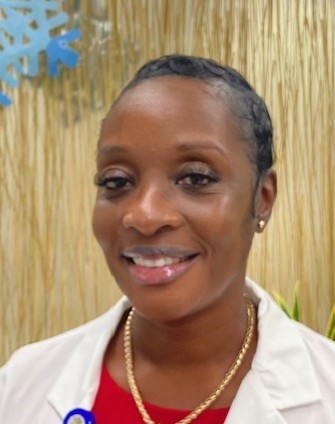
Employee Spotlight Shines on Beverly Lewis-English, MSN, RN

This month, our Employee Spotlight shines on Beverly Lewis-English, MSN, RN,  Clinical Nurse Manager. Beverly has been employed at Jamaica Hospital Medical Center for 18 years, beginning her career as an LPN on 3 South and then transferring to  MediSys East New York. She returned to 3 South after becoming a registered nurse.

Beverly was born and raised in Brooklyn, New York. She attended P.S. 233 and is a graduate of Samuel J. Tilden High School.  Beverly received an Associate Degree in paralegal studies from the New York City College of Technology, then went on to receive her LPN certification  from the Vocational Education & Extension Board (VEEB). Beverly obtained her Associate Degree in Nursing from the Helene Fuld College of Nursing, then received her Bachelor of Science in Nursing and her Master of Science in Nursing with an emphasis in Nursing Leadership degrees from the Grand Canyon University. She is a member of Sigma Theta au International Honor Society of Nursing.

She has three children, two daughters and one son. She enjoys spending her free time with family and friends. She loves to meet new people and learn about various cultures. She also values quiet time just relaxing at home. Beverly enjoys traveling. Her favorite places are Guyana, South America where her parents are from, and also the Dominican Republic. One day she hopes to visit Thailand.

Beverly likes different types of food and is always willing to try foods from other cultures. She enjoys different types of music, and in high school, she played the saxophone and the piano. She likes to entertain and to plan events. In everything she does, she places God first and believes in the importance of family, integrity, and living a full and purposeful life.

Beverly served six years as an Army Reservist and that experience taught her discipline, leadership, adaptability and to have a commitment to helping others.

Beverly enjoys working at Jamaica Hospital because it is where she grew up professionally. She continues to be inspired by the diversity, resilience and strength of the community that we serve. Working at Jamaica Hospital has afforded her the opportunity to make a direct impact on providing quality patient care alongside an exceptional team of nurses, physicians, and support staff. We are pleased to have Beverly as a member of our staff and look forward to continue working with us for many more years in the future.

All content of this newsletter is intended for general information purposes only and is not intended or implied to be a substitute for professional medical advice, diagnosis or treatment. Please consult a medical professional before adopting any of the suggestions on this page. You must never disregard professional medical advice or delay seeking medical treatment based upon any content of this newsletter. PROMPTLY CONSULT YOUR PHYSICIAN OR CALL 911 IF YOU BELIEVE YOU HAVE A MEDICAL EMERGENCY.

Symptoms of Autoimmune Disease

Autoimmune diseases are health conditions that happen when the immune system attacks the body instead of defending it. They are also called autoimmune disorders by healthcare providers. 

The immune system is the body’s built-in defense system. It automatically detects substances that shouldn’t be in the body, such as viruses, bacteria, or toxins. It sends out white blood cells to eliminate them before they can damage the body or make a person sick.  

If a person has an autoimmune disease, their immune system is overactive. When it doesn’t have anything to attack, the immune system turns on the body and damages healthy tissue.  

Autoimmune diseases are chronic conditions, which means a person will have to manage them and the symptoms they cause for the rest of their life.  

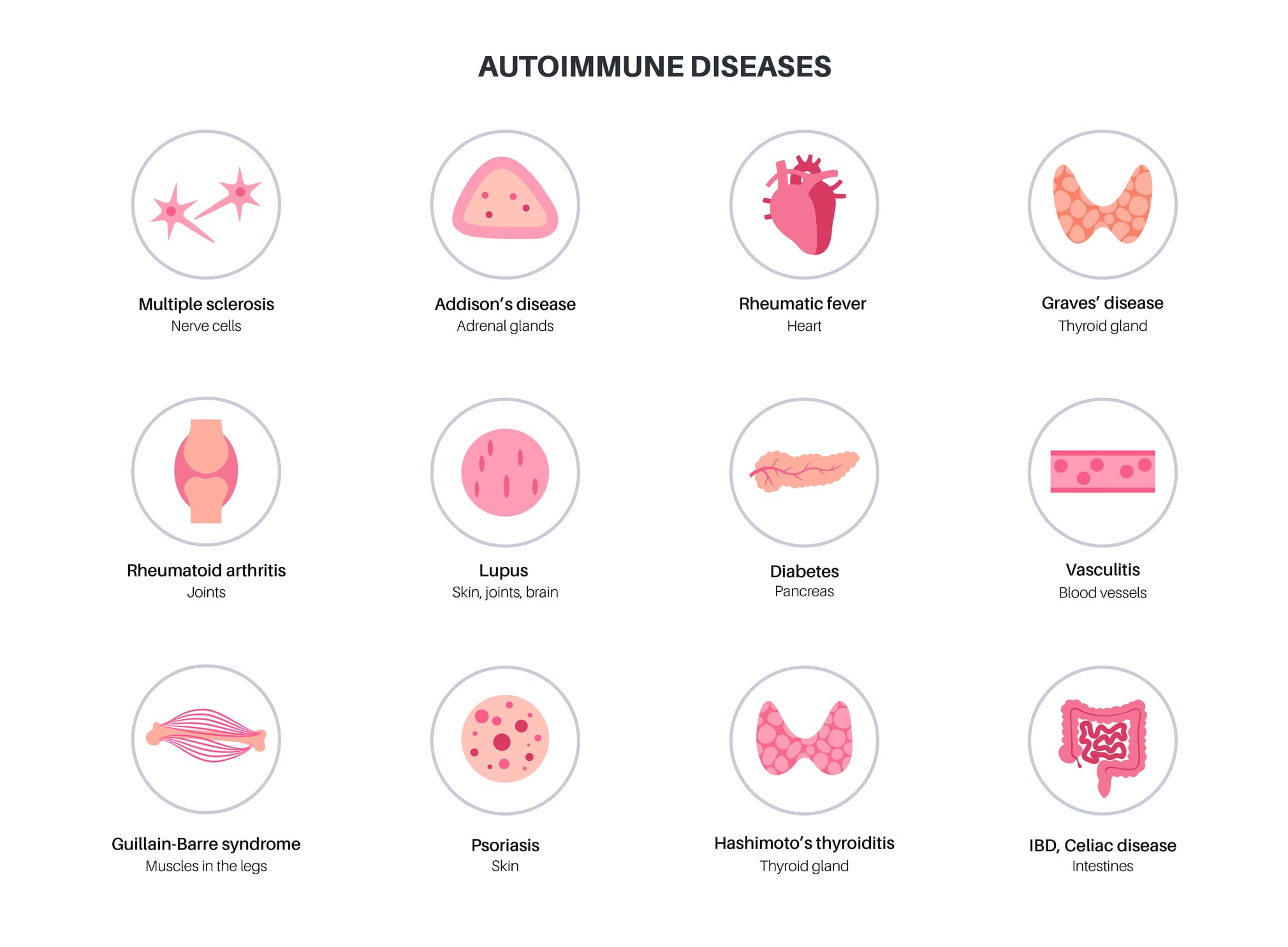
There are more than 100 different autoimmune diseases, and they can affect almost any tissue or organ in the body, depending on where the immune system malfunctions. These autoimmune diseases can include: 

  • Joints and muscles 
  • Rheumatoid arthritis (RA) 
  • Lupus 
  • Myositis 
  • Skin and blood vessels 
  • Sjögren’s syndrome 
  • Psoriasis 
  • Psoriatic arthritis 
  • Dermatomyositis 
  • Scleroderma 
  • Vasculitis 
  • Rheumatoid vasculitis 
  • Urticarial vasculitis 
  • Vitiligo 
  • Digestive system 
  • Crohn’s disease 
  • Celiac disease 
  • Ulcerative colitis 
  • Autoimmune gastritis 
  • Endocrine system 
  • Type 1 diabetes 
  • Addison’s disease 
  • Hashimoto’s thyroditis 
  • Graves’ disease 
  • Nervous system 
  • Multiple sclerosis (MS) 
  • Myasthenia gravis (MG) 
  • Guillain-Barré syndrome 
  • Chronic Inflammatory Demyelinating Polyneuropathy (CIPD) 

Autoimmune diseases are very common due to there being so many different types, with experts estimating that around 1 in 15 people in the U.S. has an autoimmune disease. 

Autoimmune diseases can cause a wide range of symptoms that can affect a person’s body from head to toe. Conditions that affect the muscles can cause muscle weakness, joint pain, swelling, or stiffness, indicating a condition such as rheumatoid arthritis. Type 1 diabetes causes high blood sugar. And some autoimmune diseases can affect a person’s vision. 

Many autoimmune diseases can cause inflammation, which causes a feeling of warmth, discoloration or redness of the skin, swelling, and pain.  

Additionally, a lot of autoimmune diseases can cause recurring symptoms. These episodes of more noticeable or more severe symptoms are called flares or attacks.  

Unfortunately, experts don’t know for certain what causes autoimmune diseases, and researchers are still studying what makes the immune system start attacking the body in the first place.  

However, some studies have found certain factors, or triggers, that might increase the risk of developing an autoimmune disease. They include: 

  • Viral infections such as COVID-19 and the Epstein-Barr virus 
  • A person’s sex, as women are more likely to have an autoimmune condition 
  • Having biological relatives with autoimmune diseases, as some are genetic and can be passed through generations of a biological family 
  • Having one autoimmune disease can increase a person’s odds of developing another one. This is called multiple autoimmune syndrome 
  • Exposure to chemicals or other environmental factors may trigger autoimmune diseases 
  • Smoking and other types of tobacco use can cause many health issues, including potentially triggering autoimmune diseases 

A healthcare provider diagnoses autoimmune diseases when they perform a physical exam and discuss a person’s health history with them. They will examine their body, specifically if they are experiencing symptoms in a specific area. They will ask about the person’s symptoms and when they first noticed them.  

A healthcare provider will perform tests for several different conditions that can cause the symptoms until they find a cause. This is called a differential diagnosis. They may order blood tests to look for specific markers, or clues the immune system leaves behind after it damages the body or causes specific issues, of autoimmune diseases.  

They may also perform imaging tests to look inside the body, including: 

  • X-rays 
  • MRI 
  • CT scan 
  • Ultrasound 

Autoimmune diseases may need a variety of treatments, since they cause a variety of symptoms. Which treatment is needed depends on which condition a person has. Everyone’s immune system, genetics, and environment are different, which means the treatments will be unique to each person. Some common treatments to manage autoimmune disease symptoms include: 

  • Pain relievers 
  • Anti-inflammatory medications such as NSAIDs or corticosteroids 
  • Immunosuppressants 
  • Physical therapy 
  • Occupational therapy 
  • IVIG infusions 

A person may need specific treatment based on what condition they have. People with Type 1 diabetes will need insulin therapy. People with celiac disease will need to eat a gluten-free diet. 

The Division of Rheumatology at Jamaica Hospital provides consultations for patients in Queens, NY, who develop rheumatological disorders. If you would like to make an appointment, please call 718-206-6742. 

All content of this newsletter is intended for general information purposes only and is not intended or implied to be a substitute for professional medical advice, diagnosis or treatment. Please consult a medical professional before adopting any of the suggestions on this page. You must never disregard professional medical advice or delay seeking medical treatment based upon any content of this newsletter. PROMPTLY CONSULT YOUR PHYSICIAN OR CALL 911 IF YOU BELIEVE YOU HAVE A MEDICAL EMERGENCY.

National Safe Toys and Gifts Month

December is National Safe Toys and Gifts Month. It is an annual observance dedicated to promoting the safety of toys and gifts for children, particularly during the holiday season. It serves as a reminder to parents, caregivers, and gift-givers to choose age-appropriate and safe toys to ensure the well-being of the children who receive them.  

Started by the nonprofit organization Prevent Blindness, National Safe Toys and Gifts Month focuses on raising awareness about the importance of selecting toys and gifts that meet safety standards and align with a child’s age and developmental stage. The month aims to prevent accidents and injuries caused by inappropriate or hazardous toys, especially when gift-giving is most common.  

Too often, accidents involving children and toys occur and may result in eye injuries. Each year, thousands of children ages 14 and younger suffer serious eye injuries, including blindness, from toys, according to the American Academy of Ophthalmology. Approximately one in ten children’s eye injuries caused by toys end up in the ER.  

Promoting safe toys and gifts during this month is essential for children’s well-being. Ways to participate and ensure safe gift-giving include: 

  • Check the labels of the toys before purchasing them. Always look for age-appropriate labels on toys and gifts and follow the manufacturer’s recommendations. 
  • Avoid toys with small parts, which can be choking hazards for young children. 
  • Inspect the toys for any hazards by examining them for sharp edges, loose parts, or any potential dangers that could harm children. 
  • Research the toys and gifts online by reading reviews and asking for recommendations from other parents and caregivers.  
  • Consider the child’s age before buying any gifts or toys. Also consider their interests and abilities when selecting gifts for them. 
  • Support educational toys by choosing toys and gifts that encourage learning, creativity, and development. 
  • Spread awareness by sharing safety tips and information about safe toys and gifts month with your community and on social media. 

Taking proper precautions can avoid many accidents and injuries involving children’s toys. Let’s all do our part to encourage their safety. 

To schedule an eye exam for your child at Jamaica Hospital Medical Center’s Ophthalmology Center, call (718) 206-5900. If there is an emergency, please call 911. 


All content of this newsletter is intended for general information purposes only and is not intended or implied to be a substitute for professional medical advice, diagnosis or treatment. Please consult a medical professional before adopting any of the suggestions on this page. You must never disregard professional medical advice or delay seeking medical treatment based upon any content of this newsletter. PROMPTLY CONSULT YOUR PHYSICIAN OR CALL 911 IF YOU BELIEVE YOU HAVE A MEDICAL EMERGENCY.

Dealing with Loss During the Holiday Season

The holiday season is a time filled with joy and happiness. But it can also be full of sadness and grief, especially when you are struggling with the loss of a loved one.  

It can be very challenging to deal with grief during the holiday season, as seasonal events and holiday traditions can serve as a reminder of what has been lost, which can magnify a person’s sense of loss and sorrow. The happiness of others can make those who are grieving feel isolated and alone.  

However, seasonal events and holiday traditions can also serve as comforting rituals that allow those who are grieving an opportunity to connect with family and friends, focus on cherished memories, and try to recapture their sense of joy.  

If you are mourning the loss of loved ones this holiday season, here are some ways to help cope with your grief: 

  • Do what feels right for you, as you are not obligated to participate in any activities that don’t feel doable. Create realistic expectations for yourself and others, but it is important to be gentle and kind to yourself. However, holiday activities could be a good distraction that brings joyful feelings and good memories.  
  • Accept whatever you are feeling. Everyone grieves and mourns differently. Some people may try to avoid the pain and sad feelings, while others may feel every emotion. Some people may feel bad if they aren’t up to enjoying the holiday, and others may feel guilty because they are feeling joyful. A person may cycle through these feelings throughout the season.  
  • Get support for your emotions and grief. Talking with family and friends about your emotions and mental health needs. It is important to be honest about how you would like to do things this year. If you would like to talk about those who have passed, then do so, and let others know that it is okay. If you are participating in a holiday activity, let people know that you may bow out quickly if it becomes too much for you, and if possible, have a friend there to support you.  
  • Put the focus on children in the family. Many of the activities we participate in during the holidays place special attention on children, and it may be helpful to focus on them during this difficult time. It is important to recognize that the choices you make in regard to how you get through the holidays may affect the children in the family. They may not understand why you don’t want to join family festivities if you withdraw. If you participate in activities that are important to them, you could allow yourself to feel their joy and excuse yourself when you have reached your limit. 
  • Sometimes, the anticipation of the holiday is worse than the actual holiday itself. Planning comforting activities ahead of time to give you something to look forward to, instead of building up the anxiety of the pain that the holiday could bring. It is important to make sure to include breaks for quiet grounding time and rest in your plans. An emotion like grief can drain your energy, so you may feel worn out more easily than usual. Add music, rest, meditation, prayer, rest, journaling, a walk, a comforting movie, and other downtime to your holiday activities.  
  • In moments of grief and loss, we can feel paralyzed by the intense emotions such as sadness, anger, or resentment, and sometimes relief can be found by giving to others. Focusing on others instead of yourself and taking action that makes a difference can help broaden our perspectives. Honor a loved one that you’ve lost by donating in their name to a charity or cause that they cherished, or buy something that symbolizes them or what you shared to donate to a family in need. You can also try volunteering to help people in a way that is related to what caused the pain you’re feeling. Some examples include: 
  • If you have lost someone to suicide, you can volunteer for a depression or suicide hotline 
  • If a hospital or nursing home took good care of your loved one, bring holiday gift baskets and cards for the staff 
  • If you were a caregiver for your loved one who has passed, you know how hard it is to do caregiving during the holidays. Consider supporting a caregiver you know with a gift, a meal, or some practical help 
  • It can be helpful to participate in holiday rituals that acknowledge and honor the memory of someone who has passed, especially if it relates directly to their interests. Some ideas include: 
  • Light candles 
  • Talk or write about the person on social media 
  • Donate children’s toys or books 
  • Dedicate a prayer or religious service to the loved one’s memory 
  • Plant a tree in memory of the deceased in your own yard or in a forest 
  • Make a card or write a holiday letter with the person’s picture 
  • It is important not to hesitate to ask for help or accept help and support when it is offered to you. Let others host, cook, or handle the organization of activities, so you don’t have to take on everything yourself. Others can help you with decorating, shopping, shipping packages or cards, wrapping gifts, driving you to any family gatherings and parties, or getting your home ready for visitors. 
  • Losing loved ones that you have celebrated with for a long time can make it feel like the yearly celebrations will never be the same again. In some ways, they won’t be the same, and accepting this will help you manage your expectations. It is important to remember that different isn’t always bad. If it is possible, embrace the difference and acknowledge that there can still be joy in your life. Starting new activities that don’t have specific memories tied to a loved one may make it easier. Activities that may create new memories could include: 
  • Holding a virtual family gathering 
  • Planning a family movie night 
  • Try a new recipe for the holiday menu 
  • Having a new meal delivered from a grocery store or restaurant 
  • Volunteer to serve meals at a shelter for people without homes 
  • If you feel that participating in holiday activities will be too much for you and you would like to withdraw, let your family and friends know before doing so. However, plan comforting alternative activities for yourself and let someone know what you will be doing. It is a good idea to make sure someone checks in with you regularly, especially on the actual holiday. Grieving is something that is very personal. No one can tell you how to grieve or how long it may take. Life without a loved one who has passed away will never be the same, but you will get through this. 

Losing a cherished loved one is always difficult. Celebrating birthdays, holidays, or any happy moments and milestones without a loved one who has passed away can put a damper on observing them. When participating in holiday activities and celebrations, remember the good times you shared with them. It is also important to note that there is no specific way to grieve because everyone grieves differently. There is also no timeline for healing. Take time for yourself when you need to, and ask for help and support when you need it.  

If you or a loved one is struggling with a loss, contact the Substance Abuse and Mental Health Services Administration (SAMHSA) National Helpline at 1-800-662-4357 for information on support and treatment facilities in your area.  

You can also call or text the 988 Lifeline to speak with a trained live agent. 

If you or a loved one needs the assistance and support of a mental health professional at Jamaica Hospital Medical Center, please call 718-206-5575 to schedule an appointment. 

All content of this newsletter is intended for general information purposes only and is not intended or implied to be a substitute for professional medical advice, diagnosis or treatment. Please consult a medical professional before adopting any of the suggestions on this page. You must never disregard professional medical advice or delay seeking medical treatment based upon any content of this newsletter. PROMPTLY CONSULT YOUR PHYSICIAN OR CALL 911 IF YOU BELIEVE YOU HAVE A MEDICAL EMERGENCY.

The Importance of Handwashing During Cold and Flu Season

The Centers for Disease Control and Prevention (CDC) found that only 31% of men and 65% of women wash their hands after using a public restroom. 

Not washing our hands can lead to the spread of germs and increase the risk of getting illnesses that affect our health. 

Personal hygiene begins and ends with our hands. Frequent handwashing is one of the simplest and most effective ways to stay healthy and reduce the spread of germs.  

Germs can spread easily when we touch our faces, prepare food, or handle shared objects. You can pick up and pass along germs when you: 

  • Touch your eyes, nose, or mouth with unwashed hands 
  • Prepare or eat food with unwashed hands 
  • Touch contaminated surfaces or objects 
  • Blow your nose, cough, or sneeze into your hands and then touch others or shared items 

Therefore, it is extremely important to keep you and your loved ones healthy by washing your hands often. There are several instances when it is important to wash your hands, including: 

  • Before, during, and after preparing food 
  • Before eating 
  • Before and after caring for someone who’s sick 
  • Before and after treating a wound 
  • After using the bathroom 
  • After changing diapers or cleaning a child who has used the bathroom 
  • After blowing your nose, coughing, or sneezing 
  • After touching animals or handling pet food 
  • After touching garbage 

Some other facts that highlight the importance of handwashing include: 

  • 80% of spreadable diseases can be transferred by touch 
  • Washing your hands a few times a day can reduce diarrhea rates by 40% 
  • Touching your face with dirty hands can spread sicknesses such as pneumonia, the common cold, and the flu 
  • Pneumonia is the number one cause of childhood death, and is preventable by regular handwashing 
  • When you flush a toilet with the seat up, a bacteria-filled mist is spread over about 6 square meters, and worse, 90% of these bacteria cover the sinks in public bathrooms. 
  • Most bacteria on our hands are under our fingernails, so it is important to scrub under them when washing our hands 
  • Damp hands are 1,000 times more likely to spread bacteria than dry hands, yet only 20% of people dry their hands after washing them 
  • Reusable cloth towels have millions of bacteria in their fibers. Using disposable paper towels is the cleanest way to dry our hands 
  • Studies show that people who wash their hands have 24% fewer sick days because of respiratory illness, and 51% fewer sick days due to a sick stomach 

It is important to wash your hands after being in public places where you may touch shared surfaces such as door handles, shopping carts, or checkout screens, and before touching your eyes, nose, or mouth. 

Clean hands prevent infections and sickness, so it is important to learn the basics of hand hygiene. Here are five steps to wash your hands the right way: 

  • Wet your hands with clean, warm, or cold running water, turn off the tap, and apply soap 
  • Lather the backs of your hands, between your fingers, and under your nails 
  • Scrub for at least 20 seconds. You can hum or sing the “Happy Birthday” song to time yourself 
  • Rinse your hands well under clean, running water 
  • Dry your hands with a clean towel or dry air 

If soap and water aren’t available, use an alcohol-based hand sanitizer that contains at least 60% alcohol.  

Making a habit of good hand hygiene is an easy, effective way to prevent infections and sickness. 

If you are sick and would like to be seen by a physician, you can schedule an appointment at Jamaica Hospital Medical Center’s Ambulatory Care Center by calling (718) 206-7001. 


All content of this newsletter is intended for general information purposes only and is not intended or implied to be a substitute for professional medical advice, diagnosis or treatment. Please consult a medical professional before adopting any of the suggestions on this page. You must never disregard professional medical advice or delay seeking medical treatment based upon any content of this newsletter. PROMPTLY CONSULT YOUR PHYSICIAN OR CALL 911 IF YOU BELIEVE YOU HAVE A MEDICAL EMERGENCY.