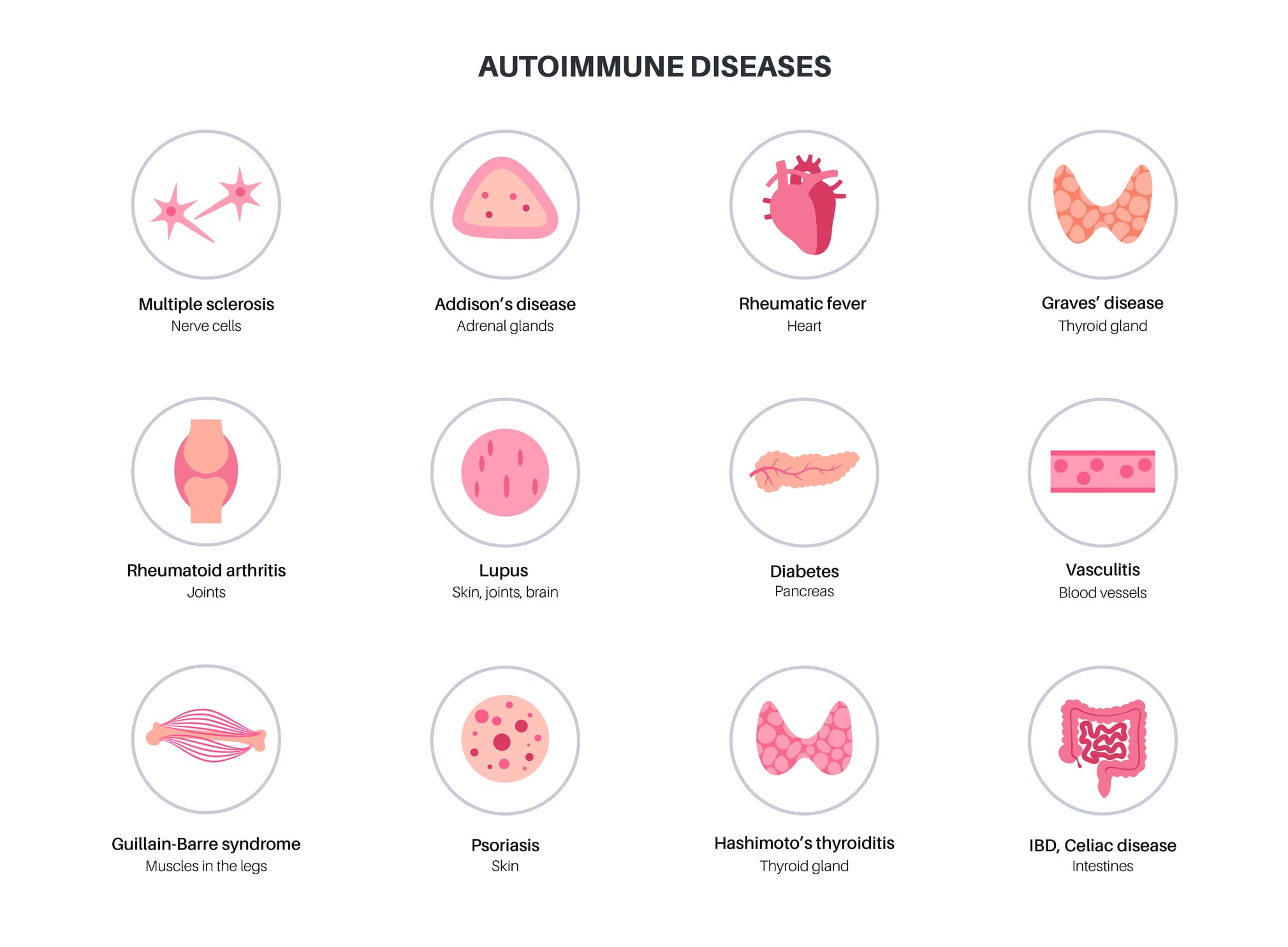
Autoimmune diseases are health conditions that happen when the immune system attacks the body instead of defending it. They are also called autoimmune disorders by healthcare providers.
The immune system is the body’s built-in defense system. It automatically detects substances that shouldn’t be in the body, such as viruses, bacteria, or toxins. It sends out white blood cells to eliminate them before they can damage the body or make a person sick.
If a person has an autoimmune disease, their immune system is overactive. When it doesn’t have anything to attack, the immune system turns on the body and damages healthy tissue.
Autoimmune diseases are chronic conditions, which means a person will have to manage them and the symptoms they cause for the rest of their life.
There are more than 100 different autoimmune diseases, and they can affect almost any tissue or organ in the body, depending on where the immune system malfunctions. These autoimmune diseases can include:
- Rheumatoid arthritis (RA)
- Chronic Inflammatory Demyelinating Polyneuropathy (CIPD)
Autoimmune diseases are very common due to there being so many different types, with experts estimating that around 1 in 15 people in the U.S. has an autoimmune disease.
Autoimmune diseases can cause a wide range of symptoms that can affect a person’s body from head to toe. Conditions that affect the muscles can cause muscle weakness, joint pain, swelling, or stiffness, indicating a condition such as rheumatoid arthritis. Type 1 diabetes causes high blood sugar. And some autoimmune diseases can affect a person’s vision.
Many autoimmune diseases can cause inflammation, which causes a feeling of warmth, discoloration or redness of the skin, swelling, and pain.
Additionally, a lot of autoimmune diseases can cause recurring symptoms. These episodes of more noticeable or more severe symptoms are called flares or attacks.
Unfortunately, experts don’t know for certain what causes autoimmune diseases, and researchers are still studying what makes the immune system start attacking the body in the first place.
However, some studies have found certain factors, or triggers, that might increase the risk of developing an autoimmune disease. They include:
- Viral infections such as COVID-19 and the Epstein-Barr virus
- A person’s sex, as women are more likely to have an autoimmune condition
- Having biological relatives with autoimmune diseases, as some are genetic and can be passed through generations of a biological family
- Having one autoimmune disease can increase a person’s odds of developing another one. This is called multiple autoimmune syndrome
- Exposure to chemicals or other environmental factors may trigger autoimmune diseases
- Smoking and other types of tobacco use can cause many health issues, including potentially triggering autoimmune diseases
A healthcare provider diagnoses autoimmune diseases when they perform a physical exam and discuss a person’s health history with them. They will examine their body, specifically if they are experiencing symptoms in a specific area. They will ask about the person’s symptoms and when they first noticed them.
A healthcare provider will perform tests for several different conditions that can cause the symptoms until they find a cause. This is called a differential diagnosis. They may order blood tests to look for specific markers, or clues the immune system leaves behind after it damages the body or causes specific issues, of autoimmune diseases.
They may also perform imaging tests to look inside the body, including:
Autoimmune diseases may need a variety of treatments, since they cause a variety of symptoms. Which treatment is needed depends on which condition a person has. Everyone’s immune system, genetics, and environment are different, which means the treatments will be unique to each person. Some common treatments to manage autoimmune disease symptoms include:
- Anti-inflammatory medications such as NSAIDs or corticosteroids
A person may need specific treatment based on what condition they have. People with Type 1 diabetes will need insulin therapy. People with celiac disease will need to eat a gluten-free diet.
The Division of Rheumatology at Jamaica Hospital provides consultations for patients in Queens, NY, who develop rheumatological disorders. If you would like to make an appointment, please call 718-206-6742.
All content of this newsletter is intended for general information purposes only and is not intended or implied to be a substitute for professional medical advice, diagnosis or treatment. Please consult a medical professional before adopting any of the suggestions on this page. You must never disregard professional medical advice or delay seeking medical treatment based upon any content of this newsletter. PROMPTLY CONSULT YOUR PHYSICIAN OR CALL 911 IF YOU BELIEVE YOU HAVE A MEDICAL EMERGENCY.

 Jamaica Hospital Medical Center has been named as one of New York State’s 2025 Top Mental Health Care Providers by City & State New York magazine.