Jamaica Hospital Reducing Pressure Injuries for Hospital Patients Through Wound Care Service

Jamaica Hospital now provides a comprehensive consultative wound care service for all inpatients.

The purpose of the service, offered though the Nursing Department and run by Rosalyn Beswick, Clinical Nurse Manager and Certified Wound Care Nurse, is to prevent pressure injuries from occurring through education and intervention.

A pressure injury (previously known as pressure ulcer) is defined as localized damage to the skin and/or underlying soft tissue usually over a bony prominence. The injury can present as intact skin or an open ulcer and may be painful. Pressure injuries usually occur as a result of intense and/or prolonged pressure.

Rosalyn and her team of specially trained wound care technicians provide around the clock coverage for all patients in need of their services. The team performs approximately 50 consults every week with the number growing steadily. “As the providers become more familiar with the services we provide and learn how we can contribute to the recovery of the patients, they are utilizing us more and more” states Rosalyn.

One of the main focuses of the wound care team is to provide instructions on how to properly position patients to allow for the appropriate distribution of weight.  Another service offered includes monitoring the nutritional status of the patient to ensure they receive a diet high in protein and vitamins as well as adequate hydration.  Lastly, the wound care specialists assess patients and offer the necessary moisture management, needed to prevent a breakdown of the skin. To support this effort, hospital administration has made an investment to purchase over 200 new bed surfaces and additional foam wedges, which will greatly benefit the team and the patients they serve.

The results of this program have been overwhelmingly positive. Since the inception of the service, the hospital’s pressure injury incidence rate went from 3.48 to .93, well below the national average. As a result Jamaica Hospital’s patients have benefited by reporting decreased pain and suffering and improved quality of life.

Rosalyn is very excited about how well the service has been received, “The patients are thankful for their improved quality of life and the staff is appreciative to have the resource available to them.” With more and more doctors, nurses and discharge planners counting on the services offered by the wound care team, Jamaica Hospital is confident that this service will continue to improve the overall quality of care provided to our patients.”

All content of this newsletter is intended for general information purposes only and is not intended or implied to be a substitute for professional medical advice, diagnosis or treatment. Please consult a medical professional before adopting any of the suggestions on this page. You must never disregard professional medical advice or delay seeking medical treatment based upon any content of this newsletter. PROMPTLY CONSULT YOUR PHYSICIAN OR CALL 911 IF YOU BELIEVE YOU HAVE A MEDICAL EMERGENCY.
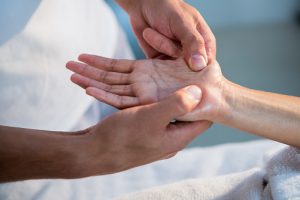
Jamaica Hospital Now Incorporates Holistic Care For Our Patients

Patient-centered care has always been a major focus at Jamaica Hospital Medical Center but the Nursing Department’s newest effort really demonstrates how important satisfying our patients’ needs and improving their experience is to the hospital.

Jamaica Hospital is now incorporating a holistic approach to the care we provide in multiple areas. Through the addition of a Certified Holistic Nurse trained in various holistic modalities, hand and foot massages (reflexology) are now being provided as a consultative service and have been shown to be very beneficial to both patients and providers.

One important benefit of reflexology is that it relaxes the patient during what can be an anxiety-filled time for them. Patients often find that a few minutes of quiet time and gentle touch offers them an opportunity to release tension and feel more at ease.  When patients feel more comfortable, it creates an atmosphere that allows for better communication leading to better care.

According to Janis Sharkey, Certified Holistic Nurse, “the healing power of touch can make all the difference for the patient’s experience. By taking a holistic approach, we are focusing on healing the many factors that influence us mentally and emotionally as well as physically.” Research has indicated that gentle touch not only reduces stress and anxiety, but it can also minimize pain, increase blood circulation, and support immune function.

Additionally, Ms. Sharkey has worked with new mothers by teaching them movement skills based on the Alexander Technique, an educational process that develops the ability to realign posture and avoid unnecessary muscular tension. By applying the Alexander principles when lifting or carrying they can avoid back and neck injuries. She also teaches these and other principles to hospital staff and new hires during orientation to equip them with the skills to avoid injury and nurture self-care.

In the hospital’s Ambulatory Surgery Unit Janis has trained staff to provide holistic care to patients awaiting surgery. They provide reflexology to patients in a quiet environment surrounded by soothing music selected for relaxation. Since this protocol has been initiated there has been a notable decrease in requests for pain medication as well as faster recovery times.

Whether being offered to our patients or our staff, the benefits of holistic care are numerous and Jamaica Hospital is happy to offer this service to all.

All content of this newsletter is intended for general information purposes only and is not intended or implied to be a substitute for professional medical advice, diagnosis or treatment. Please consult a medical professional before adopting any of the suggestions on this page. You must never disregard professional medical advice or delay seeking medical treatment based upon any content of this newsletter. PROMPTLY CONSULT YOUR PHYSICIAN OR CALL 911 IF YOU BELIEVE YOU HAVE A MEDICAL EMERGENCY.

What is AFib?

Atrial fibrillation (AFib for short) is a condition where the heart beats in an irregular or quivering manner. Some people who have AFib describe the condition as feeling as if their heart skips a beat or is banging up against their chest wall, while others claim to experience no symptoms at all. According to the American Heart Association, it is estimated that over 2.7 million Americans live with AFib.

Cardiogram and heart

Under normal conditions, your heart pumps blood from the top chambers, (atria) to the bottom chambers, (ventricles) in a coordinated rhythm. But for those with AFib, the electrical signals that control this system are off-kilter. Instead of working together, the atria are out of sync. The result is a fast, fluttering heartbeat.

If left untreated, AFib can lead to blood clots, stroke, or other heart-related complications, including heart failure.

In addition to feeling as if your heart is fluttering, other signs of AFib include:

  • General fatigue
  • Dizziness
  • Shortness of breath and anxiety
  • Weakness
  • Faintness or confusion
  • Fatigue when exercising
  • Sweating
  • Chest pain or pressure

Anyone can have AFib, but it’s more common in people who are 60 or older or those with other heart problems or past heart surgeries. Family history as well as other underlying health conditions, such as hypertension, thyroid disease, diabetes, chronic lung disease, obesity or sleep apnea may also contribute to the onset of AFib. Taking certain medication, smoking, and alcohol consumption can also raise the risk of AFib.

Treating AFib begins with proper diagnosis through a thorough examination which includes providing a comprehensive medical history and participating in a variety of tests, including an EKG, ECG or possibly an electrophysiology study.

If AFib is diagnosed, the goal for you and your doctor is to restore your heart to a normal rhythm and manage your risk factors of developing a stroke or other cardiac issues. This can be achieved through a variety of treatment options, including medications, as well as both surgical and nonsurgical interventions. Together you and your doctor can determine the best course of treatment.

If you are experiencing a fluttering heart, speak to your doctor immediately. If you do not have a doctor, yo make make an appointment at Jamaica Hospital’s Cardiology at 718-206-7100.

All content of this newsletter is intended for general information purposes only and is not intended or implied to be a substitute for professional medical advice, diagnosis or treatment. Please consult a medical professional before adopting any of the suggestions on this page. You must never disregard professional medical advice or delay seeking medical treatment based upon any content of this newsletter. PROMPTLY CONSULT YOUR PHYSICIAN OR CALL 911 IF YOU BELIEVE YOU HAVE A MEDICAL EMERGENCY.

Break Free from Osteoporosis by Learning How to Prevent and Manage the Disease.

Spinal Fracture

Osteoporosis is a disease that weakens the bones, making them more susceptible to breaking. Approximately 10 million Americans have osteoporosis and another 44 million have an increased risk, due to poor bone density. In fact, one in two women and one in four men will break a bone due to osteoporosis in their lifetime.

To raise awareness about this disease, May has been designated as National Osteoporosis Month. The National Osteoporosis Foundation (NOF) and Jamaica Hospital Medical Center want everyone to “Break Free from Osteoporosis” by learning how to prevent and manage the disease.

According to the NOF, the keys to combatting osteoporosis are diet, exercise, and lifestyle. Recommendations include:

  • Get plenty of calcium and vitamin D in your diet
  • Quit smoking and limit alcohol consumption
  • Participate in weight bearing and muscle strengthening exercises on a regular basis

To emphasize the importance of physical activity for optimal bone health, the NOF is issuing the Jumping Jack Challenge. Beginning May 1, a challenge is being issued to all children and their parents and extended families to videotape themselves doing 10 jumping jacks in less than 10 seconds and posting it on social media with the hashtag #JumpingJackChallenge.

Through this effort, the NOF wants to stress the importance of building strong bones and maintaining bone strength throughout your life.

Jamaica Hospital supports the NOF’s campaign against osteoporosis. We offer bone densitometry testing in our Women’s Health Center. For more information, or to schedule an appointment, please call 7180-206-3276.

All content of this newsletter is intended for general information purposes only and is not intended or implied to be a substitute for professional medical advice, diagnosis or treatment. Please consult a medical professional before adopting any of the suggestions on this page. You must never disregard professional medical advice or delay seeking medical treatment based upon any content of this newsletter. PROMPTLY CONSULT YOUR PHYSICIAN OR CALL 911 IF YOU BELIEVE YOU HAVE A MEDICAL EMERGENCY.

It’s Sleep Awareness Week – Learn How Important Sleep is to Your Health

The keys to a healthy lifestyle are eating right, exercise, and what’s the third thing?  Oh yes, sleep. While we give a great deal of attention to the first two, the importance of a good night’s sleep is often overlooked.

Serene woman sleeping at night

April 23rd through April 29th has been designated Sleep Awareness Week and Jamaica Hospital Medical Center and the National Sleep Foundation (NSF) want to raise awareness and educate the community about how important sleep is to each and every one of us. While most of us understand the importance of getting a good night’s sleep, we often do not make sleep a priority.

To raise awareness, the NSF has created an advocacy campaign entitled “Sleep Better. Feel Better. ” It centers around highlighting the many benefits sleep has on our body and mind and reminds everyone how vital sleep is to our overall health and well-being. Sleep aids our heart, brain, lungs, and muscles and has many other benefits including:

  • Improved immunity
  • Decreased pain
  • Increased alertness
  • Lower risk of injury
  • Improved memory
  • Better mood

The NSF recommends that adults receive seven to nine hours of sleep each night. They also provide the following tips to ensure a restful night’s sleep.

  • Stick to a sleep schedule of the same bedtime and wake up time, even on the weekends.
  • Practice a relaxing bedtime ritual Try to separate your sleep time from activities that can cause excitement, stress or anxiety; a lot of which can make it more difficult to fall asleep.
  • If you have trouble sleeping, avoid naps, especially in the afternoon. Napping may help you during the daybut it can interfere with your ability to sleep at night
  • Avoid drinking any caffeinated beverages at least five to six hours before bed.
  • Exercise dailyVigorous exercise is best, but even light exercise is better than no activity.
  • Evaluate your sleep environmentRemove any noisy distractions, eliminate bright lights and set a comfortable temperature to optimize your sleep.
  • Sleep on a comfortable mattress and  Make sure your mattress is supportive.

If you still have trouble falling asleep or getting a restful night’s sleep, you should speak with your doctor as there may be an underlining medical issue. Jamaica Hospital operates a state-of-the-art sleep center that can help diagnose and treat a variety of sleep disorders. For more information, or to make an appointment, please call 718-206-5916.

All content of this newsletter is intended for general information purposes only and is not intended or implied to be a substitute for professional medical advice, diagnosis or treatment. Please consult a medical professional before adopting any of the suggestions on this page. You must never disregard professional medical advice or delay seeking medical treatment based upon any content of this newsletter. PROMPTLY CONSULT YOUR PHYSICIAN OR CALL 911 IF YOU BELIEVE YOU HAVE A MEDICAL EMERGENCY.

Facts About Macular Degeneration

Age related Macular Degeneration (AMD) is the leading cause of severe vision loss in older adults. It affects approximately 10 million Americans – more than cataracts and glaucoma combined. With an aging U.S. population, that number is only expected to increase.

AMD occurs when the central portion of the retina, known as the macula, which is responsible for focusing central vision, deteriorates.

senior elderly man holding book, glasses having eyesight problems unable to read

In its early stages, Macular Degeneration does not affect vision, but as the disease progresses, people may experience wavy or blurred vision or blurred spot in the center of their vision. If the condition continues to worsen, central vision may be completely lost.

Advanced stages of AMD can affect one’s ability to read, drive a car, watch television, or perform many visual tasks. In fact, those living with AMD are considered legally blind.

There are two types of macular degeneration; dry and wet.

  • Dry AMD is an early stage of the disease. Approximately 85% to 90% of AMD cases are the dry type. Dry Macular Degeneration is diagnosed when yellowish spots known as drusen begin to accumulate in and around the macula. It is believed that these spots are deposits or debris from deteriorating tissue. A few small drusen may not cause changes in vision; however, as they grow in size and increase in number, they may lead to a dimming or distortion of vision that people find most noticeable when they read.
  • Approximately 10 percent of the cases of dry AMD progresses to the more advanced and damaging form of the disease known as wet AMD. During this phase, new blood vessels grow beneath the retina and leak blood and fluid. This leakage causes permanent damage to light-sensitive retinal cells, resulting in distorted vision including the appearance of wavy lines, as well as blind spots and loss of central vision. These abnormal blood vessels and their bleeding eventually form a scar, leading to permanent loss of central vision.

As the name implies, the biggest risk factor for AMD is age as the disease is most prevalent in those 55 and older. Another known link to AMD is smoking as it is believed to double the risk of developing the disease. AMD is most common in Caucasians and in females. People with a family history of AMD are also believed to be at a higher risk. Hypertension and obesity are also considered risk factors for Macular Degeneration by some, although there is no conclusive research linking these factors.

There is no cure for AMD, but if detected early, there are medical treatment and lifestyle changes that can delay the progression of the disease. Macular degeneration may not present any symptoms in the early stages and it may be unrecognized until it progresses. For this reason, it is important for older adults to monitor their eye site and visit their eye doctor regularly. Eye care doctors can often detect early signs of Macular Degeneration before symptoms occur. Usually this is accomplished through a retinal exam.

Jamaica Hospital’s Ophthalmology Center can diagnose and treat a wide variety of eye disorders. To make an appointment, please call 718-206-5900.

All content of this newsletter is intended for general information purposes only and is not intended or implied to be a substitute for professional medical advice, diagnosis or treatment. Please consult a medical professional before adopting any of the suggestions on this page. You must never disregard professional medical advice or delay seeking medical treatment based upon any content of this newsletter. PROMPTLY CONSULT YOUR PHYSICIAN OR CALL 911 IF YOU BELIEVE YOU HAVE A MEDICAL EMERGENCY.

Today is World Health Day – Let’s Talk About Depression

In recognition of the anniversary of the founding of the World Health Organization (WHO), every April 7th people across the earth celebrate World Health Day.

Doctor In Consultation With Depressed Female Patient

Every year on this date, WHO and its partners select a different global health issue – The subject of their 2017 awareness campaign is depression and their campaign slogan is “Depression: Let’s Talk.”

Depression is a common mental health disorder that affects people of all ages, from all walks of life, in all countries. The risk of becoming depressed is increased by poverty, unemployment, life events such as the death of a loved one or a relationship break-up, physical illness and problems caused by alcohol and drug use. Untreated depression can prevent people from working and participating in family and community life. At worst, depression can lead to suicide.

At the core of the World Health Day campaign is the importance of talking about depression as a vital component of recovery. There is a negative association surrounding many mental health disorders, including depression. This connotation remains a obstacle that is difficult to overcome for people around the world   By encouraging those with depression to talk to others, whether with a family member helps break down this stigma. Also, by initiating conversations about depression in group forums, such as in schools, in the workplace and in social settings; or in the public domain, such as in the news media or on social media platforms will ultimately lead to more people seeking help.

Jamaica Hospital operates a outpatient mental health center where individuals can speak with trained mental health professional about depression or any other disorder. To make an appointment, please call 718-206-5575.

All content of this newsletter is intended for general information purposes only and is not intended or implied to be a substitute for professional medical advice, diagnosis or treatment. Please consult a medical professional before adopting any of the suggestions on this page. You must never disregard professional medical advice or delay seeking medical treatment based upon any content of this newsletter. PROMPTLY CONSULT YOUR PHYSICIAN OR CALL 911 IF YOU BELIEVE YOU HAVE A MEDICAL EMERGENCY.

Protecting Your Children From Youth Sports Overuse Injuries

The days when kids just went out and played seem like a distant memory. Today, more and more kids participate in organized sports that can be very demanding. While keeping your children active has many advantages, there are also some potential risks.

A man with with child playing football on football pitch

The Physical Therapy Department at Jamaica Hospital Medical Center wants to warn parents against children sustaining “overuse injuries.” An overuse injury is damage to a bone, muscle, ligament, or tendon due to repetitive stress without allowing time for the body to heal.

Overuse injuries can lead to problems with the lower back, hips, shins, or heels. In children, overuse injuries are especially dangerous when growth plates are involved. When a growth plate is injured it can affect the size and shape of the bones as children mature.

Organized youth sports, especially when played at a high level, often require year-round commitments, with children spending an increased amount of time on the field or court. Unfortunately, their bodies simply aren’t ready for this level of physical intensity.

To avoid overuse injuries, the Physical Therapy Department at Jamaica Hospital suggest the following tips:

  • Diversification – It is highly recommended that children participate in multiple sports throughout the year instead of just one sport all year around. The variation in activity will give children an opportunity to exercise different muscles.
  • Make Rest a Priority – Your children are still growing and they need their rest. Children should not exceed 10 hours of sports in a week and they should take one to two days off per week. The increased rest will allow their bodies extra time to heal.
  • Don’t Forget to Stretch – Make sure your child’s coach sets aside time before practice to warm-up. All athletes such begin each workout with light activity and concentrated stretching exercises for all major muscle groups.
  • Encourage Children to Speak Up When They are Injured – All youth athletes should tell coaches or parents when they sustain an injury. The quicker injuries are addressed and treated, the quicker they can recover.

Physical therapists can help by determining how or why a current injury occurred as well provide advice to prevent future injuries from taking place. A physical therapist can work with patients by building cardiovascular fitness, muscle strength, endurance, agility and coordination.

Jamaica Hospital offers outpatient physical therapy services. For more information, please call 718-206-7140.

All content of this newsletter is intended for general information purposes only and is not intended or implied to be a substitute for professional medical advice, diagnosis or treatment. Please consult a medical professional before adopting any of the suggestions on this page. You must never disregard professional medical advice or delay seeking medical treatment based upon any content of this newsletter. PROMPTLY CONSULT YOUR PHYSICIAN OR CALL 911 IF YOU BELIEVE YOU HAVE A MEDICAL EMERGENCY.

Are THere Any Known Dangers to Virtual Reality Headsets?

Virtual Reality (VR) headsets have become a very popular item for teens and pre-teens.  Users can simply download virtual reality apps onto their smartphone and place the phones into specially designed headsets that transform the viewer into a three-dimensional, virtual world. While technology is an amazing experience, some are raising concerns about whether or not it is safe for children.

Fascinated little boy using VR virtual reality goggles

Most VR headsets products have recommendations for use in place. These usually include a minimum age of either ages 12 or 13 and older. Other manufacturers suggest children only use them while under adult supervision and most suggest taking breaks every 30 minutes when using these products.  When trying to determine why these warnings are in place, the answers aren’t so clear. The most logical answer is that these advisories are precautionary since the technology is so new that there is not enough information on whether or not there are any health concerns.

One of the most common concerns being asked is what the consequences of wearing VR headsets can have on a child’s eyesight.  The reason some believe it can lead to problems with vision is that the process of creating a 3-D illusion in a VR headsets requires that the eyes focuses on objects differently than they would in the real world.  Others believe that using VR headsets can actually help diagnose ocular disorders when the user is unable to view objects in the headset correctly.

Like all new technology, it is best to carefully read the manufacturers suggestions and follow them accordingly.

All content of this newsletter is intended for general information purposes only and is not intended or implied to be a substitute for professional medical advice, diagnosis or treatment. Please consult a medical professional before adopting any of the suggestions on this page. You must never disregard professional medical advice or delay seeking medical treatment based upon any content of this newsletter. PROMPTLY CONSULT YOUR PHYSICIAN OR CALL 911 IF YOU BELIEVE YOU HAVE A MEDICAL EMERGENCY.

Jamaica Hospital Supports “Go Red For Women”

jhmc go red 2017 2

Jamaica Hospital’s Cardiology Department Wears Red

National Go Red Day was created in 2003 to raise awareness about the devastating affects cardiovascular disease has on women in the United States.

Before the “Go Red” initiative was founded, many Americans believed the myth that heart disease affects men more than women. The truth is that cardiovascular disease claims the lives of 500,000 women in the U.S. every year – that’s one woman every 80 seconds.

Through this national initiative, the Go Red For Women movement has generated a great deal of awareness as many more women are aware of the importance of heart health. Some of the many strides made since 2003 include:

  • More than one-third of women have lost weight.
  • More than 50% of women have increased their exercise.
  • 6 out of 10 women have changed their diets.
  • More than 40% of women have checked their cholesterol levels.

The effort has proven to be effective. Today, nearly 300 fewer women die from heart disease and stroke each day and deaths in women have decreased by more than 30 percent over the past 10 years.

One of the keys to maintaining this success is through continued education. All women are encouraged to “Know Your Numbers” because it is knowledge that can save their life.  The five numbers all women should know are: total cholesterol, HDL (good) cholesterol, blood pressure, blood sugar and body mass index (BMI). Knowing these numbers can help women and their healthcare provider determine their risk for developing cardiovascular diseases.

Jamaica Hospital employees supports Go Red For Women Day by wearing red to raise awareness.  Jamaica Hospital urges all women to make an appointment with their doctor to learn their numbers. If you do not have a doctor and would like to schedule an appointment at Jamaica Hospital’s Ambulatory Care Center, please call 718-206-7100.

All content of this newsletter is intended for general information purposes only and is not intended or implied to be a substitute for professional medical advice, diagnosis or treatment. Please consult a medical professional before adopting any of the suggestions on this page. You must never disregard professional medical advice or delay seeking medical treatment based upon any content of this newsletter. PROMPTLY CONSULT YOUR PHYSICIAN OR CALL 911 IF YOU BELIEVE YOU HAVE A MEDICAL EMERGENCY.