January is Birth Defects Prevention Month

January is National Birth Defects Prevention Month Join us in the nationwide effort to raise awareness of birth defects, their causes, and their impact.
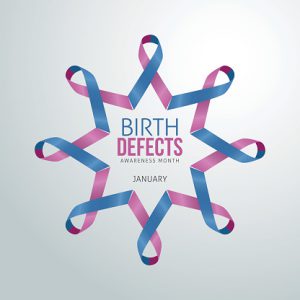
This year, Jamaica Hospital Medical Center is joining the Centers for Disease Control and Prevention (CDC) in their campaign to raise awareness among women and their families on actions they can take to increase their chances of having a healthy baby.

While not all birth defects are preventable, there are specific steps women can take to reduce the likelihood of certain types of birth defects. In addition to managing existing health conditions, adopting healthy lifestyle choices, and eliminating dangerous behaviors before and during pregnancy, one of the most important steps a woman can take to minimize her risk of having a baby born with a birth defect is to receive early and regular prenatal care.

When you receive prenatal care, your doctor will assess your health, take a family history, and discuss any lifestyle issues that may affect your pregnancy. Your doctor can also diagnose underlying health disorders that may impact your health or the development of your unborn child and order tests to detect any potential issues. Your doctor will also advise you against potential hazards that can be harmful to your baby, such as taking certain medications.

Understanding the importance of prenatal care and its role on healthy outcomes, Jamaica Hospital now offers an innovative approach for expectant moms. The hospital’s CenteringPregnancy program invites women with similar due dates to share their experiences in a friendly, group dynamic, facilitated by doctors, nurses and midwives. Through this unique model of care, women have an opportunity to share their experiences, receive support, and empower one another, while learning how to maintain healthy pregnancies.

Jamaica Hospital hopes that by offering a group prenatal care model to our patients, they will be motivated to receive the appropriate level of care for their unborn babies, which will lead to better outcomes.

To learn more about the Centering Pregnancy program at Jamaica Hospital, please call 718-291-3276.

All content of this newsletter is intended for general information purposes only and is not intended or implied to be a substitute for professional medical advice, diagnosis or treatment. Please consult a medical professional before adopting any of the suggestions on this page. You must never disregard professional medical advice or delay seeking medical treatment based upon any content of this newsletter. PROMPTLY CONSULT YOUR PHYSICIAN OR CALL 911 IF YOU BELIEVE YOU HAVE A MEDICAL EMERGENCY.

True or False – We Lose Most of our Body Heat From Our Head?

Now that the colder weather has arrived, we all are reminded to cover our heads to stay warm. One of the reasons we do this is because of the age-old theory that we lose approximately half of our body heat through our heads, but is this bit of advice really true?

The origin of this belief comes most likely from an old U.S. Army Field Manual from the 1950’s based on arctic survival research. The problem with the study is that while the research was performed on subjects wearing cold weather gear, they were not wearing hats. Naturally, in circumstances like this, body heat will escape from whatever area is exposed – in this case, the subjects uncovered heads.

Since our heads represents only 10% of our body’s total surface area, it would have to lose about 40 times as much heat per square inch as other parts of the body for this theory to be true.

Another factor in why this myth is thought to be true by many has to do with how our blood vessels are composed. We tend to feel colder in places where blood vessels are densely packed, like the head, and less where aren’t such as the legs.

Even though there is no factual basis to the concept of losing excess body heat through our heads, most will agree that if you want to stay warm this winter, you should cover your entire body to prevent heat from escaping…including your head.

All content of this newsletter is intended for general information purposes only and is not intended or implied to be a substitute for professional medical advice, diagnosis or treatment. Please consult a medical professional before adopting any of the suggestions on this page. You must never disregard professional medical advice or delay seeking medical treatment based upon any content of this newsletter. PROMPTLY CONSULT YOUR PHYSICIAN OR CALL 911 IF YOU BELIEVE YOU HAVE A MEDICAL EMERGENCY.

It’s GERD Awareness Week – Learn How to Avoid This Digestive Disorder

Perhaps there is no other day of the year associated with eating more than Thanksgiving. With so much attention being paid to food consumption, it is fitting that this week we also raise awareness about a health condition that affects the digestive system.

November 19-25, 2017 has been designated Gastroesophageal Reflux Disease (or GERD) Awareness Week. GERD, is a very common disorder that occurs when stomach acid or bile flows into the food pipe and irritates the lining.

After it is swallowed, food travels down the esophagus where it stimulates cells in the stomach to produce acid and pepsin (an enzyme), which aid the digestion process. A band of muscle at the lower part of the esophagus, called the lower esophageal sphincter (LES), acts as a barrier to prevent the back-flow. Gastroesophageal reflux occurs when the LES is weak or relaxes inappropriately, allowing the stomach’s contents to flow up into the esophagus.

Chronic heartburn is the most frequently reported symptom of GERD. Acid regurgitation (refluxed acid into the mouth) is another common symptom. Other symptoms can include belching, difficulty or pain when swallowing, or waterbrash (sudden excess of saliva). GERD may also lead to chronic sore throat, laryngitis, throat clearing, chronic cough, and other oral complaints such as inflammation of the gums and erosion of the enamel of the teeth.

Dietary and lifestyle choices can contribute to GERD. Certain foods and beverages, including chocolate, peppermint, fried or fatty foods, coffee, or alcohol may trigger reflux. Studies show that smoking can relax the LES and contribute to this condition. People who are obese are more prone to developing GERD symptoms.

Doctors recommend lifestyle and dietary changes for most people needing treatment for GERD. Along with lifestyle and diet changes, your doctor may also recommend over-the-counter remedies, or, in serious cases, prescribe medications designed to reduce acid in the stomach.

To speak to a doctor about treating your GERD, please call Jamaica Hospital’s Ambulatory Care Center at 718-206-7001.

All content of this newsletter is intended for general information purposes only and is not intended or implied to be a substitute for professional medical advice, diagnosis or treatment. Please consult a medical professional before adopting any of the suggestions on this page. You must never disregard professional medical advice or delay seeking medical treatment based upon any content of this newsletter. PROMPTLY CONSULT YOUR PHYSICIAN OR CALL 911 IF YOU BELIEVE YOU HAVE A MEDICAL EMERGENCY.

How to Help Your Teenager with Acne

Acne is a condition that teenagers have been dealing with for generations, and while there is no cure for acne, there have been many advancements in how it can be treated, making today’s generation better equipped to deal with the problem.

There are many myths associated with what causes acne. Some believe that diet plays a role, but there is no proven link between eating greasy food or chocolate and the development of acne. Similarly, stress does not cause acne (although it can make it worse).

The reason for the onset of acne for many adolescents is changing hormones. Teenagers develop certain hormones called androgens when they reach puberty. These hormones stimulate the glands in the pores to produce more oils. The excess oils can lead to pores becoming clogged. If a clogged pore becomes infected, a pimple forms. Pimples can come in many forms, but the most common type (and least severe) are blackheads or whiteheads. It is estimated that approximately 85% of all teens develop this form of acne on their face, neck, chest, back, and shoulders.

The most important way to treat acne is to keep your skin clean. Washing your face twice a day with a mild soap and warm water is key, but experts advise against harshly scrubbing the acne-ridden area as that will only irritate the skin and worsen the situation – instead gently blot the area in question.

There are also many effective over-the-counter medications designed to help with this problem. Products that contain benzoyl peroxide have proven to be effective as they reduce oil production and also contain antibacterial properties. Other medications may contain ingredients such as salicylic acid, alpha hydroxyl acid or sulfur,  designed to unclog pores and remove dead skin cells.

If over-the-counter medications prove ineffective a dermatologist can help. A dermatologist can prescribe stronger acne medications and offer a variety of treatment options.

Jamaica Hospital offers dermatology services in its Ambulatory Care Center. For more information, or to schedule an appointment, please call 718-206-7001.

All content of this newsletter is intended for general information purposes only and is not intended or implied to be a substitute for professional medical advice, diagnosis or treatment. Please consult a medical professional before adopting any of the suggestions on this page. You must never disregard professional medical advice or delay seeking medical treatment based upon any content of this newsletter. PROMPTLY CONSULT YOUR PHYSICIAN OR CALL 911 IF YOU BELIEVE YOU HAVE A MEDICAL EMERGENCY.

Today is Fall Prevention Awareness Day – Learn How to Prevent a Fall

On this day we welcome in one type of fall and at the same time, look to avoid another.

September 22, 2017 is the first day of fall in 2017, but this day also brings attention to National Falls Prevention Awareness Day. This year marks the 10th anniversary of this day of recognition sponsored by the National Council on Aging (NCOA).

Falls are the leading cause of injury-related emergency department visits for older adults. They are a major cause of hip fractures and are responsible for more than half of fatal head injuries.

This year’s Fall Prevention Awareness Day theme is Take a Stand to Prevent Falls. It seeks to unite professionals, older adults, caregivers, and family members to play a part in raising awareness and exercising measures to prevent falls in the older adult population.

The NCOA offers the following fall prevention tips for older adults:

  • Find a good exercise program to build balance, strength and flexibility
  • Ask your healthcare provider to provide you with a fall risk assessment based on your medical history
  • Regularly review your medications to determine if they increase your risk of falling
  • Get your hearing and vision checked annually
  • Keep your home safe by removing hazards and improve lighting conditions
  • Enlist the help and support of family members and neighbors

By providing these tips, Jamaica Hospital hopes everyone has a fall-free fall season.

All content of this newsletter is intended for general information purposes only and is not intended or implied to be a substitute for professional medical advice, diagnosis or treatment. Please consult a medical professional before adopting any of the suggestions on this page. You must never disregard professional medical advice or delay seeking medical treatment based upon any content of this newsletter. PROMPTLY CONSULT YOUR PHYSICIAN OR CALL 911 IF YOU BELIEVE YOU HAVE A MEDICAL EMERGENCY.

Contact Lenses and Children – When Are They Ready?

This week is Contact Lens Health Week and Jamaica Hospital wants to answer a common question that many parents who have children that wear glasses ask –  When is my child old enough to start wearing contact lenses?

The answer to that question is less about their age and more about their level of maturity. Physically, a child’s eyes can tolerate contacts at a very young age. Before considering contact lenses for your son or daughter, you should consider how they handle other responsibilities. The fact is, there are some eight year old children who are ready and there are some teenagers who are not. Wearing contacts is a major responsibility and children not only need to display that they can apply them, but they also need to exercise proper hygiene and grooming habits to handle wearing and caring for them.

While a child’s ability and maturity to handle contacts might vary from age to age, research has shown that the majority of children (51 %) receive them between ten and 12 years of age, while over 22% receive them when they are either 13 or 14 years old. Only 12.4 % of kids are prescribed contacts between the ages of eight and nine.

If they can handle the responsibility, most doctors believe that wearing contacts is a good thing for children and teens as they are generally more motivated to get fitted for and adapt better to wearing them than other age groups. They are also less likely to develop dry eyes or other issues that are common in adults who wear contact lenses.  Another reason to have your child consider wearing contact lenses is that in some cases they can actually slow down the progression of nearsightedness. In fact, a number of studies have proven that certain types of contacts offer significant control for many nearsighted children.

Professionals have also noted that there has been great advancement in the production of contact lenses over the years, which has contributed to more and more children now opting for them over glasses.  The progress in the development of disposable contacts makes maintenance easier and improved materials provide more durability and safety.

One of the biggest reasons more and more kids and parents are switching to contact lenses over glasses is the benefits to children who play sports. Even the safest eyeglass frames and lenses can cause injuries if they break. As opposed to sports goggles, contact lenses also offer better peripheral vision and an unobstructed view of the playing field. Contacts also remain stable on an athletes face while they are running, and unlike many sports goggles, they don’t not fog-up during competition.

A less common yet potentially important consideration for switching to contact lenses is how it affects a child’s self-esteem. In a recent poll, 71% of children asked cited self-esteem as a ‘very important” factor when determining whether or not to be fitted for contacts.  Additional research found that wearing contacts “significantly improves” how children and teens feel about themselves.

The best thing about making a decision to switch to contacts is that it isn’t permanent. If you think your child is ready and willing, speak to your eye doctor about getting fitted. If he or she tries it, but isn’t ready, they can always go back to wearing glasses. Together, you, your child and their doctor can decide if the time is right.

To make an appointment at Jamaica Hospital’s Ophthalmology Center, please call 718-206-5900.

All content of this newsletter is intended for general information purposes only and is not intended or implied to be a substitute for professional medical advice, diagnosis or treatment. Please consult a medical professional before adopting any of the suggestions on this page. You must never disregard professional medical advice or delay seeking medical treatment based upon any content of this newsletter. PROMPTLY CONSULT YOUR PHYSICIAN OR CALL 911 IF YOU BELIEVE YOU HAVE A MEDICAL EMERGENCY.
Choosing the Right Form of Birth Control

Family planning services provide comprehensive educational, medical, and social support to individuals who wish to control the number of children in a family, and the interval between births.

A big part of family planning involves a decision to use some form of birth control. It is estimated that half of the women in the United States of reproductive age (13-44) are in need of some form of birth control; that is, they are sexually active and able to become pregnant, but not trying to. For these women and their partners, there may be several reasons why they do not wish to become pregnant including their current marital status, career goals, or financial situation.

Determining the proper form of birth control that best suits your lifestyle is an important decision. There are various forms of birth control available and not all methods satisfy everyone’s needs. Some of the types of birth control include:

Intrauterine Device (IUD) – A small t-shaped device that is placed in your uterus and is very effective. These devices last for a number of years, are easy to use, and can be removed at any time.

Birth Control Implant – The implant (Nexplanon) is a small rod, about the size of a matchstick that is inserted into your upper arm just under the skin.

Birth Control Shot – A shot that keeps you from getting pregnant, Depo-Provera or “Depo” for short is effective for three months.

Birth Control Vaginal Ring – The ring (NuvaRing) is a small, bendable ring that you insert into the vagina. It can be left in for three weeks and taken out during the fourth week.

Birth Control Patch – The patch is a thin piece of plastic that looks like a bandage and sticks to the skin. Put on the patch once a week.

Birth Control Pill – An oral form of contraception that is taken daily. It should be taken at the same time every day to enhance effectiveness.

Condom – A popular method, the male condom is placed over the penis before sex to prevent sperm from reaching the vagina and helps protect from most STIs (Sexually Transmitted Infections)

Internal (Female) Condom – The female condom is inserted into the vagina before sex to prevent sperm from reaching the vagina and helps protect from most STIs (Sexually Transmitted Infections).

Diaphragm– A diaphragm is a shallow, dome-shaped cup made of silicone that is inserted into the vagina before sex.

Cervical Cap – A silicone cup that is inserted in the vagina to cover the cervix and prevent sperm from reaching the uterus.

Sponge – The sponge is a round piece of plastic foam that is inserted into the vagina prior to sex.

Spermicide – Spermicides include a variety of creams, films, foams, gels and suppositories that are inserted deep in the vagina and contain chemicals to stop sperm from moving.

Sterilization (Tubal Ligation) – A surgical procedure that closes or blocks the fallopian tubes so you can’t get pregnant.

Fertility Awareness  – By carefully tracking your menstrual cycle you can determine the days you can get pregnant. This is not the most effective form of birth control. Talk to your provider for more information on other methods.

Jamaica Hospital’s Contraception and Family Planning Department can offer information on each birth control option. Together, our staff can work with you to determine the best method of family planning to suit your specific needs. To make an appointment, please call 718-291-3276.


All content of this newsletter is intended for general information purposes only and is not intended or implied to be a substitute for professional medical advice, diagnosis or treatment. Please consult a medical professional before adopting any of the suggestions on this page. You must never disregard professional medical advice or delay seeking medical treatment based upon any content of this newsletter. PROMPTLY CONSULT YOUR PHYSICIAN OR CALL 911 IF YOU BELIEVE YOU HAVE A MEDICAL EMERGENCY.

Jamaica Hospital Now Incorporates Holistic Care For Our Patients

Patient-centered care has always been a major focus at Jamaica Hospital Medical Center but the Nursing Department’s newest effort really demonstrates how important satisfying our patients’ needs and improving their experience is to the hospital.

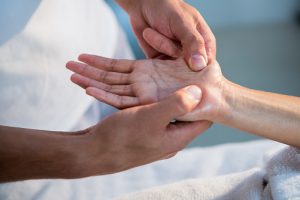
Jamaica Hospital is now incorporating a holistic approach to the care we provide in multiple areas. Through the addition of a Certified Holistic Nurse trained in various holistic modalities, hand and foot massages (reflexology) are now being provided as a consultative service and have been shown to be very beneficial to both patients and providers.

One important benefit of reflexology is that it relaxes the patient during what can be an anxiety-filled time for them. Patients often find that a few minutes of quiet time and gentle touch offers them an opportunity to release tension and feel more at ease.  When patients feel more comfortable, it creates an atmosphere that allows for better communication leading to better care.

According to Janis Sharkey, Certified Holistic Nurse, “the healing power of touch can make all the difference for the patient’s experience. By taking a holistic approach, we are focusing on healing the many factors that influence us mentally and emotionally as well as physically.” Research has indicated that gentle touch not only reduces stress and anxiety, but it can also minimize pain, increase blood circulation, and support immune function.

Additionally, Ms. Sharkey has worked with new mothers by teaching them movement skills based on the Alexander Technique, an educational process that develops the ability to realign posture and avoid unnecessary muscular tension. By applying the Alexander principles when lifting or carrying they can avoid back and neck injuries. She also teaches these and other principles to hospital staff and new hires during orientation to equip them with the skills to avoid injury and nurture self-care.

In the hospital’s Ambulatory Surgery Unit Janis has trained staff to provide holistic care to patients awaiting surgery. They provide reflexology to patients in a quiet environment surrounded by soothing music selected for relaxation. Since this protocol has been initiated there has been a notable decrease in requests for pain medication as well as faster recovery times.

Whether being offered to our patients or our staff, the benefits of holistic care are numerous and Jamaica Hospital is happy to offer this service to all.

All content of this newsletter is intended for general information purposes only and is not intended or implied to be a substitute for professional medical advice, diagnosis or treatment. Please consult a medical professional before adopting any of the suggestions on this page. You must never disregard professional medical advice or delay seeking medical treatment based upon any content of this newsletter. PROMPTLY CONSULT YOUR PHYSICIAN OR CALL 911 IF YOU BELIEVE YOU HAVE A MEDICAL EMERGENCY.

What is AFib?

Atrial fibrillation (AFib for short) is a condition where the heart beats in an irregular or quivering manner. Some people who have AFib describe the condition as feeling as if their heart skips a beat or is banging up against their chest wall, while others claim to experience no symptoms at all. According to the American Heart Association, it is estimated that over 2.7 million Americans live with AFib.

Cardiogram and heart

Under normal conditions, your heart pumps blood from the top chambers, (atria) to the bottom chambers, (ventricles) in a coordinated rhythm. But for those with AFib, the electrical signals that control this system are off-kilter. Instead of working together, the atria are out of sync. The result is a fast, fluttering heartbeat.

If left untreated, AFib can lead to blood clots, stroke, or other heart-related complications, including heart failure.

In addition to feeling as if your heart is fluttering, other signs of AFib include:

  • General fatigue
  • Dizziness
  • Shortness of breath and anxiety
  • Weakness
  • Faintness or confusion
  • Fatigue when exercising
  • Sweating
  • Chest pain or pressure

Anyone can have AFib, but it’s more common in people who are 60 or older or those with other heart problems or past heart surgeries. Family history as well as other underlying health conditions, such as hypertension, thyroid disease, diabetes, chronic lung disease, obesity or sleep apnea may also contribute to the onset of AFib. Taking certain medication, smoking, and alcohol consumption can also raise the risk of AFib.

Treating AFib begins with proper diagnosis through a thorough examination which includes providing a comprehensive medical history and participating in a variety of tests, including an EKG, ECG or possibly an electrophysiology study.

If AFib is diagnosed, the goal for you and your doctor is to restore your heart to a normal rhythm and manage your risk factors of developing a stroke or other cardiac issues. This can be achieved through a variety of treatment options, including medications, as well as both surgical and nonsurgical interventions. Together you and your doctor can determine the best course of treatment.

If you are experiencing a fluttering heart, speak to your doctor immediately. If you do not have a doctor, yo make make an appointment at Jamaica Hospital’s Cardiology at 718-206-7100.

All content of this newsletter is intended for general information purposes only and is not intended or implied to be a substitute for professional medical advice, diagnosis or treatment. Please consult a medical professional before adopting any of the suggestions on this page. You must never disregard professional medical advice or delay seeking medical treatment based upon any content of this newsletter. PROMPTLY CONSULT YOUR PHYSICIAN OR CALL 911 IF YOU BELIEVE YOU HAVE A MEDICAL EMERGENCY.

Break Free from Osteoporosis by Learning How to Prevent and Manage the Disease.

Spinal Fracture

Osteoporosis is a disease that weakens the bones, making them more susceptible to breaking. Approximately 10 million Americans have osteoporosis and another 44 million have an increased risk, due to poor bone density. In fact, one in two women and one in four men will break a bone due to osteoporosis in their lifetime.

To raise awareness about this disease, May has been designated as National Osteoporosis Month. The National Osteoporosis Foundation (NOF) and Jamaica Hospital Medical Center want everyone to “Break Free from Osteoporosis” by learning how to prevent and manage the disease.

According to the NOF, the keys to combatting osteoporosis are diet, exercise, and lifestyle. Recommendations include:

  • Get plenty of calcium and vitamin D in your diet
  • Quit smoking and limit alcohol consumption
  • Participate in weight bearing and muscle strengthening exercises on a regular basis

To emphasize the importance of physical activity for optimal bone health, the NOF is issuing the Jumping Jack Challenge. Beginning May 1, a challenge is being issued to all children and their parents and extended families to videotape themselves doing 10 jumping jacks in less than 10 seconds and posting it on social media with the hashtag #JumpingJackChallenge.

Through this effort, the NOF wants to stress the importance of building strong bones and maintaining bone strength throughout your life.

Jamaica Hospital supports the NOF’s campaign against osteoporosis. We offer bone densitometry testing in our Women’s Health Center. For more information, or to schedule an appointment, please call 7180-206-3276.

All content of this newsletter is intended for general information purposes only and is not intended or implied to be a substitute for professional medical advice, diagnosis or treatment. Please consult a medical professional before adopting any of the suggestions on this page. You must never disregard professional medical advice or delay seeking medical treatment based upon any content of this newsletter. PROMPTLY CONSULT YOUR PHYSICIAN OR CALL 911 IF YOU BELIEVE YOU HAVE A MEDICAL EMERGENCY.