Harnessing AI in Stroke Care

At Jamaica Hospital Medical Center, we are committed to bringing the latest innovations in stroke care to our patients.

Artificial intelligence (AI) is now playing an important role, helping us improve both the speed of treatment and the quality of recovery.

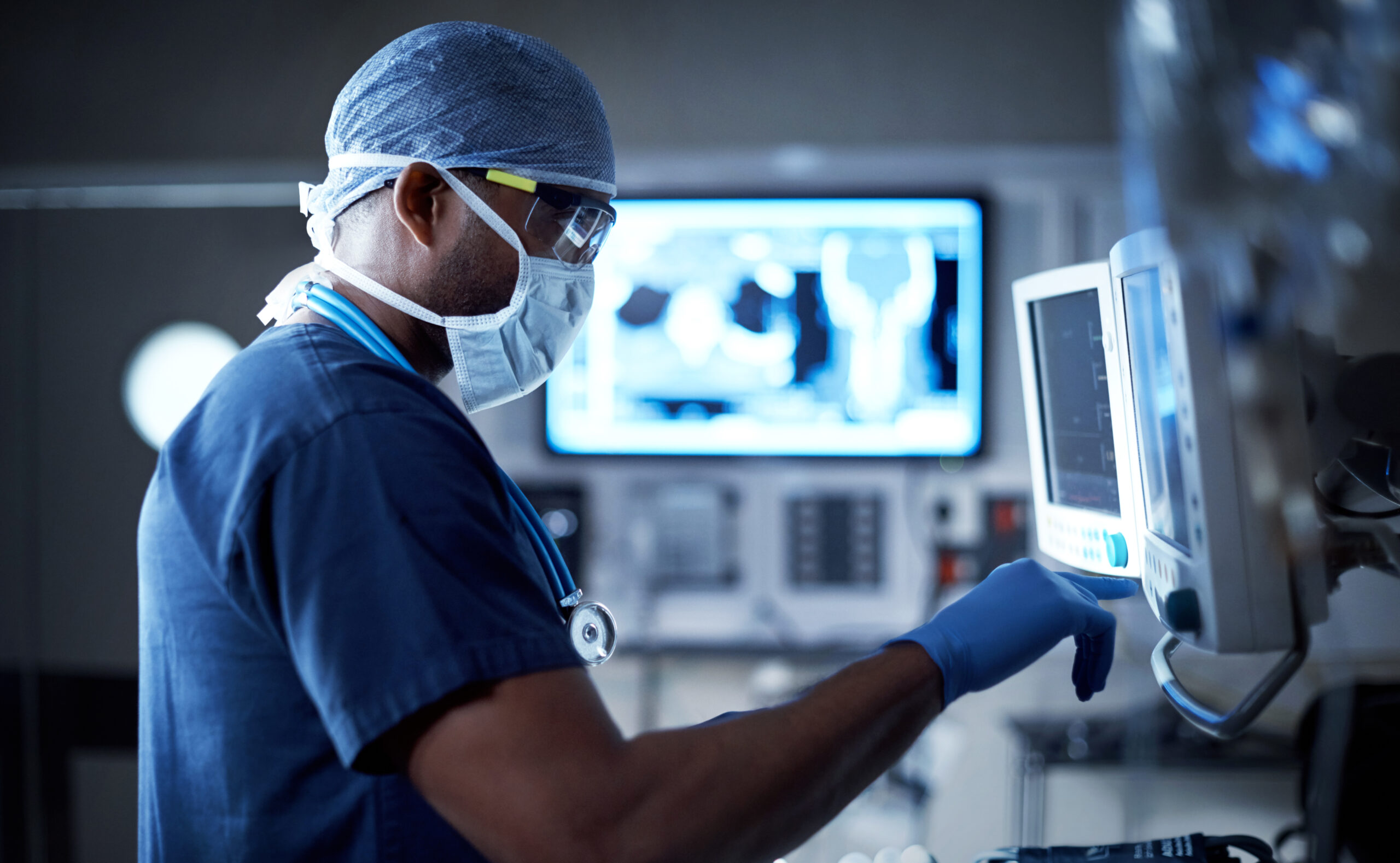
One of the technologies we use to speed up stroke diagnosis is Aidoc, an advanced AI system that reviews CT scans in real time to detect strokes caused by clots or bleeding in the brain.

By alerting our stroke team immediately, Aidoc reduces delays and supports rapid decisions for clot-busting medication or thrombectomy. This ensures that more patients can receive life-saving treatment within the critical “golden hour.”  The “golden hour” in stroke refers to the first 60 minutes after symptoms arise. This is a critical time because prompt medical intervention can greatly minimize brain damage and enhance recovery outcomes.

Jamaica Hospital is a certified Comprehensive Stroke Center, the highest designation for excellence in the care of stroke patients. This recognition highlights our commitment to delivering the highest quality of care for stroke patients. By integrating advanced AI technology with compassionate care, our hospital continues to excel in enhancing outcomes for stroke patients in our community.


All content of this newsletter is intended for general information purposes only and is not intended or implied to be a substitute for professional medical advice, diagnosis or treatment. Please consult a medical professional before adopting any of the suggestions on this page. You must never disregard professional medical advice or delay seeking medical treatment based upon any content of this newsletter. PROMPTLY CONSULT YOUR PHYSICIAN OR CALL 911 IF YOU BELIEVE YOU HAVE A MEDICAL EMERGENCY.
Building a Healthier Community: Stroke Awareness and Prevention in Action

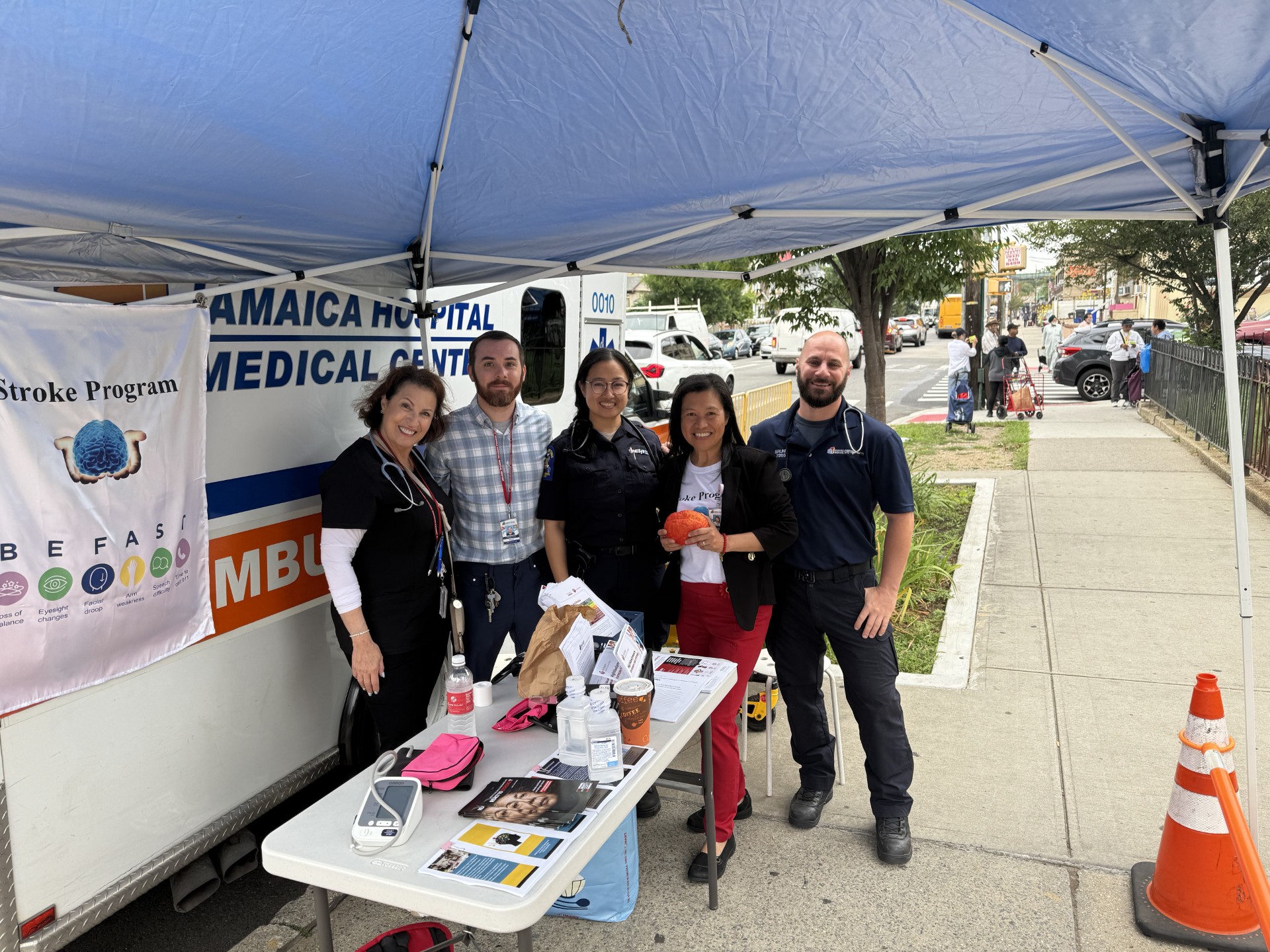
At the MediSys Health Network (Jamaica Hospital Medical Center and Flushing Hospital Medical Center), our mission extends beyond hospital walls and into the heart of our community. Every year, our stroke outreach team has proudly partnered with local organizations to bring life-saving education and preventive health services to our neighbors.

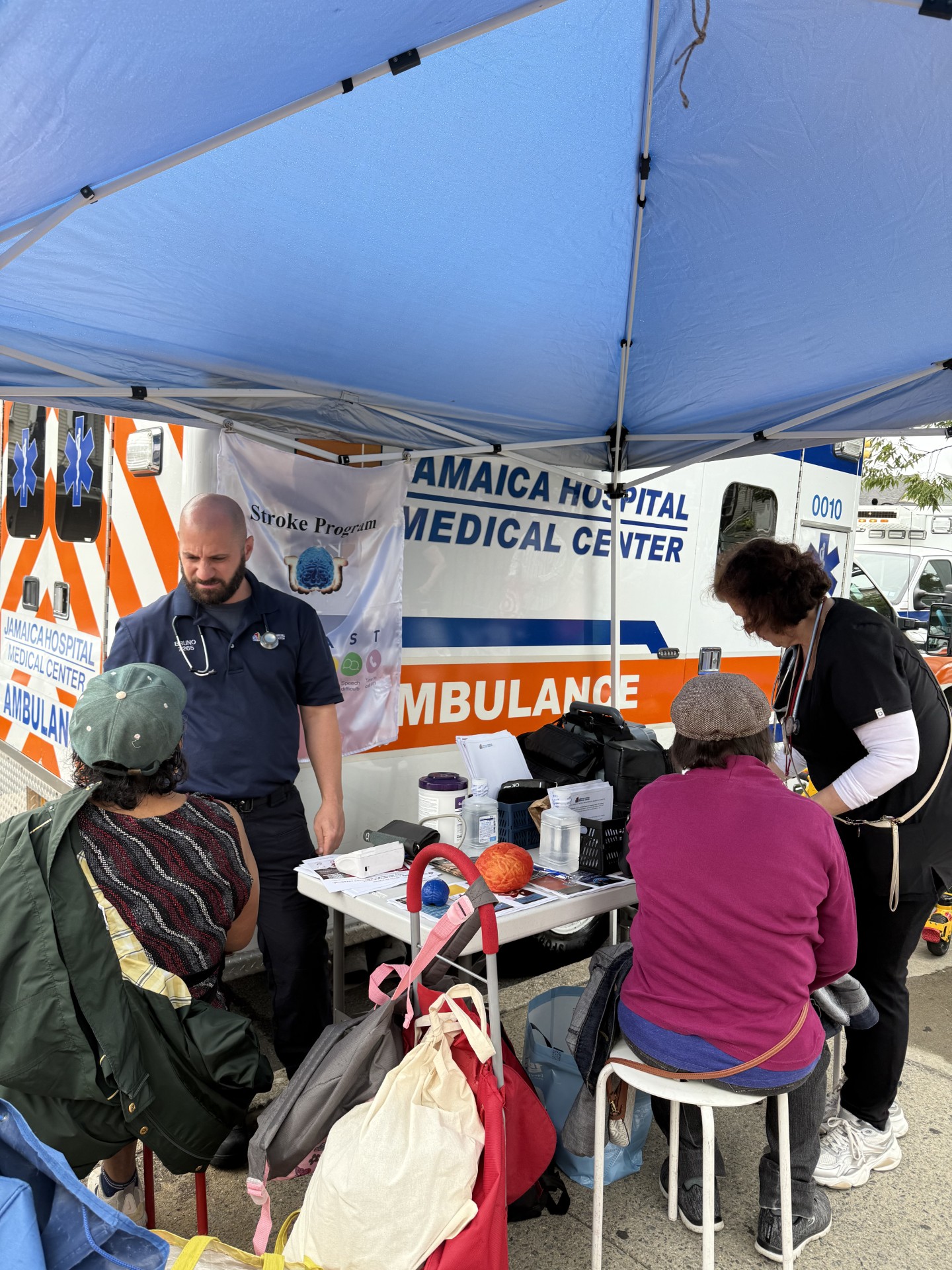
Through events like Jamaica Jams, community gatherings at the Riverfund Pantry, and collaborations with community boards and faith-based organizations, we’ve connected with hundreds of residents—many of whom are at risk for high blood pressure and stroke. These partnerships allow us to meet people where they are, providing accessible, culturally sensitive education and care.

Blood Pressure Screening & Awareness

High blood pressure remains one of the most significant risk factors for stroke. At each event, our team offered free blood pressure screenings, identifying individuals with undiagnosed or uncontrolled hypertension. These screenings are vital steps in preventing stroke before it happens.

Teaching Health for Everyday Living

Beyond screening, our outreach emphasizes stroke awareness—helping people recognize the signs of stroke using the BE FAST tool, understand when to call 911, and learn strategies for prevention. We also focus on practical health education:

  • Tips for maintaining a heart-healthy diet
  • Encouraging physical activity in daily routines
  • Reducing smoking and alcohol use
  • Promoting regular check-ups with healthcare providers

Community Partnerships Make the Difference

The success of these initiatives reflects the strength of our partnerships. Whether in food pantry lines, at local festivals, or in faith-based settings, our outreach efforts demonstrate how healthcare and community organizations can work hand-in-hand to improve public health.

  Looking Ahead

Our stroke team is committed to continuing these efforts, expanding to more neighborhoods, and building stronger bridges with community leaders. Together, we can raise awareness, reduce risk, and help our community rise stronger against stroke.

All content of this newsletter is intended for general information purposes only and is not intended or implied to be a substitute for professional medical advice, diagnosis or treatment. Please consult a medical professional before adopting any of the suggestions on this page. You must never disregard professional medical advice or delay seeking medical treatment based upon any content of this newsletter. PROMPTLY CONSULT YOUR PHYSICIAN OR CALL 911 IF YOU BELIEVE YOU HAVE A MEDICAL EMERGENCY.

Stroke Recovery: Walking with Patients Beyond the Guidelines

At Jamaica Hospital Medical Center’s stroke clinic, recovery doesn’t always follow a predictable path. We serve a diverse population, of which some face not only the aftermath of stroke but also the daily challenges of low literacy, language barriers, poverty, and mistrust of the healthcare system. For these patients, healing is not just clinical—it’s emotional, educational, and deeply human.

Helping someone through the disability that follows a stroke is a journey. It’s not a quick fix or a one-time consult. It’s a repeated process of teaching, re-teaching, listening, adjusting, and celebrating even the smallest wins. Every step forward—standing up without assistance, remembering medication, expressing a full thought—is a struggle, but also a sign of improvement. These moments might seem small to an outsider, but in the context of post-stroke life, they are monumental.

Some patients come in frustrated, embarrassed, or silent. Others are overwhelmed by the loss of independence or the fear of another stroke. But with time, trust, and tailored communication—visuals, repetition, interpreters, touch—they start to shift. And that shift becomes the heartbeat of our clinic. It’s in those moments, when a caregiver finally understands the importance of blood pressure monitoring, or a patient tears up after writing their name for the first time again, that we see the real meaning of our work.

Caring in this setting is more than clinical expertise. It’s advocacy. It’s a partnership. It’s knowing that when patients don’t understand, it’s not because they’re unwilling—it’s because the system hasn’t always spoken their language. So we change the system, one encounter at a time. And in doing so, we shift the narrative from stroke as an end, to stroke as a beginning.

Stroke recovery in our clinic takes time. But it is forward motion. And that matters. Every hard-earned step our patients take reflects not only their resilience, but also the power of compassionate, equity-focused stroke care. This is what makes our dedication worth it—because during our patients’ progress we find purpose and profound connection.

All content of this newsletter is intended for general information purposes only and is not intended or implied to be a substitute for professional medical advice, diagnosis or treatment. Please consult a medical professional before adopting any of the suggestions on this page. You must never disregard professional medical advice or delay seeking medical treatment based upon any content of this newsletter. PROMPTLY CONSULT YOUR PHYSICIAN OR CALL 911 IF YOU BELIEVE YOU HAVE A MEDICAL EMERGENCY.