
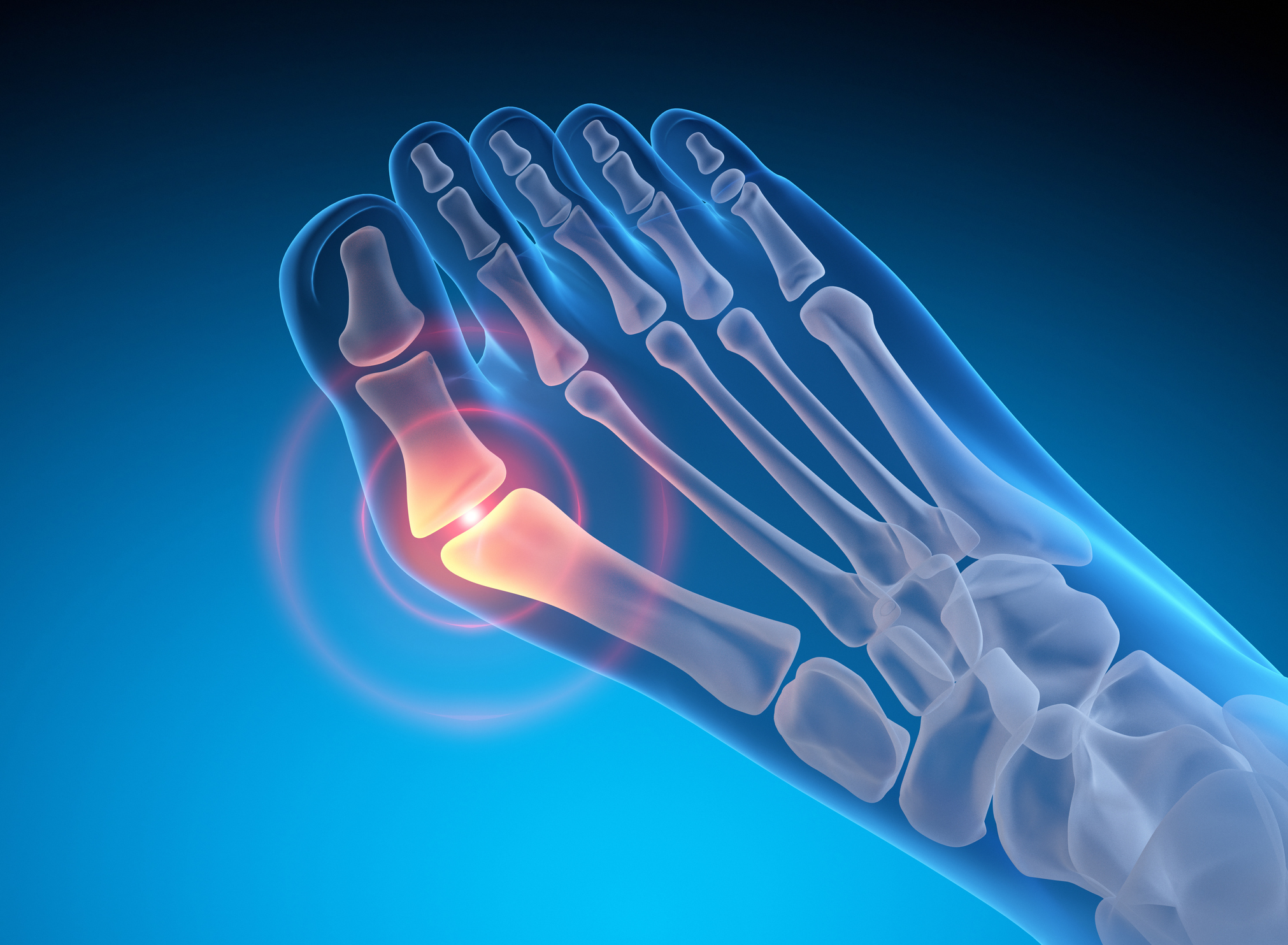
 A bunion is a bony bump that forms on the joint at the base of the big toe. It occurs when some of the bones in the front part of the foot move out of their regular position, causing the big toe to get pulled toward the smaller toes. It also forces the joint at the base of the big toe to stick out.
Bunions can develop for many reasons. It can be a combination of factors such as family history, abnormal bone structure, increased motion, or choice of footwear. It can also be caused by something putting extra pressure on the big toe joint for a long time, pushing the joint out of its natural alignment. These can include:
- The way you walk
- Health conditions that cause inflammation, such as rheumatoid arthritis or lupus
- Standing for a long time or working on your feet
Anyone can develop a bunion. Certain groups of people are more likely to have bunions, including:
- Females
- People whose biological parents have bunions or issues with their foot mechanics. More than 70% of people with bunions have a biological parent who has had them
- People with a history of foot injuries, including athletes
Bunions have many symptoms, including:
- A bulging bump on the outside of the base of the big toe
- Swelling and/or a change in color or soreness around the big toe joint
- Corns or calluses often form where the first and second toes rub against each other
- Ongoing pain or pain that comes and goes
- Stiffness or limited movement of the big toe, which could lead to trouble walking
- Hard skin on the sole
Bunions can lead to health problems, including:
- Bursitis
- Hammertoe
- Metatarsalgia
- Osteoarthritis
To diagnose a bunion, a healthcare provider will perform a physical exam and ask about your symptoms. A foot X-ray of your foot can help determine the best way to treat it.
Treatment for a bunion may vary and depends on how severe the bunion is and how much pain it causes. The most common treatments for bunions include:
- Changing footwear
- Bunion pads and taping
- Orthotic devices such as shoe inserts
- Pain relievers
- Using ice or an ice pack
- Corticosteroids
- Physical therapy
- Surgery
Surgery isn’t always necessary when treating a bunion. It is only recommended when simpler treatments don’t ease symptoms, if the bunion causes frequent pain, or if it limits daily activities.
To prevent bunions, it is important to choose the shoes you wear carefully. They should be supportive and have a wide toe box and no pointed toes. There should also be space between the tip of your longest toes and the end of the shoe. Your shoes should match the shape of your feet without squeezing or pressing any part of your foot.
If you are experiencing any bunion symptoms, you can speak with a podiatrist at our Queens Podiatry Center, located on the Jamaica Hospital campus. To make an appointment, please call (718) 206-6713/6712.
 Follow
All content of this newsletter is intended for general information purposes only and is not intended or implied to be a substitute for professional medical advice, diagnosis or treatment. Please consult a medical professional before adopting any of the suggestions on this page. You must never disregard professional medical advice or delay seeking medical treatment based upon any content of this newsletter. PROMPTLY CONSULT YOUR PHYSICIAN OR CALL 911 IF YOU BELIEVE YOU HAVE A MEDICAL EMERGENCY.