
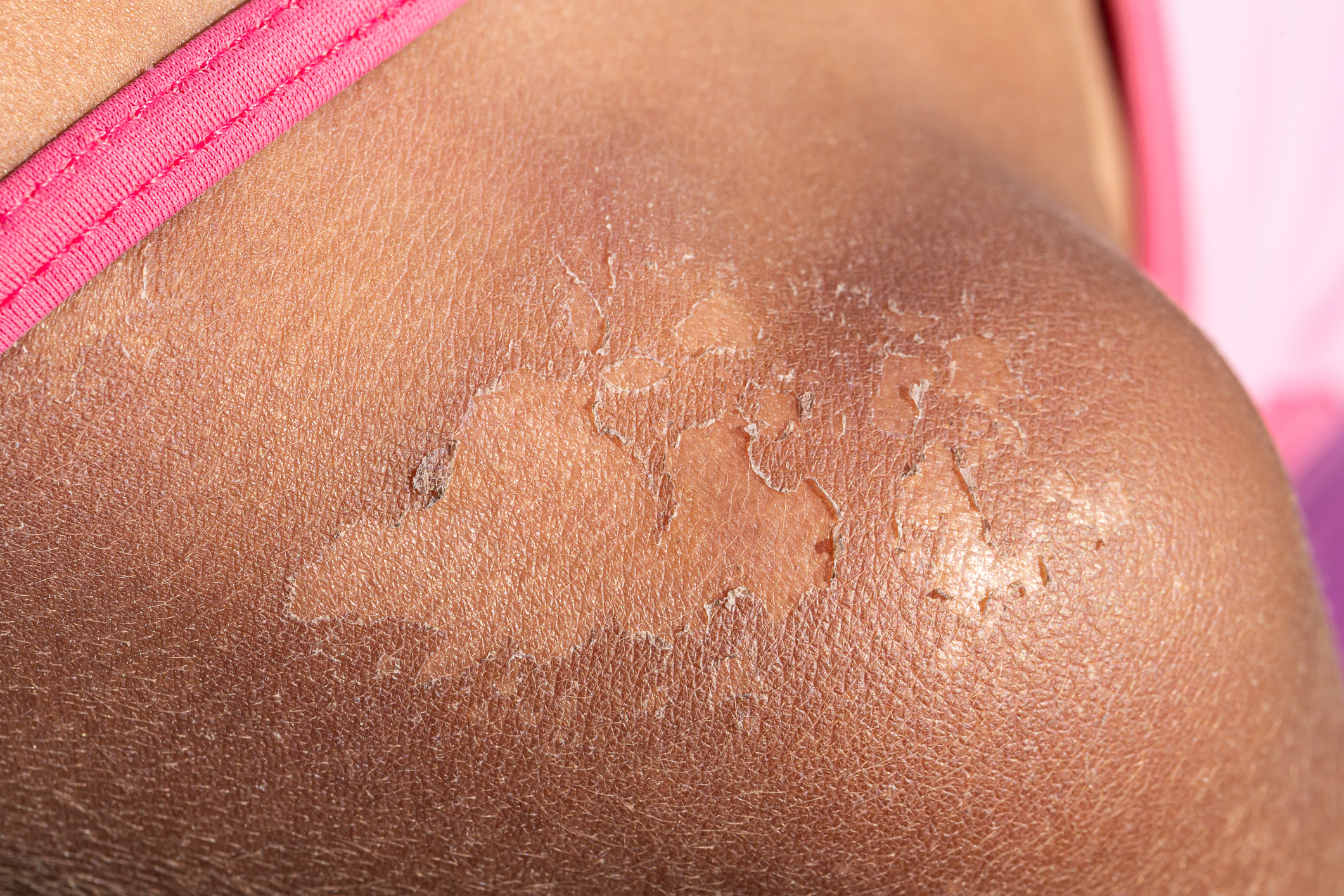
 Summer has arrived, and we will all be spending more time outdoors enjoying the warm weather and sunshine. However, spending more time outdoors means an increased exposure to sunlight, insects, and other elements of summer can lead to common skin conditions.
Some common summer skin conditions include:
- Sun skin damage- sun safety is a priority when it comes to summer skin care. Even a few bad sunburns can increase the risk of skin cancer, premature wrinkling, and aging. Some ways to protect your skin include:
- Using a good, broad-spectrum, water-resistant sunscreen on your face and other exposed areas, even on cloudy days.
- Apply generously, and remember not to forget the lips, rims of the ears, the back of the neck, and tops of the feet
- Choose a sunscreen with an SPF of at least 30
- Reapply about every two hours and after swimming or sweating
- Covering up with sun-protection clothing and always wear a hat and sunglasses
- Staying inside or in a shaded area during peak sunny hours
- Insect bites and stings can leave the skin with painful welts and can even spread disease. A tick bite can spread Lyme disease. Wasp, bees, hornets, and yellow jacket stings can be painful, especially if you are allergic. Mosquito bites can make summertime gatherings miserable.
To help prevent insect bites and stings, you can follow these steps:
- Use repellent to keep bugs off your skin
- Use a fan to circulate the air to help keep bugs from biting
- Treat bites with an anti-itch medication, as scratching bug bites can cause infection, break the skin, and leave scars
- Rashes and skin irritations- things such as summer heat, poison ivy, swimming in certain bodies of water, perspiration, and other factors can cause skin irritations and rashes.
Hot summer air and sweat can cause and/or aggravate certain skin conditions, such as acne, tinea, and prickly heat.
Plants such as poison ivy, poison oak, and poison sumac are plentiful in the summer. If you go for a run or hike, or go camping, be mindful that the oils from these plants can cause an allergic reaction that can be severe, with redness, swelling, and intense itchiness. The best way to prevent coming in contact with these plants is to learn what they look like so you can avoid them while outdoors. If you are exposed to these plants, wash your hands and clothes thoroughly to remove as much oil as possible.
Bodies of water can contain bacteria, parasites, and other irritants that can cause certain water-related rashes, such as:
- Swimmer’s itch
- Sea lice
- Chlorine rash
Some general summer skin care tips to keep your skin healthier during the summer months include:
- Stay hydrated by drinking plenty of water to keep your skin healthy and moisturized from the inside
- Limit your exposure to the sun
- Take cool showers and dry off when you’re hot and sweaty
- Use a mild cleanser daily and avoid heavy makeup
If you are suffering from any summer skin condition, you can visit Jamaica Hospital Medical Center’s Ambulatory Care Center. To schedule an appointment, please call (718) 206-7001.
 Follow
All content of this newsletter is intended for general information purposes only and is not intended or implied to be a substitute for professional medical advice, diagnosis or treatment. Please consult a medical professional before adopting any of the suggestions on this page. You must never disregard professional medical advice or delay seeking medical treatment based upon any content of this newsletter. PROMPTLY CONSULT YOUR PHYSICIAN OR CALL 911 IF YOU BELIEVE YOU HAVE A MEDICAL EMERGENCY.