
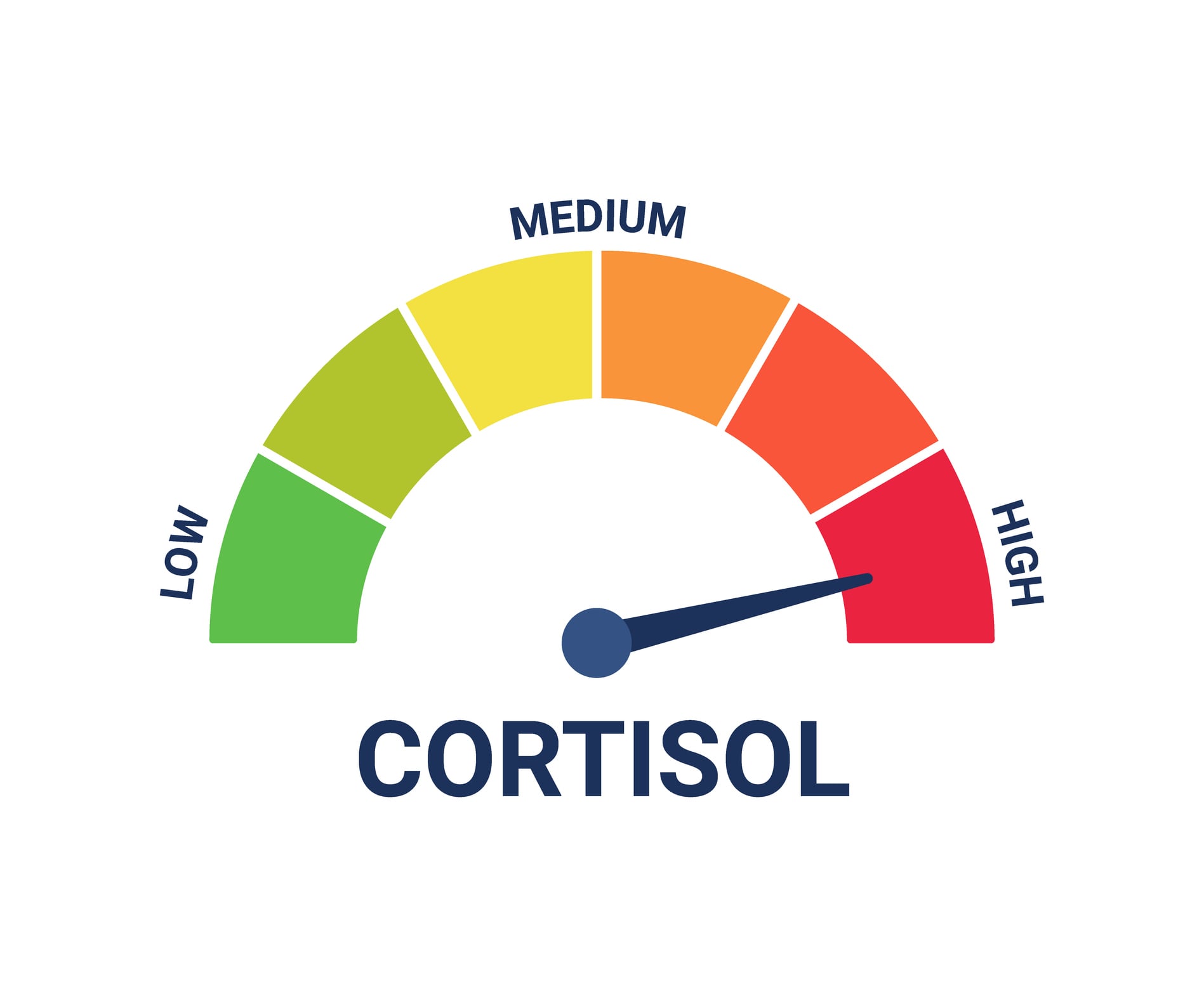
 Cortisol, commonly known as the “stress hormone”, is a steroid hormone produced by the adrenal glands.
Cortisol helps the body respond to stress by mobilizing energy to cope with stressors, or perceived threats. Cortisol triggers the “fight or flight” response.
In addition to regulating your body’s stress response, cortisol plays other important roles, including:
- Regulating blood pressure
- Controlling the sleep/wake cycle
- Regulating metabolism and glucose (blood sugar) levels
- Managing how the body uses proteins, carbohydrates and fats
- Suppressing inflammation
- Controlling heart rate
Because cortisol affects most systems in the body, having elevated levels and prolonged exposure can have a negative impact on your health. Having high cortisol levels for a long time can lead to:
- High blood sugar
- High blood pressure
- Hirsutism or excessive hair growth in women
- Muscle weakness
- Osteoporosis
- Wide pink or purple stretch marks on the belly, hips, breasts, underarms or thighs
- Weight gain in the abdomen or face
- Acne
- Skin that bruises easily
- Severe fatigue
- Reduced fertility
There are several reasons why our bodies may produce high levels of cortisol, including:
- Cushing syndrome
- Chronic stress
- Adrenal gland tumors
- Taking high doses of certain medications, such as corticosteroids
If you are experiencing symptoms related to high cortisol levels, it is recommended that you consult your doctor. They can assess your health by asking about your medical history and lifestyle, and ordering tests to investigate the cause of your symptoms.
Treatment depends on the underlying cause and may include the surgical removal of tumors, adjusting medication doses, prescribing medication to regulate cortisol production, or making lifestyle changes.
To schedule an appointment with a doctor at Jamaica Hospital Medical Center, please call 718-206-7001.
 Follow
All content of this newsletter is intended for general information purposes only and is not intended or implied to be a substitute for professional medical advice, diagnosis or treatment. Please consult a medical professional before adopting any of the suggestions on this page. You must never disregard professional medical advice or delay seeking medical treatment based upon any content of this newsletter. PROMPTLY CONSULT YOUR PHYSICIAN OR CALL 911 IF YOU BELIEVE YOU HAVE A MEDICAL EMERGENCY.